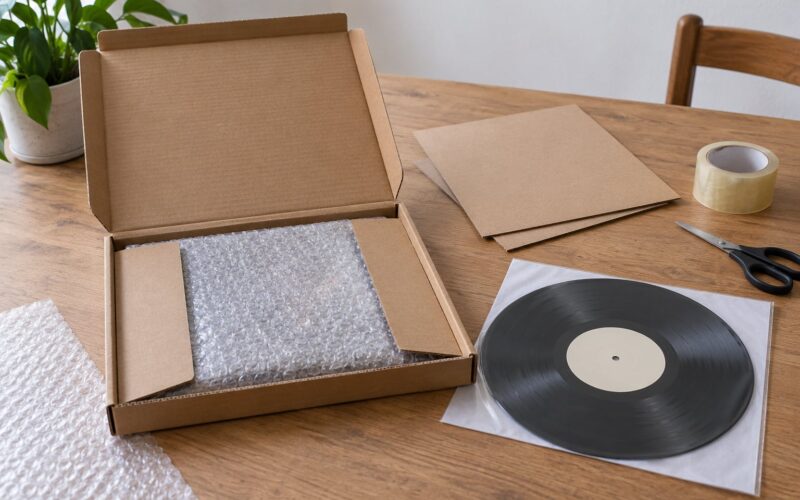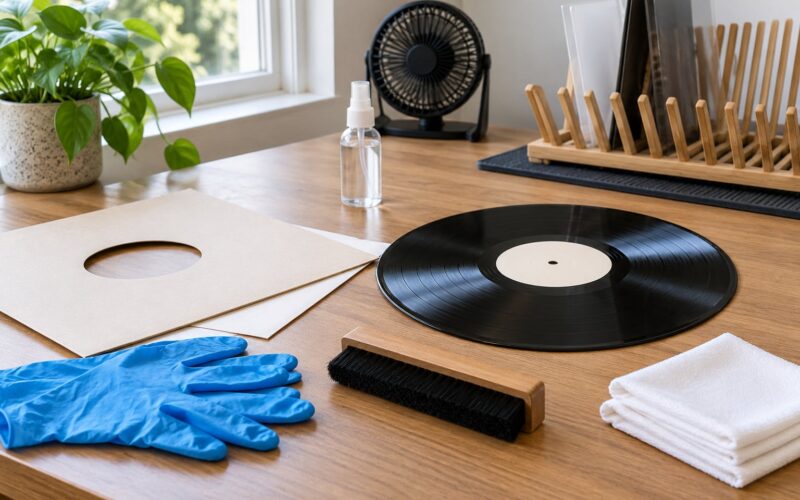
A warped vinyl record is a shape problem, not a sound problem. The pressed audio in the grooves is intact, so most mild warps can be fixed at home by cleaning the disc, sandwiching it between flat surfaces, and applying slow, even weight for weeks. If the warp is deep enough that the stylus skips in the same spot every time, a little low heat softens the vinyl enough to reshape it.
That whole job takes about 15 minutes of hands-on time. The waiting is the hard part, and knowing how to fix a warped record without ruining the pressing is mostly about patience rather than gear.
Collectors on r/vinyl, r/howto and the Talking Machine forum tend to agree on the essentials: clean first, weight evenly, be patient, and never use direct heat from an iron or a hairdryer held too close. Below is the full process, including the point where you should stop and pay someone else.
Table of Contents
- What You Need
- Step-by-Step: How to Fix a Warped Record
- Step 1: Inspect the Damage Before You Fix a Warped Record
- Step 2: Clean the Record Before Reshaping
- Step 3: Warm the Record Gently When Needed
- Step 4: Reshape the Record Under Even Pressure
- Step 5: Let the Record Relax and Test It
- Step 6: Clean and Store the Repaired Record
- Common Mistakes
- Frequently Asked Questions
- Can you fix a warped record?
- How much does it cost to unwarp a record?
- How does a record become warped?
- Is it okay to play a slightly warped record?
- Is heat safe for flattening vinyl, and will it damage the record?
- My record still skips after flattening. What now?
- Conclusion
What You Need
Most of the kit for unwarping vinyl is already in the house. The purpose-built flattener devices are nice, but they are not necessary and they are not cheap.
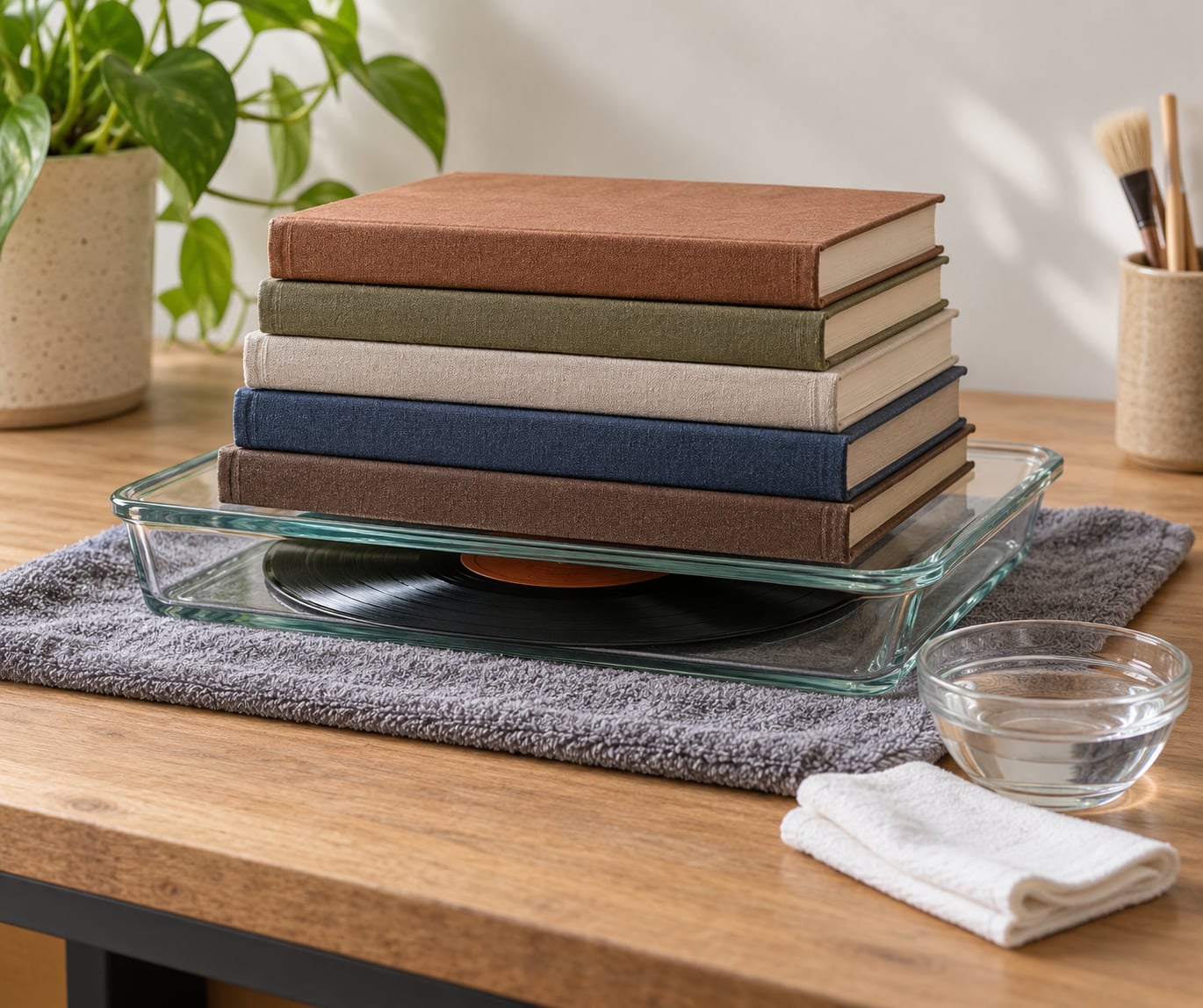
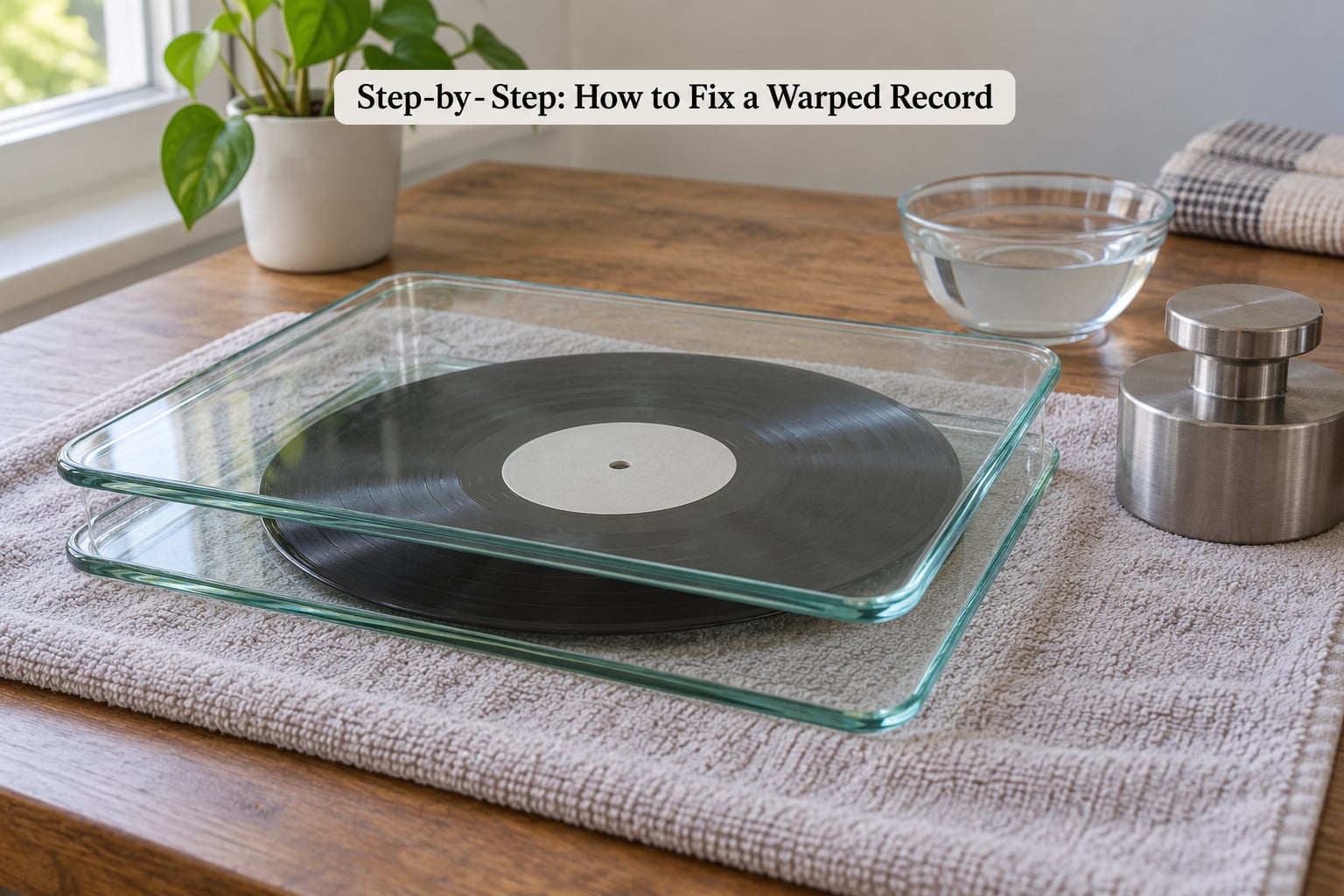
- Two flat glass baking sheets or panes of plexiglass, each a little larger than the record so the edges get support too.
- A soft towel or piece of felt to set the glass on, so a chip in your worktop does not end up in the vinyl.
- A barrier layer of parchment paper or clean felt between the glass and the record. r/howto collectors recommend parchment specifically because it will not scratch a glossy surface.
- Heavy books or a weight in the 40-60 lb range. Hardbacks in a milk crate work well because the weight is spread out rather than concentrated in one spot.
- Distilled water, a soft brush and a lint-free cloth for cleaning.
- An oven thermometer if you plan to use heat. The dial on an oven is notoriously wrong.
No sandwich, no glass, no heavy books? A few collectors on r/vinyl simply stand the record vertically on a shelf between two other albums and let time and gravity do the work. It is slow, but it costs nothing and it never damages anything.
A turntable weight is a weak stand-in. People on r/turntables report it takes the edge off a small ripple and does essentially nothing for a real bowl.
Step-by-Step: How to Fix a Warped Record
Step 1: Inspect the Damage Before You Fix a Warped Record
Look at the record on a flat table with the label facing up, at a low angle. A record that only shimmers at the outer edge is a ripple. A record that rocks when you touch its edge, or that will not sit flat on the table, is a bowl.
Then run your thumbnail gently around the rim. A crack there is the end of the line for home repair, because pressure will spread it. A bent or kinked section that only affects one side is usually a pressing or storage problem, and it responds well to weight.
Decide before you start. Ripples, mild bowls, and one-side kinks are all worth attempting. Cracks, deep sharp bends, records with heavy mould or serious mould damage, and anything genuinely valuable belong with a professional.
Set up on a clean surface you can live with for weeks, because a weight sandwich does not move. Cardboard on the floor of a spare room is fine.
Step 2: Clean the Record Before Reshaping
Dirt and grit on a warped record will end up pressed into the grooves, and a sandwich is a wonderful way to grind a speck straight across the playing surface. Clean first, every time.
Dampen a lint-free cloth with distilled water, wring it out until it is barely damp, and wipe from the centre outwards in a spiral. Never go around the grooves. A soft brush along the same path lifts stubborn dust. Follow up with a dry microfibre cloth.
Skip anything with alcohol, ammonia or “record cleaner” sprays containing solvents. Skip the kitchen sink entirely, and never run a warped record under a tap.
Step 3: Warm the Record Gently When Needed
Warmth is a tool, not a first move. If a record has been sitting in a bowed state for a long time, weight alone can take weeks. A gentle warm relaxes the vinyl so pressure works faster.
Build the sandwich first: glass, parchment, record, parchment, glass. Put it in an oven set to its lowest setting, aiming for somewhere between 100F and 120F, and check with your oven thermometer rather than trusting the dial. Leave it 20 to 30 minutes.
Then switch the oven off and leave the door shut until the whole thing has cooled to room temperature, roughly 45 minutes. Opening the door early is the single most common way people warp a record that was already straight, because a hot disc that meets a cold shelf or cold air bows again on the way down.
If you do not own an oven thermometer, use sunlight instead. Collectors on r/vinyl report leaving the glass sandwich in direct sun for 30 to 45 minutes and cooling the record out of the sun. A hairdryer works too, held well back and kept moving, and Talking Machine forum regulars use roughly two minutes, flipping the record. The problem with a hairdryer is uneven heat, and uneven heat is what causes ripples in the first place.
Step 4: Reshape the Record Under Even Pressure
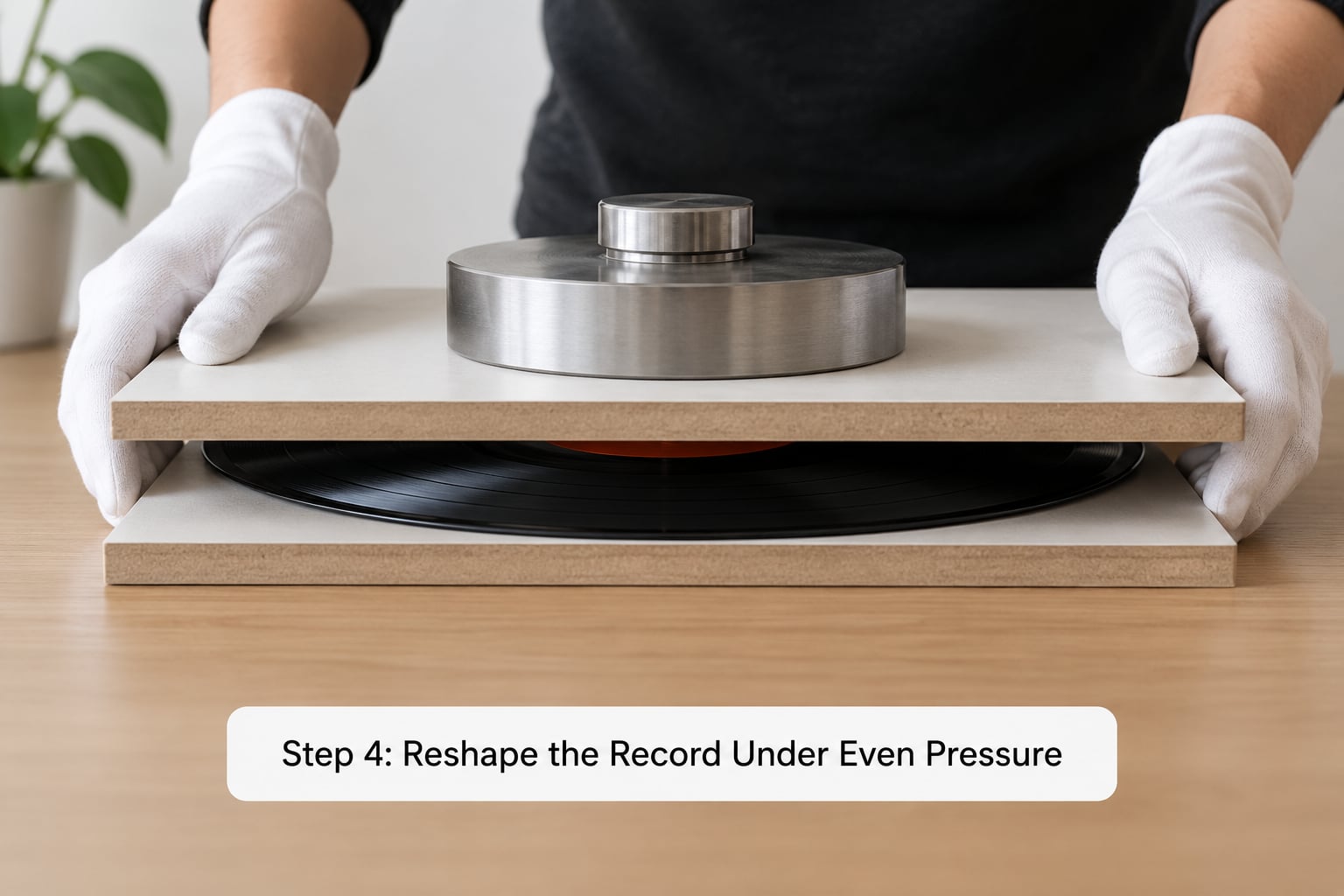
While the record is still warm, lay it into the sandwich and add the weight. The target is 40 to 60 lb spread as evenly as you can manage across the whole disc. A milk crate of hardbacks does a better job than a single stack of encyclopedias in one corner.
Pressure goes on gradually. Add a few books, check the shape, add more. If you have to lean on it with your body, you are doing it wrong.
Do not try to force the centre. The middle label area is stiffer and more brittle than the thin outer playing area, and pushing on it bends the record permanently instead of flattening it. Aim the weight at the disc as a whole, and if you must handle the record, hold it by the outer edge with clean, dry hands.
Leave it there. Two weeks is a realistic floor for a mild bowl, and several weeks is common. r/vinyl collectors who give up after a few days are the most common reason a perfectly fixable warp gets written off as permanent.
Step 5: Let the Record Relax and Test It
Remove the weight gradually, in the reverse order you added it, and lift the record by the edges. Look at it against a window or a light-coloured wall at a shallow angle. The shimmer that catches the light is the warp, and it is easy to judge by eye now that you have seen the difference.
If the ripple is still there but the skip is gone, that is a normal result. Minor edge shimmer almost never fully disappears, and most collectors learn to hear past it.
Test the first time with the tracking force where it normally sits, and start at the outer edge rather than dropping the needle in the run-in. Lift the tonearm if you hear grinding, and stop immediately. Forcing a badly bowed disc to play wastes the record and can cost you a stylus, which is the exact thing people are trying to avoid when they start the repair.
No improvement after a month of pressure means either the weight was too light, the stack was uneven, or the warp is beyond home repair. Escalate to more weight, or move on.
Step 6: Clean and Store the Repaired Record
If you used any moisture, make sure the disc is completely dry before it goes back in its sleeve. A record stored damp will grow mildew in the jacket, and once that starts the problem is no longer a shape problem.
Wipe it down one more time with a dry cloth, then return it to its inner sleeve and its jacket. Handle the sleeve by the edges, and never pull a record out by the label.
Store the record upright, in a cool dry room away from direct sun and away from radiators, with the weight of other albums leaning gently on the spine side rather than flat against the face. A warped record that was fixed and then stacked face-down under a heavy pile will warp again within months, and that is the whole reason it bowed the first time.
Common Mistakes
Almost every record I have seen ruined was ruined by one of these.
- Using a clothes iron. The classic internet answer, and the worst one. The iron is far too hot, far too localised, and the vinyl will crease, melt or take a permanent dished dent. Use a warmed oven with a thermometer, or nothing at all.
- Microwaving the record. There is no version of this that ends well. Heat in a microwave is uneven by design.
- Boiling water or a sink bath. A record that is genuinely cracked or badly out of round will go straight from bent to shattered. It is also the fastest way to damage whatever is underneath it.
- Heating a cold record with a hairdryer held close. Keep the dryer moving, keep it back, and treat it as a last resort rather than a shortcut.
- Opening the oven door early. A hot disc cooling in cold air re-bows immediately. Let it cool with the door shut.
- Stacking weight on one side, or using a single heavy object. Uneven pressure makes an S-curve out of a simple bend, which is harder to fix than the original warp.
- Over-tightening the tonearm to cope with a warped record. You are trading a flattening problem for a tracking problem, and you will still damage the record.
- Putting a damp record back in its sleeve. Dry it out fully, or you have traded a warp for mildew.
- Giving up after two weeks. Pressure is slow. The record is not broken, it is just still relaxing.
One more worth naming: buying a flattener device on the assumption it is the only way. Collectors on r/vinyl point out that dedicated units are well over the cost of a book stack, and that plenty of record stores and hi-fi shops will lend you a machine if you ask.
Frequently Asked Questions
Can you fix a warped record?
Usually, yes. A warped record has bowed out of round, but the pressed audio in the grooves is undamaged, so restoring the shape restores playback. Mild ripples, shallow bowls and one-side kinks all respond to clean, even pressure over two to several weeks. Cracks, sharp bends and severe mould damage will not. The fix is physical, not electronic, so nothing on the record itself is lost.
How much does it cost to unwarp a record?
The DIY route is free: glass or plexiglass, parchment paper and a stack of books from around the house. A dedicated flattener device is a real purchase, and collectors note prices in the low hundreds. Plenty of record stores and hi-fi shops will lend you one. Professional flattening services charge per record, usually as part of a cleaning and restoration quote, so ask for a price before booking anything.
How does a record become warped?
Vinyl is PVC, a rigid plastic that softens with heat and creeps slowly under sustained uneven pressure. The usual causes are a hot car, a sunny shelf, an attic or loft, a radiator, and long-term lean or pressure from stacking. High humidity makes stored sleeves swell and press on the disc edge. The exception is manufacturing: a record clamped badly or cooled too quickly at the pressing plant can leave the shop warped.
Is it okay to play a slightly warped record?
A slight warp is usually fine, and many collectors live with a little edge shimmer without thinking about it. Play a bowed record at a normal tracking force, start at the outer edge, and lift the tonearm the moment you hear grinding rather than skipping. Skipping is recoverable. Grinding means the stylus is fighting the shape of the disc, and that damages both the record and the needle, so stop.
Is heat safe for flattening vinyl, and will it damage the record?
It is, within limits, and the limits are well known. Aim for 100F to 120F in a standard oven verified with an oven thermometer, for 20 to 30 minutes, then cool fully with the door shut. Beyond roughly 150F the vinyl starts to soften enough to deform, and overheating leaves a permanent dish or a crease that no amount of weight will remove. Use parchment between the glass and the disc.
My record still skips after flattening. What now?
Work through it in order. Confirm the weight was heavy enough and spread across the whole disc, and leave it another three or four weeks. Check the disc sits flat on a table, because a record that still rocks will skip on any turntable. Look for a scratch at the exact point of the skip, since that is a different problem entirely. If it is still skipping after a month, it is likely cracked or badly pressed, and a specialist is the next step.
Conclusion
Start by inspecting and cleaning the record. Put it between flat surfaces under 40 to 60 lb of evenly spread weight, leave it alone for a few weeks, and only reach for 100F to 120F of oven heat if pressure alone is not moving it. If it is cracked, sharply bent, valuable, or still unplayable after a month, stop and take it to a specialist rather than trying harder.