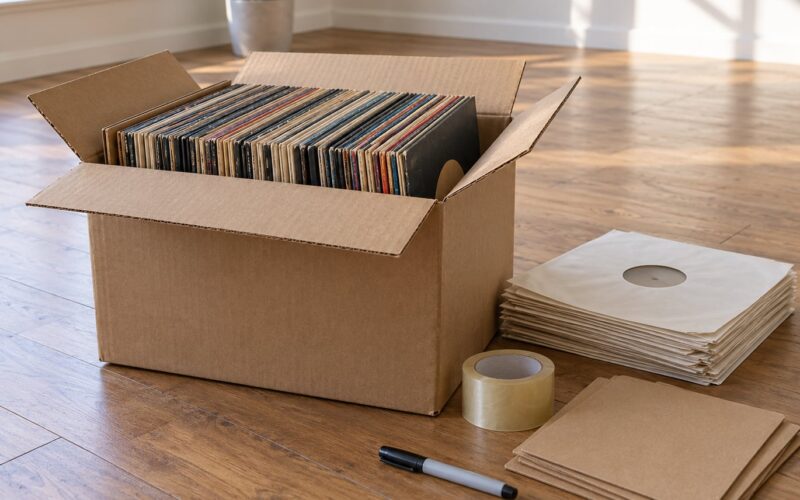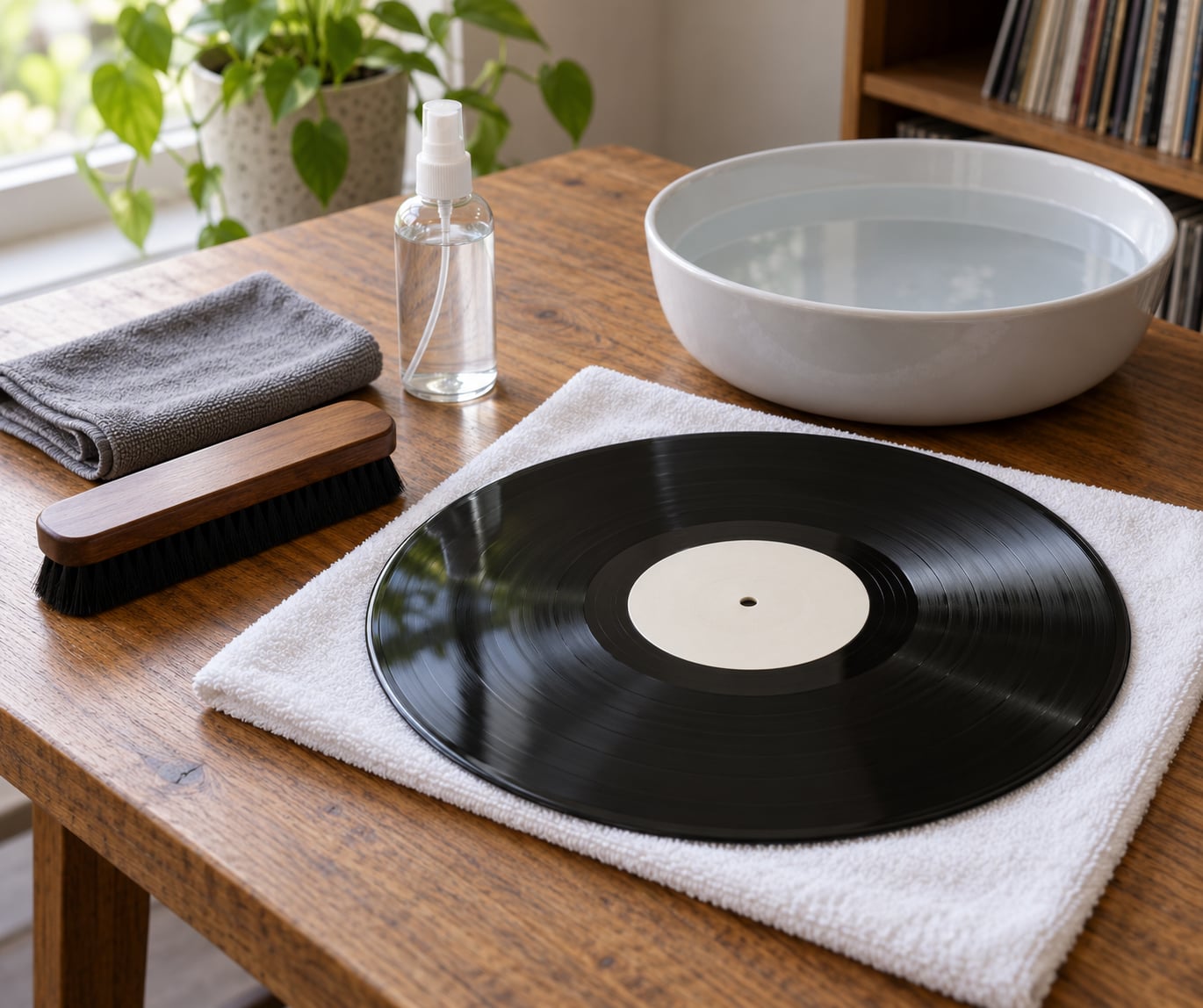
The short version: for routine dust, run a soft-bristled anti-static brush across a spinning record, always moving in the direction of the grooves and never backwards. For fingerprints, smoke haze or grime, spray a mix of three parts distilled water to one part 90% isopropyl alcohol plus a drop of unscented dish soap onto a clean microfiber cloth, wipe with the grooves, and air-dry the record flat before it goes back in its sleeve.
A brush before every play takes about thirty seconds. A proper wash takes twenty minutes plus drying, and most of that drying time is you walking away from the record. Neither job is complicated, and neither needs a turntable for the washing part.
One thing to know before you start. Cleaning removes dirt, fingerprints, haze and static. It does not repair a scratch, flatten a warp or remove hiss that comes from a worn groove, and anyone who tells you otherwise is selling something. Clean the record first, then judge the sound.
Table of Contents
- What You Need
- Step-by-Step: How to Clean Vinyl Records at Home
- 1. Remove the Record from Its Sleeve
- 2. Remove Dust with a Soft Brush
- 3. Wash the Record When Brushing Is Not Enough
- 4. Dry the Record Flat and Clean
- 5. Clean the Sleeve and Store the Record
- Common Mistakes
- How to Tell Whether a Record Needs Professional Cleaning
- Frequently Asked Questions
- Can I wash a vinyl record with dish soap?
- What is the safest way to clean dusty vinyl records?
- Can I use rubbing alcohol or household cleaners on a record?
- How long should a cleaned vinyl record dry before putting it back in its sleeve?
- Should I clean old records that have mold or a musty smell?
- How often should I clean vinyl records that I play regularly?
What You Need
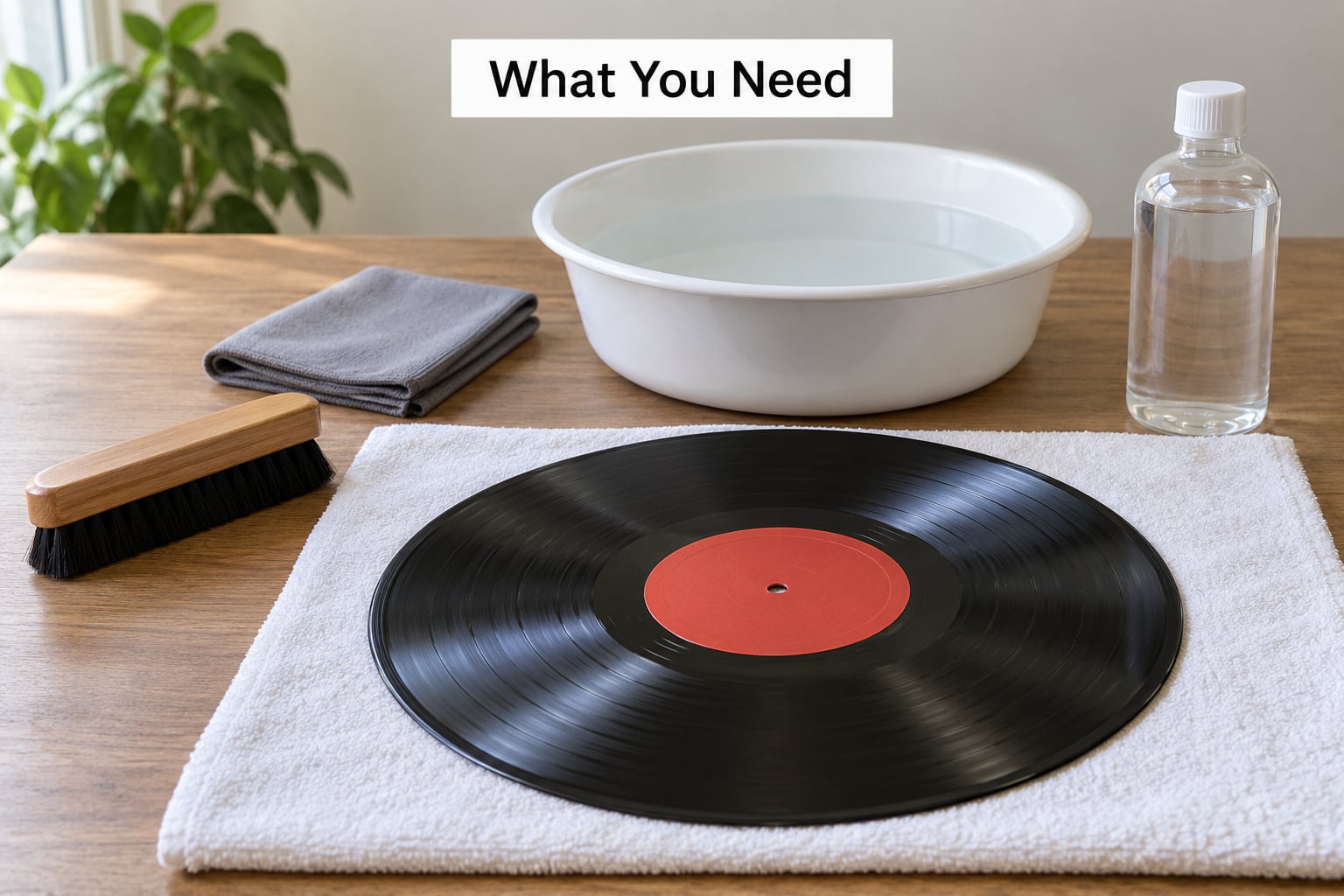
The core kit is small and most of it is cheap to replace. What matters is that the pieces are clean, because a dirty brush or a lint-shedding cloth undoes the work and pushes grit straight into the grooves.
- A soft-bristled record brush. Velvet, or carbon fibre, which is slightly stiffer and pulls dust out of the groove walls. This is your main tool.
- A microfiber cloth, washed a few times before it touches vinyl. New microfibers shed lint. Several collectors in vinyl forums use plain washable paper towels instead for exactly this reason.
- Distilled water. Tap water leaves mineral deposits that show up as water spots once the record dries.
- 90% isopropyl alcohol. Dissolves fingerprints, skin oils and nicotine film, then evaporates quickly enough to leave nothing behind.
- Unscented dish soap, or a small amount of Kodak Photo Flo 200. One or two drops is a surfactant. It lets water spread evenly across the surface instead of beading up in patches.
- Two shallow basins, a spray bottle and a soft towel. One basin for washing, one for rinsing, one towel for drying.
- Cotton swabs. For the run-out groove and the label edge, where grime collects and a cloth cannot reach.
Three levels of cleaning use that same kit. Dry dusting with the brush handles most records before they are ever played. A spray-and-cloth pass handles fingerprints, light haze and secondhand purchases that look dirty. A full basin wash is for records with real grime, sticky fingerprints, mold residue or smoke haze you can smell.
If you have no turntable, everything still works. Rest the record on a clean towel on a flat surface, or hold it by the edges, and work the brush across it with the grain.
Step-by-Step: How to Clean Vinyl Records at Home
Work on a clean table with the lights low enough that you can see dust in the grooves but bright enough to spot scratches and cracks. Check the record for damage before any water goes near it.
1. Remove the Record from Its Sleeve
Hold the record with both hands, thumbs on the paper label, fingers underneath the outer edge. Never let your fingers touch the grooves, the lead-in area or the run-out groove, because that is where fingerprint oil goes straight onto the part your stylus reads.
Slide the record out of the inner sleeve slowly, holding both the record and the sleeve. Pulling it out while the sleeve stays behind drags the record edge across the sleeve paper and grinds dirt into the playing surface. The inner sleeve goes back on before the record ever touches a table.
If the sleeve itself is dirty, deal with it separately later. For now just note whether the inner sleeve feels sticky, gritty or fuzzy, because that tells you it needs replacing rather than cleaning.
2. Remove Dust with a Soft Brush
Put the record on the turntable, start it and drop the stylus into the run-out groove. Rest the brush lightly on the label edge with the bristles touching the vinyl at a slight forward angle, so the bristles bend in the direction the record is turning.
Now move the brush from the outer edge inward, in one smooth pass, following the direction of the grooves. Then lift it clear. Do not scrub back and forth. Reversing direction drags particles across the groove walls instead of lifting them out, and the scratching noise it leaves behind is worse than the dust you started with.
Two or three passes is plenty for most records. The first pass picks up most of what is loose, and the second catches what settled. If a third pass is still coming up dirty, stop and look at where the dust is coming from, usually a leaky jacket or a grimy inner sleeve.
The brush is also how you control static. Carbon fibre is slightly conductive, so a charged record gives up its charge to the bristles instead of holding onto every speck in the room. Brushing on a dry record also lets you spot problems early, such as a fingerprint, a deep scratch or a section of groove that has been worn smooth.
3. Wash the Record When Brushing Is Not Enough
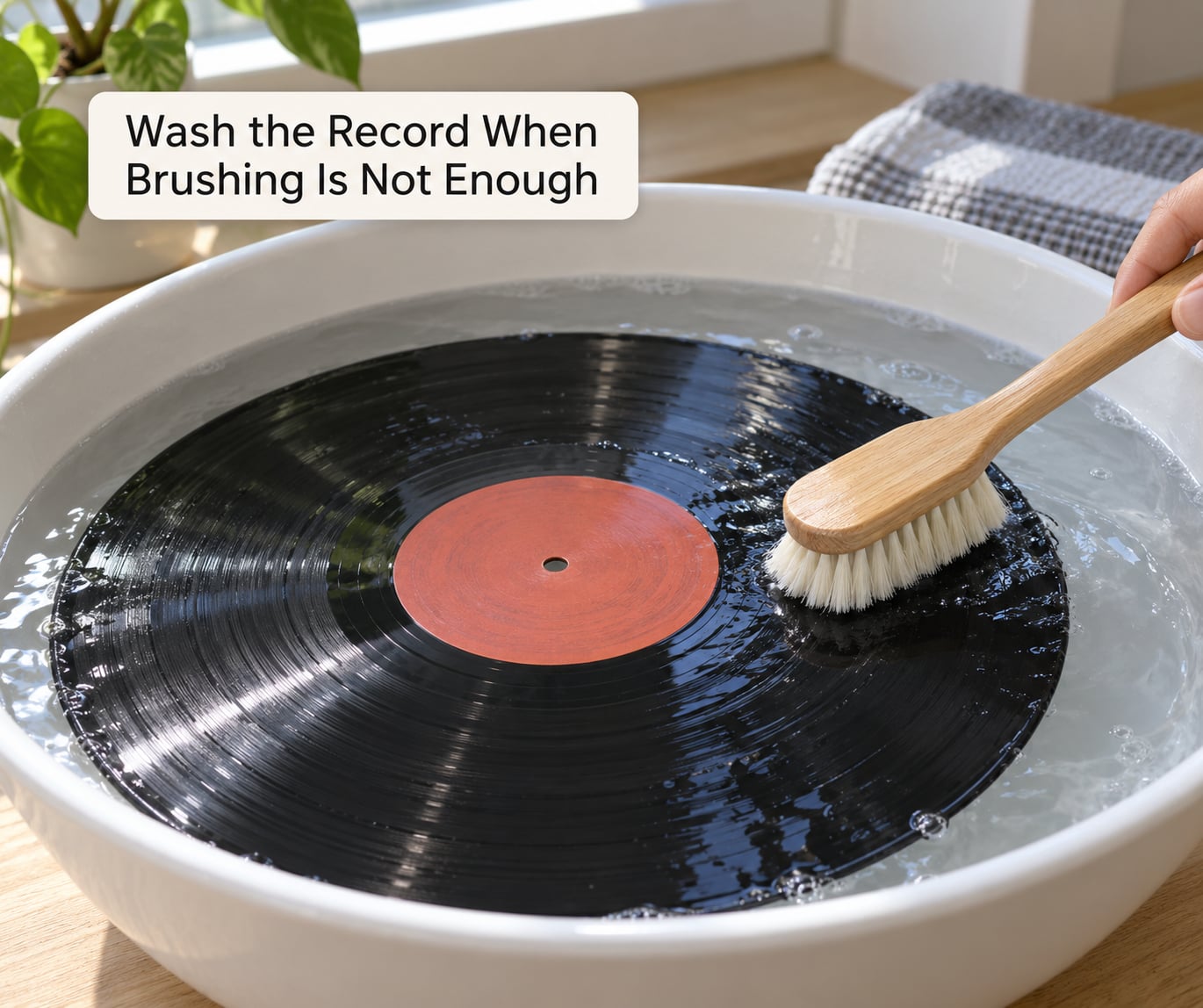
This is where most people searching how to clean vinyl records at home get stuck, and the fix is mostly about the bottle and the water temperature. Fill one basin with lukewarm water and a couple of drops of detergent for the wash. Fill a second basin with plain distilled water for the rinse.
For the cloth method, fill a clean spray bottle with three parts distilled water and one part 90% isopropyl alcohol, then add one or two drops of unscented dish soap and shake it gently. The alcohol and water combination is the most repeated recipe in vinyl forums, with several variants floating around, including 200ml of alcohol to 800ml of water plus a single drop of detergent. They all do the same job.
Spray the cloth, never the record. Put a few pumps on the middle of the microfiber, support the record by its edges with both hands over the basin, and wipe from the outer edge toward the label in the direction of the grooves. Rotate the record a quarter turn after every pass so you always work with the grain across the whole surface.
For heavier grime, drop the record into the soapy basin, let it soak for a minute, hand-turn it by the edges, and work the surface with the brush. Circular motions work well here because the record is submerged and nothing is at risk, then finish with straight strokes along the grooves to lift the loosened dirt.
Keep the label as dry as you can. If it does get wet, blot it straight away with a dry paper towel and support the label with your thumbs rather than scrubbing at it. Water will not dissolve paper label adhesive, but soaking it and then letting it dry slowly will curl the edges.
Some formats get the gentler treatment. Seventy-eights and shellac are brittle and should never be soaked, only wiped with the damp cloth method, and shellac with an old paper label is best left alone entirely. Picture discs are printed vinyl, so they take the cloth method and never a soak. Forty-fives wash like any other record.
4. Dry the Record Flat and Clean
Rinse once more in the distilled water basin if the soapy water was used. The distilled rinse is what stops water spots, because the water carries the loosened dirt away without leaving minerals behind as it evaporates.
Stand the record upright in a drying rack, wedged between two folded soft cloths so it cannot tip, or lay it flat on a towel. Do not dry it with a cloth, and do not touch the wet label. Rubbing a wet record is the fastest way to put a smudge or a scratch into it.
Give it fifteen to thirty minutes in a clean room, longer if the label is damp, and only sleeve it once it feels dry and room temperature throughout. Hairdryers, radiators and direct sunlight dry vinyl fast and warp it, so resist all three.
5. Clean the Sleeve and Store the Record
The sleeve holds more dirt than the record usually does. Brush the outer sleeve with a soft brush, or wipe a paper sleeve with a barely damp cloth and let it dry flat, and replace an inner sleeve that has gone sticky or fuzzy rather than trying to clean it.
Once the record is dry, put it in a fresh inner sleeve and back in the jacket. Store everything upright, never stacked flat, in a room that stays cool and dry and away from radiators and windows. Records that were cleaned and then pushed back into a dusty sleeve have not really been cleaned.
For smoke smell that has soaked into the jacket, a small sachet of activated charcoal or a spoonful of baking soda tucked inside the sleeve for a few days helps. It is a partial fix, not a cure, but it beats leaving the smell where it is.
Common Mistakes
Almost every ruined record I have seen was ruined by one of these, not by neglect.
- WD-40. It is a petroleum oil and solvent. It leaves an oily film that traps dust, outgasses onto the jacket and label, and is nearly impossible to get back off. Collectors are close to unanimous: do not use it.
- Glass cleaner, bleach or concentrated household sprays. The solvents and surfactants are designed for glass, not for a surface a stylus reads at micron scale.
- Tap water. The minerals leave deposits and visible spots once the record dries. Distilled water costs very little and removes the whole problem.
- Rubbing alcohol above 90%. Stronger alcohol evaporates almost instantly and, with repeated use, dulls and embitters vinyl. 90% is the ceiling most collectors stay under.
- A feather duster or a dry kitchen cloth. Both push dust into the grooves instead of lifting it out.
- Scrubbing back and forth. Follow the direction of the grooves in one pass, then lift the brush off.
- Spraying liquid straight onto the record. It runs under the label and into the run-out groove. Spray the cloth.
- Drying with a linty towel. Fibre residue in the grooves causes more pops than the dirt you just removed.
- Cleaning a cracked or warped record wet. Water makes brittle vinyl worse. Dry dust it and set it aside.
- Playing a dirty record on a cheap belt-drive turntable. Dirt forces the stylus higher and wears the needle faster. Brush first, play second.
How to Tell Whether a Record Needs Professional Cleaning
Home cleaning covers dust, fingerprints, haze and ordinary grime. A handful of problems sit outside what water and a brush can fix.
Mold and mildew. Fuzzy spots, a musty smell or a record that feels slightly sticky in a damp room all point to mold. Isolate the record in a sealed bag immediately so spores do not spread to the rest of the crate, and keep it away from your collection while you decide what to do. Never brush mold dry indoors, because the spores go straight into the air you are breathing.
Water damage. A wavy edge, a stiff record that resists the platter, or peeling jacket paper usually came from a flood, a leaking roof or a damp shed. Records that stayed wet for weeks often need professional drying, and playing them risks the platter as well as the vinyl.
Brittle vinyl. Shellac, early acetate and any record with a crack running in from the edge will shed material if you wash it. Dust them with a brush and nothing more.
Value. If a record is a scarce pressing, a first press with a collectible jacket, or part of a set you cannot replace, send it to a conservator who works with vinyl rather than experimenting on it. The cost of getting it wrong is not the same as the cost of cleaning fluid.
Frequently Asked Questions
Can I wash a vinyl record with dish soap?
Yes, in a basin, and a couple of drops of unscented dish soap in lukewarm water is the traditional way to lift heavy grime. The soap is a surfactant, so it spreads water evenly instead of beading. Keep the soak short, stay well clear of the paper label, rinse with distilled water and air-dry the record flat. Dish soap and water are for washing, not for a quick wipe between plays.
What is the safest way to clean dusty vinyl records?
A soft brush, moving in one direction with the grooves. Rest a record on the turntable, start it, place the brush bristles at a slight forward angle and sweep from the outer edge toward the label without reversing direction. Two or three passes handle almost any dusty record, and if the brush is still picking up dirt after that, the problem is a dirty sleeve rather than the vinyl.
Can I use rubbing alcohol or household cleaners on a record?
Not directly. Household glass cleaner, bleach and concentrated sprays carry solvents and surfactants that were never tested against vinyl, and WD-40 is an oil that outgasses onto the jacket and label. What you can use is 90% isopropyl alcohol diluted with distilled water, roughly three parts water to one part alcohol, sprayed onto a clean microfiber cloth. Stronger alcohol above 90% is more than most collectors use.
How long should a cleaned vinyl record dry before putting it back in its sleeve?
Give it fifteen to thirty minutes in a clean, dust-free room, and longer if the label is damp. The record should feel dry and at room temperature all the way through before it goes back into the inner sleeve. Drying it with a towel, a hairdryer or a radiator can leave lint in the grooves or warp the vinyl, so standing it on a towel or in a rack is the safe route.
Should I clean old records that have mold or a musty smell?
Isolate them first, because mold spores travel to neighbouring records in a crate. Bag the affected record, keep it out of a humid room and never brush it dry indoors. Light surface mold can sometimes be lifted with a damp cloth and a soft brush, but records with fuzzy growth, a strong smell or sticky surfaces are best left to a conservator, and valuable pressings should always go to one.
How often should I clean vinyl records that I play regularly?
Brush before every play. It takes half a minute and it removes the dust that causes pops and wears the stylus faster. Wet-clean only when the record is genuinely dirty, such as with fingerprints, smoke haze or visible grime, which for most collections means a handful of records a year. New records from a shop are worth wiping down once before the first play.
Start with the brush, before the record goes anywhere near the platter. Get into that habit and most of your collection will never need anything more than water, a cloth and twenty minutes of drying.
When you do wash, remember the three parts of the recipe: distilled water, 90% isopropyl alcohol at one part, and a drop or two of unscented dish soap. Used sparingly and dried properly, it is the same method most collectors have been using for years, and it will not hurt a record you love.