Knowing how to negotiate at a record swap meet comes down to three habits: know the market comps before you open your mouth, tie your offer to something you actually observed on the record, and decide your maximum before you walk up to the table. That last one matters more than any tactic, because it turns a conversation into a decision.
Haggling at a swap meet is expected in a way it is not in a record store. A shop prices its bins for its market and its overheads. A swap-meet table is usually one person trying to clear a few boxes out of a spare room. Different business, different logic, and the price on the sticker is a starting point rather than a fact.
The first meet is where people freeze. They can see the record is worth less than the asking price, they know roughly what it sells for, and they have no sentence in their mouth. An hour of research the night before and ten unhurried minutes per record at the table is enough to fix that. This guide covers the whole conversation, from the comps you load before you leave home to the polite goodbye when a seller holds firm.
Table of Contents
- What You Need
- How to Negotiate at a Record Swap Meet: Step by Step
- How to Research the Record Before You Arrive
- How to Inspect the Record and Packaging
- How to Ask About the Record’s History
- How to Make a Reasonable Opening Offer
- How to Respond to a Counteroffer
- How to Use Bundles and Trades Carefully
- How to Set Limits and Walk Away from a Record Swap Meet
- How to Close the Deal and Inspect Before Leaving
- Common Mistakes
- Tips for a Successful Record Swap Meet
- Frequently Asked Questions
- How much should I offer for a vinyl record at a swap meet?
- Is it rude to negotiate the price of a record at a swap meet?
- How do I tell if a record is worth more than the asking price?
- Can I trade records instead of paying cash at a swap meet?
- What should I do if a seller will not lower the price?
- Conclusion
What You Need
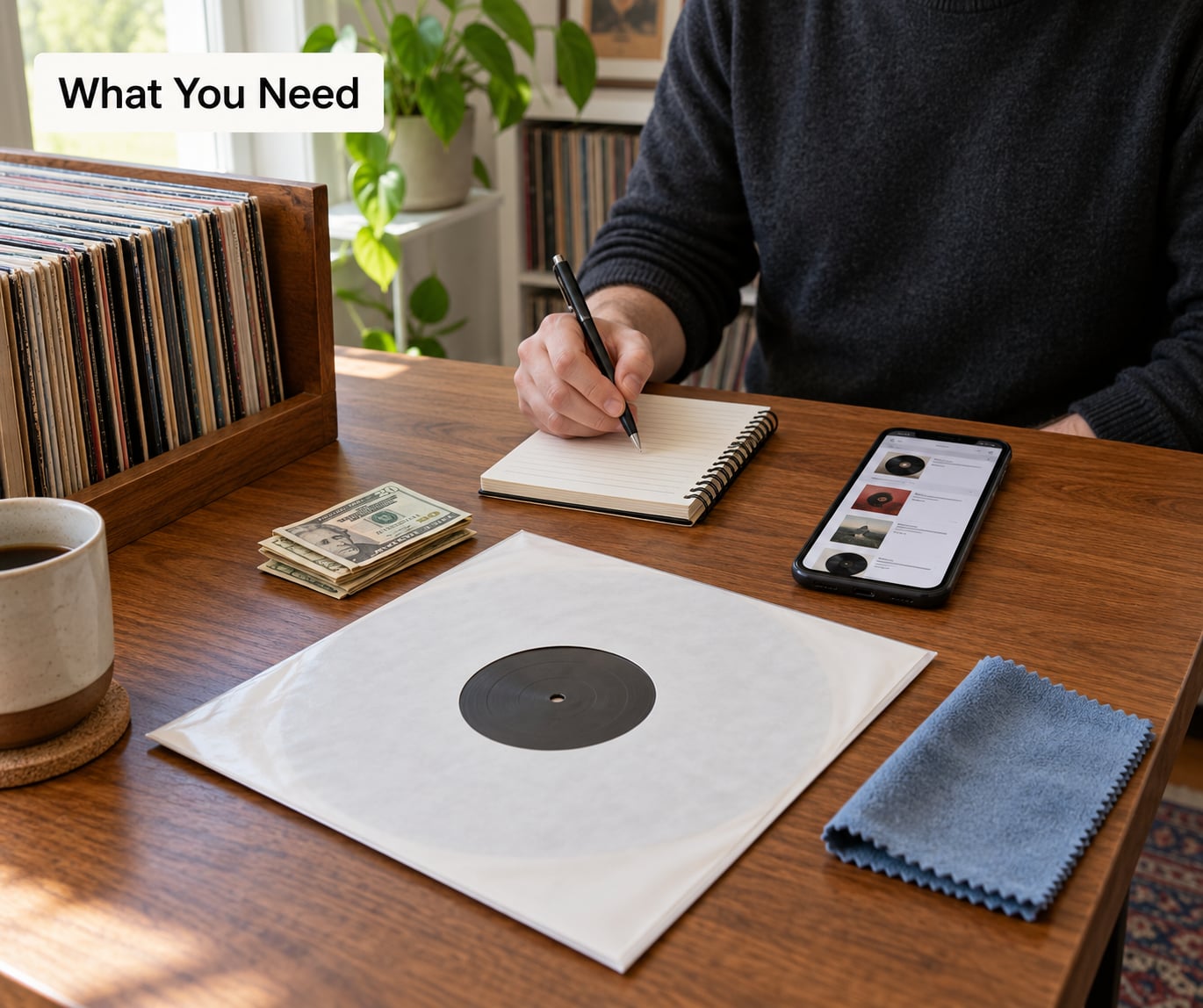
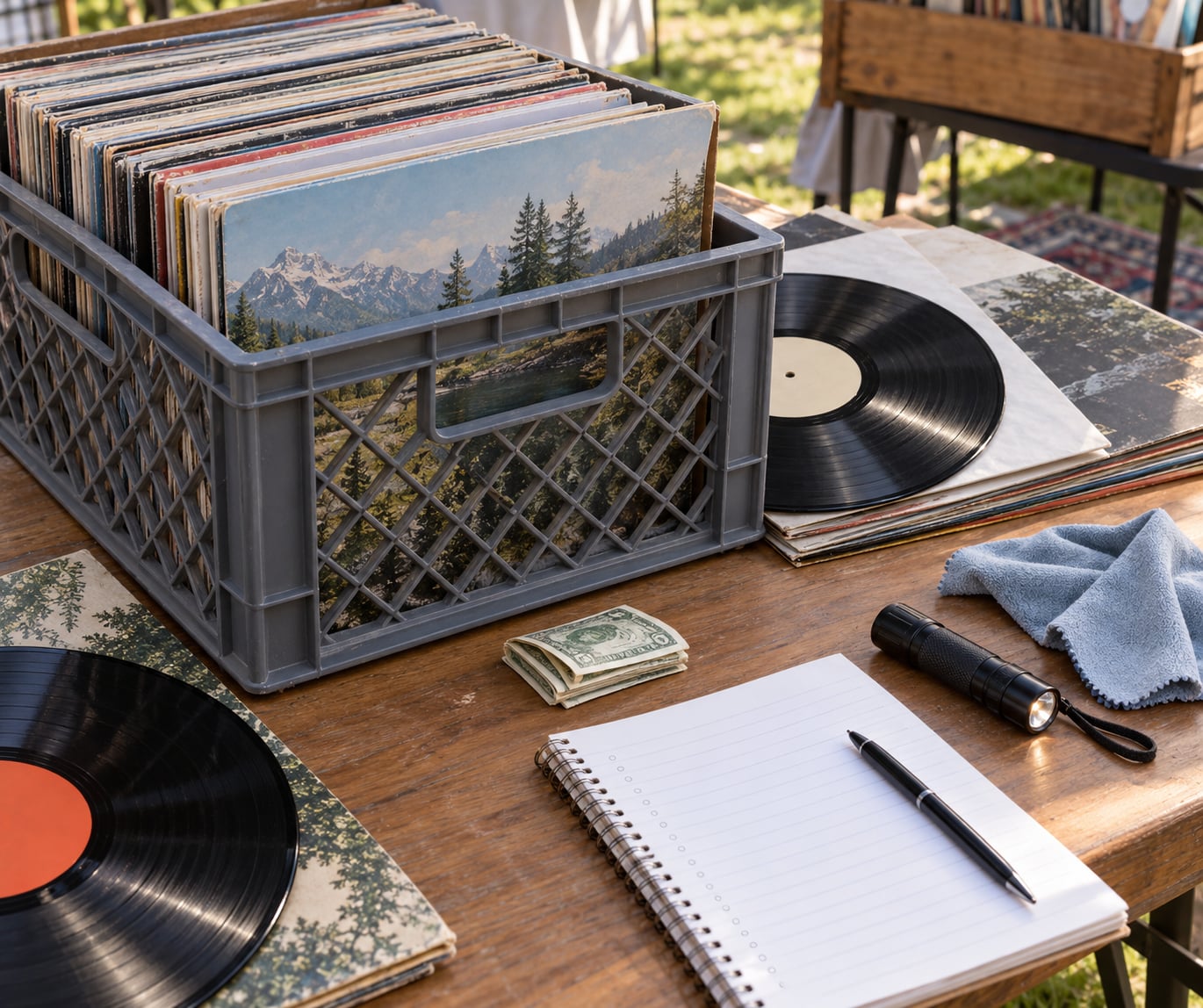
The kit is small. Everything you need fits in a jacket pocket and a phone, and none of it is specialised.
- Comps already open. The Discogs master page for anything on your list, the sold filter on eBay, Popsike if you follow one genre closely, and a Goldmine grading chart you can actually read at a glance.
- A want-list with a maximum written next to each item. A number in your own handwriting is harder to argue with than one you are forming under pressure.
- Small bills, folded and separated. Change breaks the momentum of a negotiation more often than collectors expect.
- A tote bag and a couple of outer poly sleeves so a jacket with a seam split does not split the next one in your bag.
- A soft cloth and a small penlight for checking a surface somewhere other than under the glare of a table lamp.
- Notes on your phone, not memory. What you saw, what you paid, what you concluded.
- Patience, and the willingness to lose a specific record in order to keep the relationship with the person holding it.
One more piece of preparation matters more than the gear: decide whether the person in front of you is a dealer or a hobbyist. A dealer working a table for the day can usually move five to fifteen percent. A hobbyist clearing a room can often move much further, and enjoys the conversation more than the money.
How to Negotiate at a Record Swap Meet: Step by Step
How to Research the Record Before You Arrive
Start with the pressing, not the price. The same album exists as a first pressing, a later domestic issue, a European issue, and a generic-label import repress, and those can sit ten times apart in value while looking nearly identical on a table.
What to check before you arrive:
- Pressing details. Catalogue number, label design, and whether the copy matches a first pressing or a reissue.
- Sold prices, not asking prices. The eBay sold filter and recent Discogs sales tell you what people actually pay. The top of a listing tells you what somebody hopes.
- Demand and genre scarcity. A steady seller of a widely reissued album is a different sale from a scarce genre with a thin reissue history.
- Condition premiums. Near mint copies of popular titles command a premium that a VG+ copy never will, so your grade estimate changes your number.
- Completeness. Original inner sleeve, insert, and printed inner matter can be worth a meaningful share of a collectible release.
Worked example. A first pressing of a mid-eighties punk LP with the original inner sleeve may show recent sold comps in the tens, while the common reissue of the same album trades for single digits. They sit in the same crate at a swap meet, often with the same handwriting on the price sticker. If you have not done the research, you will pay the higher number for the lower value half the time.
How to Inspect the Record and Packaging
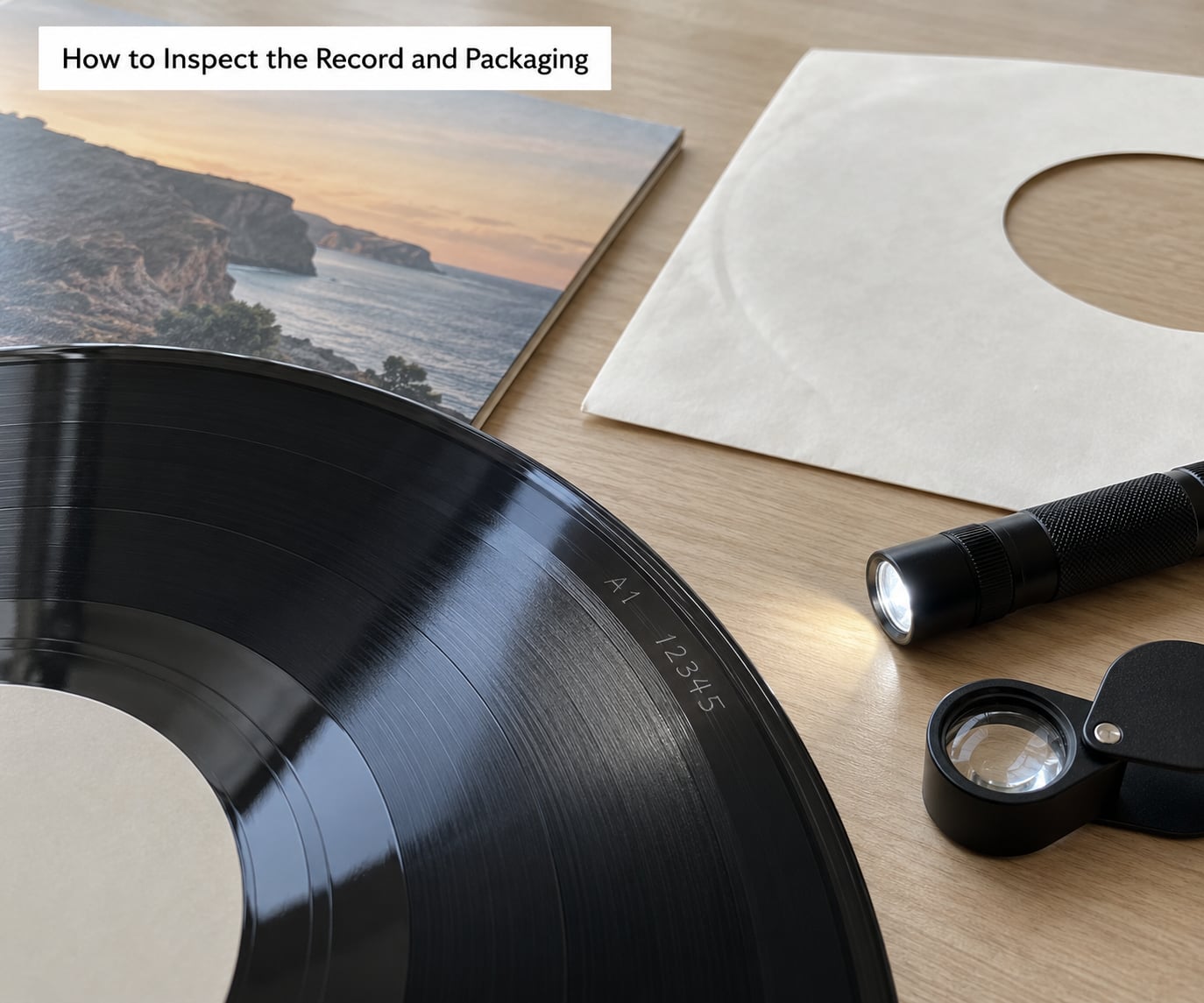
You are looking for two different things: things that stop the record playing well, and things that only look bad. Discount the first heavily and the second gently. A jacket with clean ring wear plays perfectly, and a beautiful sleeve wrapped around a warped disc does not.
What to check on the disc:
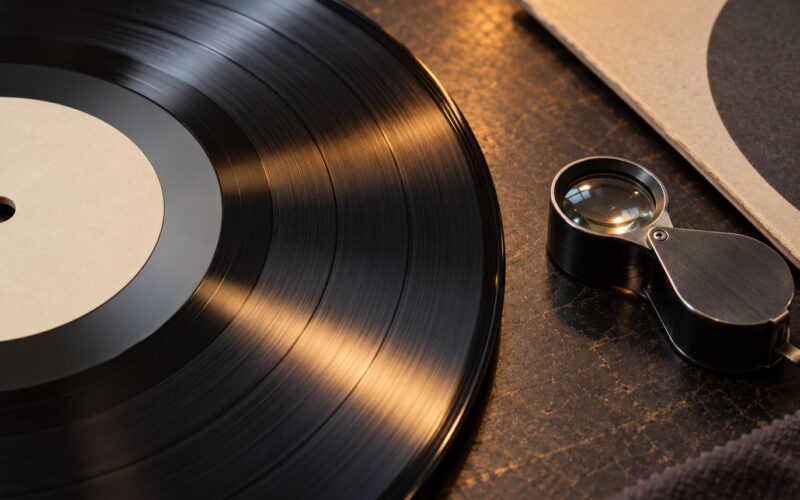
- Playability first. Scratches that cross the playing area, a warp you can see edge-on, a pressing defect, heavy grime, or any sign of mould. Light hairlines that never reach the groove usually are not worth mentioning.
- The label. Worn print, cut-through or promo markings, and writing in the dead wax.
- The runout. Flip it over and read the etched matrix. Hand-etched plant and mastering codes usually point to an original domestic pressing. A generic label, a long code, and a year from the last few years usually means an import repress. This single check is the most useful pricing tool you have at a table, and almost nobody does it.
What to check on the packaging:
- Ring wear, seam splits, spine lettering fade, corner wear, price sticker residue.
- A cut-out or price sticker that will end up on someone’s wall permanently.
- Whether the inner sleeve is original or a repro, and whether the insert is present.
- Mono versus stereo, and any hole punch or cut corner.
Do not deliver a verdict in the first ten seconds. Lift the disc to the light, tilt it, then decide what you are actually prepared to pay. If the table has a listening station, use it before you make an offer, not after.
How to Ask About the Record’s History
Questions do two jobs at once. They get you real information, and they signal that you are a serious buyer rather than a kid hunting for a steal. A few polite lines cover almost everything you need:
- “How long have you had these?”
- “Were they stored upright, or stacked flat in boxes?”
- “Do you know whether the inner sleeve is original?”
- “How often were they played?”
- “Has anything been cleaned, or are they as they were?”
The answers are worth money. A straight “bought new in the nineties, barely played” is a reason to hold your ground. An evasive answer about play and cleaning is a reason to move. Collectors who sell regularly will tell you the truth if you ask like a buyer, because you are the person who might be at the next meet with cash.
How to Make a Reasonable Opening Offer
Base the number on four inputs: condition, completeness, pressing value, and what comparable copies actually sell for. Then say one number, in a normal voice, and stop talking.
A few rules keep the opening from turning into a fight. Never lead by criticising the copy; lead by describing it, because a seller defends their record the same way you defend yours. Ten to twenty percent below asking on a clean, individually priced record is a normal opening offer and is easy to accept. Thirty to forty is fine when you can point at a real reason. Below half of asking on a clean copy reads as a joke, and you lose goodwill for a small number.
Then wait. The silence is uncomfortable for about four seconds, and the seller is usually the one who fills it.
| What you say | What it does |
|---|---|
| “I’m interested. The sold comps for this pressing have been lower than this.” | Opens with a fact rather than a complaint, so it reads as research, not stinginess. |
| “The jacket has ring wear and the inner sleeve is a reprint. How does that change things for you?” | Puts the flaw on the table as information, without accusing the seller of anything. |
| “I see where you’re coming from. My limit is X.” | Concedes nothing you have not already decided, and moves the decision back to you. |
| “If I take these three as well, is there a better number on the lot?” | Trades volume for price, which is the one discount a dealer genuinely enjoys. |
| “It’s a nice copy. I’m going to keep thinking about it.” | A real exit line rather than a bluff, and it ends the conversation cleanly. |
How to Respond to a Counteroffer
When they say no, the instinct is to fill the gap with a bigger number. Resist it. Ask one question first: what would you need it at, or is it the money or the pressing? The answer tells you whether you are negotiating over price or over identity.
- If their number is close to yours, meet it once, in the middle, and finish. Round numbers and clean endings build a reputation.
- If the gap is wide, re-check the copy. A verified first pressing and a generic import are two different conversations, and one of them is priced wrong.
- If they hold firm and the number is inside your maximum, pay it. Deciding to pay is not losing.
- After two counters that have not moved the price, stop. Repeated counters negotiate against you, and they slow down the table.
Sellers at a dealer table are thinking something fairly simple while you open: can I move this a little, and is this person going to take up my morning? A polite buyer who has clearly done the research and names one real flaw is easy to say yes to. A buyer who opens at a third of asking, argues about taste, and then stalls for twenty minutes is not.
Collectors on r/vinyl tend to draw the same line you will want to draw: bargain when you are buying several records, and do not expect a discount where everything on the table is already marked the same.
How to Use Bundles and Trades Carefully
Bundling is the strongest move available to you, because it asks the seller to give up less per record rather than to give up on a record they value. Ten or more from one table, and a ten to twenty percent reduction on the total is a reasonable, easy-to-grant ask.
Trading is the swap-meet-native version of the same idea. Bring your own unwanted records in a separate sleeve so they are never confused with what you are buying, and value both sides honestly before you say a word.
- Count the total on each side first. If your five records are worth their combined market value to you and the seller values them at a third, the trade is not a trade.
- Keep it short. A long two-way inventory holds up the table and turns a pleasant exchange into a chore.
- Never trade something you actually want. Handing over a copy of a title on your want-list at a discount is the classic swap-meet error.
- Expect sellers to value trade-ins below their retail. Cash at a small discount is the sensible fallback when a trade is refused, and refusal is not an insult.
How to Set Limits and Walk Away from a Record Swap Meet
Write your maximum next to each item on the list before the meet, and treat it as a ceiling rather than an opening bid. A ceiling is the price at which you would be pleased, not the price at which you would feel clever.
- One number, one reason. If their number is above your ceiling, the negotiation is finished, not paused.
- Walking away costs almost nothing at a meet with dozens of tables, and it buys goodwill with the one vendor whose crate you want to reach first next month.
- Missing a grail is cheaper than owning a record you resent. Every collection is full of those; few are full of resentment.
- If it physically hurts to walk away from an expensive copy, that is useful information. The record was priced above your budget, not merely above your negotiation range.
How to Close the Deal and Inspect Before Leaving
Sellers like decisive buyers. Once you have agreed, close quickly and precisely, then move on.
- Repeat exactly what you are taking, with the total: “the two punk LPs and the funk seven, forty-two all in.”
- Count the notes, and hand them over in ascending order.
- Put every record back in its crate slot, facing the way you found it.
- Note the purchase and the price in your phone while it is fresh.
- At home, clean and play each record before you treat the transaction as finished. A pressing defect you missed at the table is a lesson rather than a refund, but catching it early stops it spreading to the rest of the crate.
Common Mistakes
Almost every haggling disaster at a meet traces back to one of these seven.
- Negotiating before researching. If you cannot name three comparable sales without searching again, you are not ready to offer a number. Fix: research the night before, not with the record already in your hand.
- Fixating on disc scratches instead of playability. Cosmetic hairlines are normal. Fix: judge the warp, the groove-area scratches, and the pressing defect, and mention only what affects playing.
- Insulting the seller. Describe the copy, never the person or their taste. “The jacket is worn” is a fact; anything about the music or the owner’s collection ends the sale and possibly the friendship.
- Making an emotional offer. Numbers only. Excitement is visible, and a seller who senses a fanatic will hold firm all day to keep the pleasure of it.
- Overvaluing a record that only looks rare. Verify the pressing before the conversation, not after you have paid. A recent import repress in a generic jacket can be sitting under a hand-lettered price that assumes otherwise.
- Failing to set a maximum. Without a written ceiling you will keep meeting yourself, which is the fastest way to overpay. Fix: the number goes on the list before you leave the house.
- Dragging out a sale while a line builds. Two counters, then decide. Put the phone away, give the table back, and let the next person have the crate.
Tips for a Successful Record Swap Meet
Price tier decides how you negotiate far more reliably than personality does. The same sentence works at one table and gets you a cold look at the next.
- Flat-priced crates, everything marked the same low amount: do not negotiate. The price is the price, and nobody watching the line thinks you won anything.
- Individually priced low-range piles: a polite ten to fifteen percent knock-down, or simply take several and ask about the total.
- Mid-range table copies: this is where real negotiating happens. Arrive with comps, name one flaw, open fifteen to twenty percent below asking.
- Dealers and the wall of expensive copies: expect five to fifteen percent at most, and only for condition or completeness. Pushing hard there costs you future access, which is worth more than the discount.
A few more things that pay off:
- Arrive early for selection, and come back near the end for the markdown. Hobbyists marking a table down as they pack up is a real event; labelled dealer prices move less.
- Keep cash in small bills and separated by value. Card readers fail, hotspots fail with them, and cash changes the whole tone of the conversation.
- Buy the best example on the table, not the biggest pile. Two clean copies will outlive ten dusty ones in shelf space and in enjoyment.
- Build a reputation deliberately. The best boxes rarely reach the general tables; regulars hear about them the night before.
- Learn the other side of the table. If you bring records to trade, price them the way you would want to be offered for them, and expect a dealer to offer a third of your comps.
- Keep a note of what you overpaid for. Everyone does on a first meet, and the second one goes better because of it.
Frequently Asked Questions
How much should I offer for a vinyl record at a swap meet?
On an individually priced record, an opening offer of ten to twenty percent below asking is normal and easy for a seller to accept. Go to thirty percent when you can point at a real flaw, a repro inner sleeve, or a later pressing. Below half of asking on a clean copy reads as a joke and costs you goodwill over a small sum. In a crate where everything is marked the same, do not offer at all.
Is it rude to negotiate the price of a record at a swap meet?
No. Negotiation is the normal transaction at a swap meet, which is exactly what separates it from a record store. What reads as rude is arguing with a clearly set price, criticising the seller’s taste, or holding a table hostage with a long counteroffer session while a line forms. One reason, one counter, and a friendly close is the entire social contract.
How do I tell if a record is worth more than the asking price?
Check three things before you assume it is overpriced: the pressing, the sold comps, and the condition. Flip the record and read the matrix runout, then compare recent sold prices on Discogs or eBay rather than the highest asking price. A verified first pressing with the original inner sleeve can be worth several times a generic-label import repress of the same album.
Can I trade records instead of paying cash at a swap meet?
Yes, and it is one of the most useful moves available, because swap is in the name. Bring your unwanted vinyl in a separate sleeve so it cannot be confused with what you are buying. Value both sides honestly before you speak, keep trades short so the table keeps moving, and expect sellers to value trade-ins below their retail. Cash at a small discount is the fallback if a trade is declined.
What should I do if a seller will not lower the price?
Decide in advance whether their number is inside your maximum. If it is, pay it and thank them; deciding to pay is not losing. If it is not, say so plainly, thank them anyway, and move on. Swap meets have many tables, and the seller you were straightforward with today is often the one who will mention a good box to you next month.
Conclusion
The first thing to do at the next meet is not to haggle. Load the comps for the two records you actually want, write a maximum next to each one, and inspect the copy in decent light before you say a number. Then make one polite offer built on something you observed rather than something you guessed.
Most of the collectors who get good deals at swap meets are not the ones who negotiate hardest. They are the ones who walked in knowing what the record was worth before anybody else at the table did.
Updated for 2026, and checked against what collectors on r/vinyl say about bargaining at record fairs.