What does 180 gram vinyl actually mean? It is a 12-inch LP pressed from the same black PVC compound as any other record, but moulded to a total weight of roughly 180 grams, about 6.35 ounces. That makes the disc stiffer and less prone to warping than a standard 120-140g pressing. It does not add deeper grooves, better mastering, or louder sound.
The rest of this guide separates what the printed number genuinely changes from the things buyers assume it changes. I have weighed enough records over the years to be sceptical of a figure that appears on the sleeve without any tolerance stated, and most collector forums I read treat it as a quality signal rather than a specification.
Updated for 2026, and still the fastest way to summarise the whole debate: weight is a durability and feel specification. Sound comes from the master, the lacquer cut, the stamper and the pressing plant.
Table of Contents
- What Does 180 Gram Vinyl Actually Mean?
- How Is 180 Gram Vinyl Made?
- How Does 180 Gram Vinyl Compare With Other Weights?
- Does 180 Gram Vinyl Sound Better?
- Five claims about 180 gram vinyl that are not true
- Does 180 Gram Vinyl Last Longer?
- What Does the 180 Gram Label Tell a Collector?
- Is 180 Gram Vinyl Worth Buying?
- Frequently Asked Questions
- Is 180 gram vinyl the heaviest record available?
- Why does 180 gram vinyl often feel thicker?
- Does 180 gram vinyl prevent warping and scratches?
- Can a record be labeled 180 gram but feel thin?
- Should collectors pay more for a 180 gram pressing?
- A Smarter Way to Choose Vinyl
What Does 180 Gram Vinyl Actually Mean?
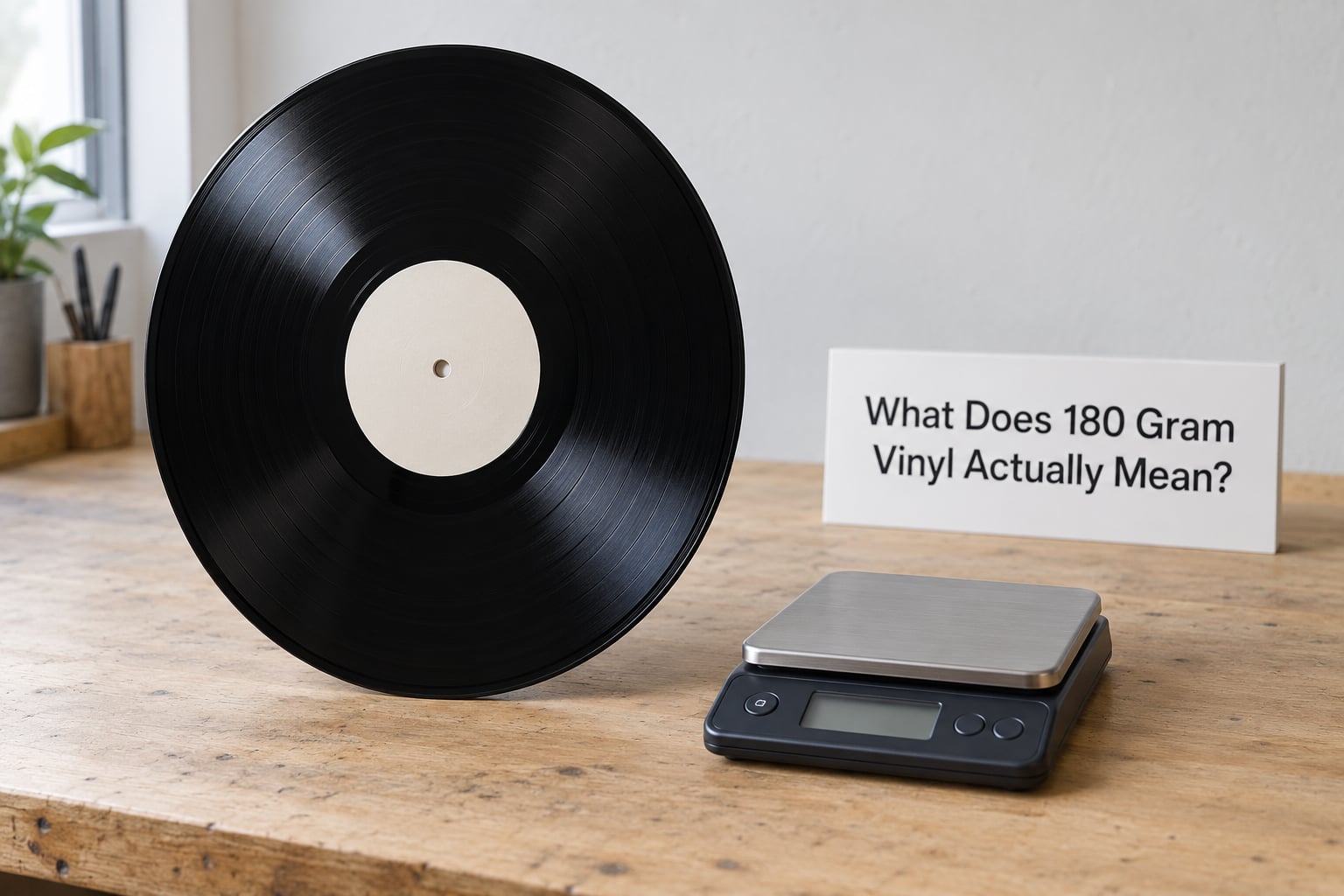
The number on the sleeve is a nominal target weight, not a measured guarantee. A record marked 180g is engineered to come off the press at that figure, and most land close to it. A collector with a decent digital scale can confirm within a few grams either way.
Weight and thickness are related but they are not interchangeable specifications. Density of PVC is broadly consistent across batches, so a heavier record is usually a thicker one, though filler content, the size of the run and the label material all nudge the result.
So when someone says a record sounds better because it is heavier, the honest answer is that they have described a correlation, not a cause. Two records cut from the same lacquer by the same stamper contain the identical audio, whether one weighs 140 grams or 180.
How Is 180 Gram Vinyl Made?
Polyvinyl chloride pellets are fed into an extruder, heated, and pressed through a flat die into a continuous sheet. That sheet is cooled and trimmed, then discs are punched or cut from it and inspected for thickness variation.
The real pressing happens next. A record is placed between two heated metal stampers, one carrying the groove form and one flat, and pressure is applied so the PVC takes the shape of the groove. The disc is then cooled under controlled conditions, trimmed at the edge, and inspected.
Two details matter here. First, the groove itself is identical regardless of total weight; the extra material sits under the playing surface and the stylus never touches it. Second, heavier discs take longer to cool evenly, and a disc cooled badly in the press can come out with a residual stress that later turns into a warp on a hot shelf.
That is the honest version of why the industry settled on 180g. It is a compromise that fits standard tooling, keeps cycle times workable and gives a visible step up in stiffness without the handling and machinery problems that come with 200g-plus pressings.
How Does 180 Gram Vinyl Compare With Other Weights?
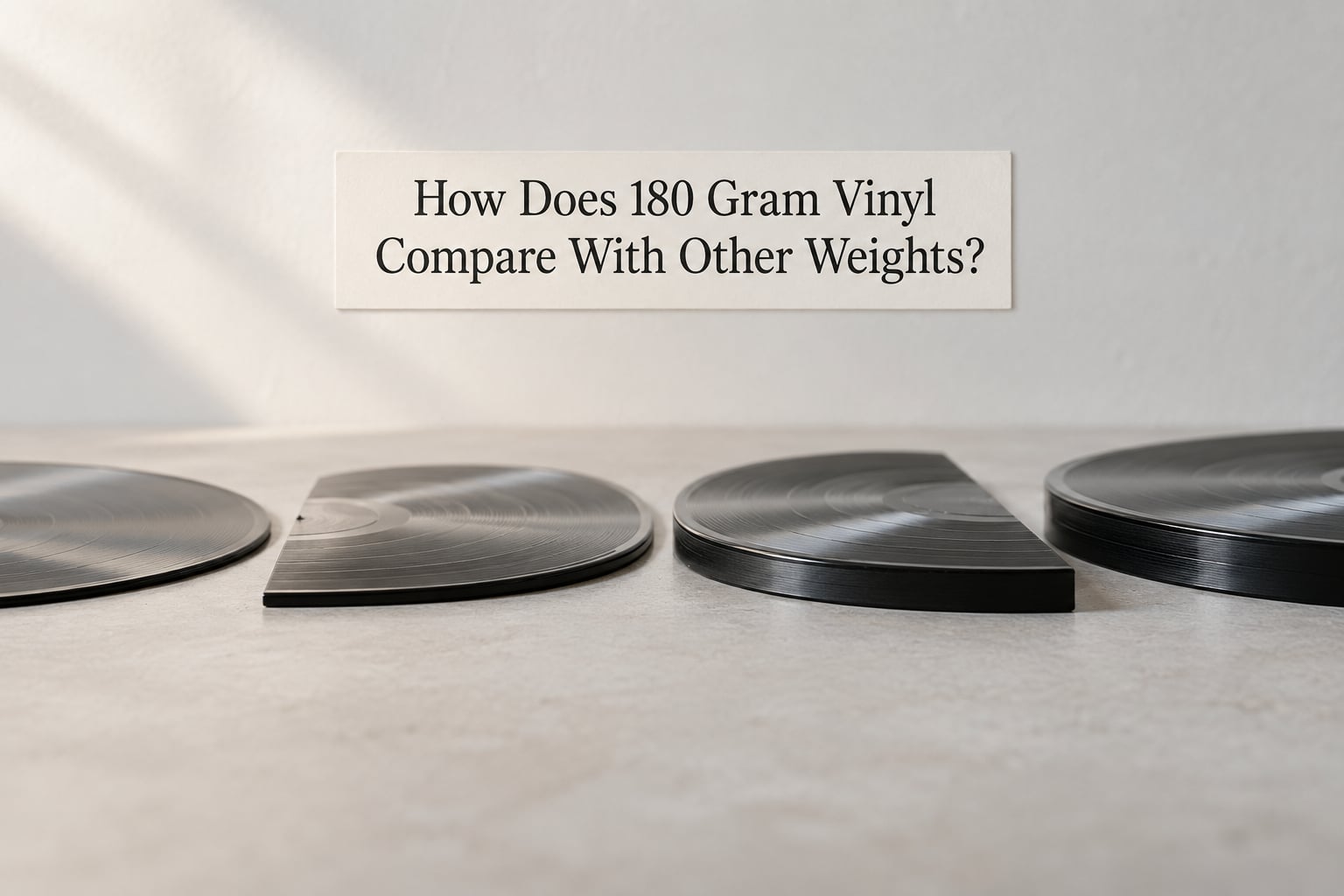
Thickness figures below are approximate, because record weight varies by label and pressing plant as well as by specification.
| Weight | Approx. thickness | Handling | What it does not prove |
|---|---|---|---|
| 140 gram | 1.5-1.6 mm | Standard, light in the hand | Nothing about mastering or pressing quality |
| 160 gram | 1.7-1.8 mm | Slightly substantial, still easy on most turntables | That the cut came from a superior master |
| 180 gram | 1.9-2.0 mm | Firm, rigid, noticeably flat on the platter | Better sound, deeper grooves or lower noise |
| 200 gram | 2.1-2.2 mm | Very solid, needs a well-damped tonearm | That 200g beats 180g audibly on the same cut |
Standard 120-140g pressings are what most of the catalogue still is. 160g shows up on mid-tier and box-set releases. 180g is the mainstream audiophile tier, and 200g sits at the top of the collector market with a handful of ultra-heavyweight editions above it.
The jump from 140g to 180g is where most collectors notice a physical difference. Above 180g, the returns flatten out. A 200g pressing and a 180g pressing of the same album, cut from the same lacquer, will not sound different from each other in any blind test I have seen run.
Does 180 Gram Vinyl Sound Better?
Not on its own. Heavier vinyl can stay flatter and stiffer on the platter, which may reduce small tracking disturbances on a modest turntable, but that is a mechanical convenience rather than a sonic upgrade. The audio itself is decided elsewhere.
These are the factors that actually determine how a record sounds, roughly in order of how much they matter:
- The master. What was taped or digital in the first place, and whether the reissue was cut from that original master or downsampled from a digital file.
- The cutting engineer. A named, respected mastering credit tells you far more than any weight figure.
- The lacquer. A fresh cut transfers more detail than an older cut of the same tape.
- The stamper and the pressing plant. A worn stamper can fill in the finest detail, and a plant running an old mould is the usual reason a reissue sounds dull.
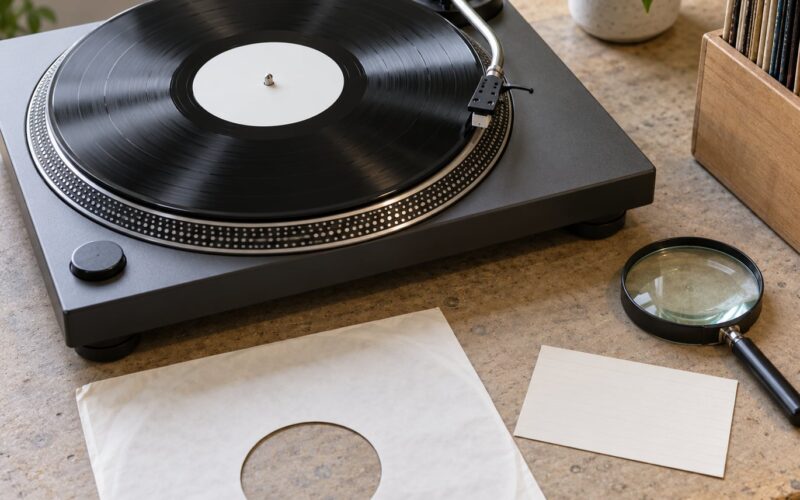
- Your playback chain. Cartridge, tonearm setup, tracking force and anti-skate, plus a clean record and a clean stylus, dwarf any gram weight.
Five claims about 180 gram vinyl that are not true
- It holds deeper grooves. No. Groove depth is set by the cut and the playback equalisation curve, not by the disc’s weight.
- It stores more music per side. No. A 180g 33 RPM LP holds the same 20 to 25 minutes per side as a 140g one.
- It means a better master by default. No. Plenty of 180g reissues are cut from inferior sources, and plenty of 140g pressings are cut from original tapes.
- It means the record is a reissue. No. Weight says nothing about whether the mastering is new or inherited.
- 200g is automatically better than 180g. No. Past roughly 180g the extra mass changes feel more than sound.
That last point is worth repeating because the belief survives everything. As one collecting forum put it, the dominant view is that weight does not determine sound; mastering, cutting and pressing quality do. Owners also commonly report that the heavier feel is genuinely satisfying while being unable to hear a consistent difference blind.
Does 180 Gram Vinyl Last Longer?
It survives handling better than a thin pressing, and that is a real, if modest, benefit. A 140g record flexes under a careless grip or a tight shelf; a thicker one is less likely to bow. Vinyl itself does not wear out through ordinary play, since the stylus rides the groove walls rather than cutting them.
Three caveats keep this honest. Collectors report heavy pressings that warp, sometimes more often than light ones, which sounds contradictory until you know that heavier discs need longer, more even cooling in the press. A badly cooled 180g carries built-in stress and can dish later in warm storage.
Static is the other complaint that comes up repeatedly on vinyl forums and in the manufacturer roundup What Hi-Fi ran on heavyweight pressings, where a Technics engineer suggested heavier discs may pick up more static than 120g pressings, possibly because of resin content. A soft brush and a proper anti-static sleeve handle it in seconds.
There is also a repair asymmetry worth knowing. A slightly warped lightweight record can be sandwiched between clean glass and warmed to relax back into flat. A warped 180g does not, and a dished heavyweight record is usually a trade, not a fix.
None of this makes 180g fragile. What it means is that a thicker record tolerates a careless hand better while resisting one specific kind of damage less well. Clean handling, vertical storage, moderate heat and a gentle brush matter far more than the label.
What Does the 180 Gram Label Tell a Collector?
Less than you would hope. The printed weight tells you the disc sits at the upper end of the standard weight range. Everything else a collector actually uses comes from other parts of the record.
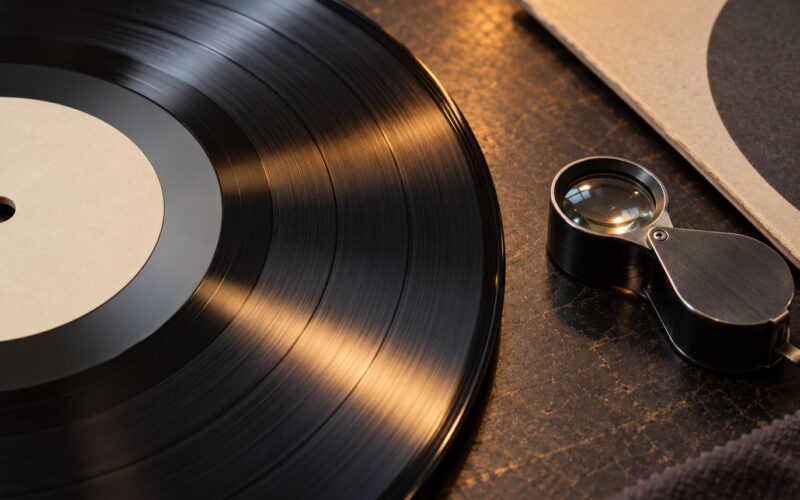
Check the runout etchings on the disc itself, usually visible in a light near the lead-in and run-out areas. They carry the matrix number, which identifies the specific cutting of a master, and the mastering engineer credit, plus the mastering house code. The catalog number on the sleeve and rear panel tells you which edition you are holding and which pressing plant produced it. Dead Wax, the small areas on either side of the label, give country of manufacture and sometimes the plant code.
Discogs is the fastest cross-check. Search the catalog number, read the entry for the pressing plant and the mastering credit, and then read the reviews attached to that specific pressing rather than the release in general. Community noise-floor reports are genuinely useful here, because a quiet pressing is something you cannot determine from the sleeve.
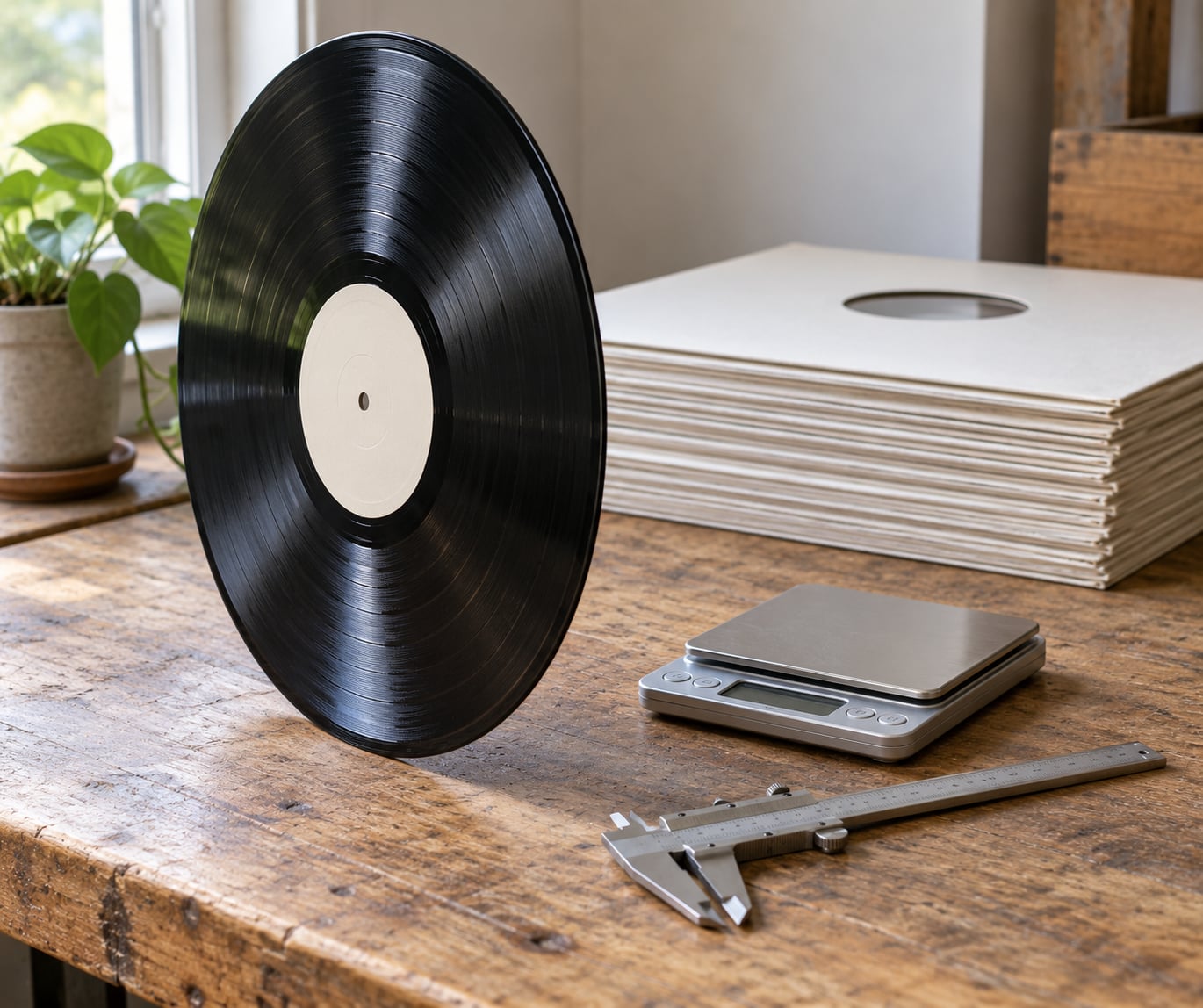
One last verification trick: a postage scale or a cheap digital scale will tell you within about five grams, which is enough to sort 180g from 200g. The same weighing also tells you the nominal label was honest, which is more often true than collectors expect.
Is 180 Gram Vinyl Worth Buying?
Sometimes, and the deciding factors are rarely the weight. I would pay the premium for a record when the mastering credit is a name you recognise, the cut is confirmed to come from the original tapes, the pressing plant has a good reputation for that album, and the sleeve and vinyl are in solid condition.
A 180g reissue with a fresh cut from the original master is a better record than a 180g reissue sourced from a digital file. The same applies the other way around: an original 140g pressing of an album cut direct to lacquer beats almost anything newer, whatever its weight.
Resale value follows the same logic. Buyers pay for first pressings, complete gatefold artwork, inserts and low numbers, not for grams. A 180g weight adds almost nothing to what a record is worth a decade later.
If you want a simple rule: buy 180g when the mastering and edition are right, and buy a standard pressing when they are not. If you are storing records somewhere hot, moving them often, or playing on a lighter belt-drive deck with a small platter, the heavier pressing earns its place on durability grounds alone.
What I would spend the extra money on instead, in order: a good stylus-force gauge, a record brush, a proper anti-static sleeve and outer sleeve, and a decent alignment tool for your cartridge. Those improve every record in your collection. A heavier pressing improves exactly one.
Frequently Asked Questions
Is 180 gram vinyl the heaviest record available?
No. 180g is a mainstream audiophile tier, not the ceiling. 200g pressings are common among collector labels, and a small number of releases are pressed even heavier still. The useful comparison is not heaviest versus lightest but where the weight stops buying anything: past roughly 180g, most collectors hear no consistent difference between pressings cut from the same lacquer.
Why does 180 gram vinyl often feel thicker?
Because the extra PVC has to go somewhere. A record is a flat disc with a fixed diameter, so raising the total weight raises its thickness, usually to around 1.9 to 2.0 mm against roughly 1.5 mm for a 140g pressing. The material sits under the groove, never under the stylus, so the perceived difference is entirely in the hand rather than in the audio.
Does 180 gram vinyl prevent warping and scratches?
It reduces neither completely. A thicker disc resists casual bending better than a thin one, but heavier pressings need slower, even cooling and can dish badly if rushed. Scratches are a handling problem regardless of weight. Records stored vertically at moderate temperature, cleaned with a soft brush and never gripped by the rim, warp far less often at any gram weight.
Can a record be labeled 180 gram but feel thin?
Yes, occasionally. Nominal weight is a manufacturing target with a tolerance, and filler content, label weight and the size of the run all shift the final figure slightly. A press that runs light can produce a batch of records labelled 180g that sit nearer 170g. Weighing a few from the same run with a digital scale is the only reliable check.
Should collectors pay more for a 180 gram pressing?
Only when the edition earns it. Prioritise a named mastering engineer, a cut confirmed to come from the original tapes, a well-regarded pressing plant and good sleeve condition. Weight alone adds nothing to resale value and no audible improvement on the same cut. Spend the surplus on a stylus-force gauge, a brush and anti-static sleeves, which help every record you own.
A Smarter Way to Choose Vinyl
Start with the album, not the weight. Decide which edition you want, then check the mastering credit and whether the cut comes from the original master. Read what collectors report about the noise floor on that pressing, and inspect the vinyl for warping and scratches before you commit. Treat 180 grams as one useful specification among several.
The best record is the one whose sound, edition, condition and playing qualities you care about. A flat, clean pressing with a good cut in a standard weight will beat a warped audiophile edition every time, and that is true in 2026 as it was in any year since vinyl came back.