Digital wins every measurement that matters on paper, and vinyl still wins a lot of listeners who sit down and press play. There is no honest answer that says one format is simply better audio: a lossless stream through a decent DAC and good speakers can be indistinguishable from a well-mastered record, while a scratched pressing on a wobbly all-in-one player sounds worse than almost anything sent to Bluetooth headphones. This guide breaks down vinyl vs streaming for sound quality by the parts you can actually check, then helps you pick the format that suits how you listen.
I have spent years moving albums between a spinning platter and a phone, and the honest summary is that I use one format for about ninety percent of my listening and keep the other for the records that deserve the attention. Neither one is the answer to everything.
Table of Contents
- Vinyl vs Streaming for Sound Quality at a Glance
- Does Vinyl Actually Sound Better Than Streaming?
- Where vinyl genuinely wins
- Where streaming genuinely wins
- How Vinyl Sound Quality Changes
- Pressing quality is the biggest variable
- Condition, cleaning and stylus wear
- Gear and the room beat the format
- How Streaming Sound Quality Changes
- What each service actually delivers
- Room acoustics outrank both formats
- Dynamic Range and Listening Experience
- Mastering is doing half the work
- Testing vinyl vs streaming for sound quality blind
- Noise, Compression and Playback Problems
- Convenience and Music Discovery
- Which Should You Choose?
- How to Test Both Formats Without Fooling Yourself
- Looking After a Format You Do Choose
- Frequently Asked Questions
- Is vinyl always higher sound quality than streaming?
- Can streaming sound as good as vinyl on a good system?
- Does Bluetooth reduce the sound quality of streaming?
- Why does my vinyl record crackle?
- Is a lossless streaming service better than Spotify?
- Should I buy records or use streaming if I mainly care about sound quality?
- Conclusion: Choose the Listening Experience You Want
Vinyl vs Streaming for Sound Quality at a Glance
| Criterion | Vinyl | Streaming |
|---|---|---|
| Dynamic range | Roughly 70 dB | 96 dB or more |
| Channel separation | About 30 dB | 90 dB or more |
| Total harmonic distortion | Typically 0.4 to 3 percent | Below 0.001 percent |
| Speed accuracy | Small wow and flutter | Perfectly stable clock |
| Noise floor | Surface noise, crackle, rumble | Silence, or codec artefacts |
| Consistency | Varies by copy and pressing | Identical every play |
| Physicality | You own the object | You rent the access |
| Catalogue reach | Only what you own | Most of recorded music |
| Needs hardware | Turntable, cartridge, phono stage, speakers | A device, speakers or headphones, network |
| Effort per play | Clean, place, flip, cue | Tap and go |
Read that table twice, because most arguments about this topic are really arguments about the bottom three rows.
Does Vinyl Actually Sound Better Than Streaming?
Not on measurements. Digital reproduces a waveform with more accuracy, cleaner channels and no mechanical noise, and every objective test lands the same way. But plenty of listeners describe vinyl as sounding warmer, fuller and more involving, and that reaction is consistent enough that it is not pure imagination.
The reason is that vinyl is never perfectly neutral. Its distortion sits in a range that listeners tend to read as richness, and its very small dynamic range forces the mastering engineer to leave headroom that digital releases often fill with louder, flatter mixes. You are hearing the mastering, not the format.
Where vinyl genuinely wins
Older recordings, especially analog masters from before 1980, tend to sound better on vinyl because the source is analog to begin with. There is also the sheer commitment of the format: an album side that runs twenty-two minutes gets played start to finish, which changes attention in a way no shuffle button reproduces.
Where streaming genuinely wins
Modern electronic, hip-hop and heavily limited pop lose very little in a lossless stream, because the master is already close to bricked. Streaming also wins on silence between tracks, on the reliability of playback speed and on the sheer number of albums you can reach without owning a single one.
How Vinyl Sound Quality Changes
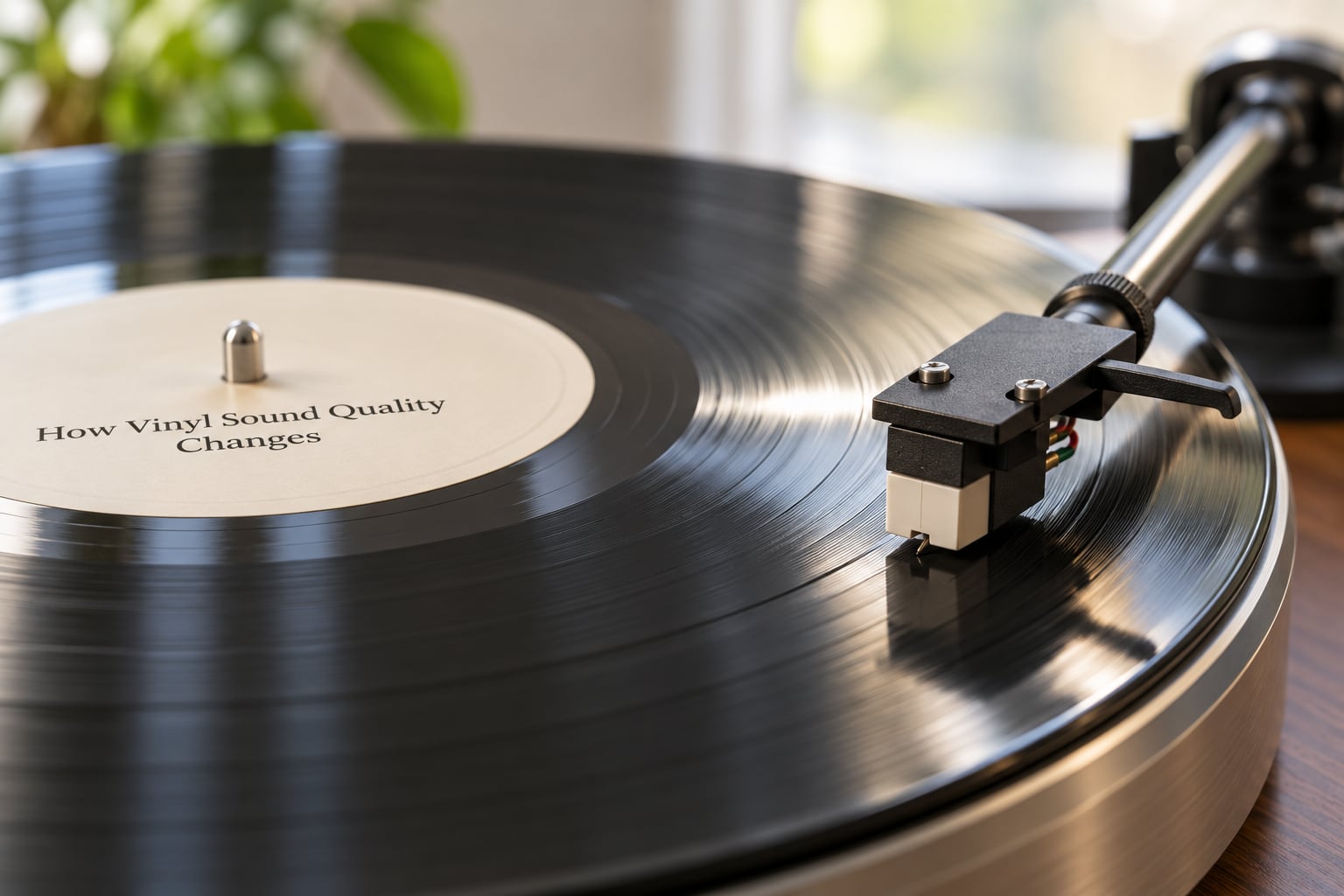
The pressing matters more than the format. The same album can sound open and detailed on one copy and thin and compressed on another, with identical playback hardware.
Pressing quality is the biggest variable
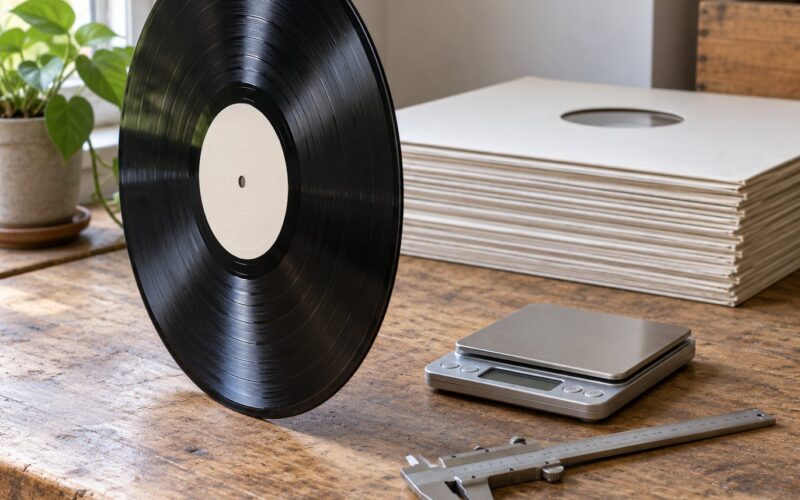
A true all-analog cut from analog master tapes, often labelled AAA or direct metal mastered, captures the full analog chain and tends to be the quietest and most open. The majority of modern pressings are cut from a digital master at a high bitrate, which is closer to the streaming version than most buyers expect. A smaller number are cut from DSD or other hi-res digital files.
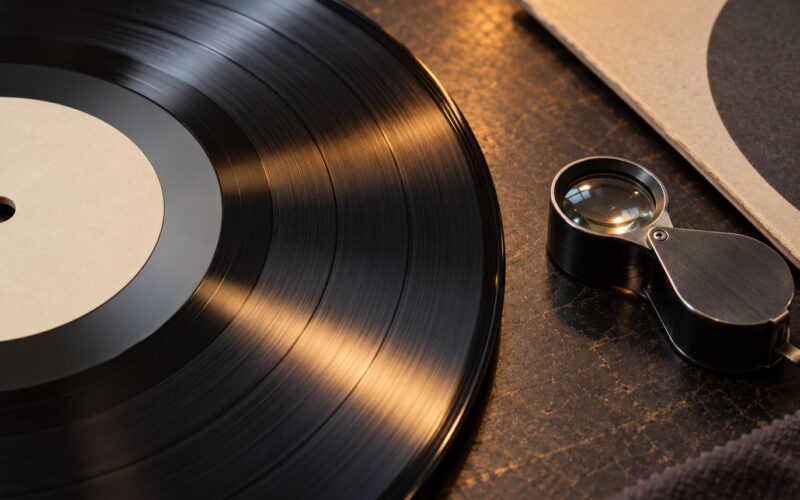
How to tell them apart: read the runout etching on the outer edge and look for AA, AAA, DSD or similar marks, and check the label text. On the sleeve side, a line saying the cut was mastered from analog originals or made at half speed is a good sign.
Condition, cleaning and stylus wear
Surface noise rises sharply after about fifteen minutes of play, because the outer grooves are smoother than the inner ones. A record that opens clean and turns crackly halfway through the side needs cleaning more than it needs new gear. Playback speed stability matters as well: cheap belt-driven decks drift slightly, and drift is one of those faults you stop noticing after a few minutes.
Stylus wear is the quiet one. A worn needle narrows the stylus and dulls the treble before anything gets damaged, and swapping it takes minutes.
Gear and the room beat the format
A cartridge, a phono preamp with proper RIAA equalisation and decent speakers will matter more than any streaming upgrade you could buy. So will the room. Bass build-up from parallel walls and a low ceiling will smear both formats equally, and experienced listeners on audio forums consistently rank room treatment above format choice when a system still sounds wrong.
That is the single most useful thing to know: if you are deciding between formats, the system and the room will decide the result before the format does.
How Streaming Sound Quality Changes
Streaming quality moves in steps, and the step you are on matters far more than the service logo. A lossy stream discards information permanently, while a lossless stream reproduces the file exactly as stored.
From bottom to top, the ladder looks like this: lossy compressed streams at standard settings, lossless streams matching CD quality, lossless streams at higher resolution, then hi-res and DSD streams that deliver more data than CD but rely on your DAC to convert them cleanly.
Three things change the result in practice. Your app’s quality setting decides which of those tiers you actually get. Bluetooth adds another compression pass on top of whatever the service sent, which is why wireless earbuds never sound as open as wired. And the DAC inside the device converts the file, so an older phone can undo a perfect stream before it reaches your ears.
Forum regulars on audio communities make the same point about bitrate: with a competent DAC and a decent file, additional resolution stops mattering quickly, while switching from a lossy stream to lossless is an immediate and obvious upgrade.
What each service actually delivers
Format names tell you most of it once you know what to look for. Lossless tiers that match CD quality sit at 16-bit and 44.1 kHz, which is where most recorded music originates anyway. Higher-resolution tiers push to 24-bit and 88.2 kHz or above, and those files are usually upsampled from the same masters unless the label took the trouble to master above CD in the first place.
DSD is the other branch. It converts the signal with a one-bit method, produces very low measured distortion and is widely available on specialist services, but it needs a DAC that handles it natively or you are converting it back to PCM before it ever reaches your speakers.
One practical warning. Normalising volume differences between albums is convenient, and it also removes the dynamic contrast that a mastering engineer deliberately created. Turn it off when you are comparing formats.
Room acoustics outrank both formats
Before blaming the format, play a familiar album in a room with parallel bare walls and a low ceiling. The bass will smear, the midrange will get a bump, and the two formats will sound more alike than either one does on its own.
Dynamic Range and Listening Experience
This is where the numbers in the comparison table come from. Digital files allow more than 90 dB between the loudest and softest passages, where vinyl’s practical ceiling is around 70 dB. Separation between the left and right channels runs about 30 dB on vinyl against 90 dB or more in a digital file. Digital stores a waveform as discrete samples, which is why it can hold that headroom without noise.
Those two gaps are audible in specific situations. Wide channel separation shows up on dense mixes with instruments panned hard, and extended dynamic range shows up on material mastered from analog with genuinely quiet passages.
Mastering is doing half the work
Because vinyl cannot hold as much dynamic range as digital, mastering engineers leave headroom on vinyl cuts. Over the years the digital side collapsed that headroom, because streaming platforms normalise loudness and louder masters sounded bigger. The vinyl cut of the same album can therefore have wider dynamics and a quieter average level than the digital version you hear on a service, which is a real and repeatable difference rather than a preference.
Genre matters here more than format. Classical and jazz vinyl from the analog era tends to hold its own because those masters are dynamic. Modern electronic and hip-hop masters are so limited that streaming loses very little, and chasing a record of an over-compressed album buys you the compression.
Testing vinyl vs streaming for sound quality blind
Formal ABX testing is the fair way to settle it for yourself, and the results are humbling. Listeners who cannot tell which file is playing in double-blind trials frequently fail to identify a hi-res stream against a vinyl rip, even with a good system. Meanwhile many who insist the formats are easy to tell apart in everyday listening have never tried without seeing the source.
So if you want the short version: test it, and keep what surprises you. Use the same track, the same level, the same seat in the room.
Noise, Compression and Playback Problems
Vinyl problems are audible and physical. Pops and clicks come from scratches and debris, crackle builds as the stylus moves inward, rumble comes from the motor and plinth, and warped records cause skipping no stream will ever reproduce. A lightly used copy played on a decent deck can be extremely quiet; a well-loved one cannot be fixed by any setting in any app.
Streaming problems are invisible until you listen for them. A lossy file may show dullness or smeared detail in cymbals and vocal sibilance, an overly compressed master runs out of headroom before it runs out of loudness, and Bluetooth adds its own artefacts plus the occasional dropout. Buffering is the only problem with an obvious fix.
Which is easier to control? Streaming, comfortably. A bad stream can be replaced by turning on lossless. A bad record stays bad, though careful cleaning removes more problems than most people expect.
Convenience and Music Discovery
Streaming wins on access by a wide margin. Search is instant, playlists build themselves, offline listening works on a plane, and nothing takes up shelf space. Discovering a 1973 Brazilian psych record costs one search rather than a trip to a shop that may not stock it.
Vinyl wins on the opposite side of the ledger. You own the object, the sleeve, and the small insert nobody scanned. Choosing a record from a crate of thirty is a different kind of decision than typing a name into a search box, and it is the reason many listeners describe vinyl as an event and streaming as background.
There is a quieter problem with streaming too: catalogues change. Albums disappear between services, and the quality attached to an album can change under you. A physical record does exactly what it did last week.
The compromise most collectors settle on is unglamorous and works well. Stream almost everything, keep vinyl for the albums you would put on when the room is quiet.
Which Should You Choose?
Collectors and anyone who values the physical object should lean vinyl, with the understanding that pressing quality and copy condition decide how good it sounds. Critical listeners who already own good speakers and care about measurements will not be impressed by vinyl on paper, and a lossless service will serve them better.
Casual listeners, people in small flats with no room for a shelf of records, and anyone who listens in the kitchen or on the move should stream. Discovery, variety and zero fuss outweigh everything else there.
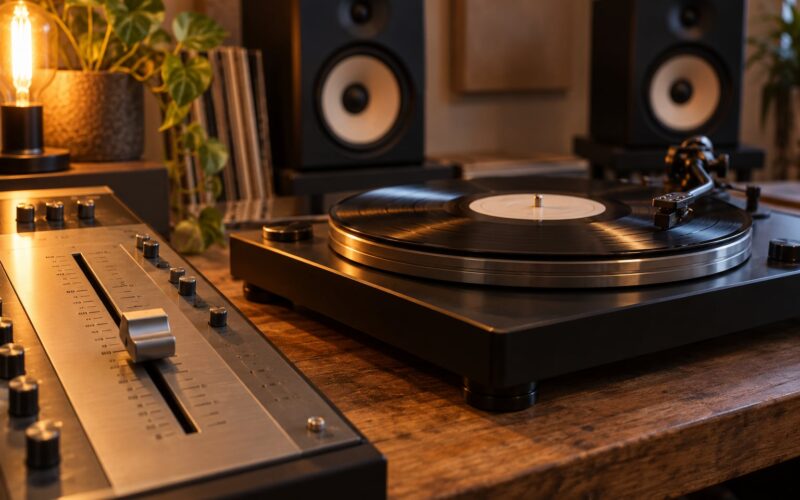
Hybrid setups solve most of the disagreement. A turntable and a streamer feeding the same amplifier and speakers costs less than building either chain twice, and the comparison between them stops being a question once they sit next to each other.
One caution for beginners: all-in-one players with a built-in speaker and a fixed cartridge are the reason so many people conclude vinyl sounds bad. They are toys compared with a separate turntable and a pair of proper speakers.
How to Test Both Formats Without Fooling Yourself
Deciding by memory does not work. You will hear whichever one you expect to hear. Set up a proper comparison instead.
Pick three tracks rather than one: something dense and modern, something recorded acoustically in a room, and something with wide stereo placement. Rip the same master you stream, or use a digital file, and match the level by ear or with a meter. A louder format always wins, and that is a volume difference, not a quality difference.
Then blind yourself. Level-match, close your eyes, switch, and keep a rough note of which you preferred before you check. Repeat in a different room on a different day. If the result changes with the room, the room was the variable, not the format.
Finally, test at different volume levels. A rough system often seems to lose the thin sound of vinyl at low volume, which tells you far more about your hearing and your speakers than about the record.
Looking After a Format You Do Choose
Whichever way you go, some habits pay for themselves quickly.
For records, keep them away from direct sunlight and heat, store them vertically rather than flat, and clean both sides with a proper brush and fluid before and after a session. Handle them by the edges only, and replace the stylus before it goes dull rather than after. Mould grows in the sleeve when a disc sits in a warm cupboard, and it is not reversible.
For streaming, set the app to its highest quality option, keep the software current, and check that the device you are casting to is using the highest-quality connection it supports. Store a local copy of anything you care about, because catalogue changes are real and quiet.
Storage is the honest limit for most households. A shelf of records takes room and holds a few hundred albums; a library of lossless files takes disc space you may not have noticed you had.
Frequently Asked Questions
Is vinyl always higher sound quality than streaming?
No. Digital wins on measurable accuracy: more dynamic range, far better channel separation and distortion below 0.001 percent against a typical 0.4 to 3 percent on vinyl. What listeners often prefer in vinyl is a specific character and the sense of listening to an entire album, not higher fidelity.
Can streaming sound as good as vinyl on a good system?
Yes, more often than not. A lossless stream through a capable DAC into decent speakers is very hard to distinguish from a well-mastered record, and in double-blind tests many listeners cannot tell them apart. Where vinyl keeps an edge is on older analog masters, where the source itself is analog.
Does Bluetooth reduce the sound quality of streaming?
Yes. Bluetooth adds another lossy compression layer on top of whatever your service sent, which smears detail and dullens the top end. A lossless stream over Bluetooth is still compressed by the codec. Use a wired connection or a high-quality wireless codec when fidelity is the point.
Why does my vinyl record crackle?
Usually one of three things: dirt and dust in the groove, light scratches that the stylus jumps, or an ageing stylus. Crackle that grows louder as the side plays points at surface noise and a cleaning kit will fix it. Crackle from the first second often means the needle is worn.
Is a lossless streaming service better than Spotify?
For sound quality, yes, clearly. Lossless streams deliver the whole file, while a standard lossy stream throws detail away before playback. The difference is easiest to hear on cymbals, strings and quiet passages. What you gain is fidelity, not a larger catalogue, so check which service has the albums you want.
Should I buy records or use streaming if I mainly care about sound quality?
If your system is modest, fix that first: turntable, cartridge, phono stage and speakers matter more than format. Once the chain is decent, stream in lossless for consistency and pick up records pressed from analog masters for older music. Vinyl will not rescue a cheap setup, and streaming will not reveal detail a poor DAC destroys.
Conclusion: Choose the Listening Experience You Want
If sound quality is your priority and you are starting from a modest system, sort the system first. A decent turntable and cartridge with a phono stage, or a good DAC and speakers, will move the sound further than any format switch, and both formats feed the same amplifier in the end.
After that, listen for what you actually prefer. Vinyl rewards attention and older analog-mastered records, and it is the only format that puts an object in your hands. Streaming rewards variety, silence between tracks and consistency across thousands of albums, and a lossless service will satisfy most listeners completely.
Start by taking one track you know well and A-Bing it properly. Match the level, sit in the same chair, and let the surprise decide for you.