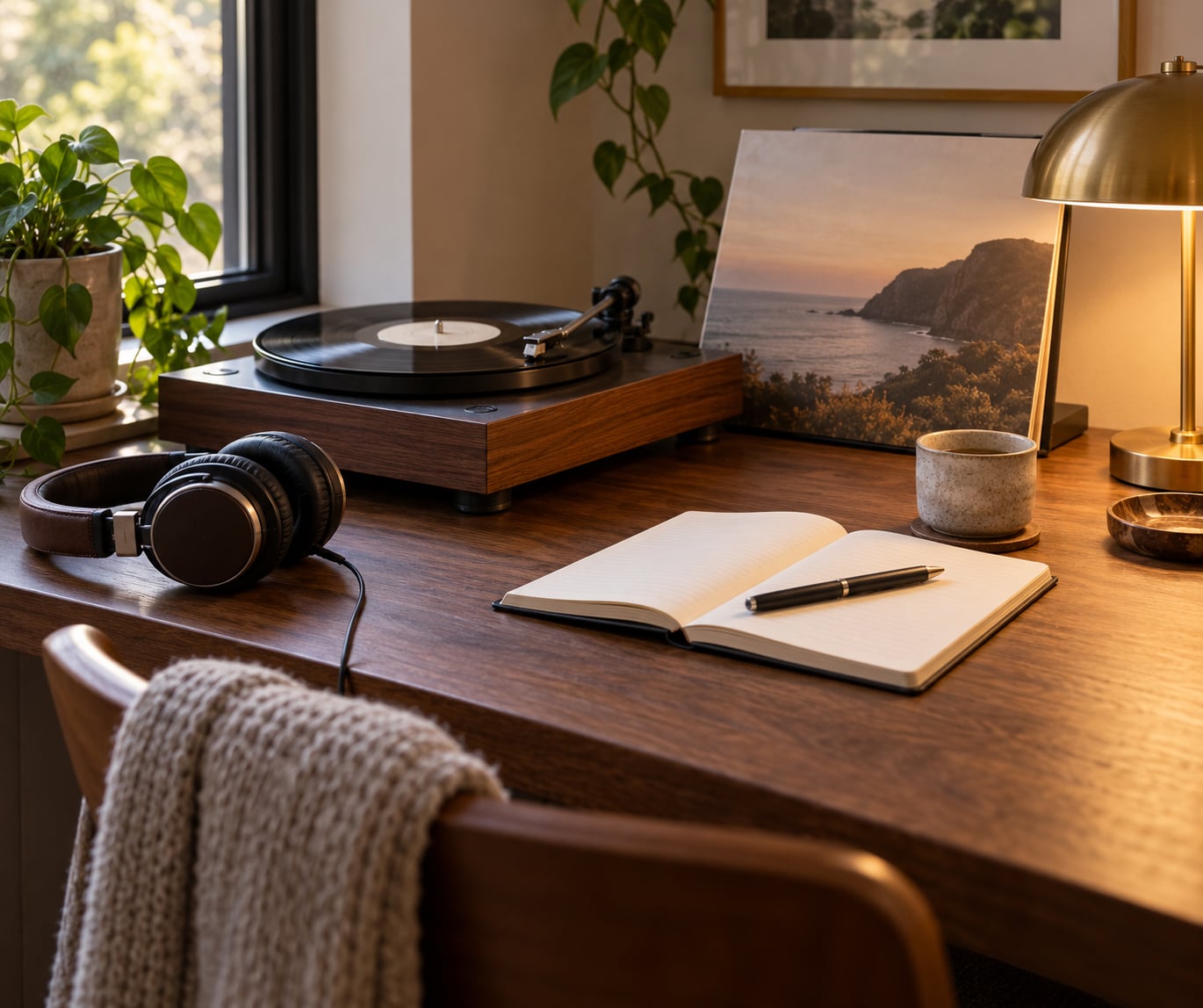
Critical listening is the deliberate act of hearing a recording closely enough to describe how it works: the rhythm, the melody, the arrangement, the performance, the words, and the choices the engineer made. The short version of how to listen critically to music is that you pick one question, listen more than once, write down what you hear before you decide whether you like it, and repeat.
I do this with records and I do it with playlists, and the routine is the same either way. It takes about twenty minutes for a single track, no equipment beyond what you already own, and it is a trainable skill rather than a gift you either got or didn’t.
What follows is the process I actually use, in the order I use it. Bring a notebook, or a notes app if paper feels like a prop. You will want something to write in during the first pass, because your memory rearranges what you heard the moment you start forming opinions about it.
Table of Contents
- What You Need
- Step-by-Step: How to Listen Critically to Music
- Set a Listening Purpose
- Describe Before You Judge
- Track the Song’s Building Blocks
- Listen for Sound and Craft
- Separate Lyrics From Delivery
- Place the Record in Context
- Form and Defend an Interpretation
- Common Mistakes When You Listen Critically to Music
- Frequently Asked Questions
- What is critical listening in music?
- Is critical listening a learned skill or a natural gift?
- What are the seven things to listen for in a song?
- How do I listen to music more deeply without ruining my enjoyment?
- Do I need expensive equipment or a treated room to do this?
- Conclusion
What You Need
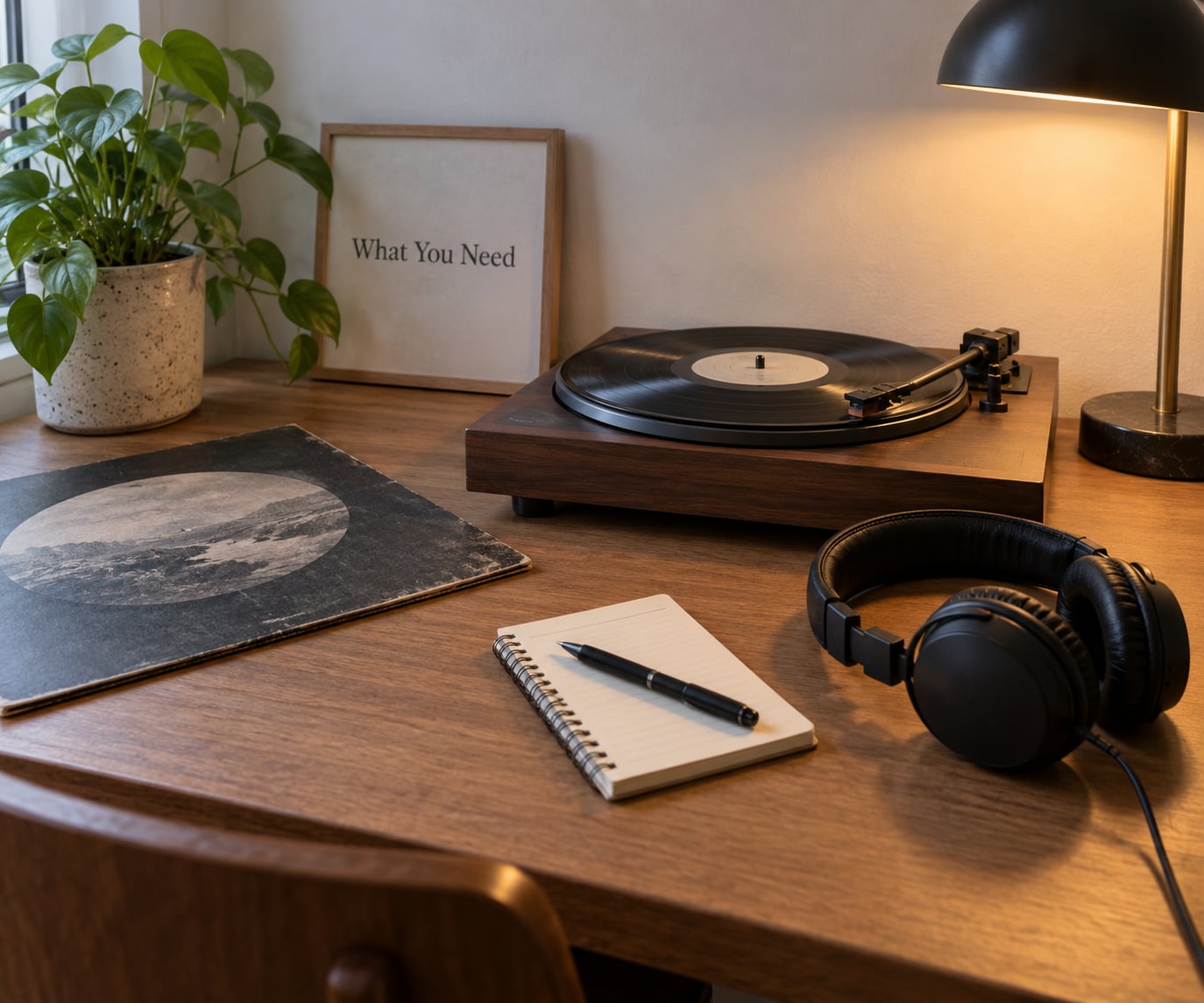
Five things, and only one of them is about hardware.
- Playback you are happy with. Whatever you normally listen on. If the plan is a new hi-fi, use a familiar setup instead, because you cannot isolate the music from the system when both are changing at once.
- A quiet room and a closed door. Background noise makes you guess instead of hear, and guessing is what you are trying to avoid.
- Credits. Liner notes for vinyl, the album booklet if you have one, or reliable track credits online. Who played what, who produced it, where it was recorded, and who mastered it.
- A notebook or notes app. Dated, with room for a timestamp.
- One or two reference recordings, optional. Well-mixed records you know well, used later for comparison rather than for the first pass.
Keep the volume moderate, roughly at a level where you can hear a hi-hat without leaning in. Turn it up and louder starts to sound better whether or not it is, which is the single fastest way to fool yourself.
It also helps to know the genre’s basic rules before you press play. In punk, lean and short songs are the point, not an oversight. In a classical symphony, there may be no verse and chorus at all, and hunting for them will make you think the piece is shapeless when it is simply built differently.
For reference material, a small set of well-known records does most of the work:
| Recording | What it tests | What to listen for |
|---|---|---|
| Kind of Blue, Miles Davis | Tone and restraint | How quiet the band plays and how much space each note gets |
| Aja, Steely Dan | Clarity and detail | Separate instruments inside a busy mix |
| Nevermind, Nirvana | Space and dynamics | The contrast between the loud parts and the dropouts between songs |
| Blue, Joni Mitchell | Vocal and guitar intimacy | Close-mic detail, finger noise, the room around the voice |
| Pet Sounds, The Beach Boys | Arrangement | How many distinct layers are stacked and where they sit |
Use these for comparison once you know what you are comparing. For a first pass on a record you have never heard, pick something you have no opinion about at all.
Step-by-Step: How to Listen Critically to Music
Seven parts. The order matters more than the detail, because most of the ways people go wrong with this come from jumping to a verdict in the first thirty seconds.
Set a Listening Purpose
Decide one question before you press play. Not a vague one like “is this good,” but a specific one: what is the drummer doing, why does this verse feel tense, what changes between the original release and the remaster, or why does this song hit emotionally in the first place.
You will notice you progress when a single question survives an entire listen without you wandering off to admire the chorus. A narrow question makes a three-minute song feel like twenty minutes of work, which is the point.
Describe Before You Judge
Write down what you hear using neutral words before you use any evaluative ones. “The bass sits under everything” is a description. “The bass is muddy” is a judgment, and it closes the door on further hearing.
Cover the basics on paper: tempo and time signature, the key or at least the mood of the harmony, instrumentation, who sings and how, the production feel. Add timestamps so you can go back to the exact moment without scrubbing.
Progress looks like a page of plain observation with no adjectives like “good” or “bad” on it. Beginners often find this stage the least exciting one, and it is still the one doing the work.
Track the Song’s Building Blocks
Break the track into its sections: intro, verse, chorus, bridge, outro. Note where the energy rises and where it drops. On a garage rock single you may find three verses, three choruses, and a solo, in a pattern that repeats without ever developing. That repetition is a choice, and once you have counted it you can decide whether it works for you or bores you.
Watch what gets added and removed. A song that introduces one new instrument per chorus is doing something quite different from one that drops to voice and guitar at the end, and both are structural decisions rather than accidents.
You are making progress when you can hum the shape of the song from memory. That means the form landed, whether or not you liked it.
Listen for Sound and Craft
Now for the production layer. On the second or third pass, follow a single element for the whole track: the bass line, the snare, the lead vocal, the room reverb, the cymbal wash. Riders on audio forums call this isolation, and it is the most useful drill I know. Several people there describe it as the exercise that finally made the difference, because it trains your attention rather than your vocabulary.
Then widen out and consider tone, texture, and space. Is the low end heavy or is it just present? Do the guitars sit behind the vocal or fight it? Is there reverb on the snare, or on the whole kit, or nowhere? How wide is the stereo field, and does the lead vocal stay centred?
One caution from the audiophile forums worth taking seriously: fixating on a single drum strike for an hour narrows your attention until you lose the song. Use isolation to notice, then come back to the whole thing.
Progress shows up when you can predict what a band will do next and it turns out differently for a reason.
Separate Lyrics From Delivery
Two different things are happening in a vocal: the words and the performance of the words. Listen to each separately, and write them separately.
For content, note the subject, the imagery, and whether the writing is specific or vague. For delivery, note phrasing, pacing, accent, how the voice sits against the band, and how much restraint the singer shows. A plain delivery on a well-written lyric can carry more weight than a busy one.
You will know it worked when you can describe how a line was sung without describing what it means.
Place the Record in Context
Then place it: the artist, the year, the scene, the label, the studio, the influences. Knowing the record came out of a specific city during a specific year changes what you hear in it, and it is the fastest way past the trap of judging a record only by whether it sounds like your favourite artist.
Credits do a lot of work here. A drummer who plays a completely different style on one track, a second engineer on a single song, a cover of something you already know: these are all audible decisions once you know to look for them.
Ask what the record is trying to do that the obvious choice would not do. If you can answer that, you are listening as a collector rather than a shopper.
Form and Defend an Interpretation
Put it together in two or three sentences: what the record is doing, the evidence, and your verdict. Evidence means specifics, so “the vocal sits too far back in the mix” beats “the production feels dated.”
Then put the record down and come back to it a week later. Interpretations shift, and the ones that survive a week with a fresh listen are usually the ones worth keeping in a listening log.
Common Mistakes When You Listen Critically to Music
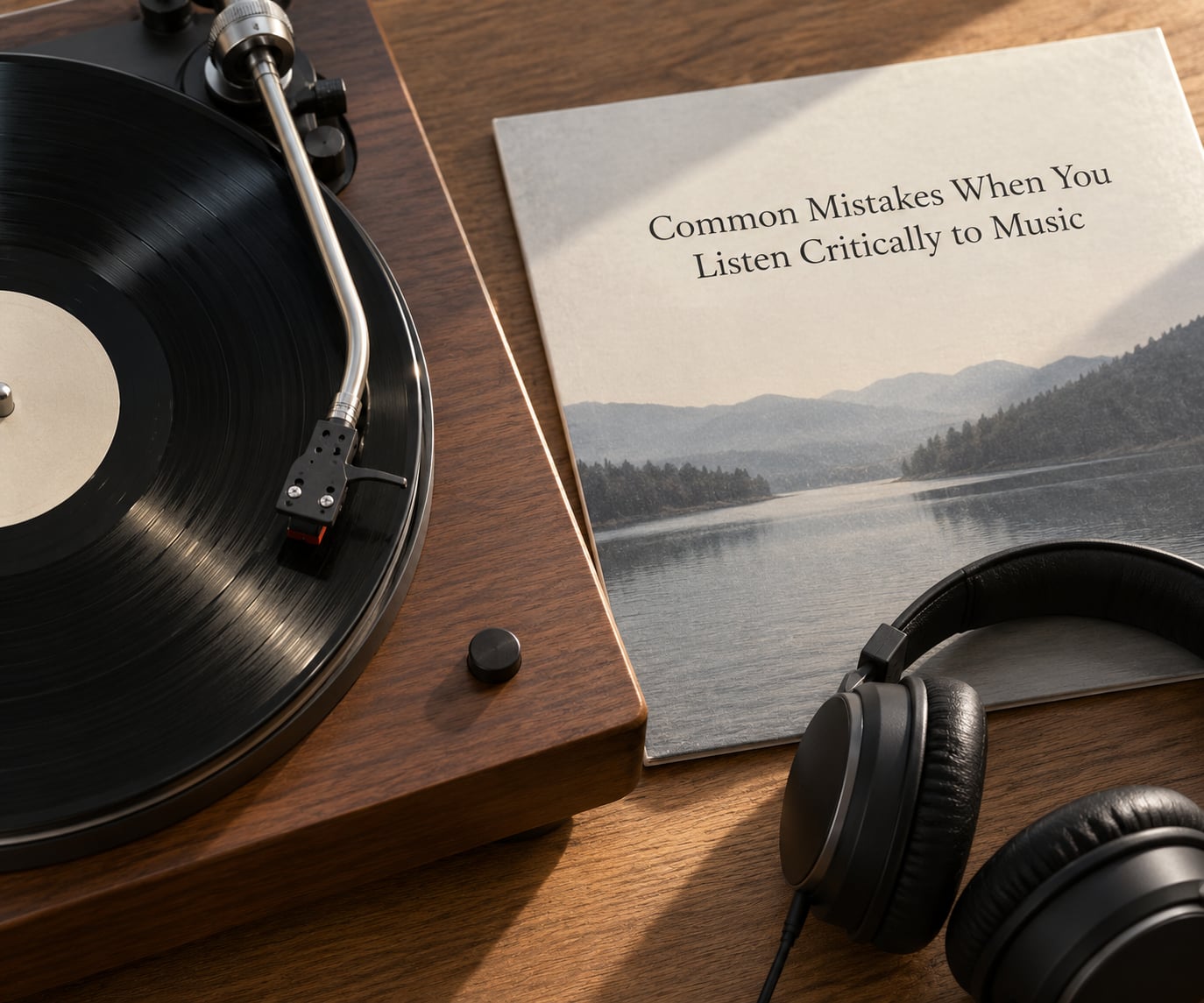
Five errors come up again and again, and each has a straightforward correction.
Mistaking familiarity for quality. A record you have heard a hundred times will always reveal more than a new one, which is not the same as being better. The correction is a blind test of your own assumptions: play a familiar song without knowing which version it is, and see whether you still identify it on tone alone.
Only listening to the words. Plenty of brilliant songs have indifferent lyrics, and plenty of plain ones do not. Give the words about a third of your attention and the other two thirds to the music making them happen.
Treating nostalgia as evidence. Remembering a record is not the same as hearing it now. If the only argument for a record is what it meant to you at nineteen, that is a memory you are evaluating.
Chasing individual notes. Hearing that a guitar note is slightly flat is a fact. Deciding the record is bad over one note is not listening, it is nitpicking. Keep the frame on the song rather than the syllable.
Treating the first impression as final. The first pass tells you how the music lands emotionally. The fourth pass tells you what it is doing. You need both, and they are not the same reading.
Alongside those, three habits protect the session. Level-match any comparison, because your brain treats louder as truer. Take a break every 30 to 45 minutes, because tired ears flatten everything and a second listen after a short walk is often clearer than another half hour. And turn analysis off sometimes entirely, which is a point raised constantly in the audiophile forums and in the top thread on the subject: analysing everything can quietly spoil the enjoyment it was meant to improve.
A useful way to think about it is that critical listening is a lens, not the film. Put it down when you have finished looking.
Frequently Asked Questions
What is critical listening in music?
Critical listening is the deliberate, focused act of analysing a recording beyond enjoyment. Instead of asking whether you like a song, you ask how it works: how the rhythm, melody, harmony, instrumentation, production and lyrics fit together, and what the artist gained or lost by each choice. It is trained by repetition, not innate talent.
Is critical listening a learned skill or a natural gift?
Learned, though the training is slow and uneven. Almost everyone can start noticing things they previously missed within a few weeks of focused listening, and most people plateau before the skills they read about in reviews. The gains come from regular, short sessions with written notes rather than from rare long ones, and no equipment upgrade substitutes for that.
What are the seven things to listen for in a song?
Rhythm and groove, melody, harmony, timbre and tone, dynamics, texture and arrangement, and stereo placement or space. A practical session moves through them in order: first the pulse and the parts, then the sound and its position in the field. Naming what you hear matters, because an unnamed observation cannot be tracked or improved.
How do I listen to music more deeply without ruining my enjoyment?
Separate the two kinds of listening rather than mixing them. Use focused sessions for analysis and plain, unstructured playback for pleasure, and never analyse a record you are trying to fall in love with. Many listeners report that a short analytical pass makes a favourite record better, while months of constant analysis makes everything feel like a test.
Do I need expensive equipment or a treated room to do this?
No. Critical listening works on earbuds, a phone speaker in a kitchen, or whatever you already play music on, because the skill is about attention rather than hardware. Better equipment makes small differences easier to hear, and a quiet room genuinely helps, but neither changes the process. Most of the improvement comes from listening repeatedly and writing down what you notice.
Conclusion
Start tonight, with one record you already own and no opinion about it. Write down one question before the first play, listen four times, and record what you hear in plain words on each pass. Twenty minutes of that will teach you more than an evening of reading reviews in vocabulary you cannot yet apply.
The habit compounds quickly. Within a few weeks you will catch arrangement choices in songs you have heard for years, and the review language that used to sound like marketing will start to mean something specific. Stay curious about what a record is doing, keep the verdict for last, and let some records remain just music.