A good deal on used vinyl is not a low number on a price tag. It is a copy whose actual condition matches what the seller claims, sold at a price that sits clearly below what clean copies of that same pressing fetch. Price alone tells you nothing, because a cheap warped record is not a bargain, and a fairly priced Near Mint copy is not a deal either.
Here is how to spot a good deal on used vinyl in eight checks. They take about three minutes per record once you know them, and they work whether you are standing in a shop with a bargain crate in front of you or buying a copy you cannot touch from a marketplace listing. Order matters: confirm what the record is, judge the copy, then look at the price last.
Table of Contents
- What You Need
- Step-by-Step: How to Spot a Good Deal on Used Vinyl
- Step 1: Define the Record and Set a Budget
- Step 2: Check the Disc and Sleeve Separately
- Step 3: Identify Represses, Compilations, and Wrong Versions
- Step 4: Compare the Price With the Condition
- Step 5: Judge the Seller, Listing, and Return Policy
- Step 6: Estimate the Playability Problem
- Step 7: Look for Complete Copies and Useful Bonuses
- Step 8: Make the Final Buy or Pass Decision
- Common Mistakes
- Frequently Asked Questions
- Is it worth buying used vinyl?
- What is a fair price for a used vinyl record?
- How can I check the value of vinyl records?
- How trustworthy is Discogs?
- Is there an app to find the value of vinyl records for free?
- What grade of used vinyl is worth buying?
- Conclusion
What You Need
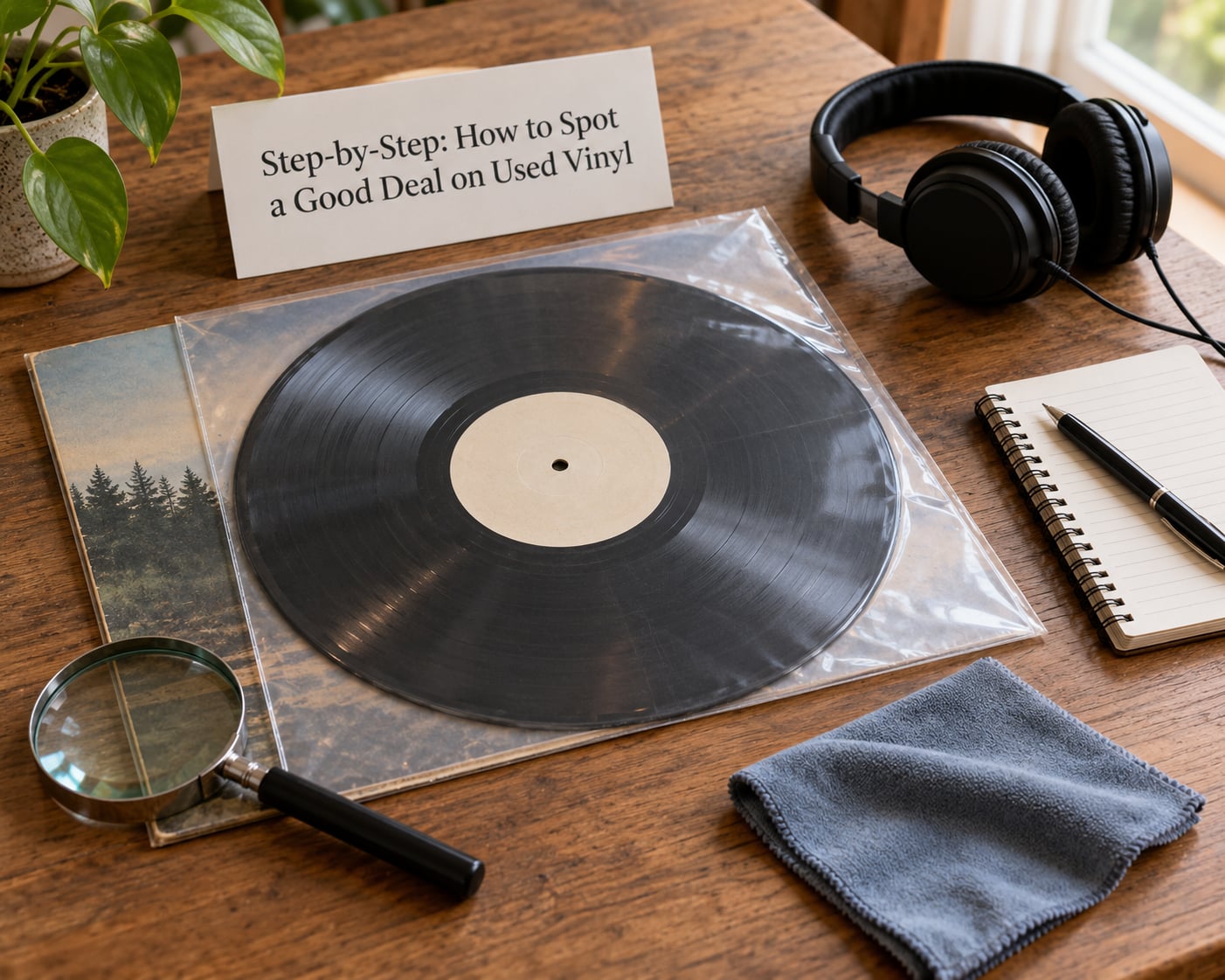
A phone with a torch, a pair of decent headphones, and about a minute of quiet. That covers most of it.
A direct light source helps more than anything else. Shine it at a low angle across the grooves rather than straight down, and hairlines that vanish under normal room lighting jump out. Bad store lighting hides exactly the marks you need to see.
A soft cloth and a record cleaning fluid let you wipe a dusty sleeve and check the disc under better light before you judge it. Most dirty-looking used vinyl looks dramatically better once it is cleaned, and you should never pay a clean-copy price for a record that simply needs a wipe.
Headphones matter because surface noise and clicks are hard to judge on shop speakers. Keep your own cleaning kit with you rather than buying one at the till, and bring a small notebook or a notes app with a running list of your wantlist and maximum price per title.
Finally, know how you will check the price before you leave. Whether that is a Discogs account, a saved sold-listing page or a phone search of completed sales on a marketplace site, decide it now so you are not deciding in the aisle.
Step-by-Step: How to Spot a Good Deal on Used Vinyl
Step 1: Define the Record and Set a Budget
Write down what you are actually after before you pick anything up. Pressing, edition, condition floor and the job the copy has to do all change what a fair price looks like.
A first pressing of a widely reissued album with intact inner sleeves is a different purchase from any modern copy of the same record. Set two numbers before you start: the most you will pay, and the minimum grade you will accept. “Under twenty and at least Very Good Plus” is a workable threshold. “Something nice” is not.
Before you buy anything, check whether you already own it. Buying a duplicate album is the most common beginner waste, and it happens because the cover looked familiar rather than the title did. If you are buying mainly to listen, set the bar lower and save your budget for the rare stuff.
Step 2: Check the Disc and Sleeve Separately
A record and its jacket have separate conditions and separate values. Sellers usually list one combined grade, which hides the fact that a clean disc often lives in a torn sleeve.
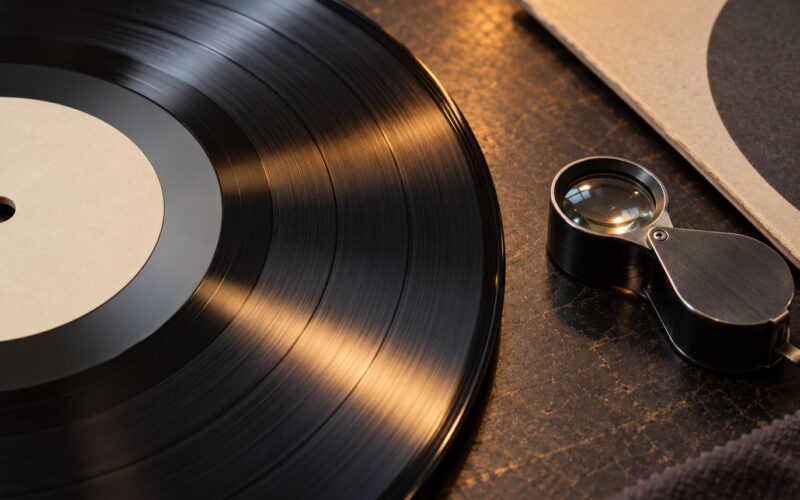
Look at the disc first. Run the torch at a shallow angle and note the hairlines, which are cosmetic and unnoticeable in playback. Then run a fingertip lightly across the surface, because a scratch you can feel is a different problem entirely and often audible. Check the runout area near the label, where cleaning damage and spindle scratches concentrate.
Turn the disc over and check side B with the same attention. Plenty of bad buys look fine until the flip, when you find the deep scratch on track four.
Now the sleeve. Look at the spine first, since collectors treat a worn spine as the strongest single negative signal of handling. Then corners, then seam splits along the spine edge, which are effectively permanent damage for most collectors. Ring wear on the front, writing on the back, and price stickers removed leaving a dull patch all count. A split seam matters more than a scuff, because it will not close up again.
Step 3: Identify Represses, Compilations, and Wrong Versions
The most expensive mistake is paying collector money for an ordinary pressing. A repress sounds the same to most ears but costs a fraction of an original copy, and misidentifying one is how beginners hand over their whole budget for nothing.
Turn the record over and read the runout etching, the matrix number, the catalog number and any country of pressing code printed near it. Deep-groove and locking-label pressings from the 1970s are identifiable by the label design and the way the disc sits. Compare everything you see against a Discogs entry for that release before accepting a “first pressing” or “rare edition” claim.
Also check the track list against the version you expected. Compilations, deluxe editions and single-album versions are priced as separate objects, and the sleeve art is often nearly identical between them. Bonus tracks and extra discs justify a higher price only if you would actually play them.
Step 4: Compare the Price With the Condition
A fair price is a condition-adjusted price. The same title in Very Good Plus is worth noticeably less than one in Near Mint, and most of that gap sits in the sleeve rather than the disc, because collectors grade sleeves harder.
Use a rough ladder like this to sanity-check an asking price against what you can see in front of you:
| Media grade | What you should see | Fair expectation against a clean copy | Fine for listening? |
|---|---|---|---|
| Near Mint | No visible wear, original inner sleeve, clean labels | Full asking rate | Yes |
| Very Good Plus | Light hairlines only, sleeve sharp with a hint of wear | Noticeably below clean rate | Yes |
| Very Good | Feelable light scratches, some audible surface noise, ring wear on the sleeve | Roughly a third to half below clean rate | Yes, after cleaning |
| Good Plus | Obvious scratches, frequent pops and clicks, seam split or split corners | Bargain territory, price should say so | Only if you plan to clean and repair it |
| Poor | Deep gouge, edge warp, damaged or missing label, mould risk | Often near scrap value | No |
Check the price against reality rather than the listing. On Discogs, look at completed and sold listings for that exact pressing, not the active asking prices, since active prices are optimistic. Note how many collectors have it on their wantlist, because a high want count against thin sales usually means the asking price is above what the market will actually clear at.
Be honest about the discount. If a copy is graded Very Good Plus but shows the defects of a Very Good, the seller is marking up rather than discounting. That is an overgraded record, and it is the most common trap in the whole hobby.
Step 5: Judge the Seller, Listing, and Return Policy
Seller behaviour predicts copy quality more reliably than any description. Overgrading is the single most repeated complaint from collectors in vinyl forums, so judge the person as carefully as the record.
Trustworthy signals: specific defect notes such as “small mark on side B” or “light sleeve scuffs”, real photos of the copy being sold including labels and spine, a high feedback score over a long selling history, and a return policy on condition. Sellers who describe themselves as conservative tend to be right more often.
Warning signals: “visual grade only” with no play test, stock photos instead of the actual item, grades that stay at Near Mint across an entire batch, no returns on a used record, and any pressure to decide quickly. A real deal survives you taking ten minutes to check your phone.
One question settles a lot: ask why the copy was graded as it was rather than one grade higher. Honest sellers answer in a sentence. Optimistic ones get vague.
Step 6: Estimate the Playability Problem
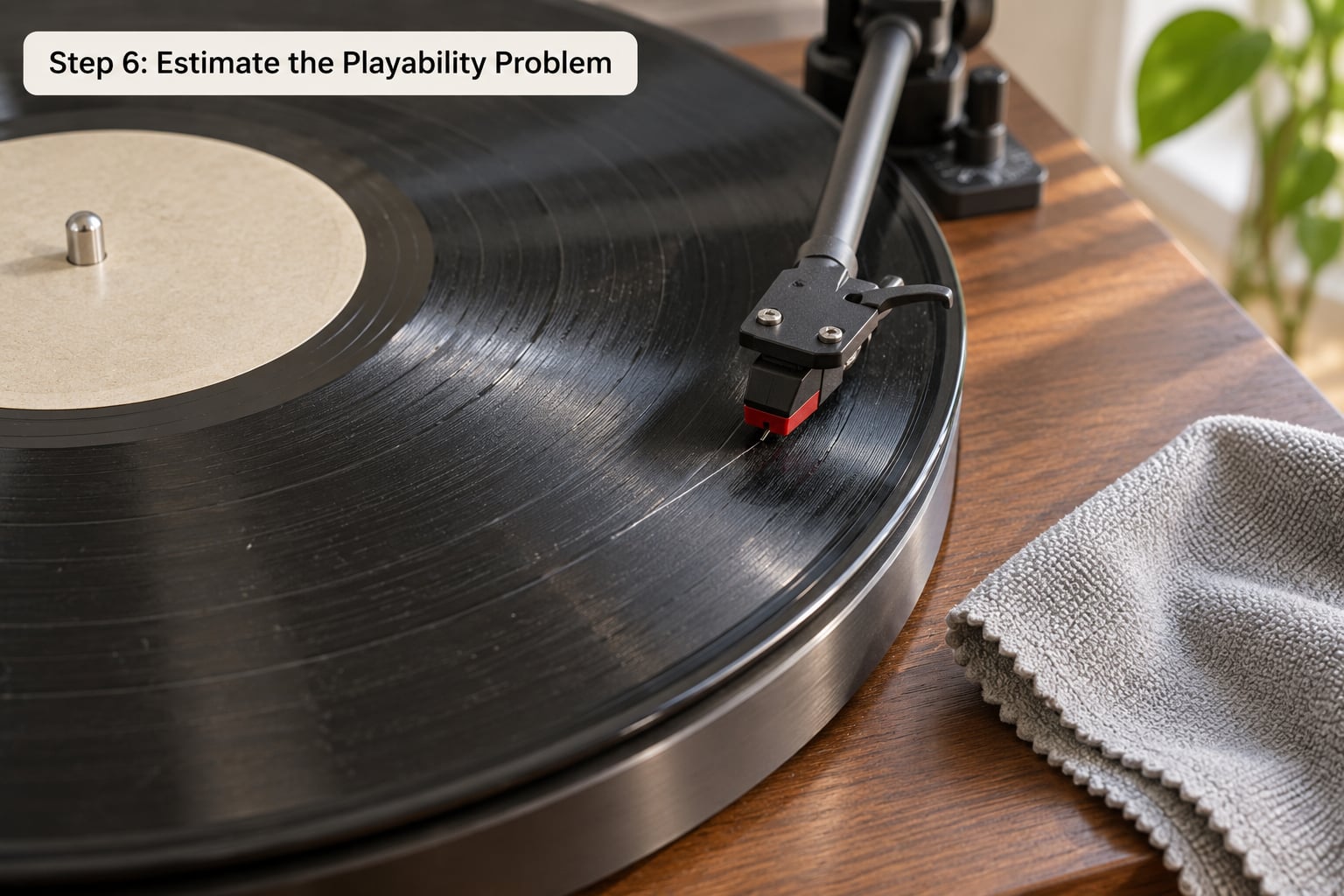
Distinguish cosmetic wear from playback damage, because they are priced completely differently. Hairlines, light scuffs and sleeve noise are background concerns. Persistent clicks, repeating pops in the same spot, audible surface noise through quiet passages and warping are playback concerns.
If a turntable is available, play the quietest track on side A for a minute before you commit. Pay attention to whether noise stays constant across the whole surface, which usually means dirt or residue that a cleaning will fix, or whether it worsens in specific spots, which usually means damage.
Check warp by looking across the disc edge on a flat surface with the light behind it. A gentle curve is normal; a visible wave that catches the stylus is not, and warped records are the most common bargain-bin disappointment. Watch for edge damage, which is how warping usually starts.
Also smell-test for mould on any older sleeve. If a record smells musty, assume the worst and walk away.
Step 7: Look for Complete Copies and Useful Bonuses
Completeness is real money, but only for certain titles. The original inner sleeve with printed lyrics, the OBI strip, the inner sleeve the record was originally sold in, bonus tracks and gatefold artwork all raise collector value, and they are frequently thrown away by the original owner.
That works in your favour at a fair, thrift store or record fair, where a complete Very Good Plus copy is often cheaper than an incomplete Near Mint one. It does not work as a blanket rule at an online marketplace, where sellers price completeness into the listing already. Check whether the extras are actually original or just photocopies, and whether the bonus material is material you will use.
Step 8: Make the Final Buy or Pass Decision
Run the copy against six checks in order: correct pressing, acceptable disc condition, acceptable sleeve condition, total price fair for that grade, credible seller, and a payment method with protection.
If five of six pass, buy it. If two of them are uncertain, pass. That last rule matters most for expensive records, where a wrong pressing or an overgraded sleeve costs you real money and cannot be returned. Cheap records are worth the gamble; an original pressing with a premium price is not.
Pay with a method that gives you a buyer dispute option, and check the seller’s feedback before you click, not after a problem. When you buy in person, ask politely whether there is any flexibility if the copy is not as described. It works more often than sellers expect, and it works best when you point at a specific defect rather than just asking for money off.
Common Mistakes
Grading by the cover. A beautiful sleeve tells you nothing about the disc. Check both, every time, and remember collectors pay a premium for sleeves.
Trusting marketplace asking prices. Asking prices are hopeful. Sold and completed listings are what people actually paid, so judge a deal against those.
Ignoring warp. A bowed record that costs half the clean price is not a deal if it skips through the quiet parts. Look across the edge before you look at anything else.
Paying collector prices for a common reissue. Check the matrix and catalog numbers against a database before accepting any first-pressing or rare-edition claim.
Overvaluing inserts. An OBI strip matters on a handful of titles, not on every album. It is not a reason to double the price.
Buying without checking your own shelf. Search your collection and your wantlist first. Duplicate albums are the quietest way to lose money on vinyl.
Skipping seller verification. Feedback scores, real photos and return terms take less than a minute to check, and they prevent nearly every bad online purchase.
Treating bargain bins as gambling tickets. They are worth it if you have a cleaning kit and a high tolerance for surface noise. Skip anything with a label you cannot read, a warped edge or a sleeve that smells musty.
Frequently Asked Questions
Is it worth buying used vinyl?
Usually yes, especially for a first shelf or for albums that were reissued without much improvement. A clean used copy in Very Good Plus gives you most of the playback quality of a new pressing at well under half the cost, and the original inner sleeve and inserts are often better preserved on a used copy. Skip used copies when noise tolerance is low, when the album is a deep-groove audiophile pressing, or when the pressing itself is the point of the record.
What is a fair price for a used vinyl record?
A fair price is the recent sold price for that exact pressing and grade, adjusted for condition. Check completed Discogs listings or completed marketplace sales rather than active asking prices. Then compare what you can see against the grade: light hairlines on a VG+ disc are worth a small discount, ring wear and a split seam are worth a large one. Anything listed near clean-copy price but showing visible defects is overpriced.
How can I check the value of vinyl records?
Read the label and the runout area first: catalog number, matrix number, country code and label design tell you the pressing, and the pressing sets the price. Then search that pressing on Discogs and read completed sales, the want count and the price history. For 45s, 45cat works better. MusicBrainz is free and useful for identifying a release, though it carries no reliable price data.
How trustworthy is Discogs?
The marketplace itself is credible because sellers are rated and disputes are handled, but seller grades are not audited. Treat the grading as the seller’s opinion, not as evidence. Look for play-graded wording, specific defect notes, real photos of the actual copy including labels and spine, a long feedback history and a return policy on condition. Overgrading is common enough that you should expect to downgrade what you are told by one grade.
Is there an app to find the value of vinyl records for free?
Discogs is the closest thing to a free reference, and completed sales there are the most reliable price data available. Popsike and 45cat cover 45s and some rarities that Discogs misses, and MusicBrainz identifies releases for free even though it does not price them. Paid grading services exist and are worth it only for records you already believe are rare. Always confirm with recent sold listings.
What grade of used vinyl is worth buying?
For listening, Very Good Plus is the sweet spot: light hairlines that you will never hear, a sleeve with minor wear, and a noticeable discount against a Near Mint copy. Very Good is fine too if the price reflects the noise you can expect and you plan to clean it. Below Good Plus, buy only for repair projects or wall art, and walk away from warped or mould-damaged copies at any price.
Conclusion
To spot a good deal on used vinyl, work in this order and never skip ahead. Confirm the exact pressing from the label and runout etching. Inspect the disc and the sleeve separately, with a torch at a low angle and a fingertip. Compare the asking price against recent sold listings for that pressing and check the discount actually matches the condition. Then verify the seller and pay with protection.
If you only remember one habit, make it the first one: check the pressing. It costs thirty seconds and it is where the expensive mistakes live.