The fastest way to sell a record collection is to sort it into three piles, grade every record honestly, price each one against recent completed sales, then list the valuable titles individually and move the bulk locally. Give yourself two or three evenings to get through it properly and you will not end up regretting a bad grade or a broken record in the post.
Most people asking how to sell a record collection are really dealing with two very different things: a handful of records that collectors actively want, and a long tail of common pressings that are worth more to a shop than they are to a buyer online. Treating those two groups the same is where sellers leave money behind.
This guide walks through the whole process, from the supplies you need to the packing method that keeps a disc from cracking in transit. It works for a collection of fifty inherited LPs just as well as it does for a thousand-record shelf.
Table of Contents
- What You Need
- Step-by-Step
- 1. Sort the collection by priority
- 2. Identify and grade each record
- 3. Research current market prices
- 4. Choose the right selling method
- 5. Photograph, describe, and list the records
- 6. Pack the record securely
- 7. Complete payment and document the transaction
- Common Mistakes
- Frequently Asked Questions
- What is the easiest way to sell a large record collection?
- How do I know whether my old records are valuable?
- Should I sell records to a local record store or online?
- How should I ship a vinyl record safely?
- Can I sell records that have scratches or damaged jackets?
- How do record stores pay for collections they buy?
- Conclusion
What You Need
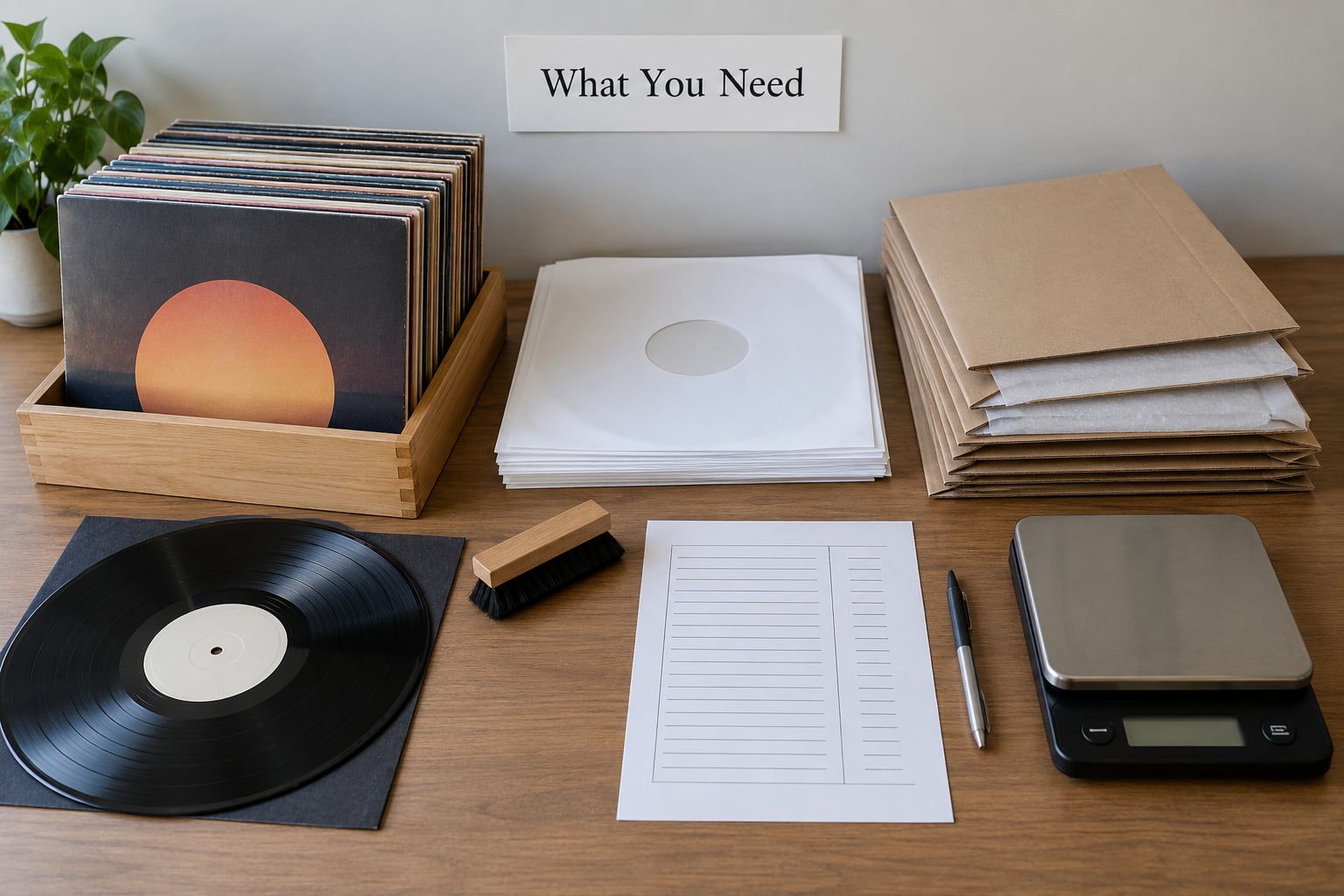
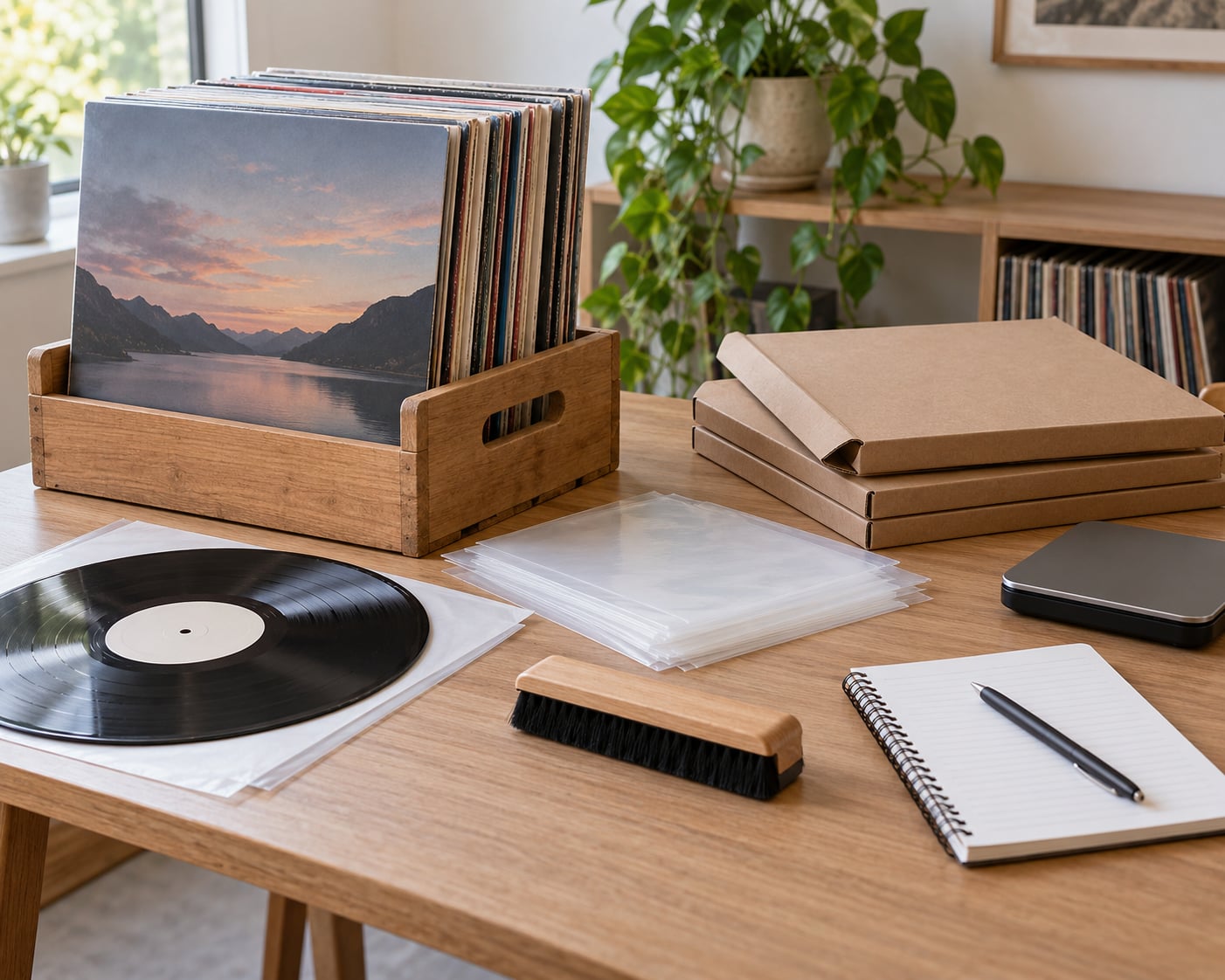
Gather your supplies before you start listing anything. Most of it is cheap, and the packing materials are the part you genuinely cannot skip.
- Poly outer sleeves for every record without one. They cost almost nothing per sleeve and they stop seam splits during handling.
- Inner sleeves, ideally the disc-specific ones with the round hole. Regular paper sleeves fit loosely and let the record shift inside the jacket.
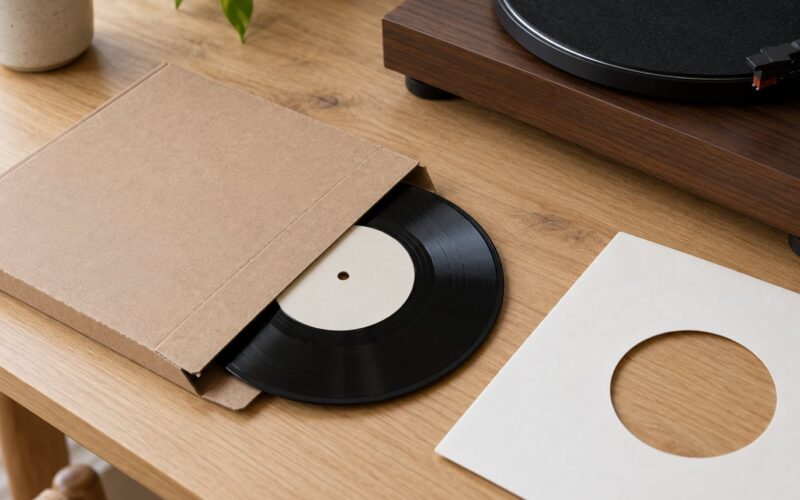
- Cardboard record mailers with stiffener inserts. A 13 inch mailer for LPs, a smaller one for 7 inch singles.
- Soft cleaning brush and a dust blower. You do not need anything wet or conductive to do a basic surface clean.
- A small magnifier or loupe for reading matrix numbers and checking for hairlines near the label.
- A USB microphone or phone camera for the play test, plus headphones.
- A shipping scale that reads to the ounce. Media Mail and courier rates turn on weight, and LP jackets weigh far more than you expect.
- A spreadsheet or inventory app with columns for artist, title, label, catalog number, pressing, grade, and your asking price.
On the research side, you want a Discogs account. The free tier lets you scan barcodes with the phone app, and the database gives you catalog numbers, matrix etchings, and a rough sense of how many pressings exist.
A stock paper ledger works if you dislike apps. Some sellers sort alphabetically and keep a running list with three columns: title, pressing, and grade. Whatever system you pick, write it down before you start pricing, because you will not remember pressing details six weeks later.
Step-by-Step
1. Sort the collection by priority
Pull everything out and sort it into five piles before you value a single record. The piles are keepers, potential high-value finds, obvious duplicates, damaged items, and bulk.
Keepers are the ones you would actually buy again. They should be the smallest pile. Duplicates go together immediately, because two copies of a common LP rarely both need a listing.
Damaged records still deserve a pile. A warped disc, a torn sleeve, or a water mark does not mean unsellable, it means a different buyer and a different grade. Separating them early keeps you from accidentally listing a damaged copy as a clean one.
You will finish this step knowing roughly how many records you are dealing with. That number decides whether this is a weekend project or a two-month one, and it changes which method in step 4 makes sense.
2. Identify and grade each record
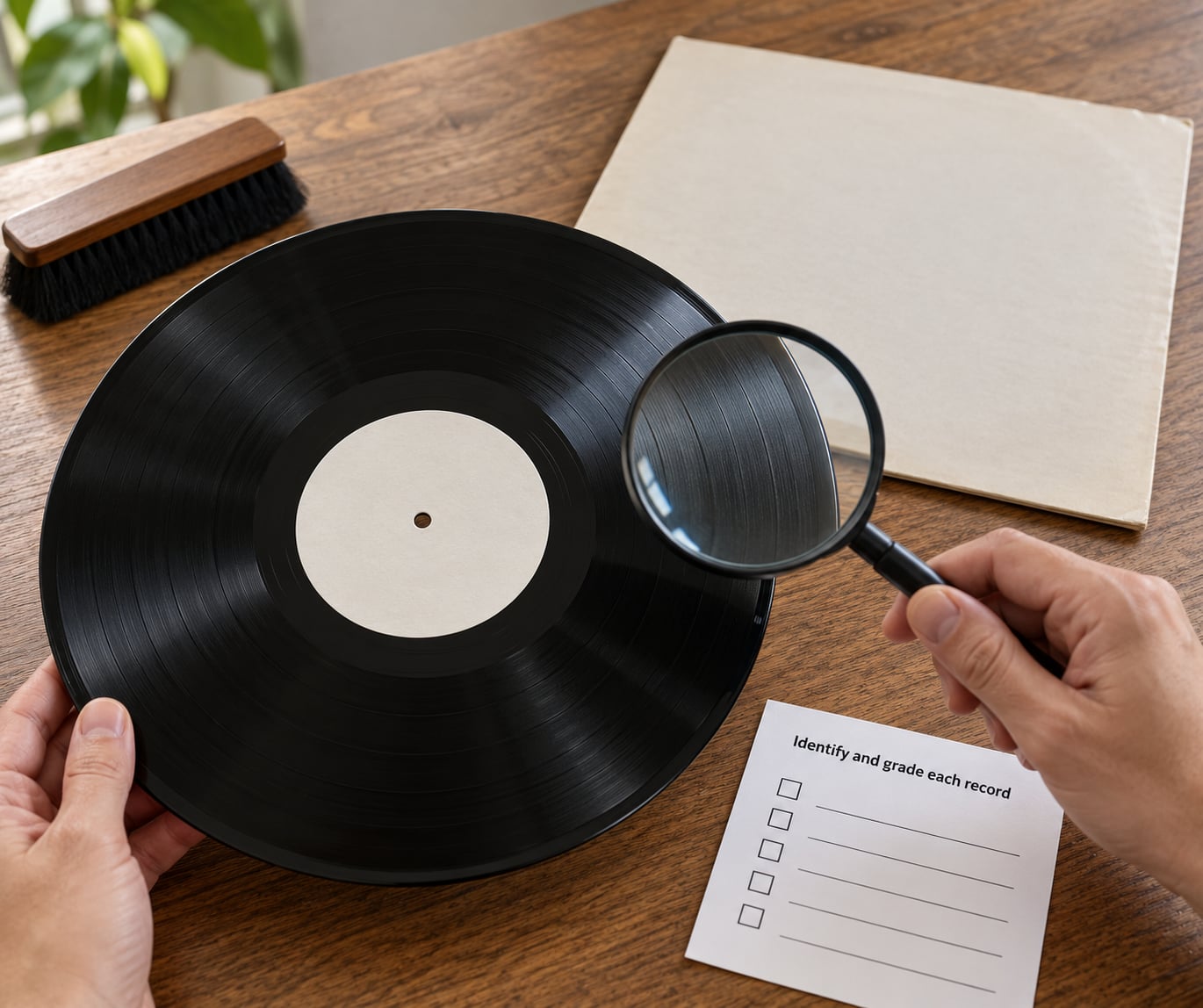
Identify the pressing first, then grade it. The pressing determines who buys the record; the grade determines what they pay.
Start with the catalog number on the label or the jacket, then check the run-out groove on the disc for matrix etchings. Match both against the Discogs release page. A first pressing usually shows in the matrix with clean, shallow etchings, while later repressings carry the plant letter or identifier and a deeper cut.
Grade the media and the sleeve separately, using the Goldmine standard that most buyers follow:
- Mint (M) — unplayed, perfect labels and jacket. Almost never true of a collection record.
- Near Mint (NM) — visually perfect, maybe one hairline. Plays clean.
- Very Good Plus (VG+) — light signs of careful use, no sound defects, sleeve barely touched.
- Very Good (VG) — audible surface noise in quiet passages, light ring wear on the sleeve.
- Good Plus (G+) — noticeable noise, a crackle between tracks, moderate wear.
- Good (G) — skips, crackle throughout, a worn sleeve with writing or split seams.
- Poor (P) — damaged, warped, or unplayable sections.
Look for the things that downgrade a record fastest: writing on the cover, seam splits, ring wear heavy enough to press into the vinyl, library stickers, corner dents, and promo or cut-out holes left in the sleeve.
Clean the record before you grade it. A soft brush and a blower remove the dust that makes a playable copy sound like a damaged one. A careful clean often nudges a copy up a grade, and the grade is the biggest single lever on what a buyer will pay.
Be conservative. Buyers spot an inflated grade faster than any other flaw, and once a listing is flagged the doubt carries over to everything else you sell. You get one reputation per account, and it is far cheaper to keep an honest grade than to walk it back after a complaint.
3. Research current market prices
Price against completed sales, never against asking prices. An asking price is a hope, a completed sale is a fact.
eBay sold listings filtered by category and then sorted by recently completed give you the clearest picture for common pressings. On Discogs, sort the sales history by most recent and note the median rather than the top result. Popsike aggregates sold prices across several Japanese and international auctions and is the better tool for vintage Japanese pressings, which often carry a real premium.
Then adjust for your specific copy. Condition matters more than almost anything else, and the gap between NM and VG can be two-thirds of the value. A record with the original inner sleeve, insert, and poster is worth more than a bare copy.
Set a floor before you list. Decide the lowest figure you would accept, write it in your spreadsheet, and do not chase a buyer below it. Sellers who have no floor end up taking whatever is offered.
4. Choose the right selling method
Match the method to the record. There is no single best channel for a whole collection, so sellers who get good results run a hybrid: the valuable titles online one at a time, the bulk locally in groups. Getting how to sell a record collection right comes down to routing each title to the channel that suits it.
- Discogs marketplace — you keep the full asking price less commission and shipping. Best for rare pressings and audiophile reissues, but each listing takes real time to write properly.
- eBay sold and buy it now — full price less platform and payment fees, plus shipping. Handles common pressings and runs of similar titles well.
- Local record shop — a fraction of retail, paid on the spot. The right home for bulk, common records, and anything you want gone this week.
- Facebook Marketplace and local groups — full price with no fees, but the buyer collects. Works for mid-value records within driving distance.
- Record fair — full price less the table cost and your day. Worth it if you have a few hundred well-graded mid-value records and nothing rare.
- Specialist dealer or bulk buyer — wholesale rate, no packing or shipping on your part. The usual answer for estates and very large collections.
Local shops are the fastest option and the worst price. Buyers at record stores typically quote somewhere around a third to half of what the same title sells for online, and they only take what they can resell quickly. The trade is instant money and zero effort in exchange for most of the value.
Online marketplaces keep more of the money but add fees, packing time and the risk of a damaged arrival. On a mid-value title the postage is usually the deciding factor, so check what shipping will do to your total before you settle on a price. That is the honest trade: a higher return for many more hours.
Record fairs move a lot of vinyl in a single day, which makes the table cost worthwhile if you have a few hundred well-graded mid-value records and nothing rare. Bring a way to take payment on your phone and a stack of sleeves for the buyers who turn up with none.
For inherited or estate collections, professional buyers will come to you, inspect, and offer on the spot. That is useful when the goal is a clean handover rather than maximum return.
5. Photograph, describe, and list the records
Buyers cannot hold the record, so the photos do the selling. Shoot the actual item, not a stock image, and show the flaws close up rather than hoping nobody notices them.
Most successful listings use four or five photos: the front cover, the back cover, the label, the disc surface, and a close-up of any damage. A photo of the run-out groove helps a serious buyer confirm the pressing themselves.
Write the description in a fixed order so buyers can scan it fast:
- Artist, album title, format, and speed for singles
- Label and catalog number exactly as printed
- Pressing country and year, plus first pressing or reissue if you verified it
- Matrix number from the run-out groove
- Media grade and sleeve grade, using Goldmine terms
- What is included: inner sleeve, insert, poster, obi
- Any defects stated plainly: seam split, writing, ring wear, noise between tracks
- Return terms and whether shipping is included
On shipping, decide early whether the price includes postage. Many sellers fold a calculated shipping cost into the asking price so buyers on either side of the country see the same number, and it removes the argument from checkout.
Photograph 45s and 78s separately from LPs. Buyers of older formats care about label variation, rim damage, and crackle far more than sleeve condition, so a shot that makes a 78 look like an LP costs you the sale.
6. Pack the record securely
The method that prevents almost all shipping damage is simple: the record goes inside the jacket, and the disc never touches the jacket cardboard directly.
Remove the disc and place it in a poly sleeve. Then slide both the disc and the jacket into a second, larger poly sleeve together, with the disc facing the front of the jacket so any corner split in transit pulls against the sleeve instead of the record. This is often called shipping vinyl outside the jacket, and it works.
Add two cardboard stiffeners, one on each side of the album. Put the sandwich into the record mailer, fill the corners so nothing shifts when you shake it, and seal the outer flap well.
For anything valuable, insure the parcel and use a tracked service. Photograph the packed item before it goes into the box, especially if the listing shows the same angles, so you can demonstrate the condition on arrival.
Weigh the packed mailer rather than guessing. Heavier parcels cost more to send and get split by carriers more often, so double-box anything going more than a short distance.
7. Complete payment and document the transaction
Take payment through the platform, never outside it. Marketplace payment systems hold funds until delivery is confirmed and give you a path back if a buyer claims an item never arrived. Direct bank transfers for high-value records leave you with no protection at all.
Check the buyer’s name, address, and feedback history before packing anything. Scammers on vinyl forums tend to follow the same script: urgent interest, a strange address, a request to pay by invoice or gift card, or pressure to skip the listing photos.
Keep a record of every sale. Record what the item was, what you graded it, what you sold it for, and the tracking number. If a buyer later disputes the condition, that file is your only real evidence.
Confirm the tracking shows movement, and if a parcel stalls, message the buyer early. Most problems resolve faster when both sides know what is happening.
Common Mistakes
Almost every avoidable loss in a record sale comes from one of a handful of errors.
Grading too generously. Buyers play the record before grading your sleeve, and Discogs buyers in particular will notice. Grade the copy you actually have, mention every flaw, and let the photos back you up. The fix is to grade first, photograph second, and never upgrade your description to win a sale.
Believing an asking price. A record listed at a high number tells you what one seller hopes for, not what the market pays. The fix is to check completed sales from the last few months and price off the middle of that range.
Missing the pressing entirely. Two copies of the same album can differ by a factor of ten, and the difference is usually in the catalog number and matrix etchings. The fix is to check the run-out groove on anything you think might be early.
Thin photography. Blurry photos and missing label shots generate messages and lowballs. The fix is a fixed five-photo set for every listing, taken in daylight or under a plain lamp.
Packing the record inside its jacket. This is the single most common cause of cracked records and split seams. The fix is the double-sleeve method above, plus stiffeners.
Sending without tracking. Untracked postage means no recourse when a parcel never turns up. The fix is a tracked service on everything, and insurance above the point where a lost item would hurt.
Ignoring fees before setting a price. Platform and payment fees come off the top, so a price that looks competitive can leave less in your pocket than a lower one sold locally. The fix is to work backwards: decide the minimum you want to keep, then add fees and shipping.
Leaving return terms vague. A buyer unsure of the return policy will either haggle or walk. State plainly what you will accept back and in what window.
Leaving nothing behind. Unsellable records still need a plan. Donation, recycling, or a specialist disposal service is better than a basement that never empties.
Frequently Asked Questions
What is the easiest way to sell a large record collection?
Sort into piles first, grade honestly, then sell the valuable titles one at a time online and move the bulk to a local shop or a bulk buyer in groups. Listing everything individually takes far longer than most people expect, and the difference in return only justifies it for records that are genuinely scarce or well graded.
How do I know whether my old records are valuable?
Check the catalog number and the matrix etchings in the run-out groove, then look up completed sales for that exact pressing. Condition matters as much as rarity, so grade the media and sleeve honestly. Value comes from a specific pressing in good condition, not simply from age.
Should I sell records to a local record store or online?
Use the shop for bulk and speed, and sell online for anything rare or well graded. Shops usually quote a fraction of retail, often around a third to half of what the same title brings online, but they pay immediately and take the packing work off you. Online keeps more money but costs hours per listing.
How should I ship a vinyl record safely?
Put the disc in a poly sleeve, place it and the jacket together in a second larger sleeve with the disc facing the front, sandwich the album between two cardboard stiffeners, and place it in a record mailer. Ship tracked, insure anything valuable, and weigh the packed mailer so postage is accurate.
Can I sell records that have scratches or damaged jackets?
Yes. Almost every used record has some wear, and buyers grade accordingly. The key is honesty: describe the scratch, the seam split, or the writing on the cover in the listing and photograph it closely. Damaged copies usually sell to other collectors or to dealers, often at a discount to clean copies.
How do record stores pay for collections they buy?
Most shops value a collection on the spot after a quick sort, based on the titles they know they can resell. They may pay in cash, by store credit, or on consignment where they display the record and split the sale with you. Expect a wholesale rate well below retail, and get the terms in writing.
Conclusion
How to sell a record collection without losing weeks comes down to four jobs: sort it into keepers, finds, bulk and discards, identify and grade each record properly, price against completed sales, then match every title to a channel that suits it.
Start with the sort. Pull everything out, get it into piles, and see what you are actually dealing with. Then take the records you understand best, the ones you can identify pressing and grade confidently, and list those first. Most sellers find the process gets easier with the first twenty listings, and the pile they thought was worthless often contains the surprise.