To find the value of old vinyl records, identify the exact pressing, grade the vinyl and the sleeve honestly, then compare recent completed sales of that same pressing. Age alone decides nothing. A 1972 record can be worth a few pounds or a few thousand depending entirely on which version it is and what shape it is in.
That is the whole method, and it takes about twenty minutes per record once you know where to look. The hard part is resisting the two traps almost everyone falls into: trusting asking prices instead of sold prices, and grading your own copy a grade too high.
A vinyl record appraisal is simply an estimate of what one specific pressing is worth, based on what that pressing has actually sold for. Collectors who inherited a box of records from a relative usually find the answer is modest. Forums are blunt about it: inexperienced sellers over-grade by a lot, and the inherited mainstream rock collection is usually worth very little. Better to hear that now than after you price a box of forty records online.
Table of Contents
- What You Need
- Step-by-Step: How to Find the Value of Old Vinyl Records
- 1. Identify the Record
- 2. Assess the Record’s Condition
- 3. Check Pressing and Edition Details Once you know the pressing, check what kind it is. A first pressing is not automatically the valuable one, but it is the version most people look for. A test pressing is a small pre-release run, and a white label promo is an advance copy sent to reviewers and radio stations; both carry a premium only when they are genuine, which is why collectors insist on checking the catalogue entries rather than trusting a seller’s claim. Represses and later issues of the same album are usually common and usually inexpensive, though regional editions sometimes surprise: a European or Japanese issue can carry an obi strip, a paper band with price and catalogue details, and Japanese pressings have a devoted following because the vinyl and mastering differ. Coloured vinyl, picture discs, gatefold sleeves and gatefold-era inner sleeves also affect value, as do hype sheets, posters and bonus inserts. Complete beats nearly identical incomplete copies. Verify the details rather than assume rarity, because the counterfeit and bootleg trade copies famous sleeves convincingly. 4. Research Comparable Sold Prices to Find the Value of Old Vinyl Records
- 5. Estimate a Realistic Value Range
- 6. Document and Verify the Record
- Common Mistakes
- Frequently Asked Questions
- How can I check if my vinyl records are worth anything?
- Is there an app that tells you the value of vinyl records?
- What does VG+ mean on vinyl?
- Where do I get old vinyl records appraised?
- Are old vinyl records worth any money?
- Conclusion
What You Need
You need very little to start, and most of it is free. Here is the short list.
- A bright, angled light source. A desk lamp held low and to the side of the record reveals hairlines that disappear under overhead lighting. A window works too.
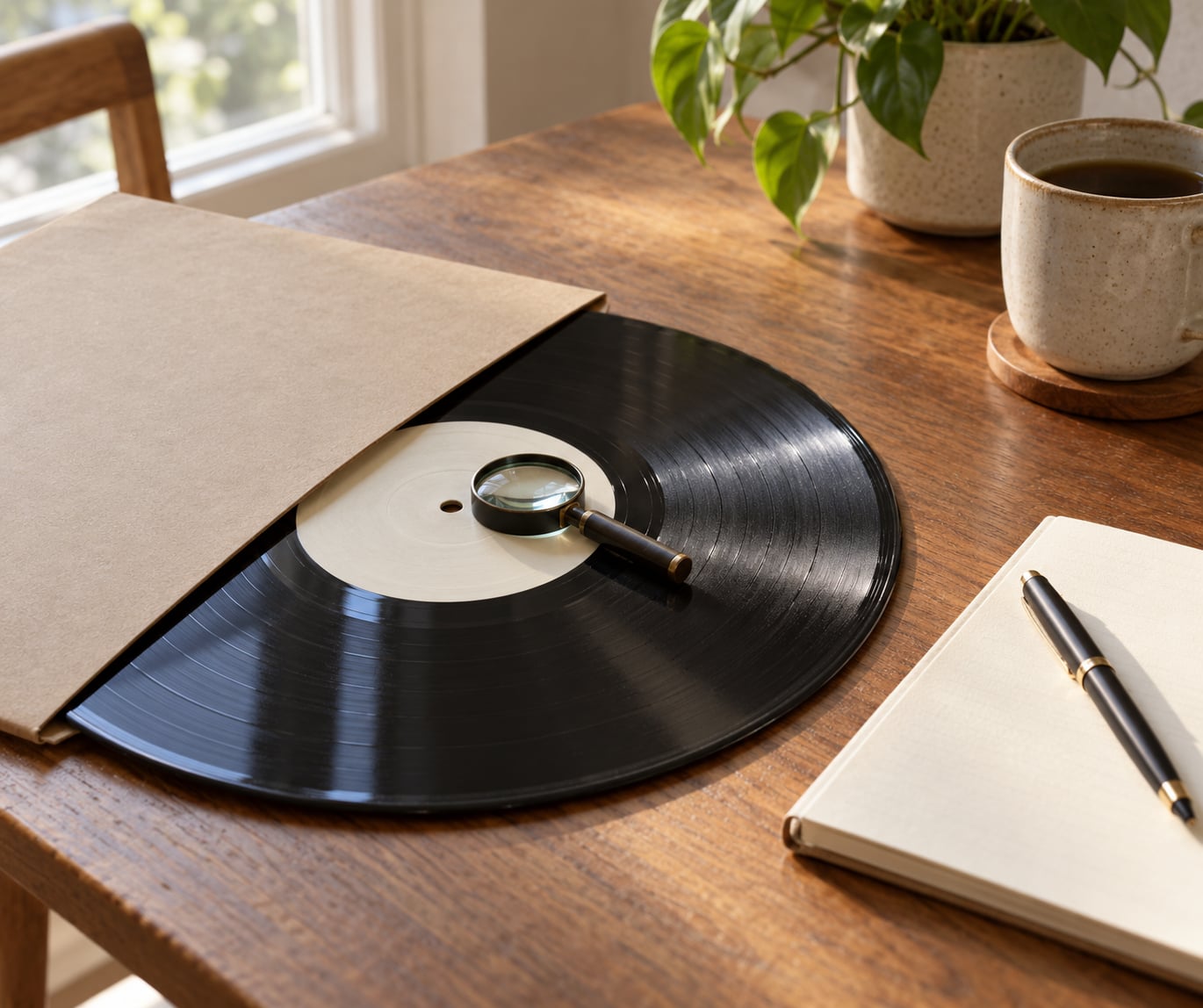
- A hand lens or loupe. A cheap 10x loupe lets you read the etched markings in the runout groove, which is usually where the pressing information lives.
- A record cleaning kit. Most “dirty” records are just dusty. Cleaning before grading stops you from downgrading a record for surface noise you can remove in five minutes.
- A ruler or small calipers. Useful for checking sleeve size against the expected format, and for spotting a mis-sized jacket.
- A phone camera. You will photograph labels, the runout area and sleeve flaws. Do it once, properly, and the same photos serve research, listings and insurance.
- Access to sold-price research. Discogs gives you the most; eBay completed listings, Popsike, ValueYourMusic and auction house archives fill in the gaps.
- A spreadsheet. Even a phone notes app works for a handful of records. Beyond that you want columns you can sort and total.
Step-by-Step: How to Find the Value of Old Vinyl Records
1. Identify the Record
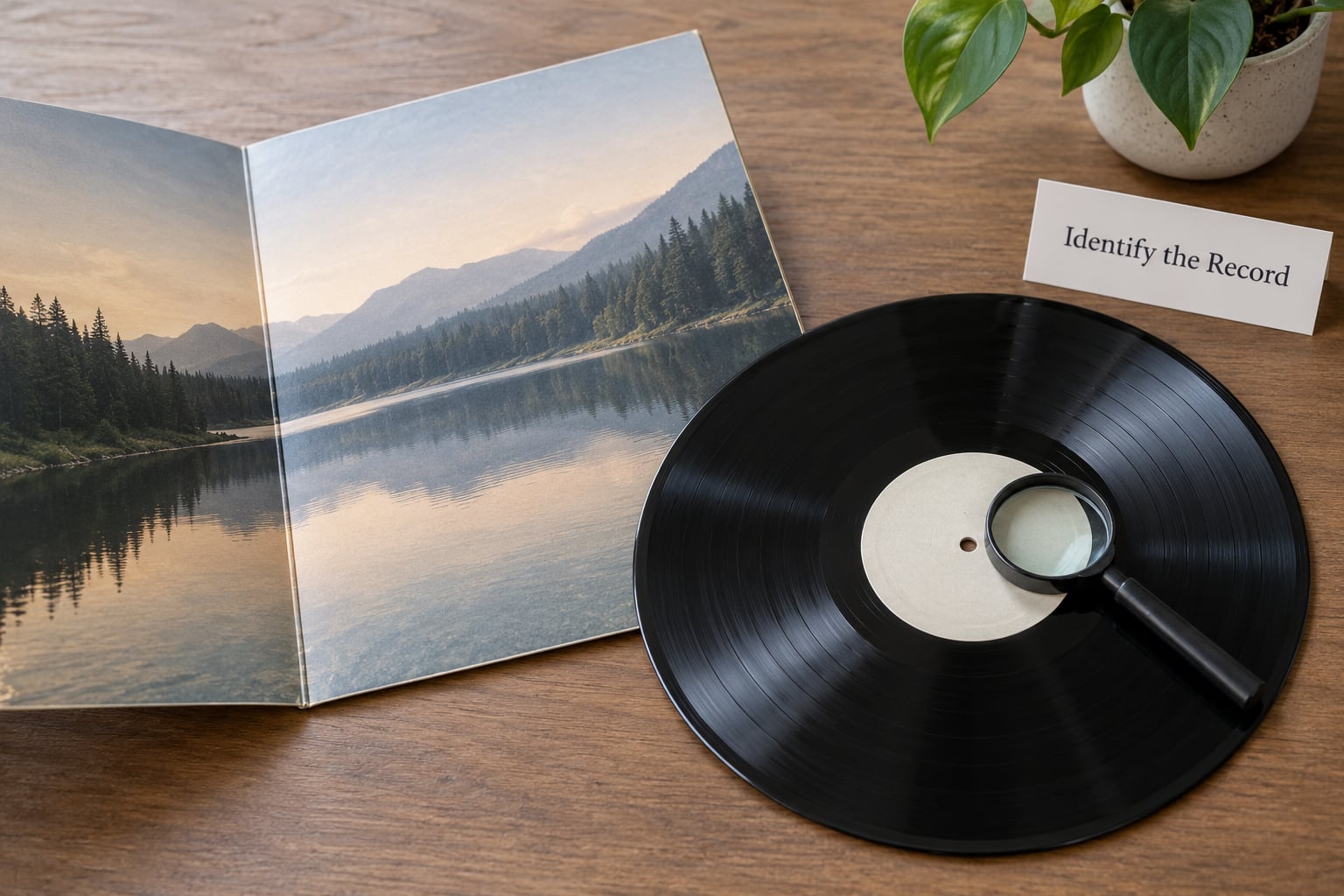
Start with what is printed on the label and the sleeve, then confirm it against the record itself. You are trying to answer one question: which version is this?
The catalog number is usually printed on the label, on the back of the sleeve, or on the spine. Write it down exactly, including letters, numbers and any country suffix. Alongside it, note the artist, the title, the format (LP, EP or 45), the label name and design, and the country of manufacture printed in small type near the rim of the label.
Then flip it over. The area between the last track and the label is the runout groove, also called the dead wax. What is etched there is the most reliable pressing evidence you have. Collectors on the forums point to exactly this spot: enter the etched information visible under close inspection on the inner runout of the actual record, not what the cover claims.
How to read matrix numbers: a matrix number is typically an alphanumeric code, often something like a letter, a group of digits, a letter, another group of digits, then a stamper letter. The letters identify the master lacquer, the digits the side, and the final letter the stamping plant. Around the code you may also find hand-etched symbols, an asterisk, a paired asterisk, or a star and asterisk combination. Those marks usually indicate a promotional copy. On a record you can search by the matrix code directly, and collectors have built entire discographies around them.
When the details are clear, the record is identified. When they are not, photograph the label and runout and move on rather than guessing.
2. Assess the Record’s Condition
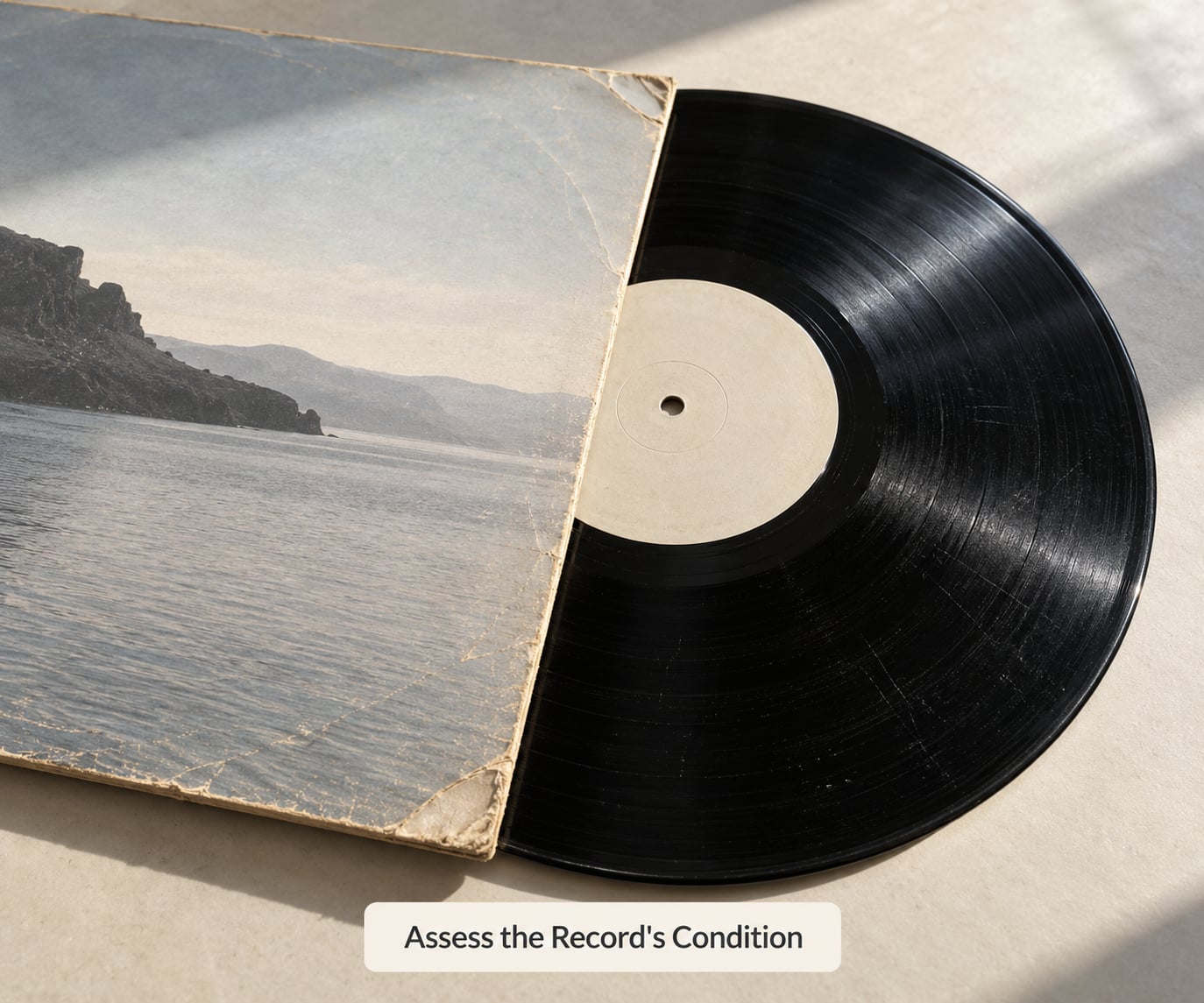
Grade the media and the sleeve separately. The standard is the Goldmine scale, and the two grades get written as a pair, such as VG+/VG for near-Near-Mint vinyl in a Very Good sleeve.
Inspect visually first, before playing anything. Hold the record under angled light and rotate it. Distinguish a hairline, which is a light mark visible only in reflection, from a scratch, which you can sometimes feel with a fingernail. Check the label itself: ring wear, writing, tears and spindle holes all cost money, and a seam split on the label can drop a record several grades.
Then look at the sleeve. Ring wear around the hole means the record was pulled out by the edge and slid back in thousands of times. Corner splits, spine lean, fading and creases matter. A split seam along the top or bottom edge is the most common sleeve defect and it is structural, not cosmetic.
Play-grade last. Put the record on and listen through the quietest passages, which are the intros and the run-outs. Surface noise that clicks constantly, repeating pops, or a passage where the music fades under the noise all pull the media grade down. Check for warping by looking at the disc edge-on on a flat surface, and for mold by looking closely at the sleeve interior in dark corners.
| Grade | What it means | Share of top value |
|---|---|---|
| Mint (M) | Perfect, unplayed | 100% |
| Near Mint (NM) | Nearly perfect, one or two very faint marks | 85-95% |
| Very Good Plus (VG+) | Light marks, no feel, plays cleanly | 70-80% |
| Very Good (VG) | Noticeable wear, audible but not distracting | 50-60% |
| Good Plus (G+) | Shiny wear, clicks between tracks | 35-45% |
| Good (G) | Heavy wear, persistent noise, label wear | 20-30% |
| Poor (P) | Damaged, warped, cracked or incomplete | 5-10% |
When a record sits between two grades, grade it down. That rule comes straight from dealer practice and it saves money on every single listing.
3. Check Pressing and Edition Details
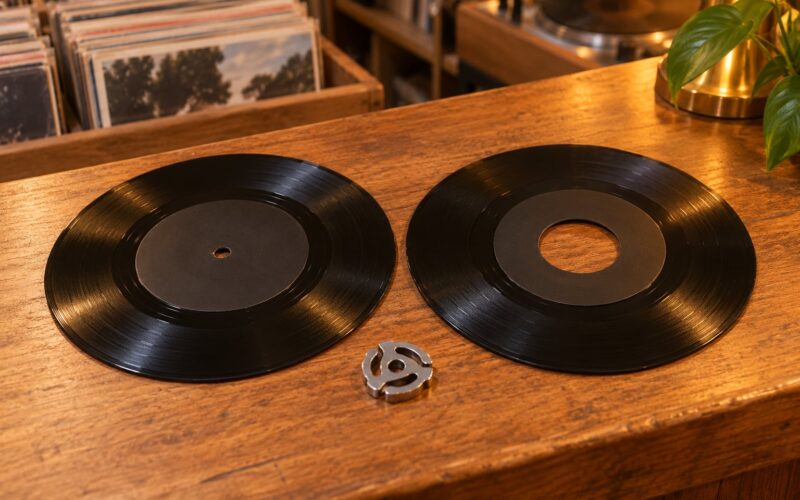
Once you know the pressing, check what kind it is. A first pressing is not automatically the valuable one, but it is the version most people look for. A test pressing is a small pre-release run, and a white label promo is an advance copy sent to reviewers and radio stations; both carry a premium only when they are genuine, which is why collectors insist on checking the catalogue entries rather than trusting a seller’s claim.
Represses and later issues of the same album are usually common and usually inexpensive, though regional editions sometimes surprise: a European or Japanese issue can carry an obi strip, a paper band with price and catalogue details, and Japanese pressings have a devoted following because the vinyl and mastering differ.
Coloured vinyl, picture discs, gatefold sleeves and gatefold-era inner sleeves also affect value, as do hype sheets, posters and bonus inserts. Complete beats nearly identical incomplete copies. Verify the details rather than assume rarity, because the counterfeit and bootleg trade copies famous sleeves convincingly.
4. Research Comparable Sold Prices to Find the Value of Old Vinyl Records
This is the step most guides get wrong in a sentence and skip in practice. You are not looking at what sellers are asking. You are looking at what buyers actually paid.
On Discogs, search the artist and title, open the master page, then pick the exact pressing matching your catalog number, label design and matrix. Open that release and read the Sales History at the bottom of the page. Sort by recent, note the condition each sold copy was graded at, and look for the median of the last several sales in your grade band rather than the single highest number ever recorded.
On eBay, filter to Sold Items and Completed Listings. Prices there are noisy because grading descriptions are unstandardised, so treat them as a range rather than a number. Popsike and ValueYourMusic are strong for 45s and for anything where Discogs coverage is thin. WorthPoint tracks auction results, which is where older and higher-end titles surface.
| Source | What it shows | Best use |
|---|---|---|
| Discogs sales history | Completed sales with the grading noted | Primary benchmark for LPs |
| eBay sold listings | Completed transactions, loose grading | Volume and quick sanity check |
| Popsike | Historic sold prices by format | 45s and 78s |
| ValueYourMusic | Aggregated sold prices | Rare titles, cross-checking |
| WorthPoint | Auction results | Higher-end and older titles |
| Scanner apps | An estimate from cover art matching | A rough first pass only |
About the apps, since people ask constantly: a scanner identifies a record by its cover image, not by its pressing, so it happily returns the price of a first pressing for a common reissue in your hand. Useful for a ten-second sanity check, unreliable as a valuation. Forums treat them the same way: helpful first pass, never a substitute for reading the matrix and play-grading.
5. Estimate a Realistic Value Range
Take the recent same-pressing, same-grade sales and build a range from the middle of them. Then adjust. A complete copy with inserts sits at the top of the range. A missing insert or a seam-split sleeve sits below it. A record nobody in the catalogue wants may have sold three times this year, and that thin trade tells you something the asking price does not.
One thing to separate clearly: collector value and what a dealer will hand you today are different numbers. A local record store buys for resale margin, and its offer is often a fraction of what the record fetches when it sells to a collector. That is not cheating, it is a different transaction. Ask for trade-in value as well as cash, and take it as information either way.
For a collection of a hundred records or more, do not research each one individually. Pick a sample of twenty, value them properly, group them into tiers by pressing type and grade, apply a rate per tier across the rest, then check fifteen percent of your estimates against the sold data. You will be within a sensible margin in an afternoon, and you will spend your research time on the records that actually move money.
6. Document and Verify the Record
Before you sell, insure, consign or pay someone to appraise, photograph the record properly. Shoot both labels flat, the full sleeve front and back, the spine, the runout groove under the same angled light, and any flaw you have graded down for. Include the catalog number and matrix in the frame so the record can be identified later without guessing.
This takes a couple of minutes and it settles arguments. It also makes batch work possible, since whoever helps you will not have to re-identify anything.
Common Mistakes
Trusting asking prices. Listings show what sellers hope for, not what the market paid. Fix: only ever work from sold or completed transactions.
Over-grading your own copy. Near Mint is the most abused phrase in record selling. Fix: grade down when unsure, and check what grade the sold copies actually carried.
Assuming every old pressing is rare. Most records from the 1970s and 1980s were pressed in enormous quantities. Fix: confirm the pressing was actually limited before treating it as scarce.
Misreading the matrix. Copying the sleeve catalogue number and skipping the dead wax means you may be pricing a different record entirely. Fix: always read the runout.
Comparing different editions. A Japanese first press and a European reissue are not comparable prices. Fix: match catalog number, country and matrix before you compare anything.
Ignoring the sleeve and the warp. A warped record plays badly and buyers discount it hard, and a ring-worn sleeve can cost more than the vinyl. Fix: grade both, separately, and check the disc edge-on for warp.
Paying a premium for a suspicious copy. Bootlegs copy sleeves well. Red flags: printing that looks sharper than the label, odd paper, missing or duplicated matrix marks, and a catalogue entry that never mentions that version. Fix: verify against a database before paying more.
Frequently Asked Questions
How can I check if my vinyl records are worth anything?
Start with the label and sleeve: note the artist, title, catalog number, label design and country of manufacture. Then read the etched matrix number in the runout groove between the last track and the label. With that pressing identified, open the Discogs sales history for the same catalog number and read the median of recent sales in your condition grade, not the highest price ever recorded.
Is there an app that tells you the value of vinyl records?
Scanner apps identify a record from its cover art, not from the pressing in your hands, so they often return the value of a rarer first pressing for a common reissue. They are useful as a ten-second first pass and useless as a valuation. For a real number, read the matrix and runout yourself, grade the copy, and check completed sales for that exact pressing.
What does VG+ mean on vinyl?
Very Good Plus describes a record in good shape with light signs of use: a few faint marks, no feel to the touch, no distortion in playback. When you see a pair like VG+/VG, the first grade is the media and the second is the sleeve, so that record has near-Near-Mint vinyl in a sleeve with visible wear. Dealers grade down when a record sits between two grades.
Where do I get old vinyl records appraised?
For most collections, a specialist record store is the practical first stop: ask for a trade-in value as well as the cash offer, and treat the gap between the two as useful market information. Paid written appraisals from a recognised appraisal service make sense for estates, insurance schedules or authentication of a high-value pressing, because only a documented report carries weight for those purposes.
Are old vinyl records worth any money?
Most of them are worth a little, and a few are worth a lot. Inherited collections of mainstream rock and pop from the 1970s and 1980s are usually worth modest amounts, because those records were pressed in very large numbers. Value concentrates in early or unusual pressings, high-demand artists, clean copies with original sleeves and inserts, and titles collectors actively hunt for.
Conclusion
Start with the pressing. Read the label, the catalog number and the matrix in the runout groove, and write all three down before you look up a single price. Then grade the complete copy honestly, media and sleeve separately, grading down when you are unsure. Finally, check recent completed sales for that exact pressing and take the median rather than the headline figure. Only after those three steps is it worth deciding whether a professional appraisal or a sale makes sense.