Learning how to find rare records at thrift stores comes down to three habits: arrive with a specific want list, read the label and the runout groove before the record leaves your hands, and walk away when the condition is bad. Give any bin 30 to 60 minutes of proper sorting and most of the value in it surfaces without leaving the store.
The reason it works is simple. Thrift stores price donated media as bulk inventory at a flat per-item rate rather than by market value, so records collectors actively want — first pressings, regional and small-label releases, promo copies, colored variants — get sold for pocket change. Your entire edge is knowing which identifiers to read and how fast you can read them.
Here is the rapid scan I run on any record that makes me pause. It takes about a minute and it filters out most of the crate.
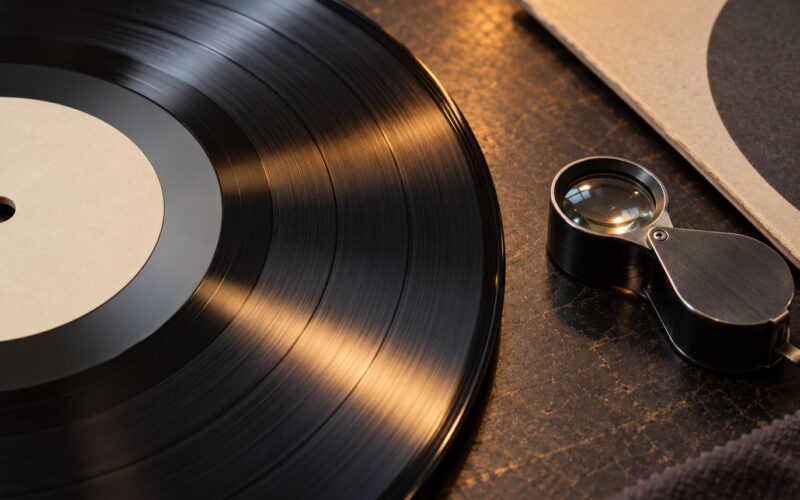
- Angle the light. Tilt the record so raking light runs across the surface and the scratches pop out. Flat overhead light hides everything.
- Read the label, not the cover. Label design, catalog number, country of manufacture and any stereo or mono marking tell you more about pressing than the sleeve does.
- Look for a runout etching. The unmarked band near the label edge carries the matrix number, which is the closest thing vinyl has to a fingerprint.
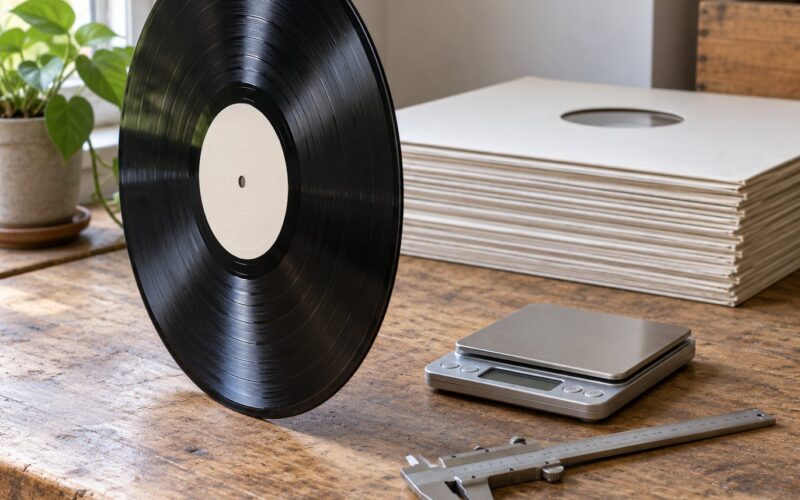
- Press the label flat against a hard surface. If the record rocks or the edge is visibly uneven, it is warped and warped records lose value fast.
- Grade the sleeve separately. Ring wear, a split seam and a writing pen mark are graded on their own axis from the vinyl, and collectors pay for the cover as well as the disc.
Table of Contents
- What You Need
- Step-by-Step: How to Find Rare Records at Thrift Stores
- Build a Focused Shopping List
- Learn Which Stores and Neighborhoods to Try
- Search the Bins by Label, Shape and Era
- Identify the Record Before Buying
- Inspect the Vinyl, Sleeve and Insert
- Compare Seller Price With Market Value
- Check and Preserve the Record at Home
- Common Mistakes
- Frequently Asked Questions
- How likely am I to find a genuinely rare record at a thrift store?
- Can I identify a record when the catalog number is missing?
- Are sealed or shrink-wrapped thrift-store vinyl records automatically valuable?
- How do I inspect old 78 rpm records without damaging them?
- Is it reasonable to negotiate the price of records at a thrift store?
- Conclusion
What You Need
The gear list is short, and most of it costs nothing. What matters is having a reference before you walk in, because a bin of 200 records takes far longer than you think once you stop to check anything.
- A shortlist of wanted records and labels. Specific artists, catalog numbers and pressing variants, not vague genres.
- A Discogs account, or the Discogs app. The database covers the widest range of pressings and lets you save a master release to your watchlist.
- A price-checking method. Completed sales, not active listings. Popsike and Goldmine cover US and UK pricing; 45cat is the reference for singles.
- A small cleaning kit. A soft microfiber cloth, a nylon brush and a bottle of isopropyl alcohol handle dusty sleeves and light grime.
- Cash, mostly in small bills. It makes a polite counter-offer possible and skips a queue.
- A flat, sturdy tote or crate. LPs carried in a floppy shopping bag bend at the corners on the walk home.
- A flashlight or a phone with a bright light. For the record section in a poorly lit back corner, and for reading small print in the runout.
- A notebook or your phone. Write down the catalog number and matrix mark the moment you confirm one. You will not remember it from the car.
Step-by-Step: How to Find Rare Records at Thrift Stores
Seven steps, in the order that actually works. Skipping ahead to the third one because something shiny caught your eye is how you walk out with six duplicates of the same Carole King album.
Build a Focused Shopping List
A want list turns an afternoon of browsing into a search. Write down five to fifteen targets — an artist, a pressing, a label, a genre, a regional issue — and rank them so you know what you are willing to spend extra time on.
Separate genuinely scarce things from things that only look scarce. A first pressing of a well-known album gets reissued constantly and turns up in every used bin in the country. A regional pressing of an obscure title from a small label does not. The difference is in the label design, the catalog number pattern and the plant code, not in the fame of the artist.
Add a few wildcards. The second-most-repeated tip on r/vinyl is simply to keep an open mind, because the format itself still turns up things nobody was looking for.
Learn Which Stores and Neighborhoods to Try
Charity-linked chains get the most traffic, which cuts both ways. They receive the most donations and their staff price almost everything identically, so genuine finds sit next to filler at the same tag. A recurring complaint in the r/vinyl thread on cheap used records is that big chains routinely price common titles above what a local record shop asks for its dollar bin.
Independent oddball shops and small independent thrift stores often beat the chains. They receive estate collections instead of steady donation streams, which means slower turnover and deeper discounts on individual titles.
Estate sales and antique mall vendor stalls are worth a separate trip when you have time. That is where regional pressings, library contract copies and private press material tend to surface, because those records rarely survive a donation stream.
Search the Bins by Label, Shape and Era
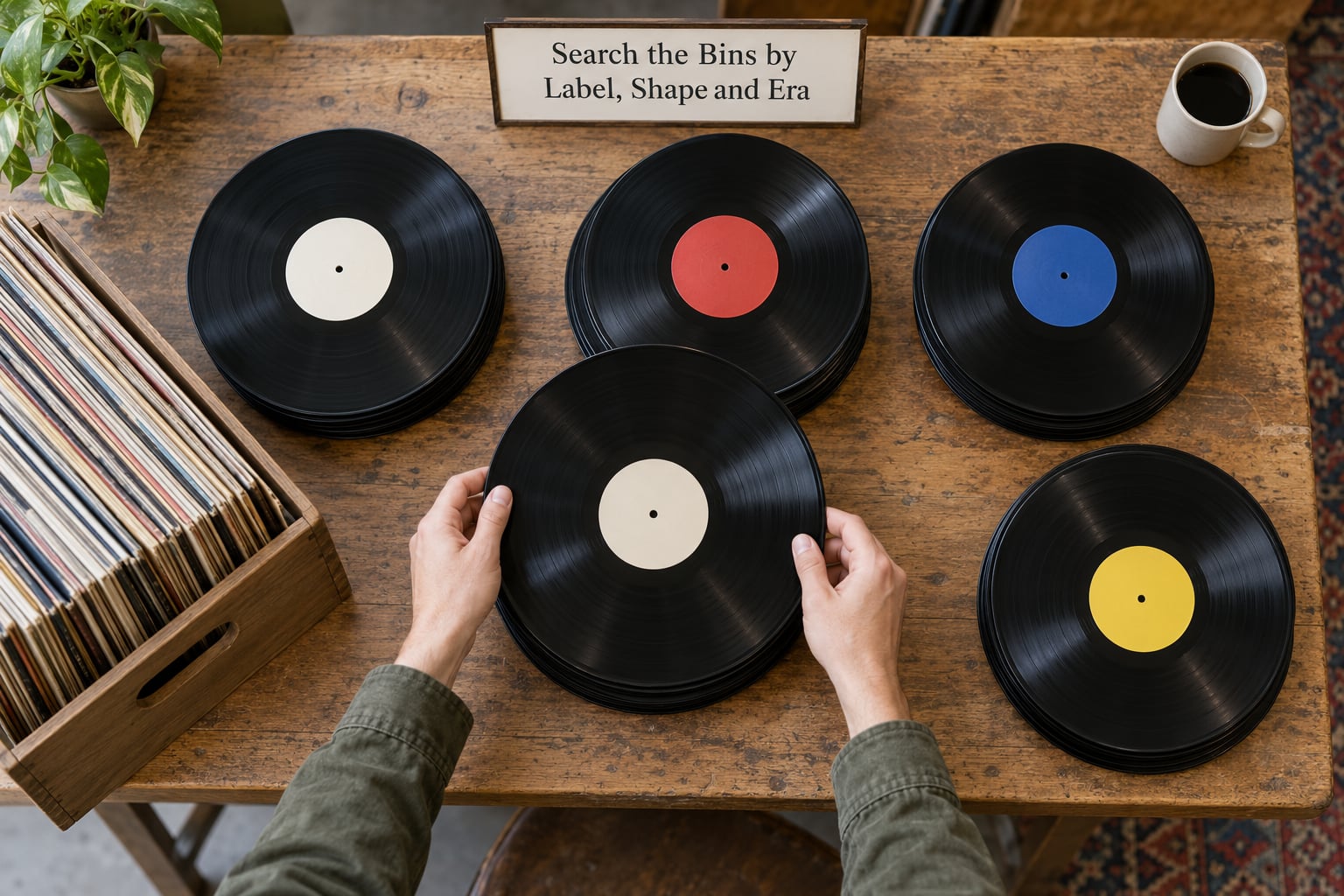
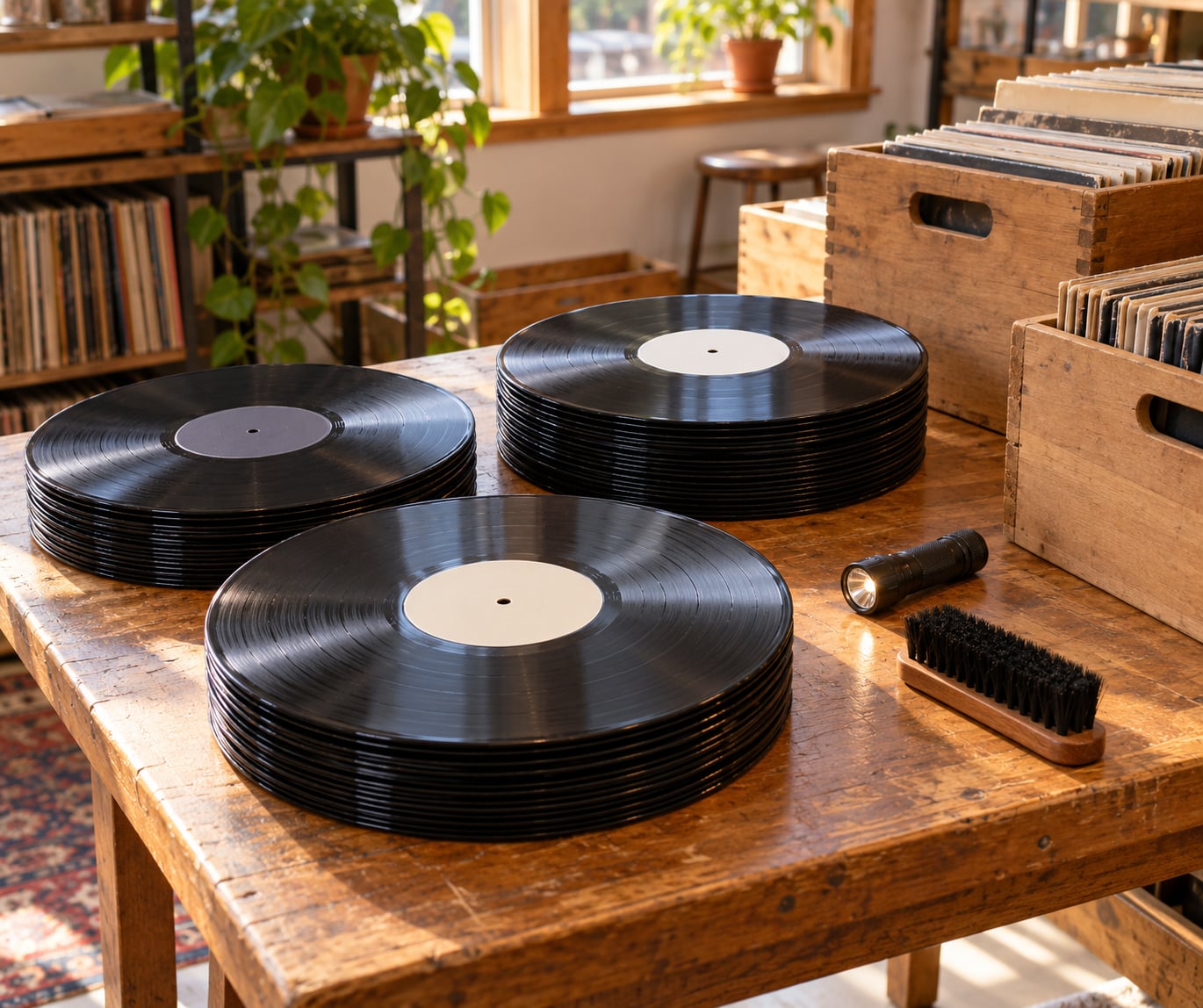
You cannot read 200 labels one at a time. Sort visually and physically first, then read.
- Label color and design. Black, red, green, orange, white label, split and full art. A design that looks cheap is often a regional pressing of an expensive record.
- Catalog number shape. Longer alphanumeric codes usually mean later issues; short numeric codes on a familiar label often mean earlier ones.
- Country of manufacture. Printed on the sleeve or the label. UK, German, Japanese and Jamaican pressings show up in dollar bins in the US all the time.
- Sleeve format. Gatefolds and thick card inner sleeves cost more to make and skew toward higher-grade pressings.
- Shape and thickness. A 7-inch single in a stack of LPs is already separated value. A test pressing or an acetate is thin, plain and usually unlabelled.
Identify the Record Before Buying
A matrix number is the alphanumeric code hand-etched or stamped into the un-grooved band between the last track and the label. That band is called the runout groove, or the dead wax. It records the master the cut was lacquered from, the stamper, usually the side, and often the year, which makes it the single most useful identification tool you have.
Read the spine, then the runout, then look the combination up in Discogs. Confirm the artist, the album, the pressing, the country and an approximate year before you commit to anything. If the sleeve has been replaced, the runout is your most reliable source.
Unlabelled records need a slower path. Plain white or black label, no printing, thin vinyl and a hand-written number usually means an acetate, a test pressing or a promotional copy. Promos often carry a notation such as not for sale or a company name on the label. These are frequently interesting and frequently fragile, so price the risk before you buy.
Inspect the Vinyl, Sleeve and Insert
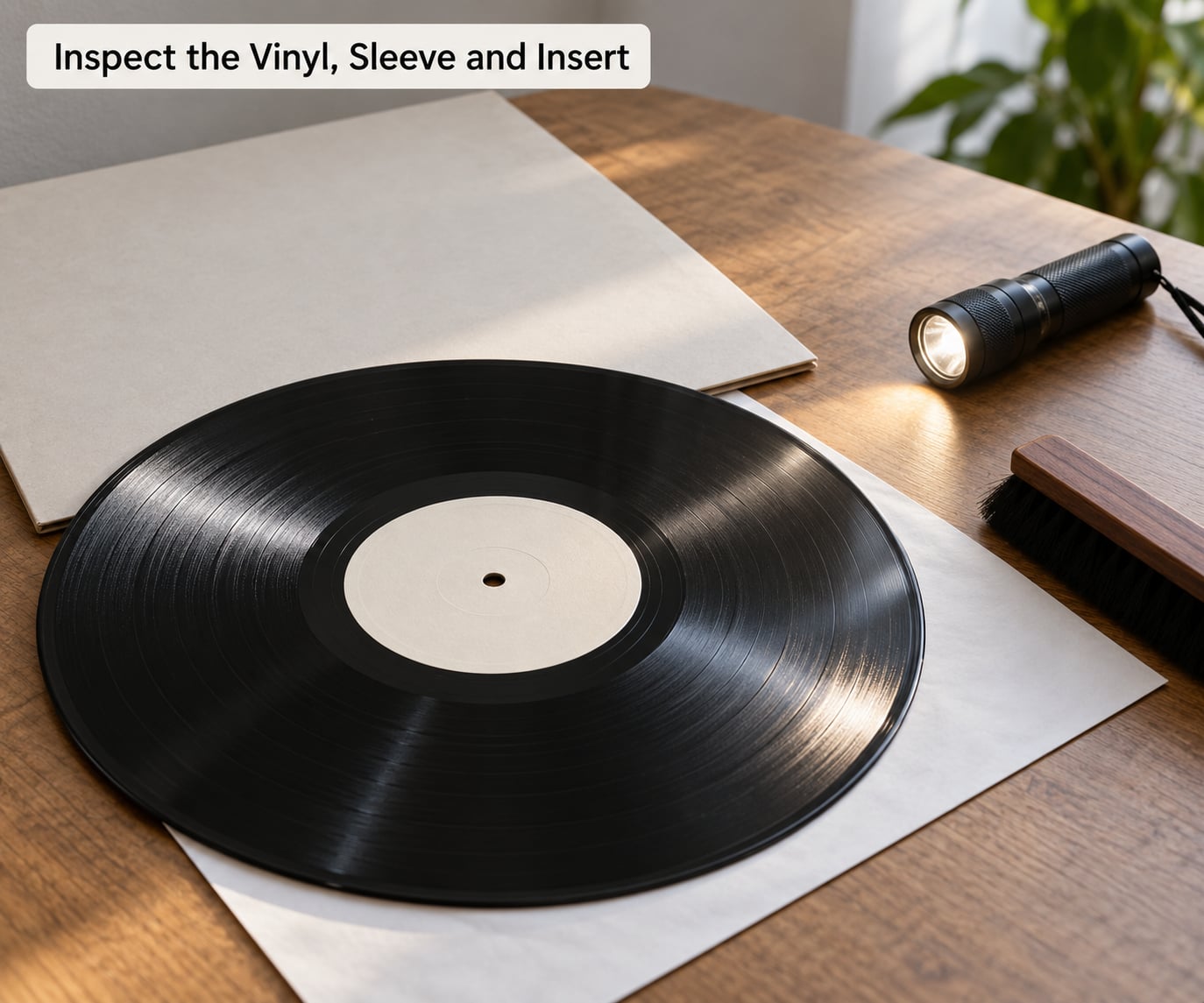
Run the field check in this order and you will have a usable grade in about ninety seconds.
- Surface. Angle the light across the vinyl. Light hairlines are normal; deep scratches you can feel with a fingernail are not.
- Warp. Look at the record edge-on on a flat surface. A visible curve, or a record that rocks, will never sit properly on a platter.
- Lead-in grooves. The two or three blank grooves at the start of each side should look smooth. Visible scratches or a run-on groove suggest a rough handling history.
- Seam split. Look at the corners and the spine of the jacket. A split at the spine or a detached corner drops jacket value hard and it does not repair well.
- Ring wear. A ring worn around the centre hole means a record was shelved upright without a sleeve. Two rings means it was moved a lot.
- Writing and water damage. Pen marks on the back, tide lines, board swelling or a musty smell all point to damp storage and possible mold.
- Inserts. An original inner sleeve, a poster, a hype sticker or a booklet can be worth real money on certain titles. Amateur shrink wrapping, applied years after manufacture, usually is not.
Grade the disc and the jacket separately. VG+ vinyl in a Good Plus jacket is a normal pairing, and a Near Mint disc does not rescue a split spine.
Compare Seller Price With Market Value
Check completed sales, never active listings. An active listing is someone’s optimistic starting number; a completed sale is money that actually changed hands for a copy in the same condition. Popsike and Goldmine both show sold history, Discogs shows market history by pressing, and 45cat covers 7-inch releases in detail.
Then subtract the honest costs. Sleeve repair, pressing replacement and grading fees all come off the top, and a warped record may need pressing before it is worth anything at all. Set a maximum figure for each item before you start negotiating, and do not raise it in the moment because something else in the crate interests you.
Paying for rarity you have not verified is the expensive mistake. A catalog number you read half-correctly is not a first pressing until the runout confirms it.
Check and Preserve the Record at Home
At home, lay everything out in the order you grabbed it and start confirming the purchases rather than the impulse ones. Look up each matrix number properly, play each record once through, and note anything that skips, crackles badly or runs out of speed.
Clean with a soft cloth dampened with isopropyl alcohol, rotating the record on a steady surface. Never clean a sleeve with a wet cloth. Paper and card do not recover from water, and a single careless wipe can turn a VG+ jacket into a Good one.
Re-sleeve into a fresh anti-static inner as soon as a record is clean and confirmed. Store upright, in a cool dry room, away from direct sunlight, with weight distributed evenly across the crate. Document what you bought, the store, the date and the price in your notebook.
Common Mistakes
Most bad thrift purchases come from a short list of habits, and every one of them has a simple fix.
- Shopping without research. A bin of unfamiliar records is a lottery. Fix: spend twenty minutes on Discogs before you go.
- Assuming every unlabelled record is rare. Most are test pressings, promo copies or nothing special at all. Fix: confirm the matrix runout before treating it as anything.
- Reading the wrong side of the label. The pressing plant and catalog number often differ between sides. Fix: check both labels and both runouts.
- Paying graded prices for ungraded vinyl. You cannot grade to VG+ in a charity bin. Fix: compare against ungraded sold prices and subtract condition.
- Ignoring sleeve condition. Collectors buy the artifact, and the jacket is most of it. Fix: grade the jacket on its own axis.
- Buying one copy of a common title. Barbra Streisand, Carole King’s Tapestry, Julie London and the Miami Vice soundtrack surface constantly, which is why they are affordable. Fix: check your shelves and your want list first.
- Damaging a record while removing it from a crate. Records slid out at an angle pick up scratches. Fix: lift by the label, support both hands, and carry records flat.
One more worth naming: buying damaged copies to flip. A warped, scratched or moldy record is nearly impossible to sell as anything but a fixer, and the cost of making it presentable often exceeds what you paid.
Frequently Asked Questions
How likely am I to find a genuinely rare record at a thrift store?
Most trips return a handful of records worth keeping and nothing rare at all. Collectors who do find real grails describe years of regular visits rather than a lucky afternoon. Budget for one good find per ten trips, keep buying the common titles you actually listen to, and the hobby stays affordable regardless of what shows up.
Can I identify a record when the catalog number is missing?
Yes, usually. Work from the label design, the artist and title on any surviving sleeve, the country of manufacture and the matrix number etched into the runout groove. Search the matrix number on Discogs, which often leads straight to the exact pressing. Records with no label and no sleeve are much harder, and acetate copies are the usual explanation.
Are sealed or shrink-wrapped thrift-store vinyl records automatically valuable?
No. Sealed means unplayed, not rare. A sealed copy of a common reissue is still a common reissue, and many thrift-store sealed records were wrapped years after manufacture as a donation-packing measure. Value comes from the pressing, the inserts and the condition, and shrink wrap hides the very defects that would tell you which it is.
How do I inspect old 78 rpm records without damaging them?
Hold them by the edges with both hands and never slide them against each other in a crate. 78s are brittle, especially wartime shells, so keep them flat in the tote rather than standing them up. Avoid flexing the disc to test for warp, and skip any that show deep cracks, chipped edges or heavy flaking, since these do not clean or play.
Is it reasonable to negotiate the price of records at a thrift store?
Often yes, because tag prices on records are set by donation policy rather than market value. The best approach is factual: point out a scratch, a split seam or a warp and ask for a lower figure, especially when you are taking several records to the counter. Some stores have no returns on media, so agree before you pay rather than after.
Conclusion
Anyone can learn how to find rare records at thrift stores; the method is simple enough to repeat. Build a focused want list before you leave the house, learn to read label design and matrix numbers until the runout groove is obvious, check the stores that turn over donation stock slowly, and spend real time in the bins instead of glancing at the front rows.
Then verify both pressing and condition before you pay, grade the sleeve separately from the disc, and walk away from anything warped, split or musty. Start with one store you have never tried, on a weekday morning, with an hour and a list. That is usually how it starts.