The short answer: a well-kept LP usually makes it through several hundred full plays before you hear anything wrong with it. Played on a correctly set up turntable with a fresh stylus, a record can comfortably handle 100 to 200 plays per side, and collectors routinely report original pressings from the 1960s and 70s that still sound right after hundreds of plays.
Nobody counts plays by marking a record, though, so the number is less a rule than a starting point. Groove depth, pressing quality, tracking force, dirt and storage conditions decide whether that record is still playing cleanly after 50 plays or after 5,000.
Table of Contents
- How Many Plays Before a Record Wears Out?
- What Counts as a Play?
- Why Do Records Wear Out?
- What makes one record wear faster than another
- Why inner groove distortion is not always wear
- How Much Does Playback Quality Matter?
- How Do Dirt, Cleaning, and Storage Affect Record Life?
- Signs a Record Is Reaching the End of Its Life
- How to Extend the Life of a Vinyl Record
- Frequently Asked Questions
- Do 33 RPM records last longer than 45 RPM records?
- Are modern vinyl pressings more durable than older ones?
- Can you still play a record after it has skipped?
- How many times can I play one album on repeat?
- Does changing the stylus protect my records?
- Do cheap turntables ruin records?
- What to Do First
How Many Plays Before a Record Wears Out?
Most well-maintained records last roughly 100 to 200 plays per side, or about 200 to 400 plays across both sides. Records that get cleaned before every play, stored upright in a stable room, and played at a sane tracking force routinely go far past that, with plenty of owners reporting 1,000 or more plays with no audible loss.
The play count is not a switch that flips. Wear shows up gradually as surface noise and shrinking stereo separation, and by the time you notice it, most of the damage is already done. Judge a record by what you hear, not by the counter on a turntable that stopped being made decades ago.
| How the record is treated | Usual life per side | Typical total across both sides |
|---|---|---|
| Dusted with a soft brush before each play, kept indoors, tracking force set correctly | Several hundred plays | 1,000 or more |
| Cleaned occasionally, stored in a shelf, occasionally played at too high a tracking force | About 100 to 200 plays | 200 to 400 |
| Played constantly, no cleaning, thin or recycled vinyl, cartridge never checked | Audible wear within a few dozen plays | Under 100 |
One controlled test reported by Big Fudge Vinyl put a record through around 1,200 plays while cleaning it every 20 plays, and reported no decline in sound quality. A separate 50-play comparison run by VWestlife and written up by Headphonesty found records played 50 times sounded close to the untouched control copy.
Both results point at the same thing. Play count matters far less than the conditions during each play.
What Counts as a Play?
The word is used loosely, and that is why two people can argue about the same record for an hour. It helps to define the situations first.
- A full side, start to finish. Roughly 18 to 22 minutes of music. This is the standard unit most owners mean when they say a record has had 100 plays.
- A whole album, both sides. About 40 to 45 minutes, so two sides counts as two plays under the per-side convention.
- A DJ mix or continuous program. A 12-inch single spun for an hour or an hour and a half gets far more groove contact than a single album side, even though most people would call that one play.
- A repeat loop. Cueing the same ten seconds for twenty minutes hammers one small section of the groove. Physically it is twenty minutes of wear, and that section will show it first.
- A partial play. Listening to one track then flipping the record leaves most of the side untouched, so the wear is smaller than a full side.
This matters when you compare records. Someone who says their copy has 500 plays on it may have played two sides of an album a week for a year. Someone else with the same number may have cued the same drum break for an afternoon.
Why Do Records Wear Out?
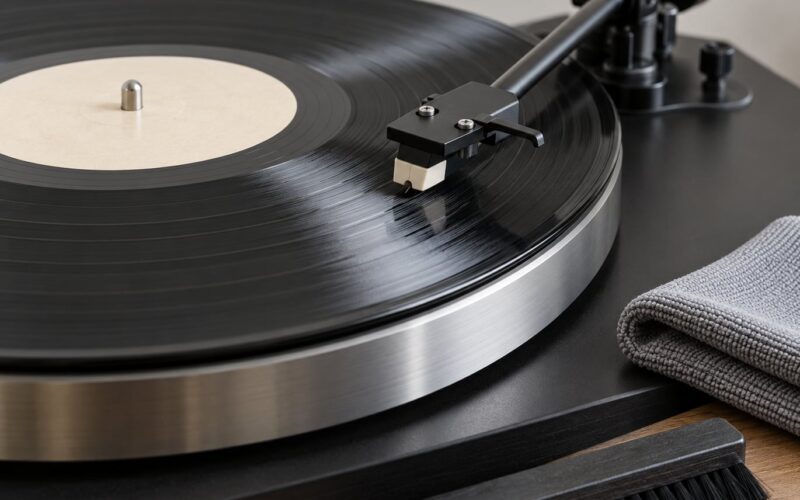
The wear mechanism is small and physical. A stylus rests in a groove that is only a few millionths of an inch deep and travels along it at a steady speed while the record turns underneath it. Every pass flexes the vinyl a little and scrapes a microscopic amount of material onto the tip.
Over hundreds of passes the groove walls round off, the V-shaped cross section flattens, and the stylus has less and less of a surface to sit in. That is what a worn groove looks like under magnification, and it is why a record can look flawless to the naked eye while sounding tired.
What makes one record wear faster than another
- Groove depth. More deeply cut grooves leave more material for the stylus to work with. Thin, budget pressings and picture discs have shallower cuts and less margin.
- Compound quality. Virgin PVC is stiffer and more dimensionally stable than recycled compound. Recycled material is perfectly good for listening, but a little softer at the groove.
- Record weight. A 180g or 200g pressing is not indestructible, but a heavier disc deforms less under the stylus.
- Pressing quality. A rushed pressing with a poorly cut master can have ragged groove walls from day one, and those rough walls wear faster than smooth ones.
Why inner groove distortion is not always wear
Inner groove distortion is the term for audio that tightens, thins, or loses bass as the stylus reaches the last inch or two before the run-out groove. Collectors often blame it on wear, but a perfectly fresh record with a badly aligned cartridge or a low anti-skate setting will show the same symptom. Check the setup before you write a record off.
How Much Does Playback Quality Matter?
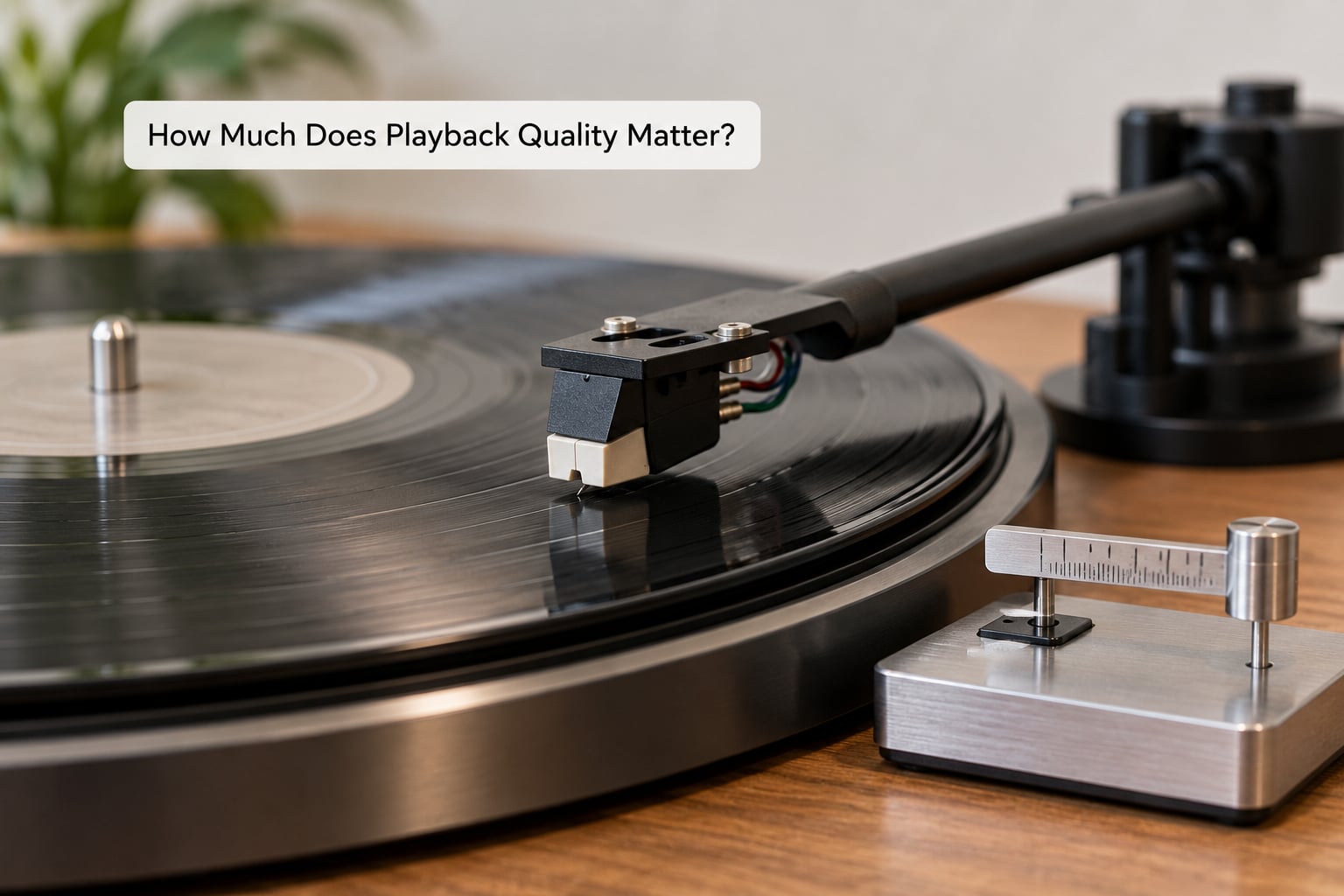
Playback quality has more influence on record lifespan than the weight of the record or the number of times it is played. The two failure modes are a stylus pressed too hard, which gouges the groove, and a stylus pressed too lightly, which mistracks and scrapes the sides of the groove at an angle.
Both leave damage. The force setting is the single biggest variable most owners control, and most budget turntables ship with the tracking force set well above what the cartridge designer intended.
- Set tracking force to the cartridge spec. Most moving-coil and moving-magnet cartridges are specified somewhere between 1.5 and 2.5 grams. Set it with a proper tracking force gauge, not by ear.
- Set anti-skate properly. Anti-skate is there to stop the tonearm being dragged inward by the groove’s friction. Set too low, it works against itself and pushes the stylus harder into the inner grooves. That is a direct route to inner groove damage.
- Level and align the cartridge. An aligned cartridge keeps contact even across the record. A badly aligned one bobs in and out on the louder passages, mistracking in the places where the groove is hardest to follow.
- Use a stylus shaped for the cartridge. A line-contact tip on a cartridge designed for a conical tip, or a badly undersized replacement, will not sit where it should.
- Replace the stylus on schedule. Manufacturers quote life in hours of use, typically 500 to 1,000 hours for a diamond stylus. A worn diamond is a rounded pebble that gouges instead of glides, and it wears your records and itself at the same time.
Heavier records get a reputation for durability, and a 180g pressing usually holds up better than a thin one. But weight alone does not decide lifespan. A 200g record played at four grams on a worn stylus will be ruined sooner than a thin record played correctly and cleaned each time.
The myth that budget gear destroys records deserves a closer look, because it is only half true. The widely discussed VWestlife test played records on a cheap turntable with a ceramic cartridge for 100 plays and found no audible degradation, which surprised a lot of people. The same setup will still do damage if the tracking force is set far too high, or if the needle skips in the same place every time. Gear quality changes the odds. It does not act alone.
How Do Dirt, Cleaning, and Storage Affect Record Life?
Dirt does more to a record than it does to your ears. A single speck of hard dust under a stylus becomes a small chisel that carves a permanent groove every time the stylus crosses it, and it picks up fresh debris on the way out.
Other habits do steady damage:
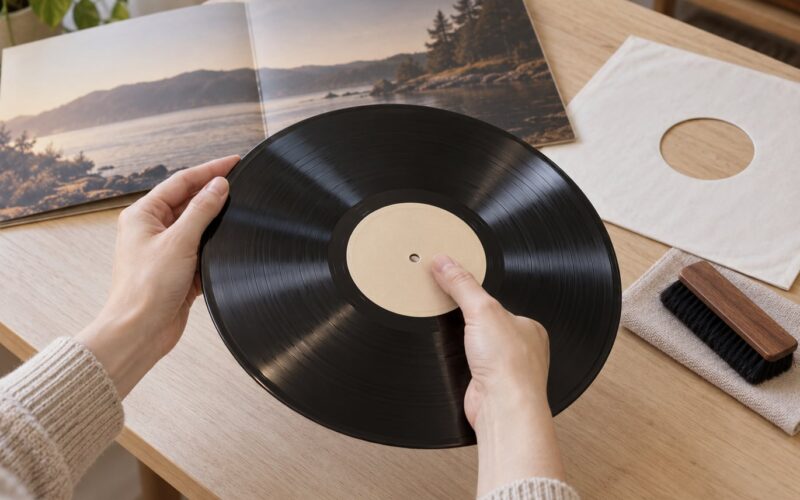
- Touching the record surface. Skin oils attract dust and dull the groove. Handle the edge, ideally with clean dry hands.
- Static cling. Dust settles in the groove and the stylus scrapes it, producing hiss and pops. Anti-static inner sleeves and a soft carbon fiber brush swept in the direction of rotation before each play take care of most of it.
- Sticky sleeves. Plastic PVC inner sleeves that have gone tacky can draw a residue film onto the record. Replace them with good anti-static poly sleeves.
- Heat and sunlight. A record left on a windowsill or in a car can warp enough to make the platter speed wobble, and a warped record will not track properly no matter how good the turntable is.
- Humidity swings. Keeping records in a dry cupboard or a damp basement invites warping and mould on the sleeves. Around 45 to 50 percent relative humidity and a normal room temperature is the practical target.
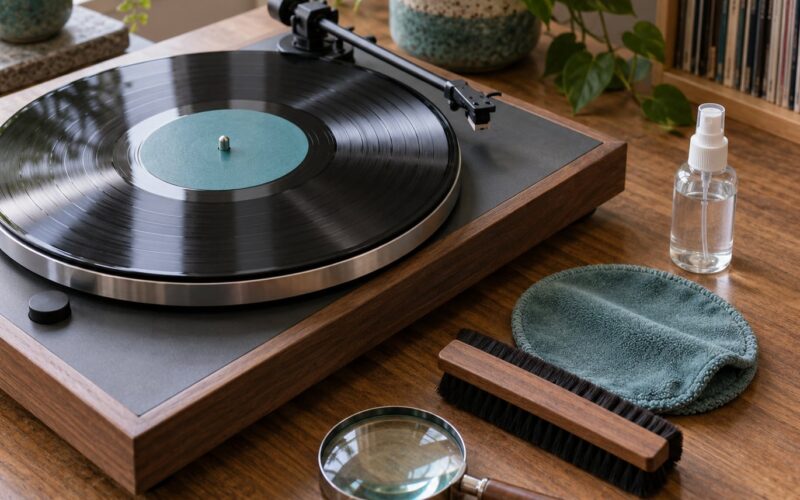
A routine that takes five minutes keeps most of this out of the picture. Brush the record from the outside edge toward the label before each play. Give it a proper wet clean with a dedicated record fluid and a clean cloth every few weeks, or whenever it sounds dirty. Return it to its sleeve immediately, and store the sleeve upright rather than stacked flat.
Care matters more than play count in almost every case I know of. Two records with 200 plays each will end in very different condition depending on what happened at the twentieth play.
Signs a Record Is Reaching the End of Its Life
Wear announces itself before it becomes obvious. Watch for these:
- Surface noise that comes back within seconds of a clean.
- Repeating clicks or pops at the same point on the track.
- Skips or a loop that does not go away after cleaning.
- Reduced bass and treble, or a hollow, papery tone on the quietest passages.
- Noticeable loss of stereo separation, where instruments that should sit in separate places start to sit in the middle.
- A stylus that comes away looking grey and smeared under a loupe, with visible debris packed into its tip.
- Distortion on loud passages that was not there last month.
Work through them in order. If a dirty record jumps, clean it first and play the same passage again. If the click sits in one spot and the record is clean, look at it under a light for a scratch that reaches the bottom of the groove. If the whole side is quieter and thinner than it used to be, the groove is genuinely worn.
Swap the stylus if you have not checked it in a year or two, or if you see debris on the tip. A fresh stylus on a worn record will not restore what the groove has lost, but it will stop making the damage worse. Once a record skips repeatedly on both sides no matter how it is cleaned, replace it. There is no way to re-cut a flattened groove.
How to Extend the Life of a Vinyl Record
A short checklist does more for your collection than any product you can buy for it.
- Set the tracking force to spec, with a gauge. Check it every year, since cartridges and counterweights drift.
- Set anti-skate last, after the force is right. This is the setting most owners skip and the one that causes the most inner groove wear.
- Replace the stylus on the manufacturer’s hour rating. Treat it as maintenance, not as a repair for a bad-sounding record.
- Brush before every play. Five seconds of sweeping from the outside in removes the dust that does the real damage.
- Handle records by the edge only. Use both hands and avoid squeezing the middle of the sleeve.
- Use anti-static inner sleeves and clean the record every few weeks. Deep cleaning beats any amount of dry brushing over time.
- Store upright, indoors, away from heat. Never leave records in a car or a loft, and do not stack them flat under heavy objects.
- Rotate your albums. Playing the same record every evening wears one record hard while the rest of the shelf sits untouched.
- Let a record rest between plays. Friction and heat soften the vinyl slightly during a side, and time lets it settle back into shape. A record played straight through for six hours without a break is being asked to do more than it was designed for.
Worth saying plainly: playing a record often is not worse than playing it rarely. Daily listening on a properly set up turntable with regular cleaning wears a record no faster than the same total number of plays spread over a decade. It is the dirty, mistracking, over-forced plays that shorten a record’s life.
Frequently Asked Questions
Do 33 RPM records last longer than 45 RPM records?
Usually yes. A 33 RPM LP has wider, deeper grooves than a 45 RPM single, and the stylus crosses less groove area in the same playing time. Single 45s also tend to get played as jukebox or DJ records, which adds heavy tracking and repeat loops. Both can last indefinitely if the tracking force is right and the record is cleaned, but expect more life from the 12-inch LP.
Are modern vinyl pressings more durable than older ones?
They are generally well made, but not automatically tougher. Many current pressings use recycled PVC and thinner, lighter discs than the 180g and 200g originals from the 70s and 80s, so a modern copy may have less material in the groove than the vintage pressing it replicates. Older original pressings usually have the edge here, assuming they were stored well and never mistracked.
Can you still play a record after it has skipped?
Yes, but find out why it skipped first. A dirty record or a worn stylus is the usual cause, and both are fixable. Clean the record, check the stylus tip under magnification, and confirm the tracking force matches the cartridge spec. Skip repeatedly on a clean record with a fresh stylus and you are probably looking at a scratch that reaches the bottom of the groove, and further plays will deepen it.
How many times can I play one album on repeat?
There is no fixed number, but repeat listening concentrates the wear. Spinning an album five times in a row puts five times the usual track time through the same grooves in a short window, with the record barely cooling down. Spreading the same number of plays across weeks does less damage than the same plays in one afternoon. Rotating between several albums is the gentler habit.
Does changing the stylus protect my records?
Yes, and it is one of the cheapest things you can do. A worn diamond tip has lost its shape, so it rides the groove walls instead of the groove floor and cuts them as it goes. Replacing it on the manufacturer’s hour rating, usually somewhere between 500 and 1,000 hours of use, stops the damage and usually restores the top end along with it. Check the tip under a loupe when you replace it.
Do cheap turntables ruin records?
Not automatically. In a widely discussed test, records survived 100 plays on a budget turntable with a ceramic cartridge without audible degradation. The risk comes from setup rather than the price tag: tracking force set far too high, a worn or undersized needle, an unbalanced tonearm, or a warped platter speed. Buy a tracking force gauge and set the force to the cartridge specification, and a modest turntable will look after your records fine.
What to Do First
Put a tracking force gauge on your turntable and check the force against the cartridge spec. That single measurement does more for the life of your records than any amount of worrying about the play counter, and it takes about two minutes.