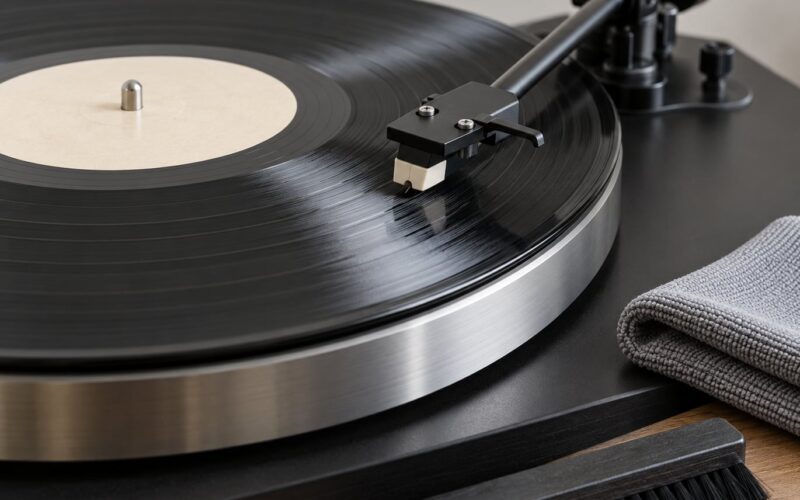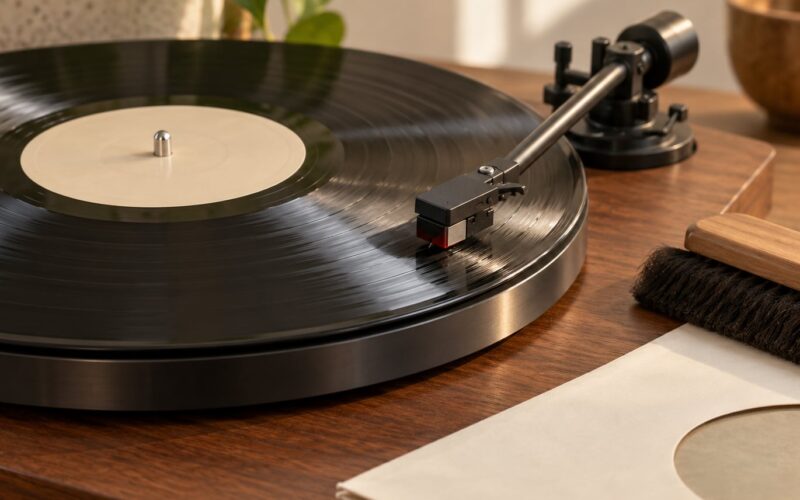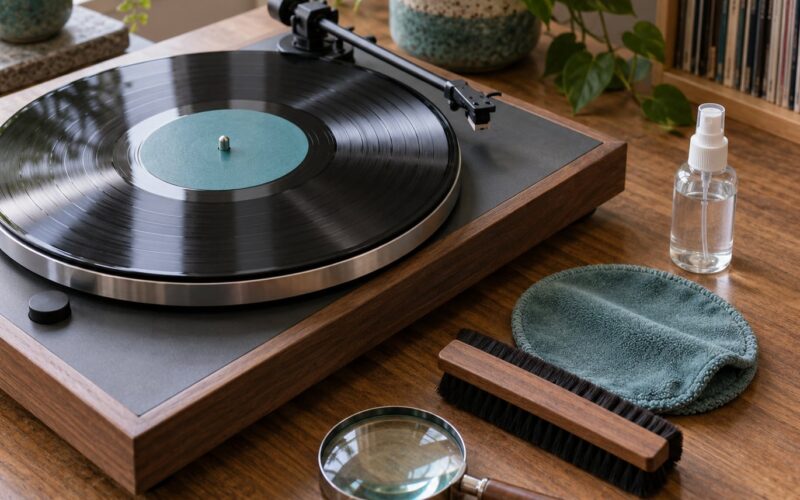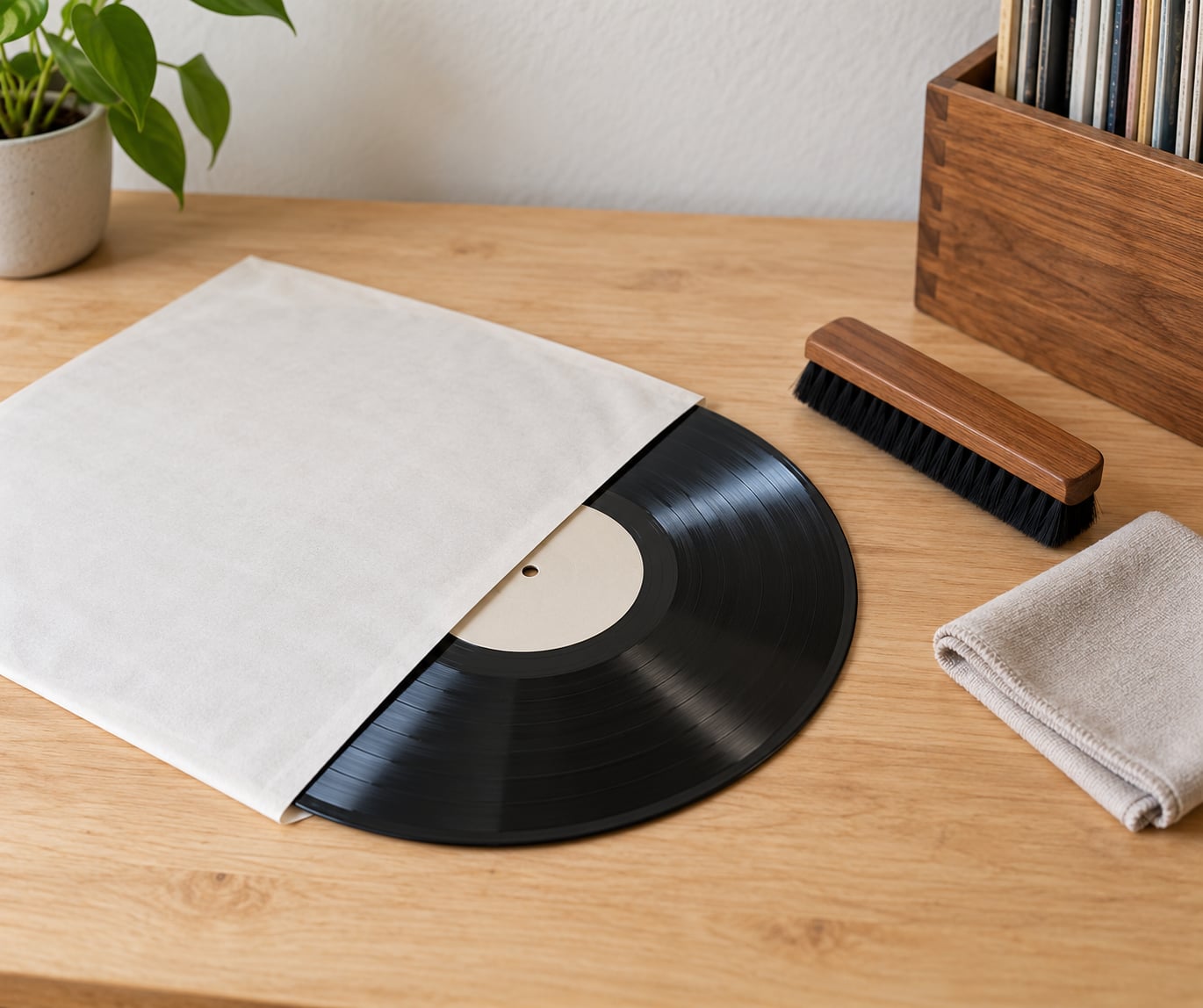
How to teach kids to handle records comes down to three habits a child can actually remember: hold the disc by its edges and the center label, slide it out of the sleeve slowly, and slide it straight back in before walking away. Drill those three things over a few short supervised sessions and you have most of it solved. The whole first lesson takes about ten minutes and feels more like putting away dishes than a chore.
Children who are never taught tend to grab, drop and pile. Those habits bend discs and chew through grooves, and they are much harder to undo than a rule learned early. A calm five-minute routine works better than a year of saying be careful.
Table of Contents
- What You Need
- Step-by-Step: How to Teach Kids to Handle Records
- 1. Choose a Comfortable, Low-Risk Record
- 2. Explain What Vinyl Is and Why It Scratches
- 3. Set Up a Clean, Open Workspace
- 4. Demonstrate the Correct Way to Remove the Record
- 5. Teach a Gentle Inspection and Cleaning Habit
- 6. Make Passing and Putting Away a Two-Hand Job
- 7. Practice with a Short, Repeatable Routine
- Common Mistakes
- Frequently Asked Questions
- At what age can a child handle vinyl records?
- What if my child scratches a record?
- How do I keep kids from tearing record sleeves?
- How do I teach a child with motor-skill differences?
- Do valuable or heirloom records need to stay out of reach?
- Start With a Spare Record and a Calm Routine
What You Need
You need almost nothing. Set up the same five things each time and the routine becomes predictable, which is what actually teaches a child.
- A clear, dry surface. A table cleared of everything except the record, the sleeve and the crate. Bare wood is fine. Carpet and bedsheets are not.
- Clean hands. Wash and dry before you start, and have the child do the same. A soft brush and a dry microfiber cloth cover a quick pass before play.
- Soft inner sleeves and a crate. Anti-static inner sleeves cut down on the sleeve-scraping that causes most real damage. A crate lets a record slide up and out instead of being levered over the top of a stack.
- A safe storage spot. One shelf at adult hip height or higher, out of the route of a running child.
- Three rules on paper. Edges and label. Slide out slow. Straight back in. A note on the crate beats a lecture.
One more thing worth having: a low-value practice record you do not care about. Use a spare copy or an inexpensive album rather than a prized first pressing. Plenty of collectors start their kids the same way, on a cheap spare setup rather than a good one.
Step-by-Step: How to Teach Kids to Handle Records
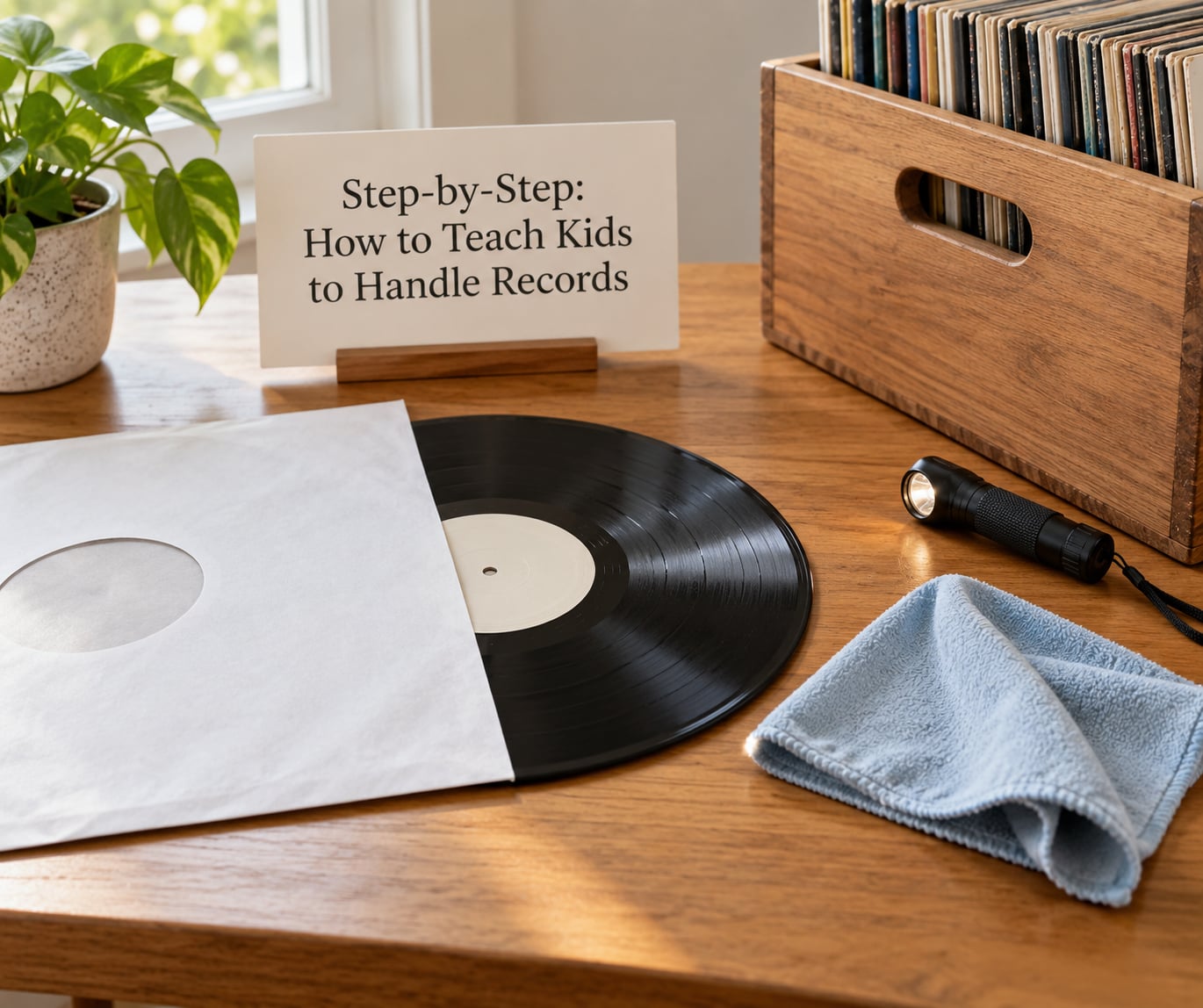
1. Choose a Comfortable, Low-Risk Record
Pick something familiar and visually interesting: a colorful jacket, a big center label, a shape your child already likes. Skip anything warped, scratched, cracked at the edge or worth real money. The first lesson is about lowering excitement and risk, so a duplicate copy beats the collector’s copy every time.
A 12-inch LP is the hardest thing in the house to hold properly. Some families hand over a 7-inch single first because a child’s hand is smaller. Either works if you keep the practice short.
2. Explain What Vinyl Is and Why It Scratches
Say it plainly: this is thin, hard plastic with grooves cut into it, and a scratch makes the music skip. Fingerprints and dust land on the grooves too, and grease from fingers makes them worse. Two sentences, then move on.
Keep it factual rather than worried. Calling a record fragile teaches a child that touching it is dangerous, and a child who thinks something is dangerous tends to do it behind your back.
3. Set Up a Clean, Open Workspace
Clear a table, put the crate on the floor beneath it rather than on the table, and spread sleeves out flat so nothing gets dragged across a stack. Keep other children, pets and the door swing out of the area. The workspace only has to be big enough that a passing elbow cannot reach the record.
This is also the moment to move the crate away from the edge of the table. More than one parent has watched a disc roll off in slow motion.
4. Demonstrate the Correct Way to Remove the Record
Here is how to teach kids to handle vinyl records properly, in the order that matters. Take the outer jacket off and set it down. Put your hand flat against the inner sleeve so the disc is supported from behind, hold the disc by the label with one thumb and one finger, and hold the outer edge with the thumb and finger of your other hand.
That second contact point is what stops the disc from flexing. Flexing, not touching, is what cracks an LP, so slow the motion down and exaggerate the two points of contact while you talk. Then narrate while your child copies you, and protect the sleeve with your free hand so it cannot flex either.
5. Teach a Gentle Inspection and Cleaning Habit
Teach kids to look before they play. Tilt the disc under a light, point out dust or an existing scratch, and never rub the grooves with a finger. A scratch is not a repair job, and telling your child that early saves an argument later.
Cleaning stays an adult job for the most part. The child-friendly part is one pass with a carbon fiber brush before the record goes back on the spindle, which is quick and makes the care part of the ritual. Skip household sprays, damp cloths and wet cleaning entirely. If a record is sticky or heavily soiled, that is an adult task with a proper kit.
6. Make Passing and Putting Away a Two-Hand Job
One rule covers all of it: two hands, slow movement, record and sleeve treated as a single object. To hand a record to someone, wait until both their hands are open and under the disc. To put it away, align it with the opening of the inner sleeve, slide it in flat, then press the sleeve back into the jacket with your thumbs.
Stacking records flat in a pile is the habit to break early. It is the thing most likely to warp a disc over years, and it starts with one album left on the table.
7. Practice with a Short, Repeatable Routine
Keep sessions to about five minutes: choose one record, inspect it, brush it, handle it once or twice, put it away, then talk about what went well. Do the same sequence every time so nothing is new to remember. On a r/turntables thread about a kid who had started spinning records, the advice that came back was simply that seven is a good age to show a child how to handle a record and use a turntable properly.
Adjust by age rather than expecting identical behavior. A three-year-old works on removing and replacing one record while you keep a hand on the sleeve. A six- or seven-year-old can pull their own record and load it onto the spindle. An eight-year-old can learn the cue lever. The routine has not changed much since your own kids were small, and it still works in 2026.
Let older siblings teach younger ones where you can supervise it. A sibling saying the three rules out loud teaches the rules and gives the lesson a second voice that is not a parent being annoyed.
Common Mistakes
Almost every damage story in this hobby comes from one of the habits below. Name the habit, show the fix, and move on. Kids repeat what is corrected calmly and stop repeating what is only punished.
- Gripping the disc while it is bent, one hand on each side. It cracks the edge or snaps it clean across. Fix: one thumb and finger on the label, one hand on the outer edge, both hands flat.
- Pulling a record out by one edge over the top of the sleeve. That bends the disc and rips the inner sleeve. Fix: support the back of the sleeve and slide the disc straight up and out.
- Fingers across the grooves. Grease collects and causes skips and pops. Fix: edges and center label only, every single time.
- Using household sprays or a damp cloth. It leaves residue in the grooves or wets the label. Fix: a dry brush before play, and proper kit cleaning by an adult when it is needed.
- Rough play near the crate or the turntable. Dropped discs, a damaged stylus or a cracked cartridge. Fix: seated handling at the table, with gear placed out of reach of high chairs and pets.
- Leaving records in a flat pile. That warps them over time. Fix: back in the sleeve and the crate, stored vertically.
- Treating a mistake as a failure. The child stops wanting to try. Fix: repair the record, then re-run the routine once more calmly.
Two framing tips do more than any rule. First, some of the fingerprints on a child’s first record are yours, so aim your own handling at the same standard. Second, give handling a small job attached to it, like being the one who picks the evening record, so it reads as responsibility rather than restriction.
When a scratch does happen, work out which kind it is. Dust, fluff and fingerprints come off with a dry brush. A true scratch through the grooves is permanent, though a light one often still plays fine. Correct the problem, keep the record, and move on. On r/vinyl, collectors who taught their kids report it went well, with one parent noting their daughter grew up learning to handle and play records alongside them and never touched the turntable unsupervised.
Frequently Asked Questions
At what age can a child handle vinyl records?
Most children can begin supervised handling around age three, using one low-value record for a few minutes at a time. Independent pulling from a shelf and loading a turntable usually lands around six or seven. A collector thread on r/turntables put it plainly: seven is a good age to show a child how to handle a record properly. Watch for readiness signals instead of counting birthdays.
What if my child scratches a record?
Work out which kind of scratch you have. Dust, fluff and fingerprints lift off with a dry anti-static brush. A scratch through the grooves is permanent, though a light one usually plays fine and a deep one may skip a bar. Do not rub the groove with a finger or a cloth, since that spreads the damage. Keep the record, correct the habit, and repeat the routine calmly.
How do I keep kids from tearing record sleeves?
Sleeve damage comes from levering discs over the top of the jacket or from handling the sleeve edge when it is already stressed. Teach support-and-slide removal, store records vertically in a crate, and replace torn jackets when you find them. Ring wear along the outer jacket edge and seam splits along the spine are normal wear, not something a child caused, and a new outer jacket fixes both.
How do I teach a child with motor-skill differences?
Drop the speed down and shrink the task instead of the record. Sitting at the table with the crate already beside them means no walking or balancing with a disc. Let them hold the sleeve while you move the record, or rest the disc on a flat towel before gripping it. The same two contact points apply, just executed more slowly and with more setup.
Do valuable or heirloom records need to stay out of reach?
Yes, and you do not need to feel bad about it. First pressings, autographed sleeves, live recordings and anything your child cannot replace belong on a high shelf or in a closed cabinet. That is not distrust, it is triage. Give them a generous shelf of their own below it, and they learn the same technique on something replaceable.
Start With a Spare Record and a Calm Routine
Pick a duplicate or inexpensive album today, clear a table, and demonstrate the two contact points once, slowly, out loud. Let your child copy the motion while your hand protects the sleeve, then brush the disc, put it back and say what went well.
Repeat that five-minute session a few times over the next couple of weeks. Keep the valuable records on the high shelf and give your child a whole crate of their own below it, and within a month the handling habit is doing the protecting for you. Record collecting works best as a respect for the object and the music, not as something to be afraid of getting wrong.