Yes — playing a record wears it out, but slowly and by a very small amount. Every play sends a diamond stylus dragging through soft PVC grooves under a couple of grams of pressure, and that contact slowly polishes the groove walls. Most well-kept 12-inch records show no audible change for hundreds of plays, and the damage you hear after a few thousand is usually caused by bad setup, dirty surfaces or handling mistakes rather than playback itself.
Table of Contents
- Does Playing a Record Wear It Out?
- What Actually Happens When a Stylus Plays a Record?
- Why tracking force is the biggest dial you control
- What groove recovery means
- How Many Times Can a Vinyl Record Be Played?
- What Causes the Most Damage to Records?
- Dropped records and edge handling
- Dirty or damaged styluses
- Excessive tracking force
- Warped records and poor storage
- Cleaning too hard
- Can You Tell If a Record Is Worn Out?
- How to Reduce Wear While Playing Records
- How to Store Records for Long-Term Protection
- When Is Replacing a Record Better Than Continuing to Play It?
- Frequently Asked Questions
- Does playing a record wear it out?
- How many times can you play a vinyl before it goes bad?
- Are you supposed to clean your vinyl records?
- Is it okay to leave a record on the turntable overnight?
- What does a worn out vinyl sound like?
- Does playing vinyl damage the needle instead?
- Conclusion
Does Playing a Record Wear It Out?
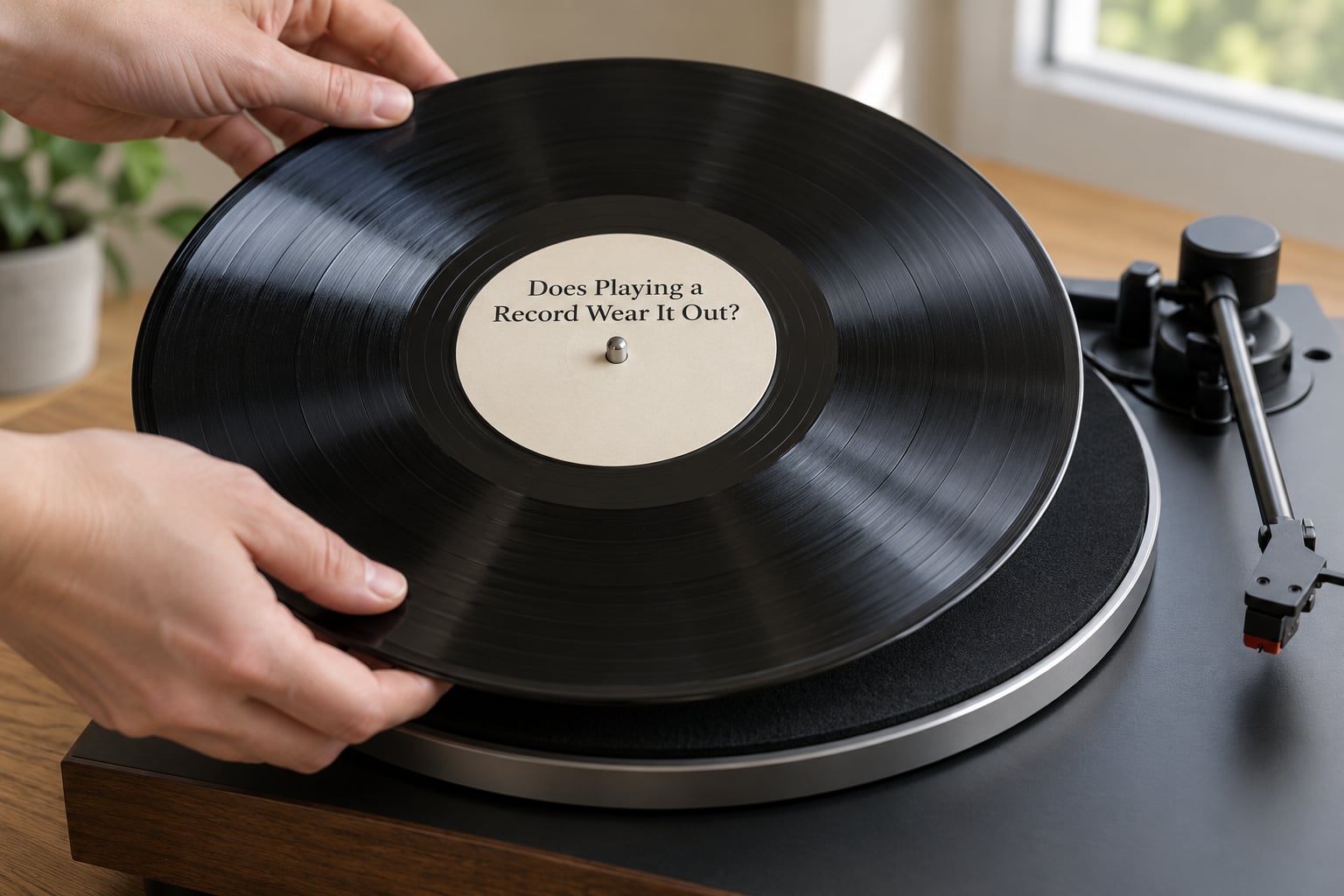
The honest answer has two halves. Normal playback produces gradual, cumulative wear that most listeners will never notice within their lifetime. Improper handling, misaligned tonearms, excessive tracking force and dirt produce damage fast enough to hear within a handful of plays.
Those are two different problems, and collectors spend a lot of energy worrying about the wrong one. Wear is measured in hundreds of plays. Damage happens on a Saturday afternoon.
| Type | What it is | Speed | Reversible? |
|---|---|---|---|
| Normal wear | Stylus slowly polishing the groove walls | Hundreds to thousands of plays | No |
| Fatigue | Groove relaxes out of shape after a play, recovers over 12-16 hours | One play, temporary | Yes, with rest |
| Mistracking | Stylus rides up the groove wall or skips under heavy force | Immediate | No |
| Scratching | Groove wall physically cut by a dirty stylus or abrasive cloth | Immediate | No |
| Warping | Record deformed by heat, pressure or rough handling | Immediate | Sometimes |
What Actually Happens When a Stylus Plays a Record?
The stylus sits in the groove with a few grams of downward tracking force and vibrates hundreds of thousands of times per second as the record turns beneath it. Vinyl is soft enough to deform, so that repeated contact reshapes the groove wall very slightly, the same way a riverbed changes shape under flowing water.
Three variables decide how fast that happens: how much downward force you use, how clean and how sharp the stylus is, and how much debris sits in the groove for the stylus to plough through. A dirty stylus is not just dirty — it is an abrasive, and it grinds the groove rather than riding it.
Why tracking force is the biggest dial you control
Cartridge manufacturers publish a recommended tracking force range, usually somewhere between 1.5 and 2.5 grams for a moving magnet and lower for a moving coil. Staying inside that range is what separates normal wear from groove damage. Push well past the top of the range and the stylus stops riding the groove wall and starts pressing into it, which is where lasting damage happens.
Users on audiokarma generally keep elliptical styli under 2 grams and reserve conicals for setups needing more force, since a conical tip distributes its contact differently. A difference of a few hundredths of a gram between two setups matters far less than being 30 percent over the cartridge’s ceiling.
What groove recovery means
A played groove does not snap back to full quality immediately. Vinyl is viscoelastic, so it holds a slight deformation for hours after the stylus has passed through. Listeners on the vinylengine turntable forum report virtually complete recovery of the groove after a 24-hour rest, which matches the 12-16 hours of recovery time cited widely in discussions of this topic.
That is why back-to-back replay of the same record sounds slightly worse than playing it again the next day, and why a record left on the platter overnight has had most of its rest period already.
How Many Times Can a Vinyl Record Be Played?
Roughly 500 to 1,000 plays before most listeners notice anything on a decent pressing, and several thousand before wear alone becomes clearly audible. Those are estimates rather than guarantees, since pressing quality, tracking force and storage swing the number a long way.
| Record type | Plays before audible change | Notes |
|---|---|---|
| Well-preserved 12-inch LP, light use | 500-1,000 | Correct tracking force, cleaned before playing |
| Frequently played daily rotation | 1,000+ | Most collections never reach the audible stage |
| Heavy 180g pressing | 1,000-2,000 | Deeper grooves, more material to wear away |
| Thin or older recycled pressing | Fewer | Shallower grooves, easier to mistrack |
| Scratched or grooved-damaged copy | Variable | Damage already audible at first play |
| 78rpm shellac | Far fewer | Brittle material, different stylus and speed needed |
The listening maths matters more than the numbers. A 350-record collection played one album a day gets roughly 50 plays per album over fifty years. Nobody’s collection is grinding itself away, and hobbyists tend to reach the same conclusion on forums. SteveHoffman.tv regulars put it plainly: the answer is indefinitely when the equipment is good, and signs of wear almost immediately when it is not.
What Causes the Most Damage to Records?
Play a record on a correctly set-up turntable for a year and it will barely change. Drop it, drag it across a table or scrub it with the wrong cloth and you can mark it in a second. Real damage comes from a short list of avoidable things.
Dropped records and edge handling
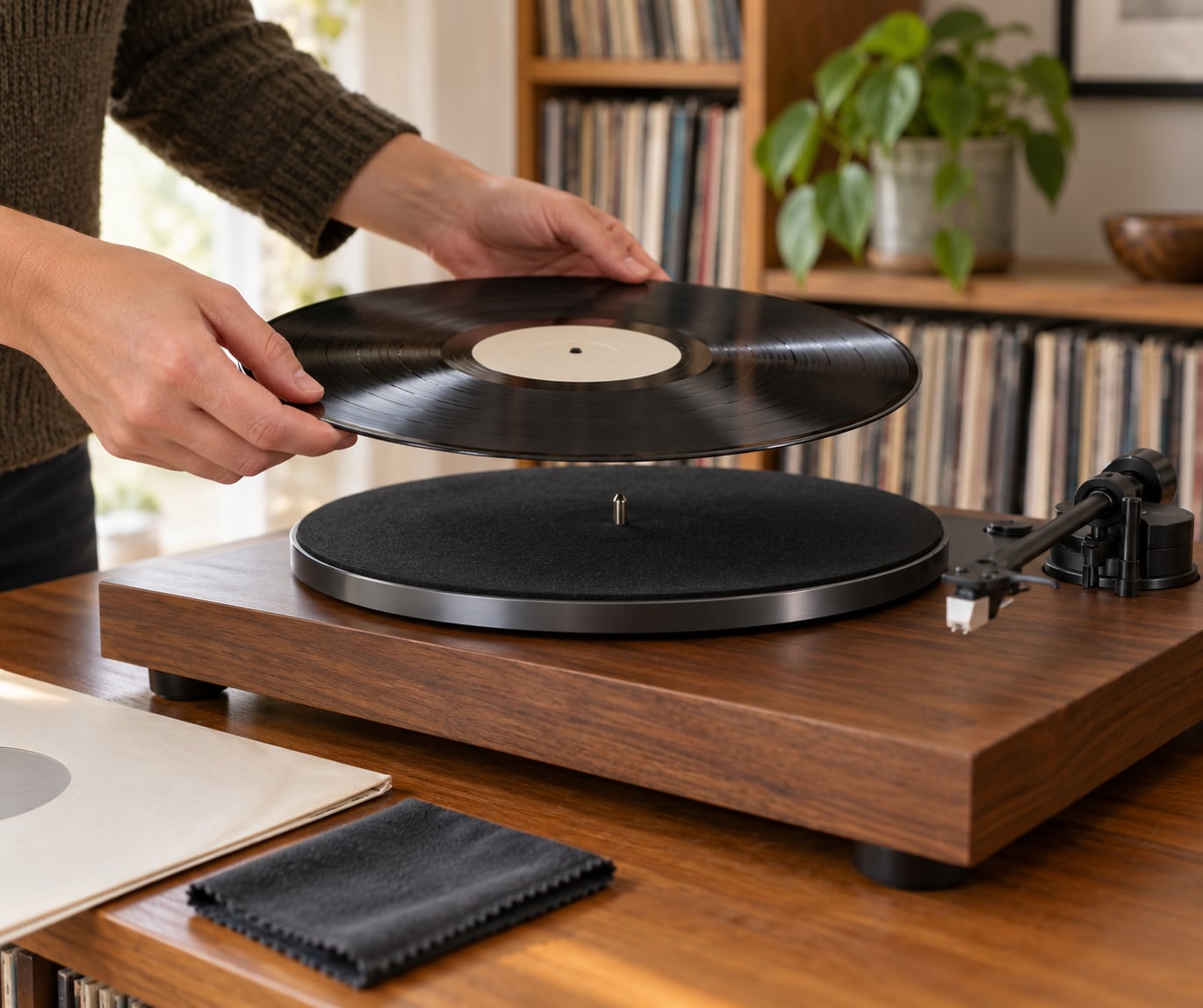
Vinyl flexes. A record dropped on one corner or gripped hard at the rim can crack or take a set that makes it wobble on the platter. Hold records by the label or the outer edge, never by the grooves or the sides of the rim.
Dirty or damaged styluses
A stylus carrying a few plays’ worth of dust acts like sandpaper in the groove. Replace a stylus when it starts skipping, distorting or showing uneven wear under magnification, rather than waiting for it to grind through a copy you care about.
Excessive tracking force
This is the most common cause of audible groove wear. Budget turntables often ship with a non-adjustable counterweight set at the factory and the owner never checks it. Verify the force with a stylus gauge against your cartridge’s recommended range before assuming the player is fine.
Warped records and poor storage
Heat above around 60°C (140°F) is where vinyl starts to take a permanent set, which is why a record left in a hot car may never sit flat again. Warping causes the stylus to fight the record, and that fight produces both skipping and wear.
Cleaning too hard
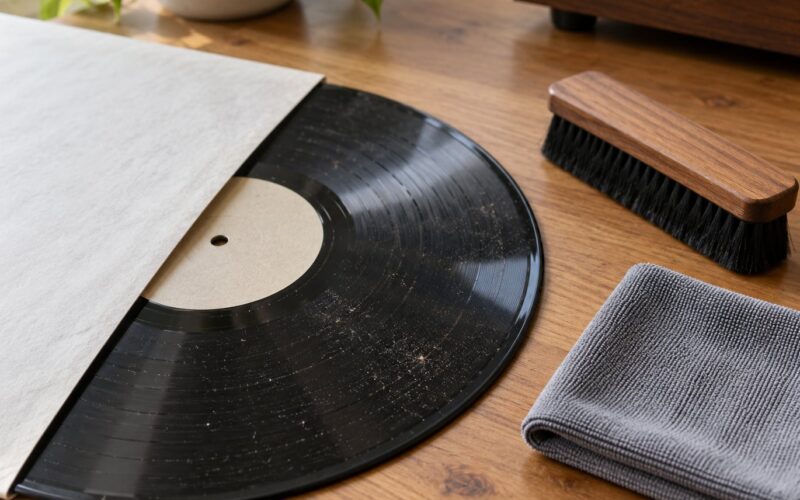
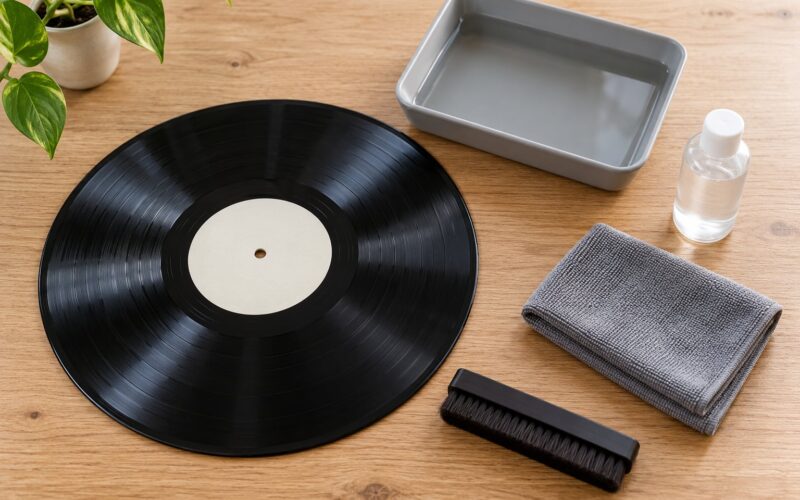
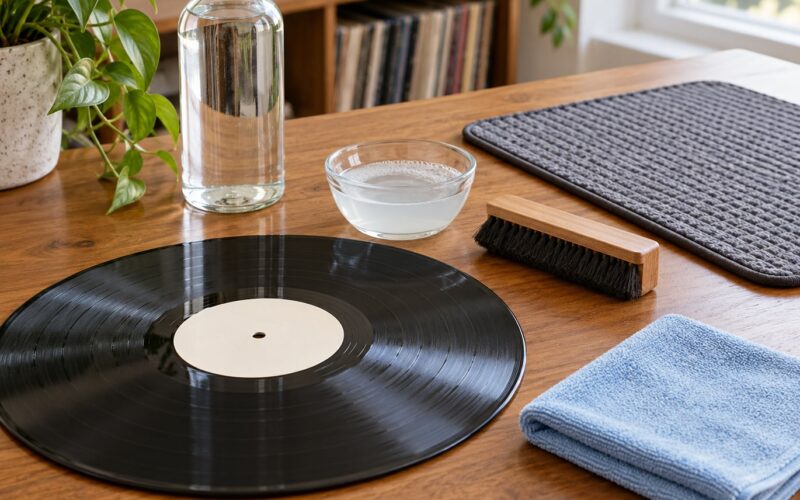
Light dust left alone is better than a record scrubbed with a stiff brush or an alcohol-heavy product. Cleaning removes dirt, but a dry brush dragged across a record in circles can push grit into the groove walls and scratch them. A damp anti-static cloth used straight from the sleeve is gentler than anything sold as a cleaning kit.
Can You Tell If a Record Is Worn Out?
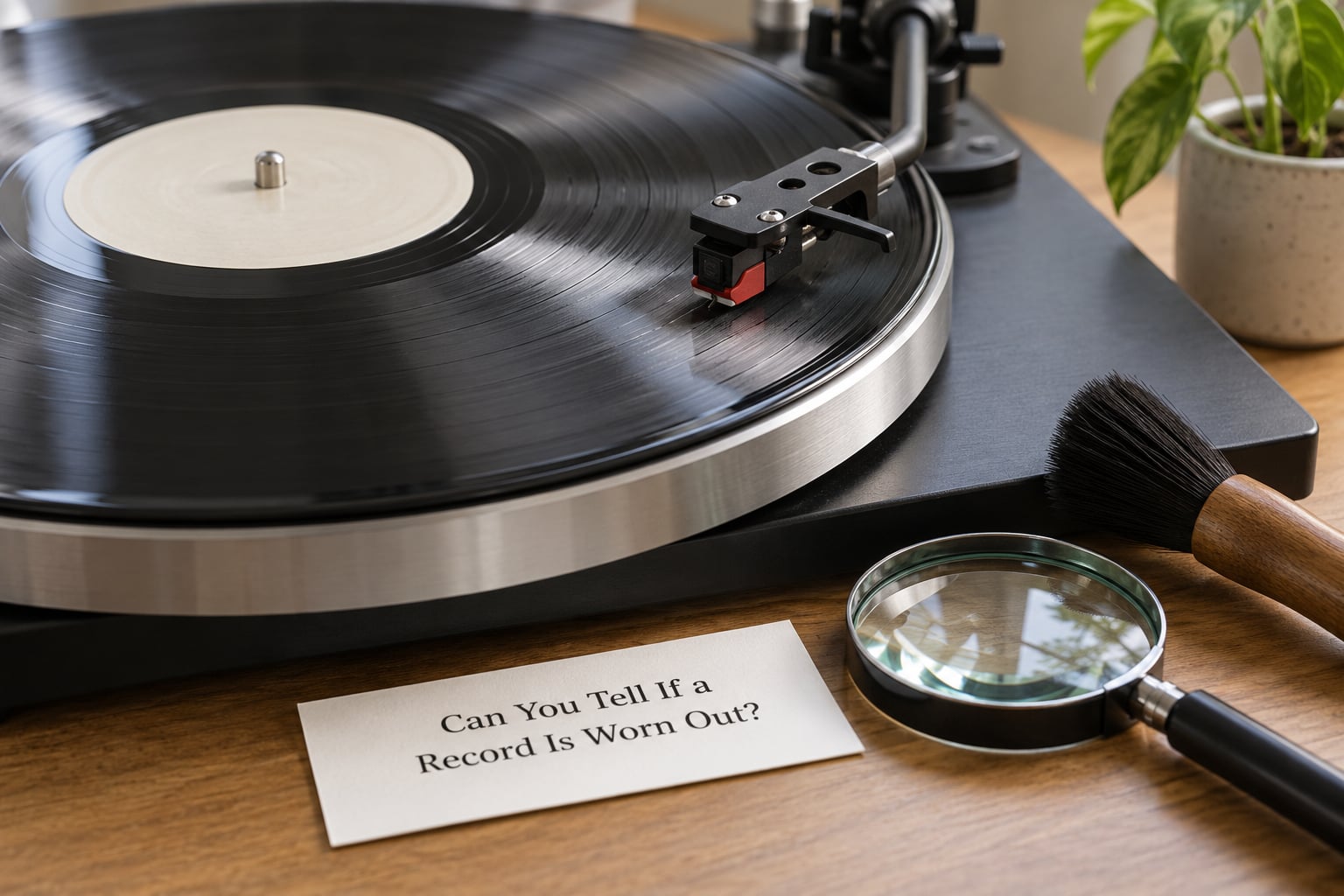
You can hear it long before it is obvious, and you can see most of it under a bright light with the record held by the edges. Look for these signs in order.
- Surface noise that never goes away. Steady crackle or hiss between tracks on a clean, properly set-up player usually means groove wear.
- Repeated clicks and pops. The same tick at the same point in the track points to a scratch rather than general wear.
- Soft, dull high frequencies. Treble losing its edge as the groove walls get polished is the classic audible sign of wear.
- Distortion that comes and goes. Compression and level-dependent distortion on quiet passages points to a worn groove.
- Skipping or sudden level drops. Mistracking as the stylus rides higher than it should.
- Visible scratches under light. Fine scuffs are cosmetic; deep scratches that catch a fingernail are structural.
Then rule out your equipment, because these symptoms overlap. A worn stylus produces the same dullness and noise and will make a perfect record sound bad. A cheap cartridge and a misaligned tonearm can do the same thing. Swap in a record you know is fine; if that also sounds tired, the problem is upstream of the groove.
For an objective check rather than a guess, enthusiasts inspect the groove walls under magnification with a microscope or loupe and compare an inner track against an outer one. Wide, scoured grooves near the label mean a stylus that used to sit too high; uniform narrowing points to a genuinely worn playing surface.
How to Reduce Wear While Playing Records
None of this is complicated, and all of it is the difference between a collection that lasts and one that does not.
- Clean before playing, using the cloth stored in the sleeve rather than anything sprayed on the record.
- Sweep the groove with a carbon fibre brush along the direction of rotation, not across it, before each side.
- Set tracking force with a gauge inside your cartridge’s recommended range and confirm the anti-skate is set to match.
- Move the tonearm sideways only when the cueing lever is raised, and never across the record while it turns.
- Level the turntable and make sure the platter spins dead true, since a wobbling record skips and wears faster.
- Replace the stylus on a schedule tied to hours played rather than to symptoms, which arrive late.
How to Store Records for Long-Term Protection
Storage decides whether wear ever becomes a problem, and it is the part you control most cheaply. Keep records upright in a shelf, not stacked flat, since the weight of a pile slowly deforms the lower records and creates the gentle warp that causes skipping.
Keep the collection away from direct sunlight and heat sources, and away from damp basements and attics. Roughly 45-50 percent relative humidity and a stable room temperature are easier to live with than a climate-controlled cabinet, and they do most of the work.
Use inner sleeves. Polypropylene sleeves are smoother and less likely to generate the static that pulls dust onto the groove than paper sleeves with rough surfaces, and they reduce the contact scratching that happens when a record slides around inside a soft outer sleeve. Replace split or peeling outer sleeves too, since a rough cardboard edge can abrade the record edge every time you pull it out.
Separate damaged records from the rest. A heavily scratched album rubbing against neighbours in a tight shelf can transfer its damage to them, and separating them also stops you pulling a good record out by habit.
When Is Replacing a Record Better Than Continuing to Play It?
For an everyday record that has picked up some noise, playing it carefully is usually the right call. Copies are plentiful, wear over a few hundred plays is minimal, and the record still sounds like itself.
For a scarce or valuable pressing, the calculus flips. Once a copy is no longer replaceable, preserving it matters more than playing it this month. Play such records on a setup you trust, leave them flat and stable, and consider digitising the ones you want to hear often so the physical copy can rest permanently.
Also stop and rethink when a record skips repeatedly despite a clean, correct setup. Repeated skipping is a stress signal, and the copy is telling you something is out of alignment before the groove is gone.
Frequently Asked Questions
Does playing a record wear it out?
Yes, but slowly. Every play polishes the groove walls slightly, and most well-kept records show no audible change for 500 to 1,000 plays. Damage you notice after a handful of plays almost always comes from heavy tracking force, a dirty stylus or handling mistakes rather than from playback itself.
How many times can you play a vinyl before it goes bad?
Roughly 500 to 1,000 plays before most listeners notice a change, and several thousand before wear alone is clearly audible. Heavy pressings last longer than thin ones, and records played on a daily rotation rarely reach even the lower figure. Correct tracking force and a rested record keep that number high.
Are you supposed to clean your vinyl records?
Yes, and gently. Wipe with a soft anti-static cloth drawn straight from the sleeve, then sweep the groove with a carbon fibre brush along the direction of rotation. Skip dry brushes worked hard across the disc and any product with harsh alcohol content, since those can grind dirt into the groove wall.
Is it okay to leave a record on the turntable overnight?
It does no harm, and it also wastes a rest period. A played groove needs roughly 12 to 16 hours to relax back toward full recovery, and 24 hours gives near-complete recovery. Leaving the record on the platter overnight means it cannot recover before you play it again.
What does a worn out vinyl sound like?
Four things give it away: persistent surface noise between tracks, treble that has lost its edge, distortion on quiet passages that grows with level, and occasional skipping or level drops. A worn stylus produces the same symptoms, so test a known-good record before blaming the copy.
Does playing vinyl damage the needle instead?
Yes, and that damage is usually faster than the record’s. Stylus life is commonly measured in hours of play, often somewhere between 500 and 2,000 depending on tip shape and pressure. Regular cleaning and replacing a dull stylus on schedule protects both the stylus and the records it plays.
Conclusion
So does playing a record wear it out? It does, at a rate most collections never reach, and the damage you hear early is nearly always a setup problem rather than a wear problem. Inspect the record under light, clean it with the sleeve cloth, and check that your tracking force sits inside the cartridge’s recommended range. Those three steps take ten minutes and cover most of what actually shortens a record’s life.