Is distilled water safe for cleaning records? Yes. Vinyl is PVC, a hard, non-porous plastic that a damp cloth cannot penetrate, so a little distilled water lifts fingerprints, dust and grime without soaking the disc. The catch is that water alone is a poor cleaner and a careless technique can damage the label, warp the record or bake in water spots.
Here is what cautious collectors do: they start dry, use water sparingly, and pair it with a proper record cleaning fluid rather than a bucket of water and hope. It takes about ten minutes per record once you get the setup down.
Table of Contents
- What You Need
- Step-by-Step: How to Clean a Record With Distilled Water
- Step 1: Prepare the Record and Work Area
- Step 2: Use Distilled Water Safely
- Step 3: Dry, Inspect, and Store the Record
- Common Mistakes That Damage Records
- Frequently Asked Questions
- Can you clean vinyl records with just distilled water?
- Can bottled water replace distilled water for cleaning records?
- How much distilled water should I use per record?
- Does distilled water work on record sleeves and jackets?
- Should valuable or moldy records be cleaned this way at all?
- Conclusion: Start Dry, Then Add Water Sparingly
What You Need
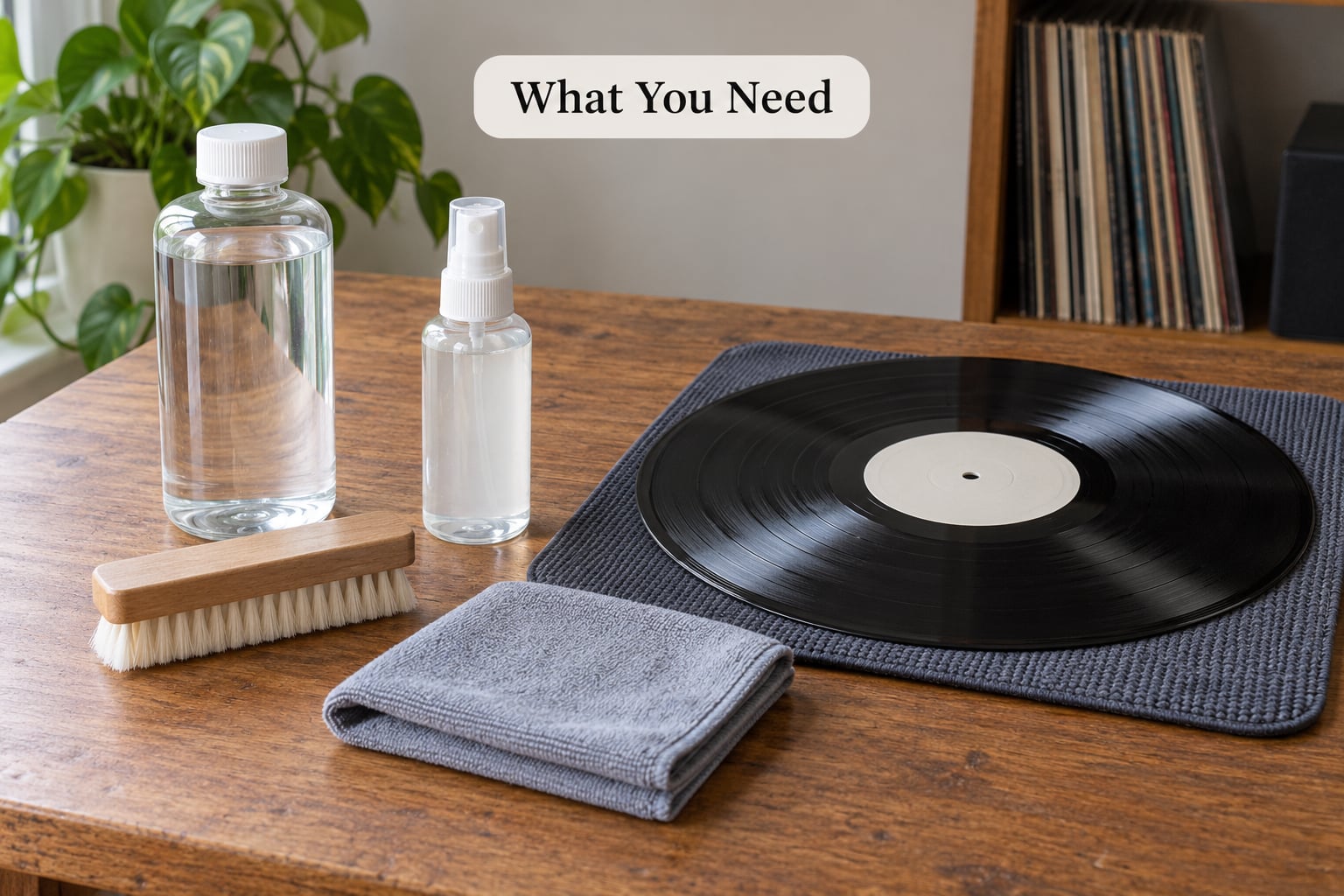
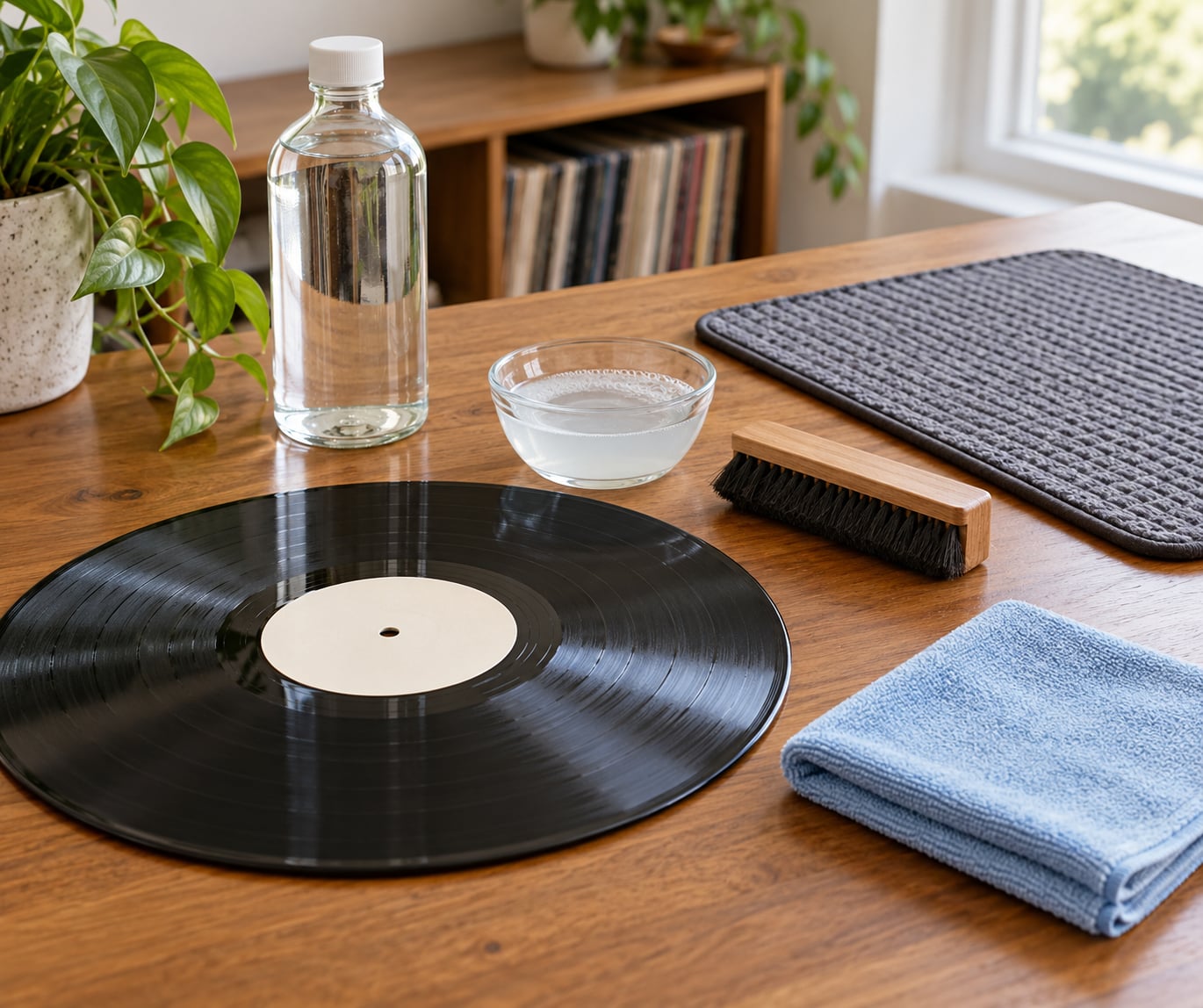
Distilled or deionized water, in a clean bottle with a small amount in it rather than the whole jug. Buy it by the gallon if you clean records regularly, since you will use more than you expect once a record gets dirty.
A neutral pH record cleaning solution. Read the label and avoid anything with dyes, fragrances, phosphates or a heavy residue. A surfactant such as Tergikleen or Photo-Flo is the useful part: it lowers surface tension so water spreads across the vinyl instead of beading up.
Two soft microfiber cloths, kept separate. One for applying fluid, one clean one for the final distilled-water rinse and dry. Launder them without fabric softener, which leaves its own film on the groove wall.
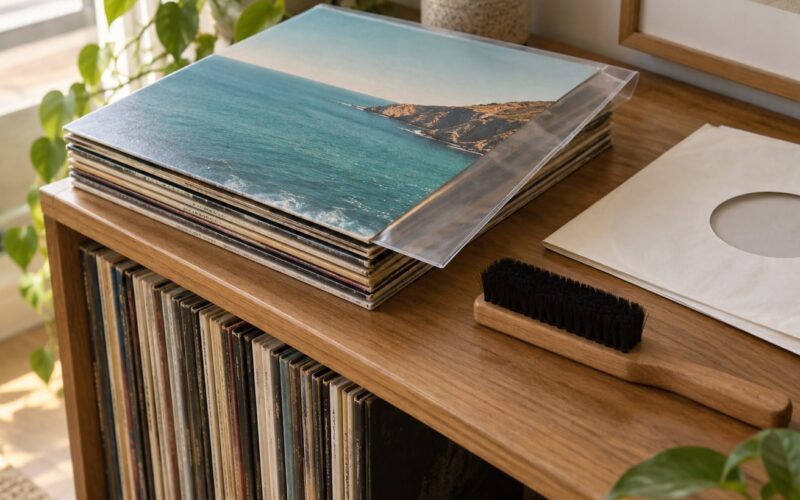
An anti-static soft-bristled brush or a carbon fiber brush, for dry cleaning between wet cleans. Keep it in its own dust-free container so it does not pick up grit on the shelf.
A drying mat, a clean soft inner sleeve and the outer jacket. Also keep a small dish and dropper nearby, because pouring water straight from a bottle is how people overshoot.
Skip the tap water, paper towels, household glass cleaner, bleach, acetone and WD-40. WD-40 is an oil-based lubricant and it will happily coat your grooves for months.
Step-by-Step: How to Clean a Record With Distilled Water
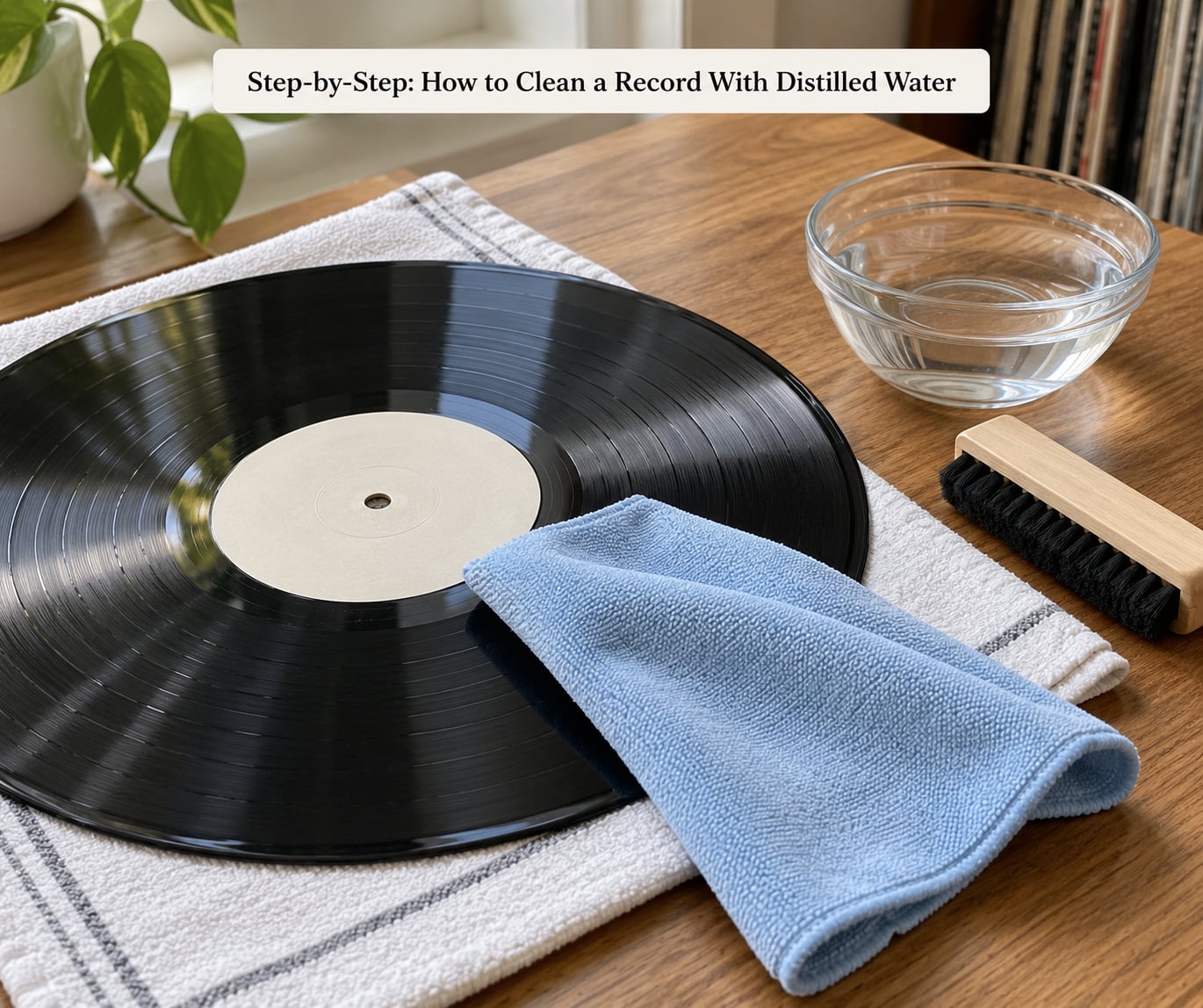
Before any water touches the disc, work out how much you need. A damp cloth should hold roughly one or two drops of water. If you can squeeze a bead from the cloth, it is too wet.
Step 1: Prepare the Record and Work Area
Put the record on a clean, flat surface you do not mind marking. A towel or a cork mat works, but nothing that sheds fibres.
Inspect the sleeve and the disc before you start. Look for grit sitting in the grooves, cracks, deep scratches and any warp. If a record is badly warped, crazed or brittle, stop and read the vintage advice further down.
Brush the dry record with the anti-static brush, following the groove direction from the outside in toward the label. Never go around the circumference, because the brush edge can catch a groove wall and scratch it. If you feel a catch, stop and brush again from a different angle rather than pushing through it.
Wash and dry your hands, or work by the label edge only. Skin oils are the reason most records need cleaning in the first place.
Routine dust removal stops here. A deep clean is for records that play with constant surface noise, that came from a smoky room, or that have fingerprints you can see.
Never bring household cleaners into this. The product list for vinyl is short on purpose.
Step 2: Use Distilled Water Safely
Distilled water is tap water put through vapor distillation, which leaves it with far fewer dissolved minerals than tap or most bottled water. That is the whole reason it is the right choice: water spots are minerals drying onto the groove wall, and the final rinse is the last thing that touches the disc.
Deionized or demineralised water works just as well. So does reverse osmosis water, which the more experienced collectors on the Steve Hoffman forum have used for years without complaint.
So is distilled water safe for cleaning records on its own? It is safe, but it is a rinse and a carrier rather than a cleaner. Water will not carry away fingerprints or oily grime unless something helps it along. Add a small amount of neutral cleaning fluid or a drop of rinse agent to the water in your dish, and the moisture becomes useful instead of merely wet.
On a vacuum or ultrasonic machine, distilled water is the standard tank liquid. Check the machine’s manual first, and never pour water anywhere near a turntable, where it will run under the platter and into the cartridge.
The goal is controlled moisture, not soaking. Dampen the cloth, wring it out until nothing drips, and work in small sections around the disc. Keep water away from the label, the spindle hole and the raised centre area, because a paper label that lifts or a disc that swells with water will warp and skip.
Step 3: Dry, Inspect, and Store the Record
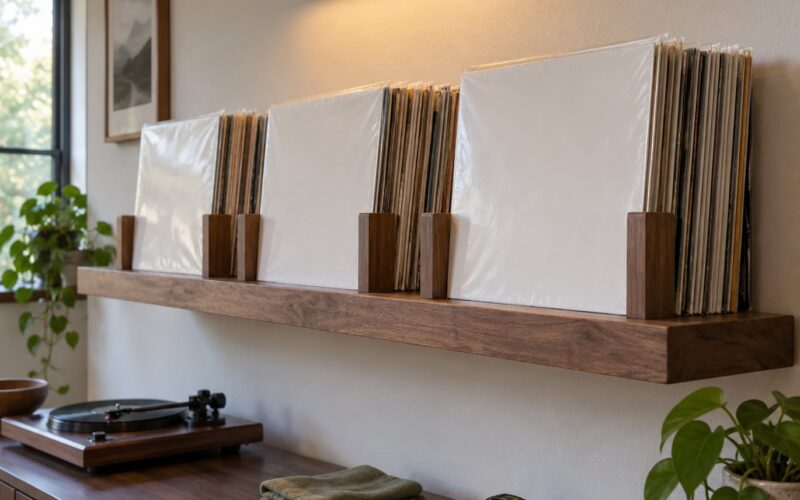
Stand the record upright, label edge down on the drying mat, and let it air dry fully. That takes 10 to 20 minutes rather than seconds, and skipping it is how water spots get baked in.
Once it looks dry, buff gently with a clean dry microfiber cloth along the groove direction. If you see streaks, you applied too much fluid or the cloth was dirty, so wipe again rather than trying to scrub it off.
Drop the needle on a quiet passage and listen. Persistent pops mean the surface is still dirty; a new skip means you let it dry somewhere warped or wet. Both are fixable, but the skip needs the record flattened under something heavy for a week or two.
Put the record in a clean anti-static inner sleeve and back into its jacket. If the sleeve is the grimy part, replace it rather than cleaning it.
For a fragile 78, an original presser of something rare, or a record with mold, stop here and use a professional archive conservator. The cost of one cleaning is small next to a lost pressing.
Common Mistakes That Damage Records
Using tap water with no proper cleaner. Tap water carries minerals, and combined with a dirty cloth you get smeared limescale instead of a clean groove. Use distilled or deionized water plus a neutral solution, or a purpose-made record fluid.
Over-wetting the record. A dripping cloth lays water on the label and in the run-out groove, and trapped moisture can lift a paper label or push a record out of flat. Wring the cloth out properly and work section by section.
Scrubbing the grooves hard. The abrasive action comes from whatever grit is on your cloth or brush, and it removes vinyl permanently. Use light pressure and change the cloth often.
Using alcohol or household detergent at full strength. Straight isopropyl is aggressive on some plastics and full dish detergent leaves a film that traps dust, which feels like the record never got clean. Dilute and use tiny amounts.
Sliding a wet record into its sleeve. The sleeve sticks, the water has nowhere to go, and both can come out marked. Air dry first, every time.
Reusing a cloth that has grit on it. One dirty microfiber cloth can mark an entire side. Keep a stack of them and swap often.
Frequently Asked Questions
Can you clean vinyl records with just distilled water?
It is safe, but it is not a cleaner on its own. Distilled water carries no minerals, so it will not cause water spots, yet it also will not lift fingerprints or oily grime without help. Mix it with a small amount of neutral record cleaning fluid or a drop of rinse agent, dampen a microfiber cloth rather than the record, and keep the moisture away from the label and spindle hole.
Can bottled water replace distilled water for cleaning records?
Bottled water is filtered but usually not demineralised, and many brands still add minerals back for taste. In a soft-water area it will probably be fine as a one-off. In a hard-water area expect faint spotting and rings after it dries. Distilled or deionized water costs little and removes the guesswork, so use that.
How much distilled water should I use per record?
Less than you think. One or two drops is enough to dampen a microfiber cloth, and roughly a teaspoon of diluted fluid per side is generous. Never pour water onto the disc or into the label area, because trapped moisture is what causes warp and skips. Tip the dish against the cloth and let it soak in.
Does distilled water work on record sleeves and jackets?
No, and it should not. Sleeves are usually PVC film and paperboard, and water can soak into the board, cause ink to run or leave a tide mark. Clean the disc separately, then replace a grimy inner sleeve. For a valuable jacket, leave sleeve cleaning to a conservator.
Should valuable or moldy records be cleaned this way at all?
Not by hand. Mold means a humid storage problem that a cloth will not fix, and spores can spread to neighbouring sleeves. Severe warp, crazing, brittle vinyl or a rare pressing deserve an archive conservator with controlled equipment. For everything else, start with dry brushing and test the whole wet method on a less valuable record first.
Conclusion: Start Dry, Then Add Water Sparingly
Distilled water is safe for cleaning records when you use it sparingly, with a record-safe cleaner, on a clean cloth. On its own it will not remove fingerprints, dirt or static, and it will not fix scratches or worn grooves either.
Start where most collectors should: a dry anti-static brush, following the grooves from the outside in. Only move to a damp cloth when the noise tells you the record needs more, and keep the water off the label and the spindle hole.
Run the full method on a record you would not mind losing before you touch a prized pressing. That one habit has saved more collections than any cleaning product on the shelf.