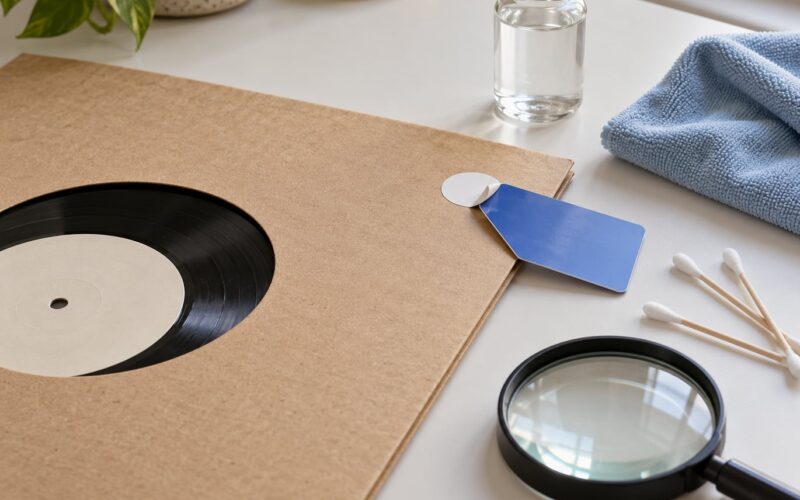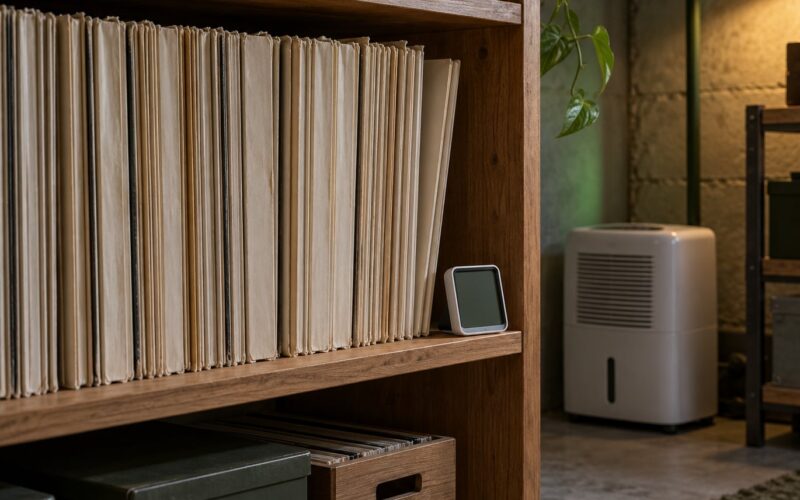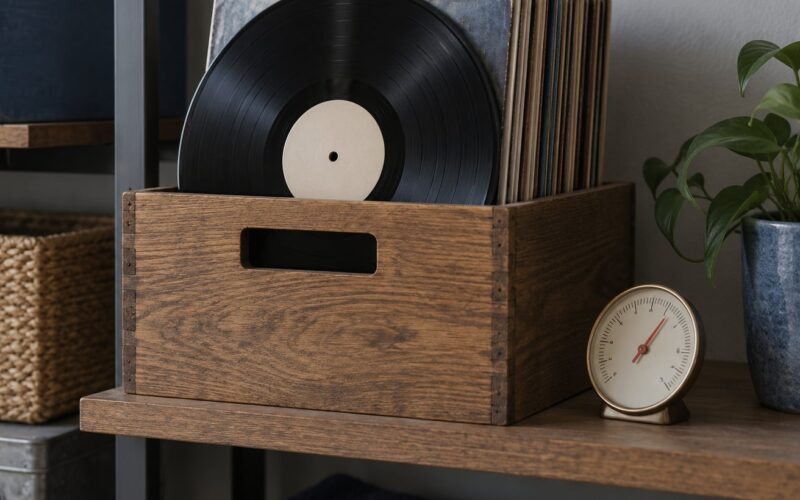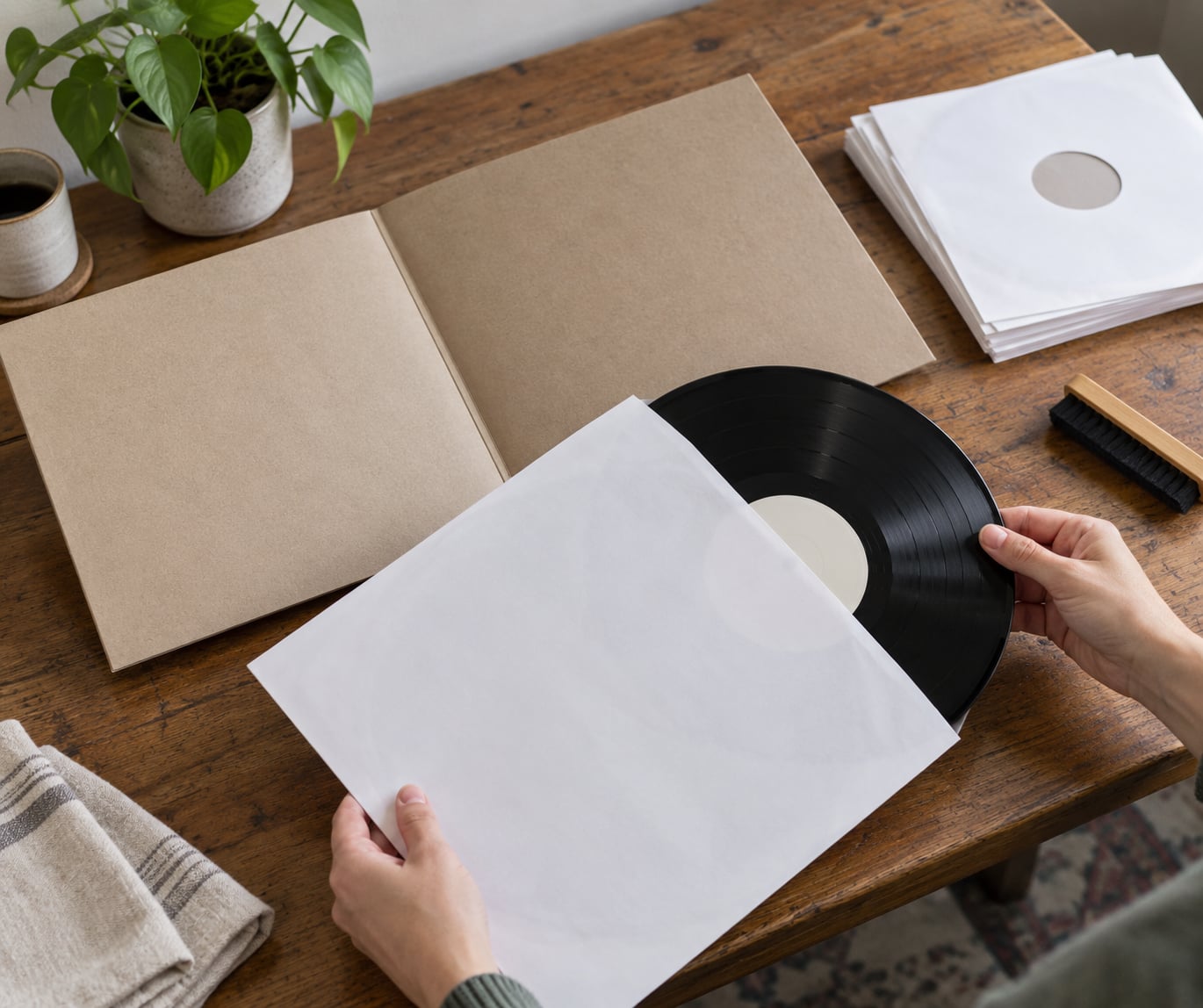
If you have only just started buying records, you have almost certainly heard the phrase thrown around in record shops without being told what it means. So here is the short answer: inner sleeves are the thin protective layer that sits between the vinyl record and the printed album jacket, and you need them because the vinyl is the only part of a record that plays and the only part that cannot be repaired. Everything about what are inner sleeves and why you need them comes down to that one fact.
A new LP usually arrives with a cheap paper sleeve inside the jacket. It fits, technically. It is also thin, generates static, and in a bargain bin it can be dirty, torn or missing entirely. Replacing it is one of the cheapest pieces of maintenance a collector can do.
Table of Contents
- What Are Inner Sleeves and Why You Need Them?
- Why collectors swap out the sleeve that came in the box
- How Inner Sleeves Protect Vinyl Records
- Inner Sleeves vs. Record Jackets and Outer Sleeves
- Which Type of Inner Sleeve Should You Choose?
- How to Choose the Right Sleeve Size
- How to Put an Inner Sleeve on a Record Safely
- Common Inner-Sleeve Mistakes to Avoid
- Frequently Asked Questions
- Are vinyl records supposed to come with inner sleeves?
- What size inner sleeve fits a vinyl record?
- Are poly-lined or polypropylene inner sleeves better than paper?
- Can an inner sleeve prevent a record from getting scratched?
- Should I remove the original inner sleeve from a used record?
- Do inner sleeves prevent static or keep dust out completely?
- The Bottom Line
What Are Inner Sleeves and Why You Need Them?
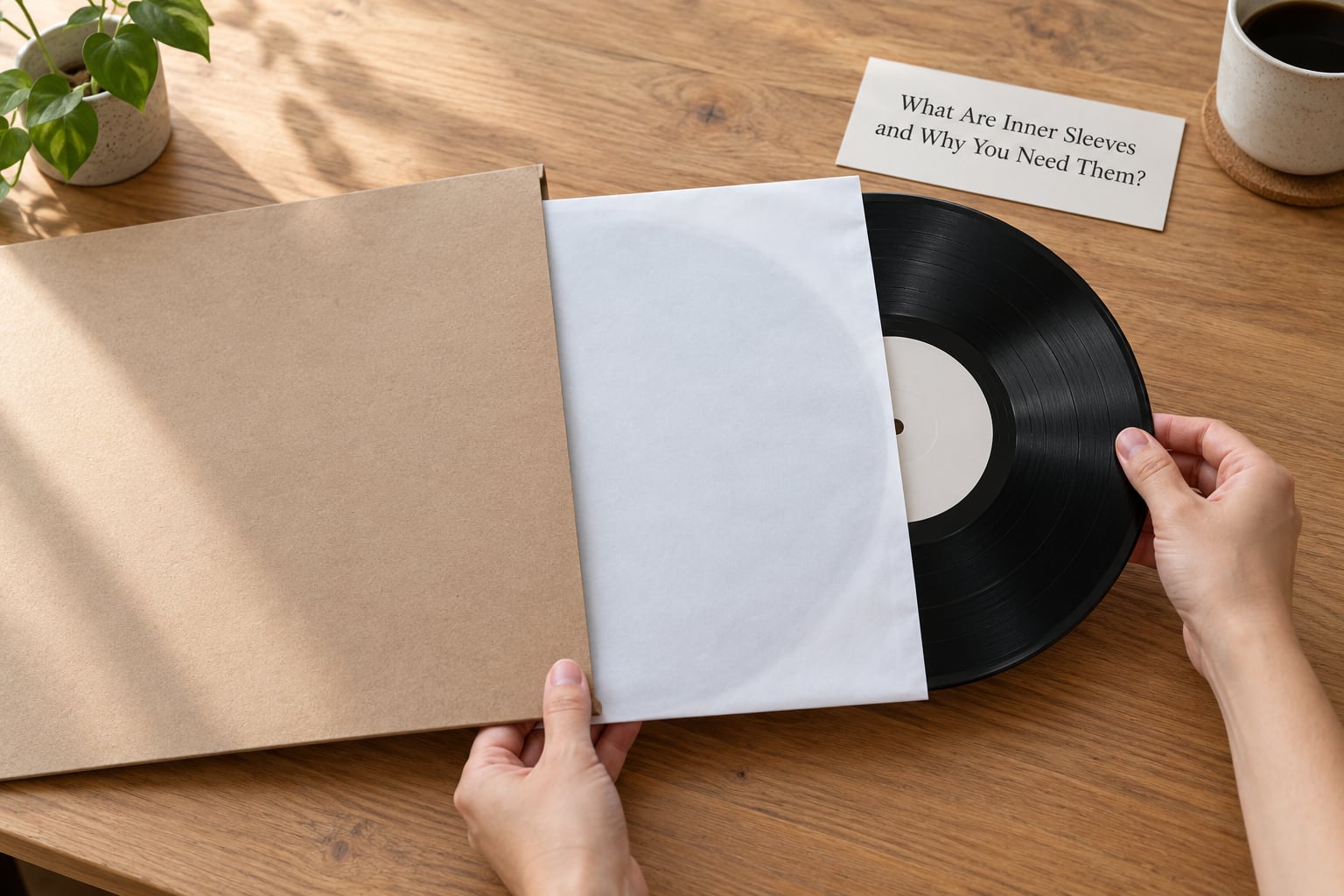
An inner sleeve is a thin protective sleeve that sits directly between a vinyl record and its album jacket. Its job is to control what touches the playing surface: dust, static charge, scuffs and the grit that gets dragged across the grooves every time a record slides in or out of its sleeve.
The jacket itself does almost nothing for the vinyl. It is a printed cardboard cover, sized to hold a 12-inch disc, and the record rests loosely inside it. Without an inner sleeve the vinyl slides directly against bare board every time you shelve or pull the record, and that contact is where scuffing comes from.
Why collectors swap out the sleeve that came in the box
Factory paper sleeves get made in enormous quantities for pennies, so they are usually thin single-ply stock with no anti-static treatment. They pick up a charge easily, they shred along the seam after a few dozen pulls, and the ink and adhesive in a cheap paper stock can be mildly abrasive against vinyl over time.
None of that makes the original sleeve dangerous. It makes it disposable. Swapping it costs almost nothing and inner sleeves are not part of how a record is graded or valued, so replacing one costs you nothing in collector terms.
How Inner Sleeves Protect Vinyl Records
The protection is unglamorous and it is entirely about friction. Because the inner sleeve is the only layer in direct contact with the vinyl, whatever is on that sleeve is what ends up rubbing across the grooves.
It keeps dust and grit off the playing surface. A record face holds a fine layer of dust almost immediately. That dust is the real scratch risk, not the sleeve itself, and a clean sleeve keeps that abrasive layer off the vinyl when you slide the disc back in.
It dissipates static. Static charge on a vinyl record is what pulls airborne dust onto the grooves. Anti-static sleeve materials let that charge bleed away instead of sitting there and gathering everything floating in the room.
It stops sleeve abrasion. This is the term collectors use for the fine swirl of scuff marks that appears when a record rubs against cardboard during repeated insertion and removal. The board itself is usually the abrasive, not the sleeve, but a smooth liner between the two removes the contact entirely.
It reduces edge and seam wear. A tight liner holds the disc square so the edge is not being knocked against the jacket opening or the split seam each time the record goes back in.
It protects rare and expensive pressings specifically. A collectible record with swirl marks across side two is a permanently reduced copy. Cheap insurance beats permanent loss.
What an inner sleeve cannot do is fix a record that already has scratches, correct a warp, or stop moisture damage in a damp room. It is a contact-protection layer, not a storage system. You still want the record stored upright, out of direct sunlight, at a steady temperature.
Inner Sleeves vs. Record Jackets and Outer Sleeves
New collectors often use the word sleeve for three different objects. Keeping them straight is the fastest way to understand the whole system: the inner sleeve touches the vinyl, the outer sleeve touches the jacket, and the jacket holds both.
| Layer | What it touches | What it protects | Typical material | Failure mode |
|---|---|---|---|---|
| Vinyl record | The record surface | Nothing protects it on its own | Vinyl | Scratches, swirl marks, warp |
| Inner sleeve | The record, surface to surface | Playing surface from dust, static and abrasion | Paper, PE, PP, poly-lined paper | Tears, wrinkles, seam splits |
| Album jacket | Holds the disc, prints on both sides | Cover art from handling, but nothing else | Cardboard | Ring wear, corner bumps, spine splits |
| Outer sleeve | The outside of the jacket | Cover art, corners and spine from shelf wear | Polypropylene, HDPE, PVC, cardboard | Yellowing, seam cracking |
An outer sleeve, often called a poly outer, is a heavier clear bag that slides over the printed jacket from the outside. It never touches the vinyl at all. Its whole purpose is to keep the cover art looking new while the records sit packed together in a crate.
Some confusion comes from the thin polythene bag most records arrive in with a sticker telling you to remove it. That is a transport bag, not a protective outer sleeve. It wrinkles, it does not seal, and it is designed to be thrown away.
One more confusion worth clearing up: trading card inner sleeves are a different product entirely. Card sleeves are sized roughly 3 by 4 inches for trading cards, so they will not fit a 12-inch record at all. A meaningful share of search results for this topic are about cards, which is a different product with a different sizing standard.
Which Type of Inner Sleeve Should You Choose?
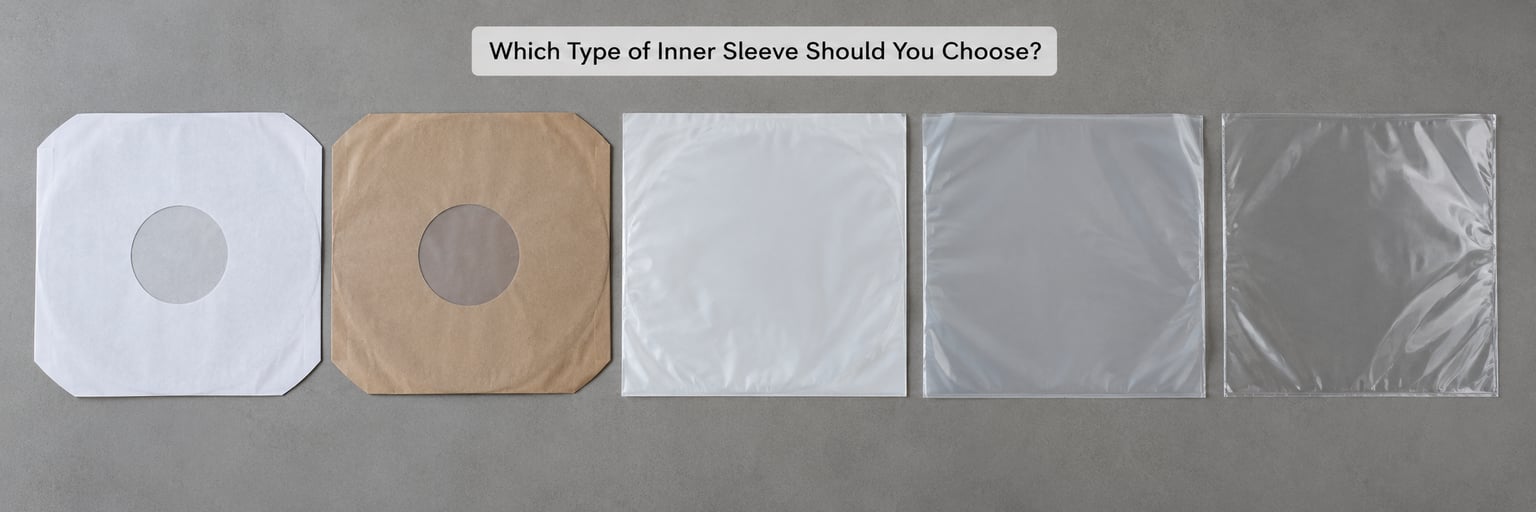
Most collectors end up using one of five materials. None of them is wrong, but they are not equal, and the table below is the fastest way to see which trade-off you are making.
| Type | Scratch resistance | Static behaviour | Durability | Transparency | Best for |
|---|---|---|---|---|---|
| Standard paper | Low | Builds charge | Tears easily | Opaque, may show printing through | Immediate replacement of a factory sleeve |
| Poly-lined paper | Medium-high | Neutralised by the liner | Good | Opaque | Handling stiffening plus surface protection |
| Polyethylene (PE) | Medium | Neutral | Fair, can crease | Translucent | Budget all-round choice |
| Polypropylene (PP) | High | Neutral | Best, resists wrinkling | Clear | Everyday use where the record is handled a lot |
| Archival HDPE | High | Neutral | Very good | Translucent | Long-term storage of valuable pressings |
Anti-static is the feature collectors argue about most, and it is worth understanding what it actually does. It is not a coating that makes the record immune to dust. It is a material that does not hold a charge, so the record does not become a dust magnet in the first place.
Paper sleeves are the worst offender on static. Polyethylene and polypropylene are both fine. The poly-lined paper style sold under lots of brand names adds a plastic layer to the paper so the sleeve stops flexing and stops generating charge, and it also stiffens the sleeve enough that the disc slides in and out cleanly.
On the branded premium versions, the marketing claims more than the material delivers. The layer marketed as rice paper in those sleeves is usually an ordinary lightweight paper sandwiched between two plastic layers, so it never touches the vinyl at all. Its real job is to stiffen the sleeve so the disc slides cleanly in and out. Many of the cheaper branded clones turn out to be the same sleeve from the same factory. If you want that construction, judge it on the material specification and the pack price, not on the logo.
How to Choose the Right Sleeve Size
Sizing is where most people get it wrong, and an undersized sleeve is worse than no sleeve at all because it presses against the record the whole time it sits in the jacket. Match the format:
| Format | Disc size | Sleeve to buy | Note |
|---|---|---|---|
| LP | 12 inch | 12-inch inner sleeve | The standard option, sold in large packs |
| Thick audiophile pressing | 12 inch, heavier | 12-inch sleeve, check depth | Deeper records need a roomier sleeve |
| Picture disc | 12 inch | 12-inch sleeve | Check the disc sits flat, not bowed |
| EP | 10 inch | 10-inch sleeve | Less commonly sold than 12-inch |
| Single | 7 inch | 7-inch sleeve | Widely available, small packs |
If you are measuring rather than matching by format, a standard 12-inch LP inner sleeve is roughly 12.25 by 12.25 inches, which gives you a little clearance around the edge. That clearance matters. The disc should slide in without forcing, and the opening of the sleeve should be cut so the record goes in corner-first rather than dragging its rim across the seam.
Trimming is a last resort. If a sleeve is too deep, you can trim the open flap with clean scissors to suit a thick pressing, but cutting a paper or lined sleeve can leave a rough edge that then rubs the vinyl. Buy the right size instead.
How to Put an Inner Sleeve on a Record Safely
Re-sleeving takes about thirty seconds per record if you do it in the right order. The aim is to get the record into a clean sleeve without dragging anything across the playing surface.
1. Look at the sleeve first. Check the inside for grit, torn seams or a sticky residue from an old label. If the sleeve has been in a dirty second-hand record, replace it rather than reuse it.
2. Handle the record by the edges. Hold it at the rim on both sides with your fingertips. Keep your thumbs and fingers off the flat sides of the disc wherever you can.
3. Open the sleeve the way it was designed to open. Most are a folded square with two flaps. Open the fold rather than forcing the record through a seam.
4. Slide the record in corner first, slowly. Let the leading edge do the work instead of pushing the whole disc through at once. If you feel resistance, stop and check for a fold or a piece of debris in the opening.
5. Check that it sits square. Push the sleeve gently into the jacket. If the record is off-centre or the sleeve pokes out, the fit is wrong and the record will chafe in the crate.
6. Clean the record before you sleeve it. This is the step people skip and it is the one that matters. A record that has been sitting in a dirty crate should be cleaned first, because the record sleeve cannot protect a surface that already has grit embedded in it.
Common Inner-Sleeve Mistakes to Avoid
Oversized sleeves. A sleeve that is much larger than the record flaps around and wrinkles. Wrinkles are what dig into the vinyl during a pull, and it is exactly the scuffing that collectors report seeing after a handful of insertions into a stiff or crumpled sleeve. Match the size.
Reusing a dirty second-hand sleeve. Bargain bin records often arrive with no sleeve at all, or one carrying someone else’s dust. Toss it. It is the cheapest line item in your collection.
Folding the sleeve wrong. The opening is folded so the record enters at the corner. Folding it the other way gives you a blunt edge across the opening that scrapes the rim on every pull.
Trapped dust and debris. This is the real scratch mechanism. Collectors on forums.stevehoffman.tv and r/vinyl broadly agree on the physics: a clean sleeve against a clean record does almost no harm, because flat plastic against flat plastic is not abrasive on its own. It is the friction of trapped debris that does the damage.
Sleeving a dirty record before cleaning it. Sleeving is the last step, not the first. Cleaning comes first.
Damaging the printed insert. Insert cards, hype sheets and photos often have adhesive or printing that can stick to a vinyl surface. Keep them inside the jacket, not loose against the disc.
Double sleeving a 7-inch. Some collectors put a 7-inch sleeve inside a 12-inch sleeve and then cut it down. It works, but the cut edges are sharp and sit right where the record edge rubs.
Leaving worn sleeves in place. Replace immediately if a sleeve is torn, creased through the middle or visibly grubby. There is no value in keeping it.
Frequently Asked Questions
Are vinyl records supposed to come with inner sleeves?
Yes, a new record almost always ships with a thin paper inner sleeve inside the jacket. That factory sleeve is enough to stop the vinyl touching raw cardboard, but it is not built to last. Collectors routinely replace it with a plastic or poly-lined sleeve within days of buying, because the paper version builds static and shreds along the seam faster.
What size inner sleeve fits a vinyl record?
A standard 12-inch LP takes a 12-inch inner sleeve, which is usually a few millimetres larger than the disc so it can slide in without forcing. 10-inch EPs need 10-inch sleeves and 7-inch singles need 7-inch sleeves. Thick audiophile pressings need a roomier sleeve because they sit deeper, and an undersized sleeve causes constant friction.
Are poly-lined or polypropylene inner sleeves better than paper?
Both beat plain paper on the things that matter. A poly-lined paper sleeve keeps the structure of paper while adding a plastic layer that stops static and resists abrasion. Polypropylene is the tougher, clearer option and handles repeated handling well. Neither protects against a dirty record or a dirty sleeve, which is where most scratches actually come from.
Can an inner sleeve prevent a record from getting scratched?
Not on its own, but it removes the most common cause. Collector consensus on record forums is that a clean sleeve against a clean record does virtually no damage on its own, because flat plastic against flat plastic is not abrasive. The scratches come from grit and dust trapped between the two surfaces, and the sleeve works by stopping that debris collecting in the first place.
Should I remove the original inner sleeve from a used record?
If it is missing, torn, grubby or the wrong size, replace it. Original paper sleeves are not part of how a record is graded or valued, so swapping one costs you nothing in collector terms. If the existing sleeve is clean and correctly sized, you can keep it, but a plastic sleeve is an easy upgrade whenever you are handling the record regularly.
Do inner sleeves prevent static or keep dust out completely?
Anti-static sleeves stop the record from becoming a dust magnet by not holding a charge, which removes most of the problem. They do not seal, so airborne dust can still land on a record sitting on a shelf for months. Store records upright, away from direct sunlight and in a stable temperature, and dust becomes a much smaller issue to deal with.
The Bottom Line
Start with the records you actually play. Go through them, pull each one out, and check the sleeve: missing, torn, grubby, crumpled or undersized all mean replace it. That single pass fixes the majority of sleeve problems in most collections, and it costs a pack of sleeves rather than a new record.
Match the size to the format, prefer a material that does not hold a static charge, and clean the record before it goes into any sleeve. Step up to thicker archival materials only for pressings you plan to keep for decades or store in conditions where paper would suffer. Everything else in this guide is maintenance detail, and honestly, most of it you can set up once and forget.
Put simply, what are inner sleeves and why you need them comes down to cheap, replaceable insurance for the one part of a record you cannot repair. Everything about picking the right one is detail, and the price difference between a good sleeve and a bad one is small enough that there is no reason to buy the bad one.
Updated for 2026.