Short answer: yes, but only as a controlled stopgap, and only if the garage is dry, shaded, pest-proof and kept near 65-75°F (18-24°C) with 40-55% relative humidity. Vinyl is PVC, and PVC softens well before it melts, so a garage that tracks outdoor temperature is slowly deforming your records even when nothing looks wrong.
Most collectors asking this question don’t have a choice — a one-bedroom apartment, an inherited collection with nowhere to put it, or a garage sale find that needs a home. For those situations, garage storage works better than most people expect as long as you give it the same respect as an indoor closet.
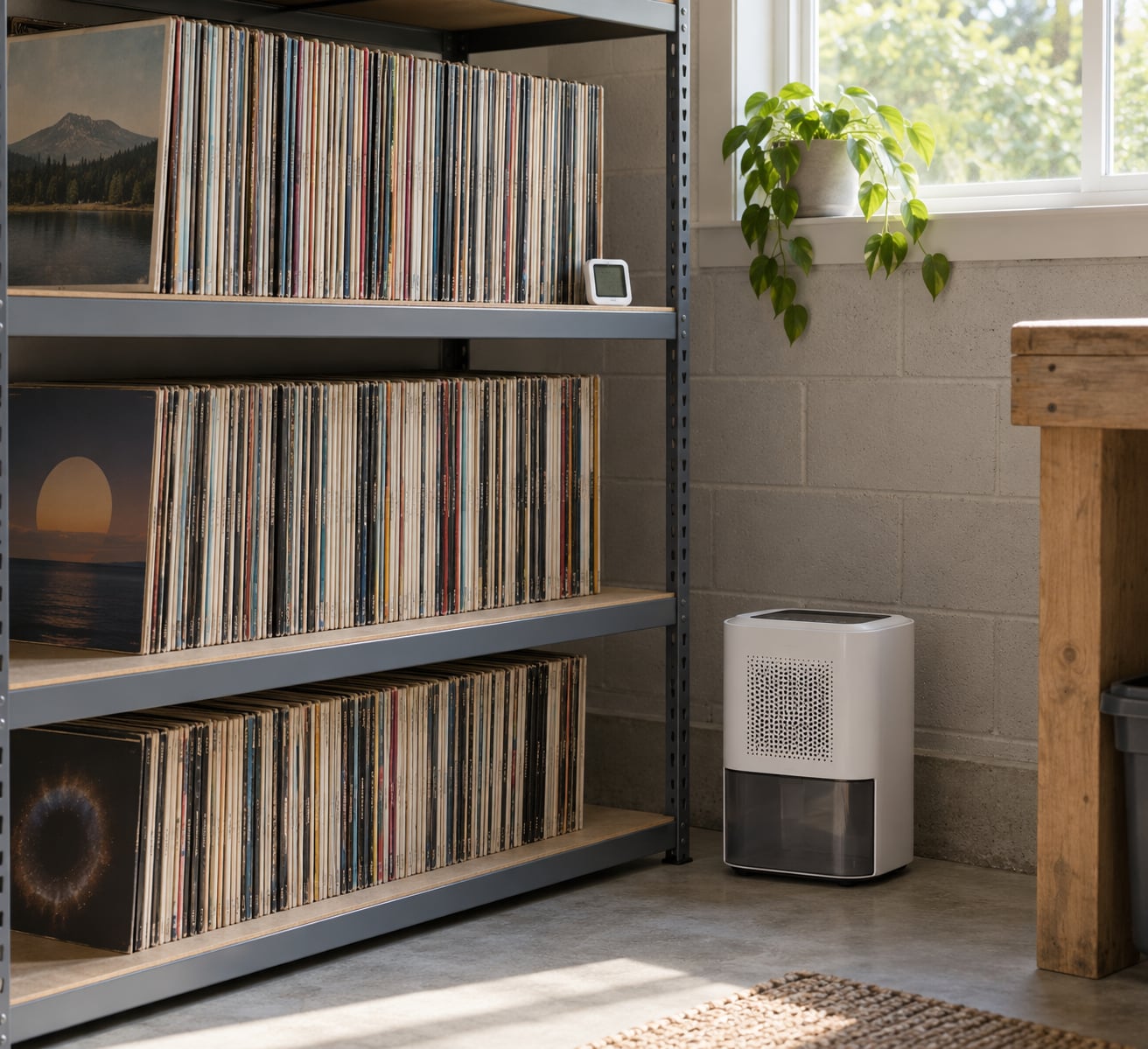
The short version: store records vertically on purpose-built shelving, off the floor, inside sealed containers, away from any window or water heater, with a thermometer-hygrometer on the shelf and a dehumidifier running if you live in a humid region.
Table of Contents
- What You Need
- Step-by-Step: Can You Store Records in a Garage?
- Can You Store Records in a Garage? Check the Conditions First
- Clean and Inspect the Records
- Choose Shelving and Packing Methods
- Control Heat, Humidity, and Pests
- Maintain and Inspect the Collection
- Common Mistakes
- Frequently Asked Questions
- Can you store records in a garage?
- What temperature and humidity are safe for vinyl in a garage?
- Are cardboard record boxes safe for garage storage?
- Should records be stored on the floor?
- How do I keep insects and rodents out of record storage?
- When should I avoid keeping valuable records in a garage?
- Conclusion
What You Need
Before a single record moves, gather these. The point is to find out whether your garage qualifies before you’ve stacked 400 jackets into a corner you’ll regret.
- A week of readings. Put a thermometer-hygrometer on the floor where the records would go and leave it for seven days. A single hot afternoon tells you more than a winter reading.
- Shelving rated for the load. Vinyl weighs roughly 180-200 grams per 12-inch disc, so a crate of 50 records is around 20 pounds. Buy shelving with a per-shelf weight rating comfortably above your heaviest crate, and bolt tall units to the wall.
- A second thermometer-hygrometer for the far end of the garage. If the two disagree by more than about 5°F, the garage has a microclimate and probably a leak or an uninsulated wall.
- A portable dehumidifier with a continuous drain hose if you live somewhere humid, or you plan to store records through summer.
- Protective supplies: anti-static poly-lined inner sleeves, poly outer sleeves, crate dividers, and airtight plastic totes with gasket lids.
- Basic safety gear: a hand truck or dolly, work gloves, a sturdy ladder, and a dust mask if any box smells musty when you open it.
Rated shelving and airtight totes are the two items worth spending properly on. Everything else you can improvise.
Step-by-Step: Can You Store Records in a Garage?
Can You Store Records in a Garage? Check the Conditions First
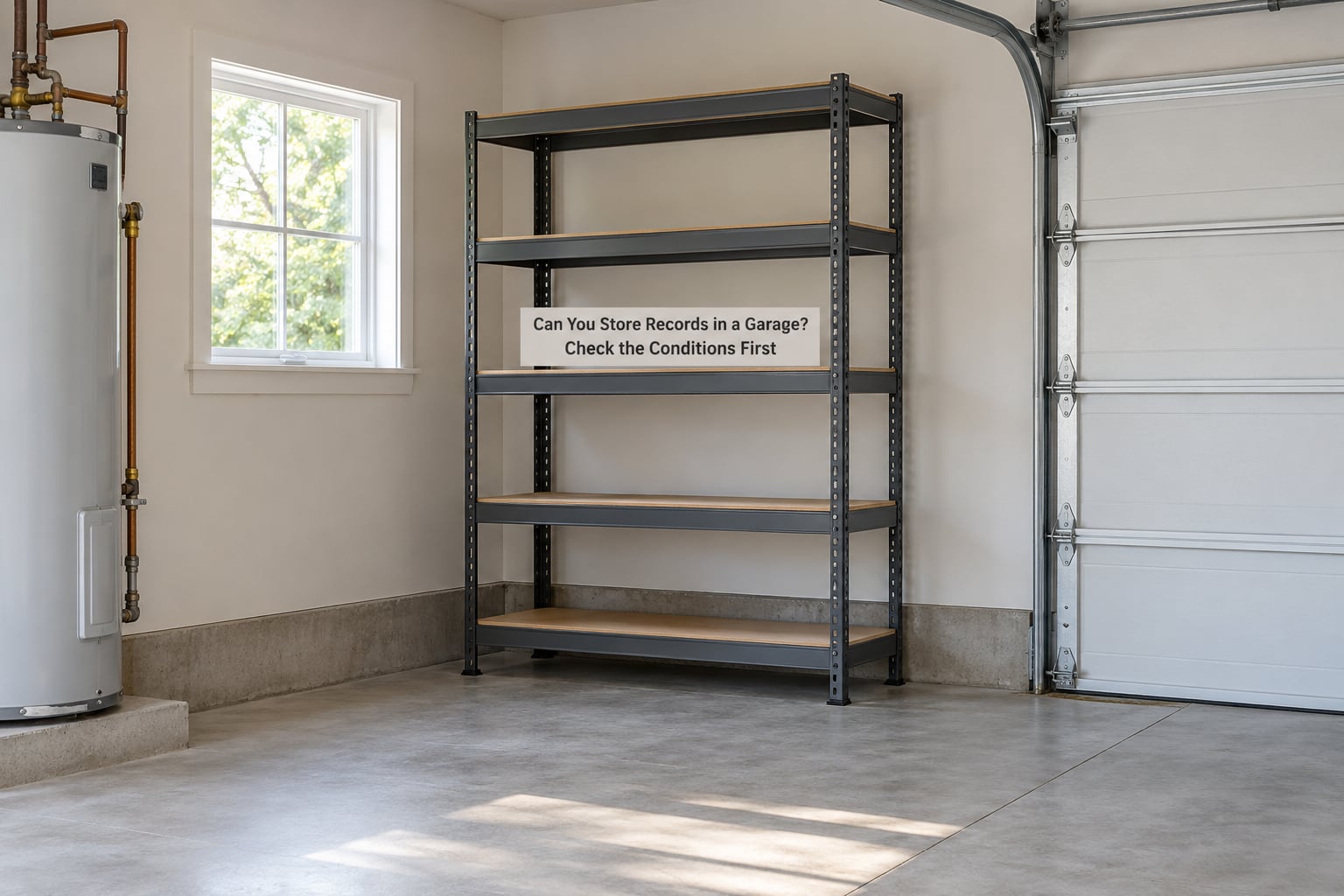
A garage qualifies only if all four of these are true. If one fails, use a different space.
- It never gets hotter than about 80°F. An uninsulated garage can reach 40°C (104°F) on a summer afternoon, and attached garages often run 15-25°F above the house.
- The floor is dry and not flood-prone. Records sit at floor level in most garages, which is exactly where water goes.
- No direct sunlight. UV fades jacket art and yellows card sleeves permanently.
- Pests are already excluded. Look under the garage door, around pipe penetrations, and at the gap where the door meets the floor on both sides.
If you have an attached, insulated garage in a temperate climate, you have the strongest case of anyone asking this question. Detached and uninsulated garages in hot or humid regions are the weakest.
Clean and Inspect the Records
Sort before you store. Records with existing problems should be fixed, not sealed into a tote for a year.
Start with smell. Open a box and put your nose near the jackets — a musty or sour smell means mold has taken hold in paper sleeves, and that spreads to neighbouring jackets.
Next, look at the discs edge-on. Hold a record at eye level and sight along its rim: a gentle banana curve is warping. Hold it flat on a surface and press very lightly near the edge — if the edge lifts, it is warped. A warped record drops the needle badly and skips; the damage cannot be reversed.
Then check for pests. Silverfish leave irregular notches along jacket edges and corners rather than clean holes. Look for mouse or rat nesting material, greasy urine staining along shelf edges, and gnawed card corners.
Before sealing anything: brush off loose dirt, re-sleeve damaged jackets in fresh anti-static inner sleeves, separate any musty albums from the rest of the batch, and deal with mold-affected records separately. You do not want to seal damp records into a tote.
Choose Shelving and Packing Methods
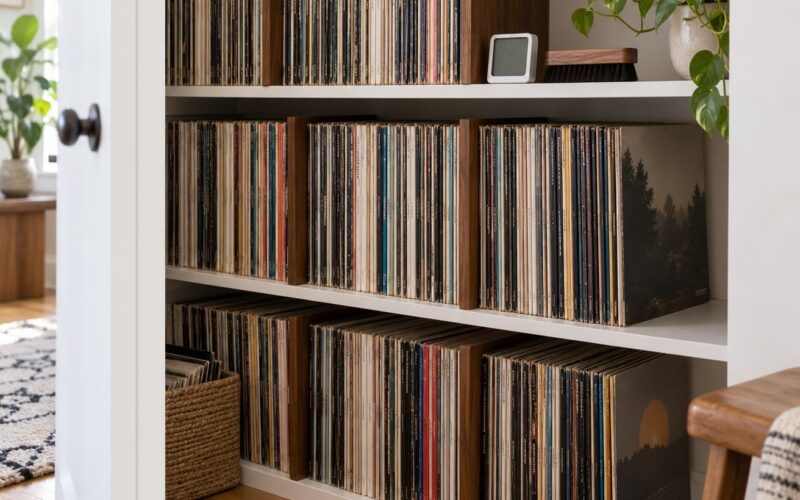
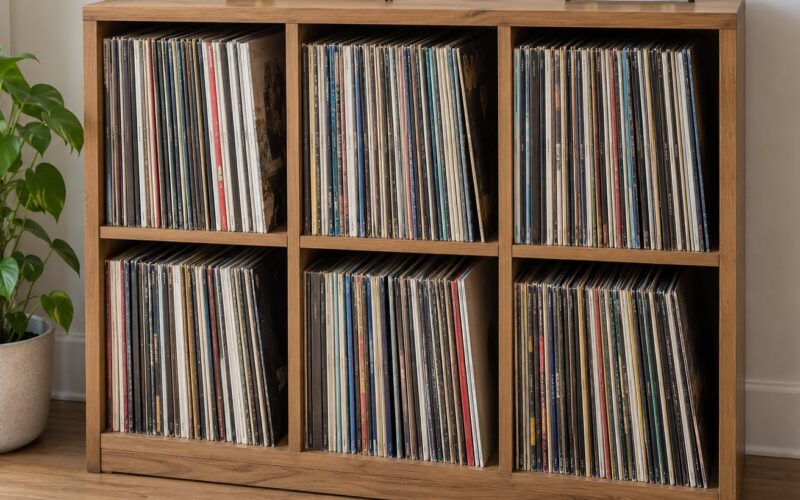
Vertical storage, on its edge like a book, is the one non-negotiable rule. Stacked flat means one heavy record pressing on another for months, and that weight leaves a set of gentle ripples across the whole stack. Leaning at an angle is nearly as bad, because the weight of the albums above rests on the bottom edges of the lower sleeves.
Match the shelf to the record size. 12-inch records need a shelf around 13-14 inches tall and roughly 15-16 inches deep, so a record stands with a few inches of spine above the shelf lip. 7-inch records need about 9 inches.
Use dividers between partially filled shelves so jackets stay vertical rather than tipping into their neighbours. Fill shelves from one end and stand records tight enough that they hold each other up without forcing them.
On boxes: use sturdy double-wall record cartons, not single-wall moving boxes. Do not overfill them — a box too heavy to lift safely onto the top shelf will not get lifted onto the top shelf. And keep the total load per shelf under its rated limit, with the heaviest crates low.
Control Heat, Humidity, and Pests
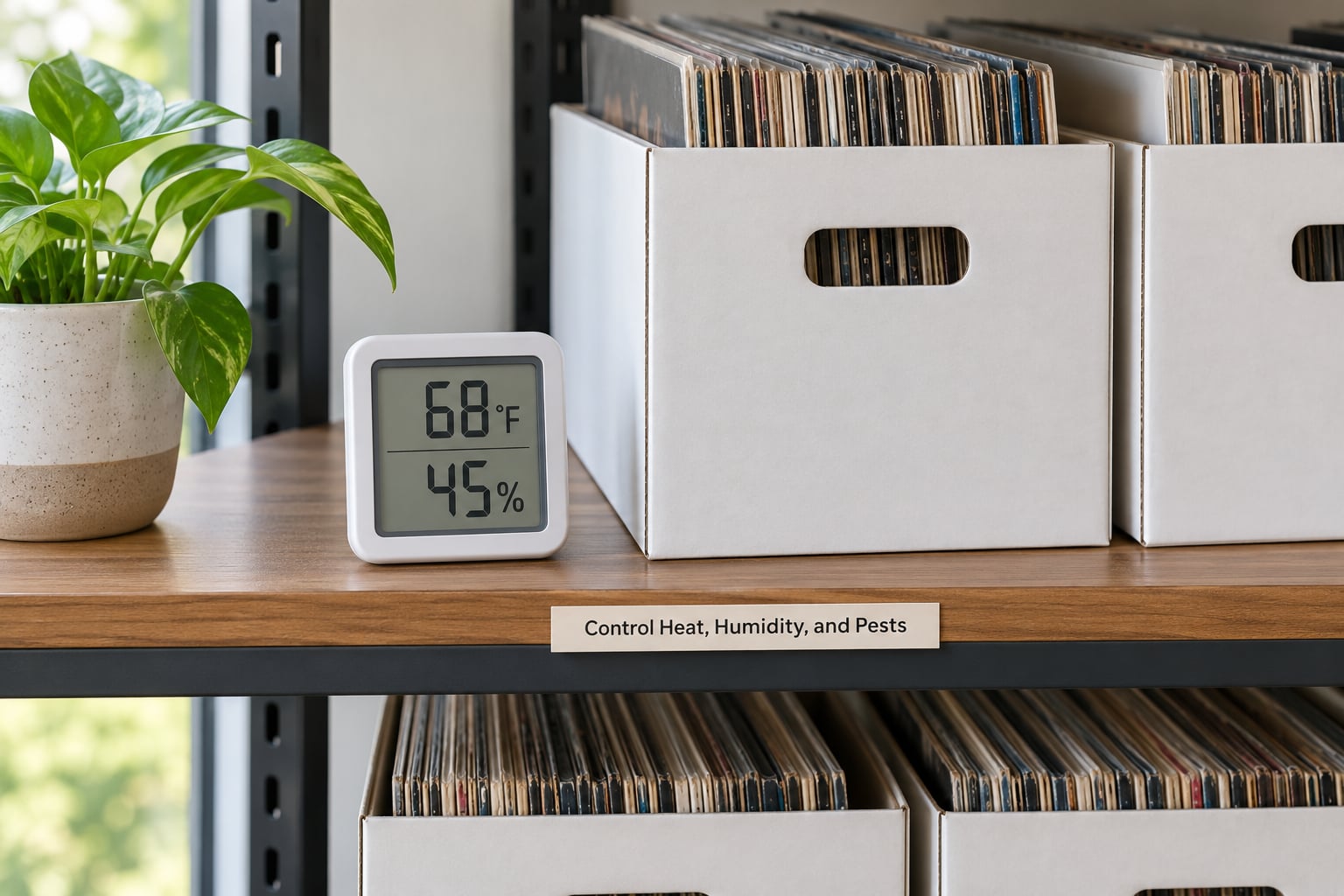
The target is 65-75°F (18-24°C) with 40-55% relative humidity, stable rather than merely average. Repeated hot/cold cycling matters more than the peak reading, because PVC softens, deforms and re-hardens with each swing.
Run the dehumidifier in the corner with the worst readings, not the one nearest the door where the hose reaches. Aim the outlet away from the record shelves so it is not blowing conditioned air directly at jackets. If the unit has a continuous drain, route the hose to a floor drain or out through the wall — an auto-shutoff reservoir will stop working on a long weekend, and that is exactly when you are not there to notice.
Improve what you can cheaply: seal gaps around the garage door threshold, add weatherstripping, and hang a reflective radiant barrier or reflective foil-backed foam under the ceiling joists. Insulation on the garage door itself often does more than anything else you can add.
For pests, seal with rodent-proof materials rather than foam — mice chew through expanding foam. Add tamper-resistant bait stations inside, near entry points, and check them on the same schedule as your records. Bay leaves and cedar blocks are folklore; they do nothing.
On electricity, keep it plain: a dehumidifier and a small fan on separate circuits, no extension cords daisy-chained together, and nothing plugged into a multi-outlet strip under a shelf full of paper. If a circuit needs to be added, have a licensed electrician do it.
Maintain and Inspect the Collection
Set two rhythms. A monthly thirty-second glance at the hygrometer reading and a quick scan for water staining or chewed card. And a seasonal check — about 20 minutes — where you pull two or three boxes, look for musty smell and edge-on warp, and confirm nothing is leaning.
Add extra checks when the weather cooperates: after a heavy storm, during a forecast heat wave, and before a cold snap. If your hygrometer reads above 60% or above 85°F more than a couple of hours, that is your cue to move the most valuable records indoors until it passes.
One habit most people skip: when you bring records in from a cold garage, leave them sealed in their totes or sleeves for 30-60 minutes before opening. Warm humid room air meeting cold vinyl produces condensation on the disc surface, and people regularly mistake that bead of moisture for storage damage when it is really just acclimatization.
When you move records into the garage, do it in the coolest part of the day, and stage boxes inside the door rather than carrying them one at a time across a hot floor.
Common Mistakes
Storing on the floor. Water, condensation and pests all start there. Fix: cinder blocks, a pallet, or purpose-built shelving with legs, raising the lowest shelf a few inches off the slab.
Cheap particleboard shelving. It sags under a crate of records and can fail outright. Fix: steel or solid-wood shelving, bolted to the wall, with a published per-shelf weight rating.
Leaving records near a window or under a bare bulb. Direct light fades artwork and yellows sleeves. Fix: no shelf within a few feet of a window, and no uncovered bulb above the stacks.
Sealing damp records into totes. You trap the moisture in. Fix: everything bone-dry and room-temperature before the lids go on, and leave totes open for a day after moving them in.
No monitoring. Most garage failures are gradual, which is exactly why nobody notices. Fix: a visible thermometer-hygrometer at eye level, with a second unit as a backup.
Overloading electrical setups. Extension cords under stacked paper is a fire risk. Fix: one device per outlet, no daisy chains, and a licensed electrician for anything new.
Frequently Asked Questions
Can you store records in a garage?
Yes, for short or medium-term storage, if the garage stays between 65-75°F (18-24°C) with 40-55% relative humidity and you keep records vertical, off the floor, sealed and out of direct light. Avoid the garage for high-value collections, uninsulated spaces, flood-prone floors, or anywhere summer readings climb past 85°F.
What temperature and humidity are safe for vinyl in a garage?
Aim for 65-75°F (18-24°C) and 40-55% relative humidity, held fairly steady rather than swinging. PVC begins softening well below its melting point, and uninsulated garages can reach 40°C (104°F) on a summer afternoon. Repeated hot and cold cycling warps discs faster than any single hot day.
Are cardboard record boxes safe for garage storage?
Cardboard is fine in a dry, temperature-stable garage, but it is the first thing pests and moisture attack. Use double-wall record cartons rather than single-wall moving boxes, line the shelves with the boxes you already own, and put inner sleeves in anti-static poly and jackets in poly outer sleeves so the paper is protected even if the carton takes a hit.
Should records be stored on the floor?
No. The garage floor is where water, condensation and pests begin, and it is usually the coldest, dampest surface in the space. Raise everything at least a few inches on cinder blocks, a pallet, or shelving with raised legs, and keep the heaviest crates on the lowest shelf so the load stays stable.
How do I keep insects and rodents out of record storage?
Seal first, then monitor. Close the gap under the garage door with rodent-proof material, cover pipe and vent penetrations with metal mesh, and keep tamper-resistant bait stations near entry points on a check schedule. Inside, store jackets in poly outer sleeves, since silverfish target the paper rather than the vinyl.
When should I avoid keeping valuable records in a garage?
Skip it when the garage is uninsulated or detached in a hot or humid climate, when the floor has taken water before, when your hygrometer reads above 60% or 85°F regularly, or when the records are irreplaceable first pressings or shellac-era pressings that cannot survive cleaning. Renters with no alternative are better served by a climate-controlled storage unit.
Conclusion
The garage is a workable answer to “can you store records in a garage?” for a temporary overflow collection in an attached, insulated, dry space. It is a poor answer for anything you cannot replace.
Do three things this week. Put a hygrometer in the garage for seven days and see what it actually reads. Walk the perimeter and find every gap under the door and around the pipes. Then buy shelving that holds the weight, get it off the floor, and move only the dry, stable records there — vertically, sealed, and away from the window.
Updated for October 2026.