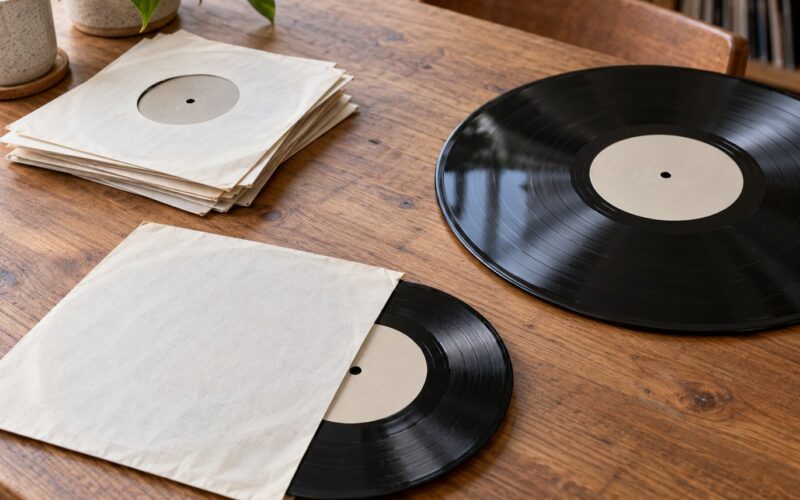
A flexi disc is a thin, flexible phonograph record, usually 7 inches across and played at 45 RPM, pressed onto a floppy sheet of plastic or extra-thin vinyl. The grooves are cut the same way as on any other record, so it spins and plays on a standard turntable with no special hardware. One note before we go further: this is the music format, not the menstrual product also sold under the name flexi disc.
That collision matters more than it sounds. Search engines routinely answer this exact question with a menstrual disc, while every organic result on the page is about music. If you landed here wondering about a different product, this guide is not for you. If you want to know how a floppy 7-inch record works and why collectors bother with them, read on.
I have handled enough of these in boxes and sleeves to have an opinion, and the honest version is this: most flexi discs are a curio, and a few are genuinely worth hunting. The format tells a good story about how labels used to market music, which is more than most bonus inserts manage.
Table of Contents
- What Is a Flexi Disc?
- What Is a Flexi Disc Made Of?
- What Is a Flexi Disc in Technical Terms?
- How Does a Flexi Disc Work?
- Where Did Flexi Discs Come From?
- Why Were Flexi Discs Used?
- What Is the Difference Between a Flexi Disc and an LP?
- What Is the Difference Between a Flexi Disc and a CD?
- Are Flexi Discs Worth Collecting?
- How Do You Play and Care for a Flexi Disc?
- How Can You Tell If a Flexi Disc Is Rare?
- Frequently Asked Questions
- Can you play a flexi disc on a normal turntable?
- Are flexi discs the same size as regular vinyl records?
- Why do flexi discs sound quieter or less clear than LPs?
- What is the rarest type of flexi disc?
- How should I store a flexi disc so it does not warp?
- Are flexi discs worth money if the record is unplayable?
- Conclusion: Start by Checking the Disc and Packaging
What Is a Flexi Disc?
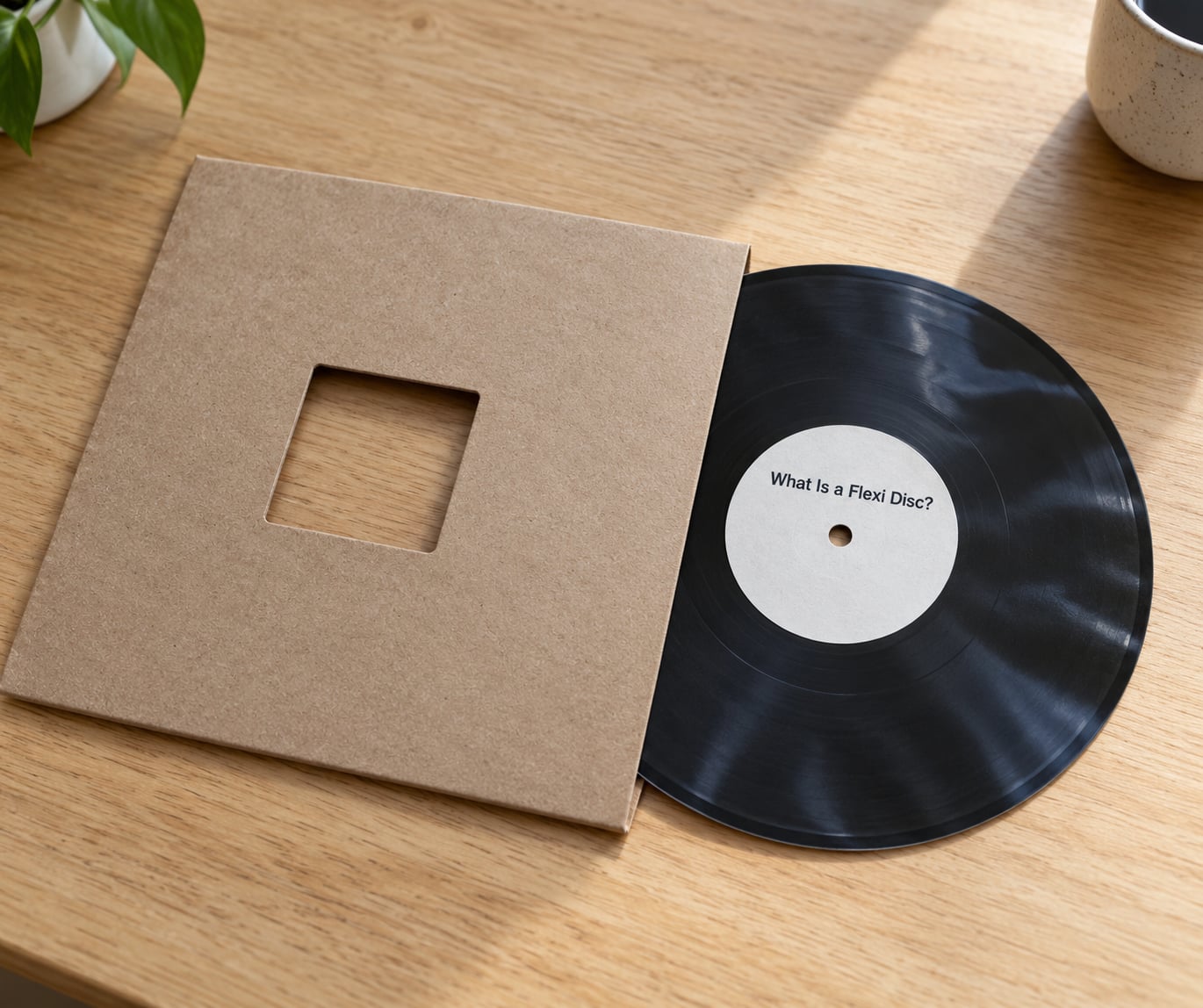
A flexi disc is a record pressed onto a very thin, floppy substrate instead of rigid vinyl, most often at 7 inches and 45 RPM. Because the groove encoding is identical to a standard single, a normal turntable reads it without complaint.
Not to be confused with the menstrual product also marketed as a flexi disc or flex disc. This guide covers the music format only.
The 7-inch flexi is the best-known version, but the family is wider than most people realise:
- Magazine flexis — stapled or glued into the centre of a magazine page, usually playing one track per side.
- Hip pocket flexis — a 4-inch diameter version, small enough for a shirt pocket and usually sold as a premium mail-order item.
- Album bonus flexis — included with an LP or CD purchase, often the only place a track from that album appears.
- Soviet X-ray flexis — pressed onto repurposed hospital X-ray film, because the material was scarce and the music was banned.
- Flexi-bound albums — a disc sealed into a fold-out cardboard package rather than a plastic jewel case.
Playing time is short. A single side holds a couple of minutes of music, occasionally a little more if the cutting engineer squeezed the groove pitch up.
What Is a Flexi Disc Made Of?
A flexi disc is a very thin sheet of plastic — often PVC or a similar flexible polymer, sometimes an extra-thin vinyl compound — with a microgroove spiral pressed into one or both faces. The common 7-inch version is roughly a millimetre or less thick and weighs almost nothing.
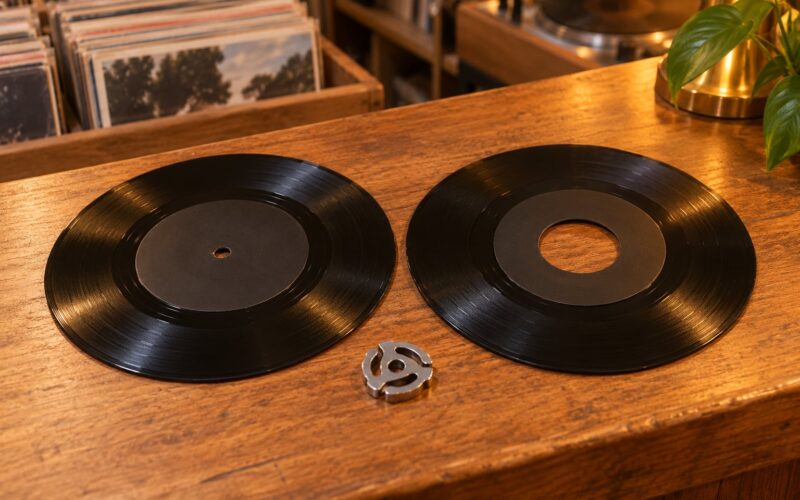
The centre hole is the part collectors argue about most. Many 7-inch flexis were manufactured with a small square hole instead of the standard 7.24 mm round one, which is why so many people conclude their disc is broken when it will not sit on a spindle. It is a manufacturing quirk, not damage.
That thinness is the whole appeal and the whole problem. It flexes, it creases, and a crease is permanent. Because the disc has almost no rigidity, heat and pressure warp it easily, and one sharp knock across the playing surface can scratch straight through to the grooves underneath.
What Is a Flexi Disc in Technical Terms?
Technically a flexi disc is a single-play or double-play 7-inch disc with a small or square centre hole, an average groove pitch in the region of a standard 45 RPM single, and a total thickness low enough that it bends under its own weight.
Most carry one track per side. A few magazine flexis are one-sided, which means flipping them is not an option — the reverse is either blank or carries the magazine’s printing.
Collectors usually handle the square-hole issue by trimming the hole out with small scissors to fit a standard spindle. It is an accepted fix among flexi owners, and it costs you a little of the disc’s edge if you are careless.
How Does a Flexi Disc Work?
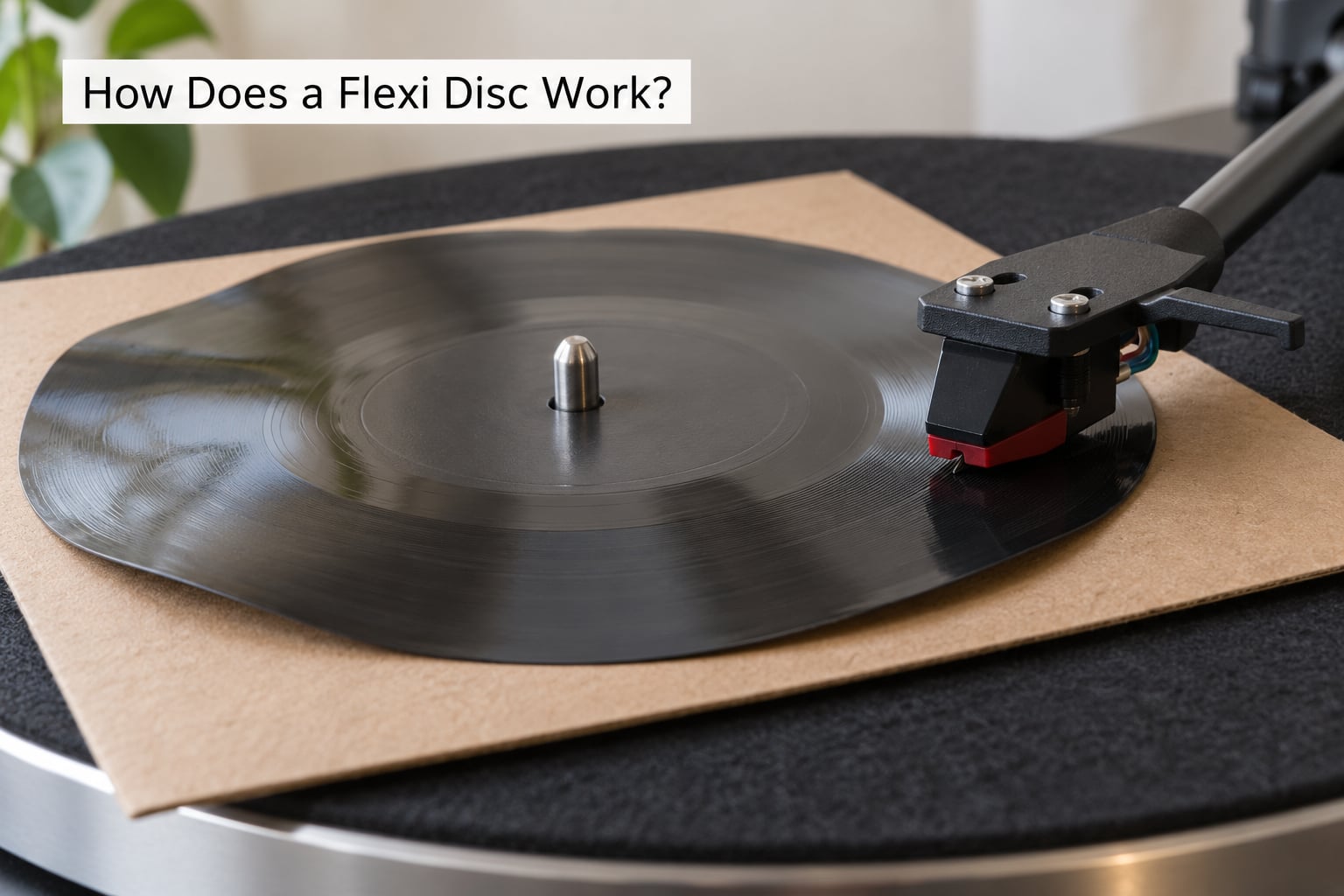
Playback works because nothing about the recording process changes. A stylus rides the groove, the groove’s tiny undulations modulate the signal, and the master cutter that made the lacquer has no idea what the record is pressed onto. The flexi is the same recording as a 7-inch single, sitting on a floppy carrier.
Set the turntable to 45 RPM. Flexis were cut for that speed, and playing one at 33⅓ RPM sounds slow and thin, the way a 45 does when you drop the pitch switch.
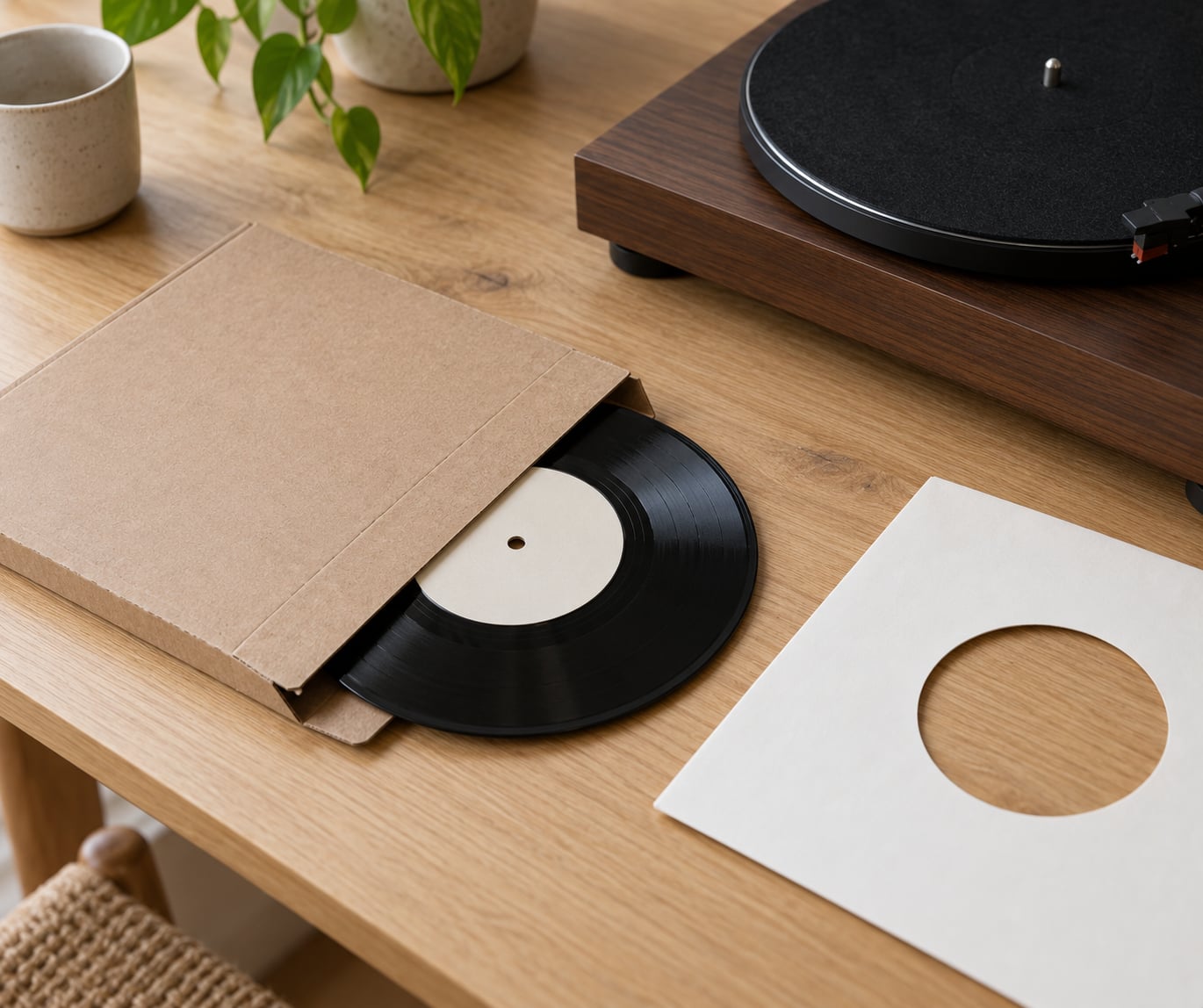
The one practical wrinkle is the sleeve. Most flexis come in a stiff cardboard mailer with a raised ridge around the centre hole, and that ridge is a built-in platform that centres the disc over the spindle. It is why the package does not fall apart when you throw it in a bin, and it is also a spindle adaptor.
Many collectors simply drop the disc onto that ridge and leave the sleeve on the platter. That works. Laying the disc straight onto a bare slipmat also works, since most slipmats grip enough for a disc this light, but the sleeve is the safer option if you own one.
Where Did Flexi Discs Come From?
The format predates most people’s guess. A 1950s religious label tied to Billy Graham issued flexi-style records for radio play, which makes the 1962 commercial pop launch feel late rather than early. That year is usually cited as the moment the format reached mainstream record shops, with Billboard and King Records among the names associated with pushing it.
Through the 1970s the flexi settled into a stable role: something to hand out. Record shops, magazines and small labels glued them to pages, mailers and record sleeves, usually with one exclusive track that appeared nowhere else.
The Soviet Union used the format for the opposite reason. Music was state-controlled, so bootleggers pressed recordings onto discarded hospital X-ray film — the folklore calls it bone music, and the trade name was Roentgenizdat. Jazz, rock and forbidden Russian songs circulated on material nobody could easily confiscate because it looked like a medical image. Collectors treat these as the serious tier of the format, and they are the most searched flexi category by a distance.
The post-punk era kept the format alive with a different tone. Factory Records used flexis for Joy Division and New Order releases, which is why the Factory catalogue page keeps the format tag alive and why completists still chase those items decades later.
The 1990s brought the album boom. Bands started including flexis with records and CDs, and it briefly became an enthusiast signal — the thing that made a package feel designed rather than assembled. By the 2000s most releases had moved to bonus CDs or download codes, and the flexi went quiet.
It is back now, in small doses, mostly from independent labels and artists selling direct. That is where the current examples tend to be found, and it is also where the new-market asking prices come from.
Why Were Flexi Discs Used?
The reasons the format existed are the reasons people still like it. Labels used flexis to add music to something that was not a record — a magazine, a book, a mailer — without paying for a full pressing.
Other common uses:
- Album bonus content — a B-side, a demo, or a track that never made the album, pressed so it could only be had by buying the package.
- Promotion — a single track sent to DJs, reviewers or radio stations, sometimes stamped with the label’s logo in the run-out.
- Test pressings — small runs of a flexi as a proof before a record went to a pressing plant.
- Samplers and soundtrack tie-ins — a short piece tied to a film, a video game or a magazine issue.
- Premium mail-order — the 4-inch hip pocket flexis sold to club members alongside mail-order albums.
- Trading pieces — cheap to produce, easy to swap, and often the first thing a new collector manages to acquire.
None of these uses requires a great pressing. That is the trade the format always made: cheap, distinctive, and disposable enough that nobody minded its thinness.
What Is the Difference Between a Flexi Disc and an LP?
The difference is scale and substrate. An LP is a 12-inch rigid vinyl record spun at 33⅓ RPM; a flexi disc is a floppy 7-inch sheet spun at 45 RPM on the same machine. Everything else — encoding, playback, tonearm — follows from the record side.
| Feature | Flexi disc | 7-inch 45 | Picture disc | 12-inch LP |
|---|---|---|---|---|
| Diameter | 4 inch or 7 inch | 7 inch | 7 inch or 12 inch | 12 inch |
| Playback speed | 45 RPM | 45 RPM | 33⅓ or 45 RPM | 33⅓ RPM |
| Material | Thin flexible plastic or extra-thin vinyl | Rigid vinyl | Vinyl with printed label | Rigid vinyl |
| Typical playing time | Under 5 minutes | 3 to 6 minutes per side | Varies | 18 to 25 minutes per side |
| Warp and scratch risk | High | Low to moderate | Low to moderate | Low |
| Centre hole | Often small or square | Standard round | Standard round | Standard round |
| Playback hardware | Any turntable at 45 RPM | Any turntable at 45 RPM | Any turntable | Any turntable at 33⅓ RPM |
| Typical role | Bonus, promo or freebie | Commercial single | Ad gift or promo item | Full album |
A picture disc is a rigid vinyl record with printed artwork replacing the usual label — sold as a promo or gift item, not as a playing format in the way the flexi was. The two get confused because they turn up in the same sleeves.
A collector’s honest summary: an LP plays better, lasts longer and holds far more music. A flexi plays worse and is more fun precisely because it was never meant to do the LP’s job.
What Is the Difference Between a Flexi Disc and a CD?
A CD holds more music, skips nothing, and cannot be warped by a shelf. A flexi disc is a physical artefact with wear, damage and noise built in — and collectors buy it for exactly those reasons.
In sound terms, the CD wins outright: no surface noise, no tracking error, no speed drift. The flexi’s audio problems are specific and well known. The thin substrate has a higher noise floor, the available groove space limits how much treble and how much bass a track can hold, and the recording is usually cut at the edge of what the format can carry.
Portability and durability are the other two divides. A CD fits a wallet and survives a backpack. A flexi creases if you slide it into a record sleeve carelessly and will not sit flat again once it has curled.
What a flexi has that a CD cannot offer is a place in a vinyl collection. It is 7 inches, it goes on the shelf with the rest of the format, and it came with something else you are keeping. That is the whole argument, and collectors make it happily.
Are Flexi Discs Worth Collecting?
Some are, and most are not — and the format’s reputation as a novelty is mostly fair. What you are collecting matters more than what you are holding, and honest collectors say so without embarrassment.
Strong reasons to keep one:
- It was bundled with something rare. A flexi that came with an out-of-print album is an accessory to a scarce release, and its interest follows that release.
- It holds exclusive material. A track that exists nowhere else makes the disc the only copy of that recording, whatever its audio quality.
- It is historically loaded. Soviet X-ray flexis sit at the top of that list because they document censorship and resistance, and that carries weight well beyond sound quality.
- It completes a run. If you are collecting a label or an era, the flexi is part of the catalogue whether or not you enjoy playing it.
- It is a magazine or hip pocket item. These are the least common shapes, and magazines in particular turn up rarely outside the countries that produced them.
Weak reasons: it looks unusual, it plays, or it is cheap. A pristine example does generate genuine excitement — collectors post photos of clean, uncreased discs with real enthusiasm — but excitement and value are not the same thing.
One comfort for anyone starting out: an intact flexi plays. Collectors report playing flexis decades after they were issued, with the disc still sounding acceptable. The limiting factor is warping and scratching, not the plastic rotting the way PVC sleeves ruin ordinary vinyl.
How Do You Play and Care for a Flexi Disc?
Five steps, and the first two solve most people’s problems. Play it on its own sleeve, at 45 RPM, and treat it like a leaf of paper rather than a record.
- Check the sleeve first. Look for a raised ridge or square platform around the centre hole. That cardboard is the disc’s built-in spindle platform, and it is why the package survives being handled.
- Place the disc on the ridge on the turntable, sleeve and all. If you have lost the sleeve, lay the disc on a normal slipmat — it is light enough that a grippy mat will hold it.
- Set the speed to 45 RPM. At 33⅓ it will sound slow and thin.
- Fix the centre hole if it is too small. Trim the square or undersized hole with small scissors until it clears the spindle. Work slowly, keep fingers clear of the cutting path, and stay away from the outer grooves.
- Lower the needle gently and handle by the edges only. A crease across the playing surface does not come out, and a scratch that reaches the groove is permanent.
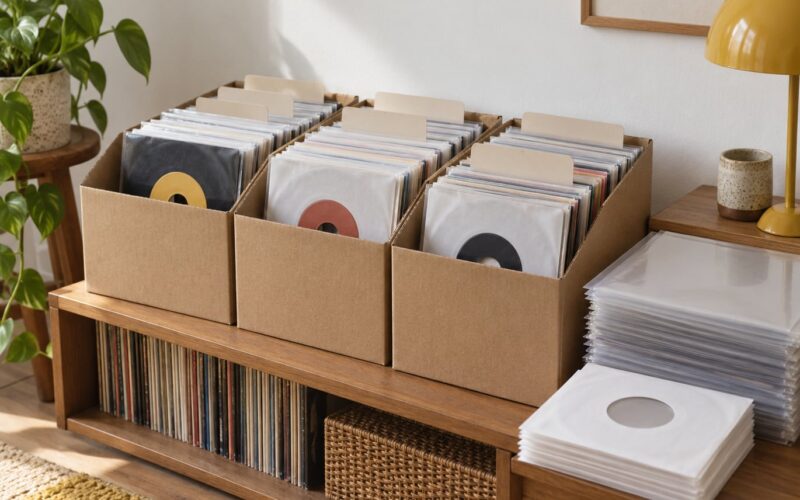
For storage, keep the disc in its sleeve, put that sleeve in a polyethylene outer sleeve, and never PVC — PVC is the thing that clouds and seizes normal vinyl, and it will do the same to a thin plastic disc faster.
Store flat, out of sunlight, away from radiators and car dashboards, with nothing heavy resting on top. Heat and pressure are what curl a flexi, and once it has taken a set you can usually talk it flat again but not always.
Cleaning is minimal. A dry, soft brush along the groove direction removes dust. Skip record cleaner fluid and skip alcohol-based products — the surface has no bite left to protect, and liquid gets into a crease fast.
How Can You Tell If a Flexi Disc Is Rare?
Rarity comes from the specific issue, not from age. Plenty of 40-year-old flexis exist in large numbers, so an old date on its own means nothing.
Check these in order:
- Catalog number and label. Find the number on the sleeve or the disc face and search it. A number with no reference listings at all is a red flag for a private press or a counterfeit.
- Country and language of issue. Soviet flexis, Japanese magazine flexis and UK magazine flexis each come from distinct supply runs, and the country is usually printed.
- Edition size. Magazine giveaways often state a print run on the sleeve or in the magazine’s masthead. Test pressings and mail-order premiums are usually limited by design.
- Shape and format. Magazine-bound, hip pocket 4-inch and X-ray film flexis are the scarcest categories. Standard 7-inch bonus discs are the most common.
- Matrix and run-out. Some flexis carry a matrix number in the run-out groove. Matching it against collector databases tells you how many were cut.
- Completeness. The cardboard sleeve, the tracklist insert and any mounting card are part of the item. A loose disc without its sleeve is a disc; a disc in its sleeve is a collectible.
- Sold listings, not asking prices. Compare completed sales over time rather than live listings. A high asking price with no sales behind it tells you nothing.
One more filter worth applying: does the disc play? A permanently warped flexi with audible surface noise is a shelf item at best, and plenty of sellers do not disclose either problem.
Frequently Asked Questions
Can you play a flexi disc on a normal turntable?
Yes. A flexi disc uses the same groove encoding as a 7-inch single, so any turntable that plays 45s will play it. Set the speed to 45 RPM, not 33 1/3, and place the disc on the raised ridge in its cardboard sleeve if you still have it. That ridge centres the disc over the spindle. If the hole is too small or square, trim it with small scissors until it fits.
Are flexi discs the same size as regular vinyl records?
Most are 7 inches across, the same diameter as a standard single, but the material is far thinner and more flexible than vinyl. A smaller 4-inch hip pocket version also exists. Rare magazine-bound flexis are sometimes square or spiral-bound into a publication. An LP is 12 inches and rigid, so size and weight both differ sharply from the small flexible versions.
Why do flexi discs sound quieter or less clear than LPs?
A thin flexible disc has a higher noise floor than rigid vinyl, and the available groove space limits how much treble and bass a track can hold. Play it too slow, at 33 1/3 RPM instead of 45, and the pitch drops and the sound thins further. Surface noise from dust and light scratches is the most consistent complaint from listeners, and the disc adds no dynamic range to compensate.
What is the rarest type of flexi disc?
Soviet X-ray flexis, pressed onto repurposed hospital film, are the most sought after because so few survive and they carry real historical weight. Magazine-bound flexis from the Soviet Union and Japan come close behind, since the publication is usually lost. Hip pocket 4-inch flexis and small mail-order premiums are also scarce. Standard 7-inch album bonus flexis are the most common by a wide margin.
How should I store a flexi disc so it does not warp?
Keep the disc in its sleeve, inside a polyethylene outer sleeve, and never PVC, which clouds and seizes thin plastic faster than it affects normal vinyl. Store it flat, away from sunlight, radiators and car dashboards, with nothing heavy on top. Heat and pressure cause most warping. Flexis stored this way have stayed playable for decades, and the real enemy is a crease rather than the material itself.
Are flexi discs worth money if the record is unplayable?
Sometimes, and the deciding factor is what the disc was attached to. A warped flexi bundled with a rare album still interests collectors as part of that package, particularly if the sleeve is present. A standalone unplayable flexi from a common bonus run is worth very little. Judge the item by the release, the completeness and the sold listings, not by the disc’s condition alone.
Conclusion: Start by Checking the Disc and Packaging
A flexi disc is a record on floppy stock: same grooves, same turntable, thinner carrier, shorter running time, more surface noise. Its appeal is real even though its sound is modest, because it carries the packaging story of how music used to be marketed — freebies in magazines, bonus discs in album packages, banned records pressed onto X-ray film.
When you pick one up, check four things before anything else. Does the disc lie flat without a curl, and do the grooves look unscratched? Is the centre hole the right size, or is it the usual square cut? Is the original cardboard sleeve present, including the raised ridge? And what was it bundled with, because the release it came from matters more than the disc ever will.
Get those right and a floppy 7-inch is one of the more entertaining corners of vinyl collecting. That is still true in 2026.