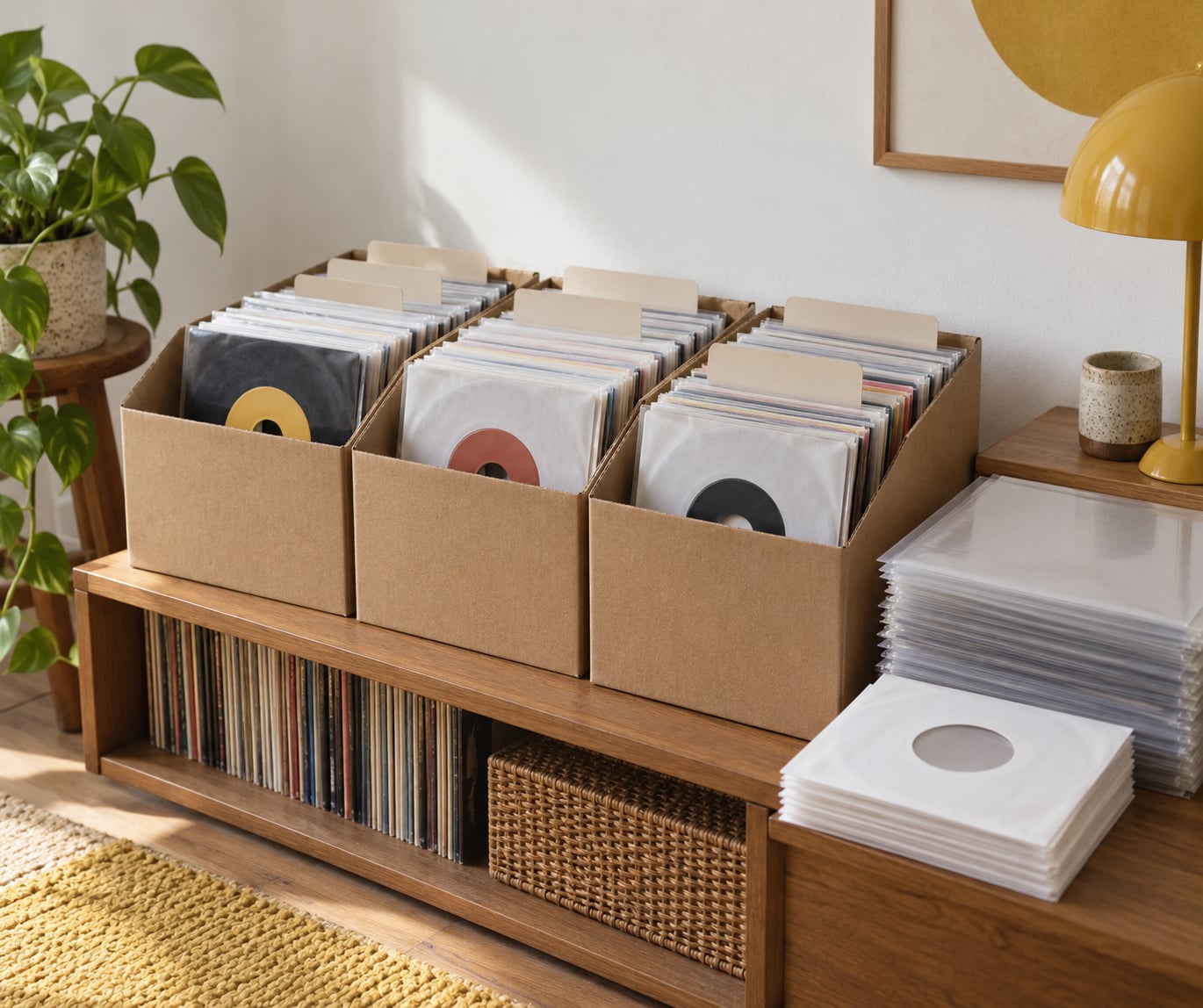
Store 7 inch singles standing upright, packed snugly in a box or shelf that is the right depth for them, out of direct sunlight and away from heat. Add card dividers so the rows stay tight and you can pull a section out without riffling through everything else. That is the whole method, and it takes about an hour for a few hundred records.
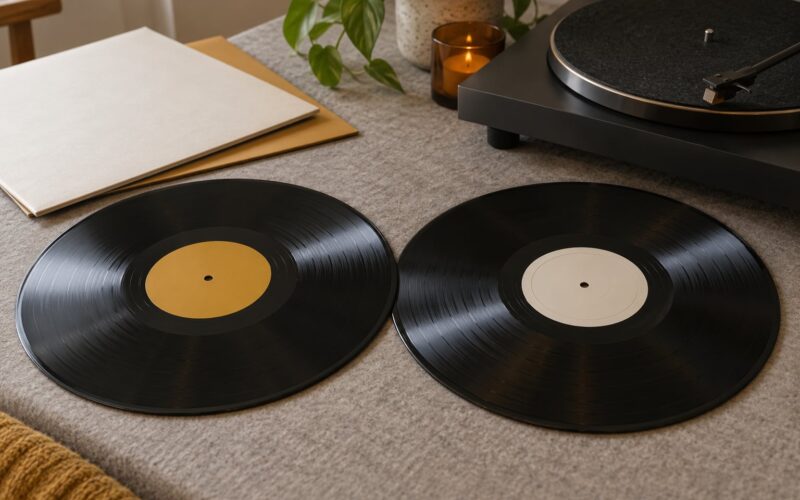
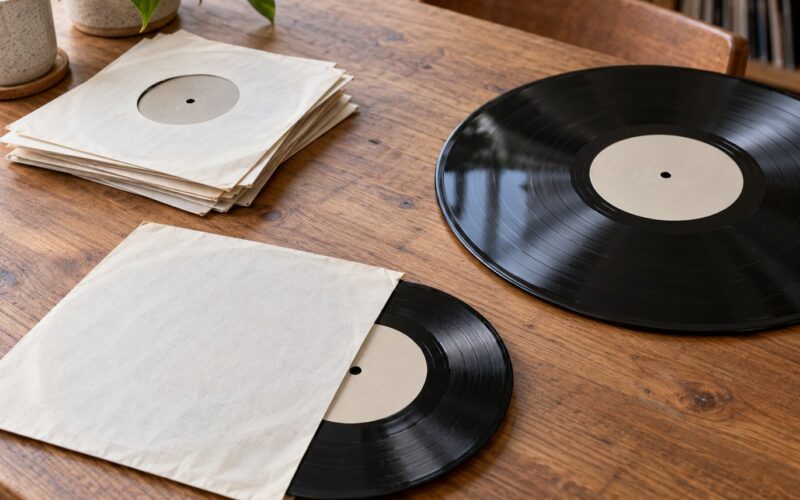
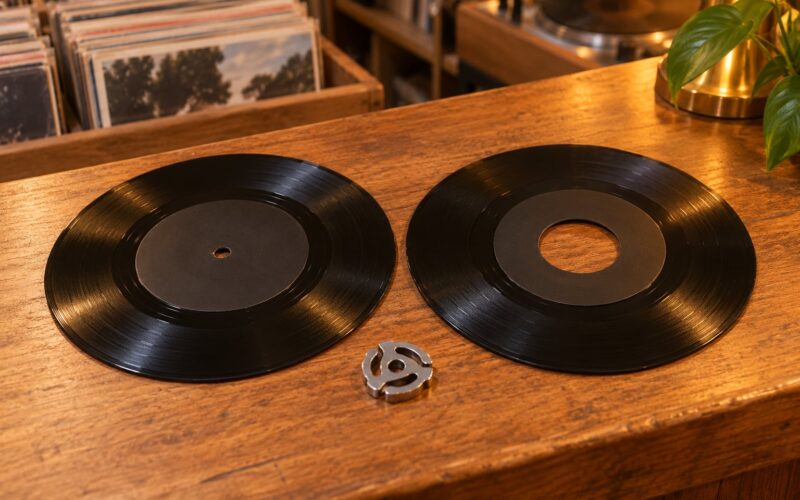
Most people end up here after a shoebox gives up, or when an LP shelf turns out to be far too deep for the format. A 7 inch single is a 45 rpm record, 18 cm across, with one song per side and a small center hole that needs an adapter to play on a standard turntable. Its paper sleeve is roughly 7.75 inches deep, which is why standard LP storage never quite works for it.
Table of Contents
- What You Need to Store 7 Inch Singles
- Step-by-Step: Setting Up Your 7 Inch Single Storage
- Step 1: Inspect and Clean Each Single
- Step 2: Protect the Sleeve and Insert
- Step 3: Choose the Right Storage Container for 7 Inch Singles
- Step 4: Arrange Records for Access and Protection
- Step 5: Label, Catalog, and Maintain the Collection
- Common Mistakes That Damage 7 Inch Singles
- Frequently Asked Questions
- Can I store 7 inch singles in their original jackets?
- What is the best way to store 7 inch singles vertically?
- How should I store old or warped 7 inch records?
- Do I need inner sleeves for 7 inch singles?
- How can I keep 7 inch singles from getting mold?
- Start Here Tonight
What You Need to Store 7 Inch Singles
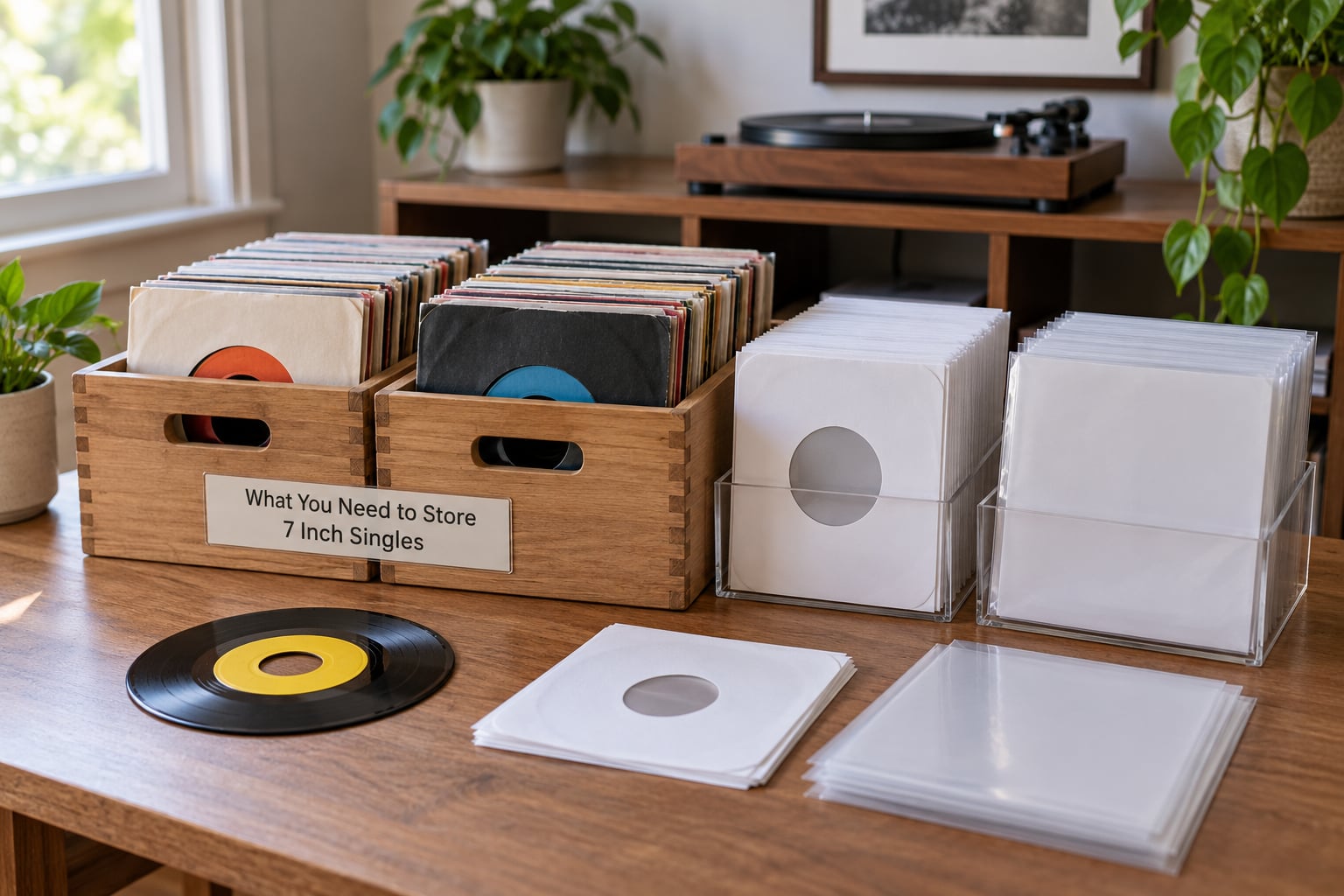
The gear list is short, and most of it is cheap. The one thing you cannot skip is a container sized for 7 inch records rather than 12 inch ones.
- Inner sleeves. Poly-lined or anti-static sleeves for the disc itself, so it does not slide against the jacket and scratch.
- Outer sleeves. Square-cornered, a hair larger than the jacket, PVC-free. Skip the thin, brittle cellophane sleeves that come on budget reissues.
- Storage boxes or crates. Corrugated cardboard singles boxes with an interior around 14.25 by 7.75 by 8 inches hold roughly 150 records each. The 8 inch depth is what lets you stack a full box without crushing the ones underneath.
- Dividers. Card stock, balsa wood, or purpose-made plastic separators. This is the piece everybody skips and everybody needs.
- A cleaning brush. A soft, dry, static-free brush for dust and grit. Nothing wet, ever.
- Labels and a marker. Archive-safe pencil or a marker that will not bleed, plus index cards if you are cataloguing properly.
Record crate, flipbin, file cabinet, shelf unit, and plain cardboard box all work. What separates them is capacity, protection, and how easy they are to browse.
| Method | Typical capacity | Protection | Best for |
|---|---|---|---|
| Corrugated cardboard singles box | About 150 records per box | Good, dust and light, stackable | Most collections, moving, trade boxes |
| Legal-width file cabinet with dividers | About 500 records per drawer | Very good, drawers stay shut | Thousands of records on a budget |
| Wooden crate or flipbin | Varies widely with size | Good, some are open-front | Forward-facing browsing by cover art |
| Shelf cubby with dividers | 40 to 80 records per shelf | Fair, exposed to dust | Small collections and frequent listening |
| Resin or plastic lidded case | 50 to 200 records | Best, sealed against dust | Valuable or fragile sleeves |
One more note on furniture. An LP shelf works for singles in the sense that a bucket holds water, but the geometry fights you: the compartment is too deep, the records sit 4 inches from the wall, and the spines are too small to read. Collectors describe this as a storage problem with no good answer, and it is the single most common frustration in the forum threads about the format.
Step-by-Step: Setting Up Your 7 Inch Single Storage
Step 1: Inspect and Clean Each Single
Go through the pile one record at a time before anything goes in a box. Look for mold on the jacket or a musty smell, tears along the spine, a split seam, loose inserts, and a disc that sits visibly crooked inside the sleeve. Warped records show up as a curve you can catch with a thumbnail along the edge.
Brush dust off the vinyl with a soft dry brush, working outward from the center label so you do not scratch in circles. Do not put household cleaner, water, or alcohol on a record, and never spray a jacket. If a jacket is dirty, a dry cleaning sponge used gently is safer than anything wet. Set aside anything damaged for its own small box so it does not spread the problem to healthy records.
Step 2: Protect the Sleeve and Insert
Put the disc in a clean inner sleeve, then the sleeved disc back into the jacket, then the jacket into an outer sleeve. That double layer is what stops ring wear, scuffs, and the disc sliding halfway out of the jacket in a moving box.
Check the fit before you seal it. A good outer sleeve is square-cornered and just slightly larger than the jacket, so the record drops in without a fight. Force a stiff, brittle jacket into a tight sleeve and the corners will crease permanently, which is exactly the damage that cuts value.
Keep inserts with the correct single. A folded promotional insert or a picture sleeve gets separated from its record sooner or later, and then it ends up loose at the bottom of a box, scratched or lost. If the seam on a jacket has already split, slide a strip of acid-free tissue or plain paper along the inside edge to brace it rather than using tape. Tape yellows, and the adhesive migrates into the card over time.
Step 3: Choose the Right Storage Container for 7 Inch Singles
Match the container to the collection size and to how much you will actually browse it.
Under 300 records: one or two cardboard singles boxes on a shelf is all you need. Buy a couple of spare boxes early so you are not improvising with a moving carton when the collection grows.
300 to 2,000 records: a run of cardboard boxes on a solid shelf, labeled by artist or decade. A standard 16 inch shelf holds four singles boxes side by side, which is roughly 600 records per shelf.
Several thousand records: a legal-width file cabinet with custom dividers is the method collectors with large 45 collections keep coming back to. One collector running about 2,000 singles reports roughly 500 per drawer, using four cabinets bought secondhand. The dividers are the whole trick: balsa strips cut to the drawer length and spaced a few records deep hold the rows upright, and a shallow drawer is far easier to dig through than a deep box.
You want to see the art: forward-facing flipbins or a shallow crate let you flip through covers the way a record shop lets you flip through LPs. Spine-out is faster to browse once you know your collection; forward-facing is the one to use when the sleeve art is part of why you keep the record.
One useful trick if you already own a Kallax, Expedit, or similar modular unit: the problem is depth, not the unit. A row of shallow records dividers sold for LPs, turned so the singles sit close to the front, closes most of the gap.
Skip any spot that gets hot, damp, or swings between temperatures. Attics, garages, basements, and unheated sheds are the worst places in a house to keep vinyl, and floods take a whole stack in an afternoon. An interior closet on an interior wall is dull and unglamorous and it is the right answer.
Step 4: Arrange Records for Access and Protection
Stand every single up. Weight on unbacked jackets makes bowing and warp over years, and a leaning row turns into a falling row the moment someone pulls one out. Pack rows snugly enough that a lightly tilted record stays where you put it, but not so tight that jackets compress or crack.
Use dividers every 25 to 50 records. You can buy them, or cut them yourself: a ream of card stock run through a paper cutter, sized to the inside depth of your box, is the cheap forum-favorite method and it works fine. Label each divider tab with the artist, the label name, or a year range, whichever you actually browse by.
Fill from the front of a shelf backward and leave the last row slightly loose so the box does not fight you. Keep the records you play most in the box closest to hand, and do not overfill a shelf just because the box is there. Shelf boards bow under a few hundred records of concentrated weight, and a bowed board pushes the bottom row forward until the jackets start to lean.
Set aside one junk box for the singles you will never play but cannot quite part with. It keeps them out of the way of the sorting work, and it gives you somewhere to put the doubles that show up at record shows.
Step 5: Label, Catalog, and Maintain the Collection
Label the front and side of every box. If you store boxes above eye level, side labels are not optional. Use a wide-tip marker on masking tape or an archive-safe pencil on the box flap, and keep a spare copy of the same list in a small notebook or spreadsheet, because labels fade and boxes migrate.
Sorting systems that actually work: by artist for a large collection, by year if you are a completist, by label if you are chasing a specific sound, by genre for casual listening. Pick one and stay with it. Mixed systems are why most collections end up unsortable.
Maintenance is twice a year, an hour each time. Check for musty smells and any white or green speckling on jackets, which is early mold. Look for fresh warping, cracked spines, and split corners. Brush out dust on the tops of the rows and check that nothing has tipped forward. Where you find problems, move those records out immediately instead of letting the whole box go quiet on you.
Common Mistakes That Damage 7 Inch Singles
Almost every ruined single traces back to one of these.
| Mistake | What it does | The fix |
|---|---|---|
| Stacking singles flat | Weight from above bows the jackets and warps the vinyl over time | Store upright only, like books on a shelf |
| Using an LP shelf or Kallax as-is | Records slide to the back, lean, and lose their covers to handling | Use shallow dividers so singles sit near the front edge |
| Thin or acidic sleeves | Jacket corners dog-ear, crack, and discolour; PVC sleeves stick to the vinyl | Use PVC-free outer sleeves and anti-static inner sleeves |
| Garage, attic, or basement storage | Heat swings warp records, damp brings mold, and a leak ends everything | Keep records on an interior wall at normal room temperature |
| Overstuffed boxes and shelves | Dividers bend, jackets compress, and boards sag under the load | Split into a second box before the first one resists closing |
| No dividers at all | Rows tip, spines scuff against each other, and browsing gets slower every year | Add card stock or balsa dividers every 25 to 50 records |
| Cleaning with household products | Chemical residue dulls the vinyl and can seep into card jackets | Soft dry brush, nothing wet, no sprays |
| Discarding inserts | You lose a collectible and the sleeve no longer fits its contents | Sleeve the record with its insert and keep the pair together |
Two smaller habits worth keeping. Never pull a record out by the label edge, grip the edges with two fingers. And when you move, use a proper singles box, keep the records upright, and pad the middle of a stack so nothing shifts; LP moving cartons are sized wrong for the format and singles slide to the bottom.
Frequently Asked Questions
Can I store 7 inch singles in their original jackets?
Yes, storing 7 inch singles in their original jackets is the normal and correct approach, as long as the jackets are intact. The disc should sit in an inner sleeve inside the jacket, and the whole thing in a PVC-free outer sleeve. Retire a jacket that is torn, brittle, or has a split seam, since it will shed paper onto nearby records.
What is the best way to store 7 inch singles vertically?
The best vertical setup is a snug box or shelf where the records lean maybe 5 degrees at most. Pack them spine out, add a card stock or balsa divider every 25 to 50 records, and keep the row close to the front of the shelf so you can grip records without shuffling the ones behind. A legal-width file drawer with cut dividers holds the most, roughly 500 singles.
How should I store old or warped 7 inch records?
Isolate warped records from the rest of the collection, because a bowed record puts pressure on its neighbours. Store them upright in their own small box, never flat, and do not try to force them back into shape. Keep the box at normal room temperature, away from sunlight and heat, since warmth makes the warp worse. Many warped singles still play fine on a manual turntable.
Do I need inner sleeves for 7 inch singles?
You do need them if you care about the vinyl. A thin poly inner sleeve keeps the disc from sliding against the jacket during handling and blocks the paper dust and jacket fibres that settle on a groove. Anti-static or poly-lined sleeves are the useful type, because a plain paper sleeve can hold static and attract grit. It is a low-cost upgrade that prevents the most common scratch.
How can I keep 7 inch singles from getting mold?
Mold needs damp and warmth, so control the room rather than the records. Store them on an interior wall at normal temperature, well away from basements, garages, and exterior walls, and avoid any spot that smells musty or feels cool and damp. Check twice a year for a musty smell or white, green, or grey speckling on jackets, and move affected records out of the box immediately.
Start Here Tonight
Pick one box, one stack of records, and one evening. Sleeve everything, cut a few dividers from a ream of card stock, and get it into a box that fits singles rather than LPs. A collection stored upright with dividers and no direct sunlight will still play in twenty years, and a collection stacked flat in a hot garage might not play next summer.