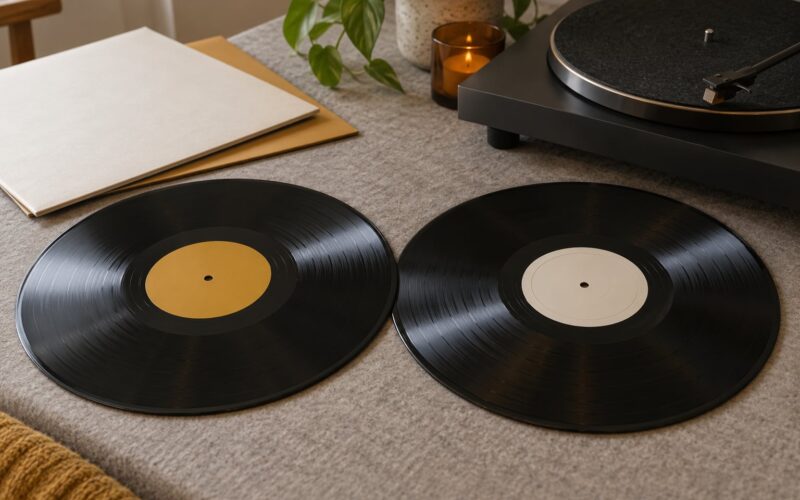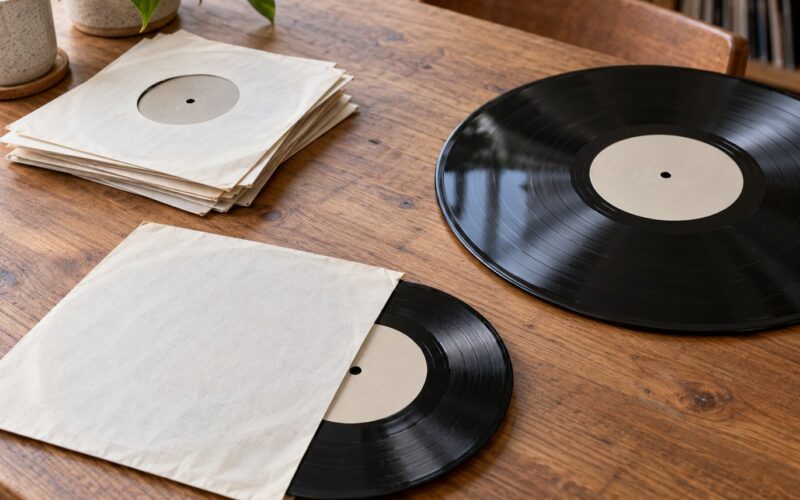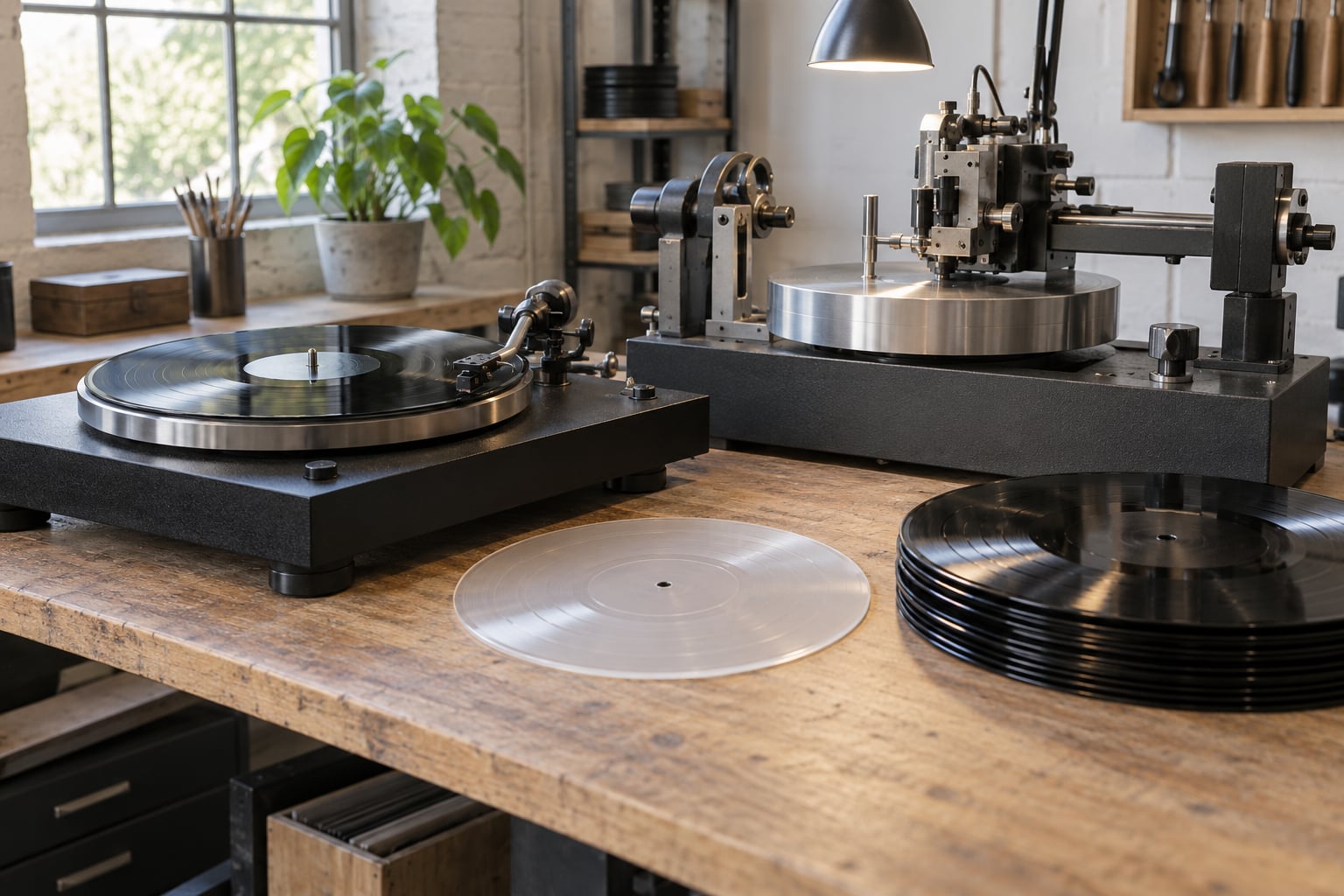
A lathe cut record is a playable vinyl record whose grooves are carved directly into a blank plastic disc, one disc at a time, in real time by a record cutting lathe. There is no master plating and no press. The disc is finished the moment the music ends.
That single sentence explains almost everything about the format, including why collectors argue about it. A lathe cut sits closer to a hi-fi direct cut like a DCC or a half-speed mastered record than most people realise, but it trades playback level, stereo image and durability for individuality, zero minimum order quantities and speed.
I have handled enough of these to have a firm view: judge one as a collector object first and a playback medium second. The forum consensus on r/vinyl is roughly the same, and it is roughly right. Two collectors in a 2016 thread put it plainly, one saying the sound quality is not good but for him it is about the art and collectibility, and another saying that for a one-off it is the cheapest option and the sound is decent. Both can be right.
So here is the straight guide: what the thing is, how it is made, how to recognise one in a shop, why it plays so quietly, and what to check before you spend money on it. The process itself has not changed in decades, but more people cut records at events for a living than at any point before 2026, and that has changed what you find on shop shelves.
Table of Contents
- What Is a Lathe Cut Record?
- Where the term comes from, and where it gets stretched
- Who actually makes them today
- How Does the Lathe-Cutting Process Work?
- How that compares with pressing a record
- Why every copy is slightly different
- Why Are Lathe-Cut Records Collectible?
- The four things collectors actually look at
- The case for
- The case against
- Shapes and formats a press cannot match
- Who buys them
- Cost, minimums and where to find them
- How Do You Identify a Lathe-Cut Record?
- The checklist
- Which clues are strong and which are weak
- Where the word gets abused
- What Is the Difference Between a Lathe Cut and a Standard Pressing?
- Cut versus embossed: material removed or dented in?
- The honest sound verdict
- Why your lathe cut is quiet and what to do about it
- Is a lathe cut stereo or mono?
- Why a lathe cut and a pressing of the same size hold different amounts of music
- Are All Rare or Special Vinyl Records Lathe Cut?
- What a lathe cut is not
- Where lathe cuts sit among direct cuts
- What Should Collectors Check Before Buying One?
- Care, cleaning and how long they last
- Frequently Asked Questions
- Are lathe cut vinyls good?
- How long do lathe cut records last?
- Where can I find the cheapest lathe cut vinyl records?
- What is the most sought-after vinyl record?
- Is a lathe cut record the same as a DCC or half-speed cut?
- Can you play a lathe cut record on any turntable?
- Where to Start with Lathe-Cut Vinyl
What Is a Lathe Cut Record?
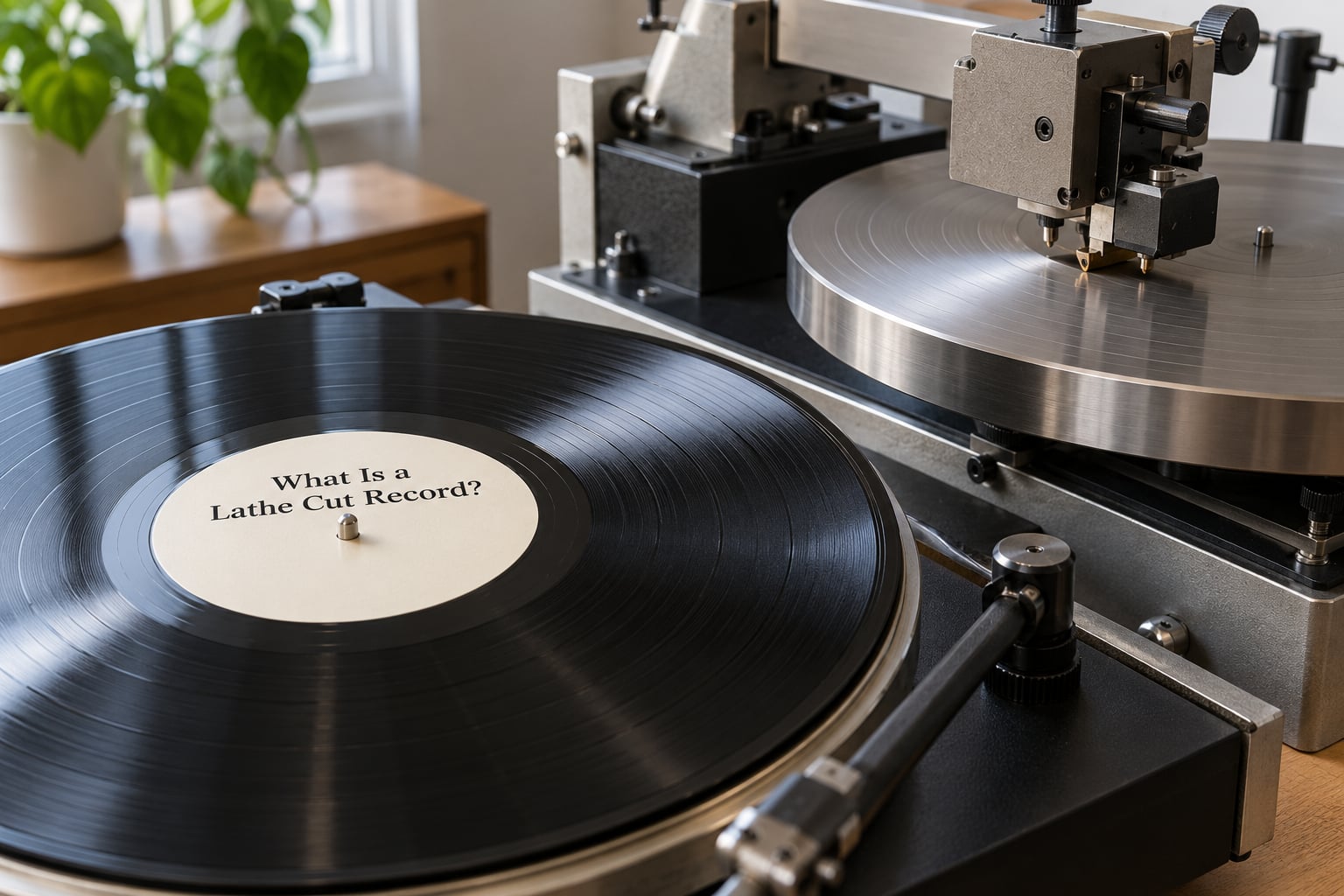
A lathe cut record is a playable record cut one disc at a time, in real time, straight from an audio master onto a blank disc of plastic. No lacquer master, no electroplating, no metal stamper, no hydraulic press. When the cutter lifts, you have a finished record.
Almost every commercial lathe cut is a 7-inch, 33 1/3 RPM disc, and most are cut on one side only. That is not a stylistic choice. It is economics and machine geometry: the cutter head is small, the blank is small, and cutting side two means re-setting the lathe and cutting the disc again, which doubles the labour for a format sold to people who want one copy of their own music.
The blanks are usually polycarbonate or acrylic rather than the black PVC used for pressings. That is why so many lathe cuts are clear, translucent or coloured. It is also why they feel lighter in your hand than a 180g pressing, and why they scratch, scuff and warp more easily. The same softness is the reason for the quiet-playback problem we will get to shortly.
Where the term comes from, and where it gets stretched
The machine is a disc cutting lathe, the same class of device used since the 1930s to cut lacquer masters for the pressing industry. A collector-owned or co-op machine cuts finished records instead of masters, one at a time, and that is the sense in which the record is a lathe cut.
The history explains the current split. For most of the record’s life, lathes belonged to record companies and cut masters, not copies, so a person wanting one record made for themselves had no route at all. Custom shops like Nelsound kept older machines working for artists who wanted a single physical object, and that work trickled down into the co-op and hobby scene. Mobile cutting, where a machine is trucked to an event and cuts in front of the crowd, grew out of the same idea: the record is finished before anyone leaves.
Be careful with the label. Sellers use the term loosely. Some services run vintage professional mono lathes built to exhibition standard, and some cut ordinary black PVC blanks with a hobby machine. Those two things land in the same search result and the same record shop bin. One collector thread is blunt about it, calling the format synonymous with crap, and the reason is usually not the format itself but a service that cut a cheap blank and called the result limited edition vinyl.
Who actually makes them today
Cutting co-ops, commercial cutting services and one-person studios do most of the work. LatheCuts.com runs a record cutting co-op on vintage mono lathes and describes its own process as experimental, which is about as honest as vendor copy gets. Audio Geography Studios and Vinylify sell one-off cutting online to artists and labels. Mobile Vinyl Recorders take machines to weddings, parties and festivals and cut in front of an audience, which turns the record into the event.
On the hobby end there is a small but real scene of home cutting lathes, cutting camps and parts suppliers, and a lot of people discovering that the hard part is not the machine, it is choosing a master with enough headroom.
How Does the Lathe-Cutting Process Work?
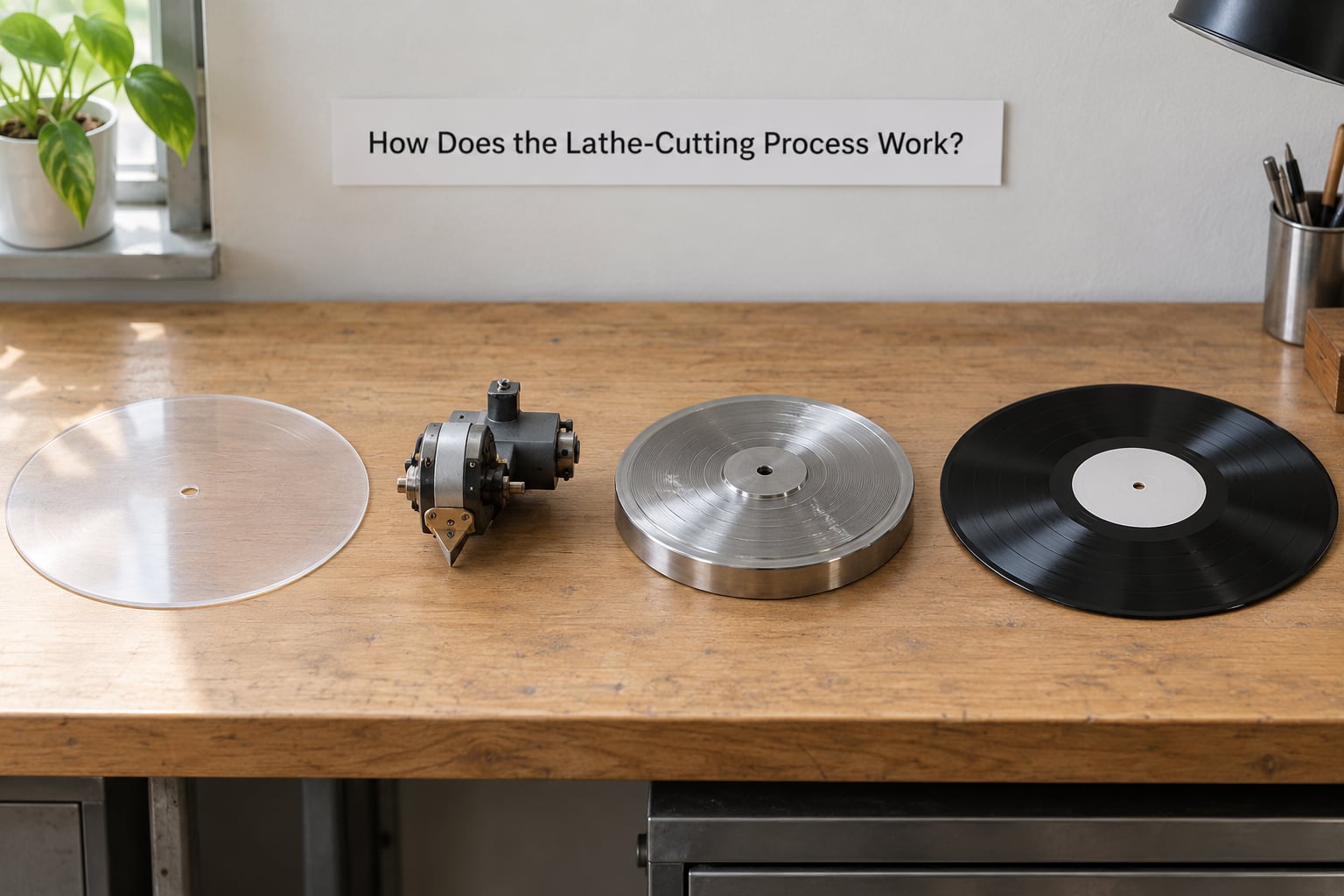
The lathe cut is a single-stage process. Four steps, and the disc is playable at the end of the fourth.
- The audio master is routed to the lathe. A tape machine, a digital player or a computer feeds a preamp and then a power amplifier. Nothing is stored on the disc yet. This is the source, and it is the most common weak link in the whole chain.
- The signal enters the cutter head. The amplifier drives a vibrating coil inside the cutter head. The electrical waveform becomes mechanical movement, mirrored exactly, one to one.
- A heated sapphire stylus carves the disc. Mounted in the cutter head, the stylus rides across a spinning blank polycarbonate disc at constant speed, cutting one continuous inward spiral groove. The stylus is heated so the plastic flows and separates cleanly instead of tearing. Material is genuinely removed, which is what separates a cut from an embossed record.
- The disc is finished. At the end of the audio the groove closes and the record comes off the lathe. There is no mastering stage, no plating tank and no press cycle. A four-minute song takes roughly four minutes plus set-up.
How that compares with pressing a record
Pressed vinyl is a three-stage manufacturing chain. First the audio is mastered to a lacquer or to a machined aluminium disc. That master is electroplated to grow a negative metal stamper. The stamper is then mounted in a press where hot PVC is compressed against it, typically 500 to 1000 copies at a time.
That is why a pressing has a matrix number etched into the runout groove and why two copies of the same record are, for practical purposes, identical. It is also why a press plant needs weeks of lead time and a large minimum order, while a lathe cut needs neither.
Why every copy is slightly different
Because nothing is stamped out, each disc is a separate performance by a separate operator. Groove position, cutting level and depth vary a little from disc to disk, and a skilled operator can shape the cut for the material in front of them. Collectors who own three copies of the same release often report hearing small differences between them. LatheCuts.com states plainly that no copy is identical to another, and that is a feature rather than a defect.
Why Are Lathe-Cut Records Collectible?
Collectability here is not about rarity in the way a scarce pressing is rare. A one-off lathe cut is unique, but uniqueness and desirability are different things. What makes these records interesting to collectors is the combination of a tiny run, a visible production method and a piece of history attached to the object.
The four things collectors actually look at
- Run size. One copy, ten copies, a hundred copies. Anything under 500 beats a standard pressing on scarcity alone, though it does not beat a genuine 180g audiophile pressing on desirability.
- Mastering and source. A direct-to-lathe cut from an original tape sounds nothing like one cut from a compressed file with no headroom. The machine matters less than what you feed it.
- Packaging. Sleeve, insert, hand-numbered jacket, custom shape. This is where small runs spend their money, and it is what most people are actually buying.
- Label and catalogue details. A coherent catalogue number, a credited cutting engineer and a named machine tell you the release was made by someone who cared.
The case for
- No minimum order, so genuinely one-off records exist.
- A finished record in minutes instead of a lead time measured in weeks.
- A direct cut from the master, with no extra generation between source and groove.
- Custom shapes, colours and sizes that a press run cannot economically produce.
- Individuality: no two copies are identical, and many are numbered by hand.
- A story attached to the object, whether that is a wedding, a memorial or a live cut at a festival.
The case against
- Lower playback level than a pressing, and the reason is mechanical, not accidental.
- Both channels in both sides, so the stereo image is gone on almost every cut.
- Softer plastic that scuffs, warps and cracks more readily than PVC.
- Wide variance between services, so a bad cut is indistinguishable from a bad purchase.
- No runout etching and no matrix number, which makes identification harder and fakes easier.
- Often one-sided, so you get a record where half the surface is blank.
Shapes and formats a press cannot match
A press produces a circle. A lathe does not have to. Squares, hearts, stars, picture discs cut in clear plastic, even a disc shaped like the thing it celebrates are all achievable because the blank is whatever the cutter was given. Some services will cut a record sized to fit a standard 7-inch sleeve, others will not.
That is where the playable-art framing comes from, and it is the most useful way to think about the format. Once the object stops being a delivery mechanism for audio and becomes a one-of-a-kind thing in its own right, the usual comparison to a pressing stops being fair. Nobody minds that a heart-shaped record of their wedding song sounds modest. They mind it when a budget service calls a black PVC pressing a limited edition and charges accordingly.
Who buys them
Wedding and anniversary records, memorial gifts for someone who played music, self-released albums by artists who cannot justify a 500-unit run, bonus tracks and B-sides too short for a 45, podcast and demo copies, proof-of-concept cuts made before committing to a pressing run, and shelf pieces. The overlap with this site’s normal readership is heavier than it looks: plenty of people who end up collecting lathe cuts got there through the second-to-last group on that list.
Cost, minimums and where to find them
Lathe cuts are almost never the cheap route to owning a record, despite the volume of marketing that suggests otherwise. Per-unit cost at small quantities is high because the cost is almost entirely labour, and labour is per disc. Where a press plant amortises one master across thousands of copies, a lathe operator repeats the whole job for every single record. Two copies of the same album from the same service can cost more than the first one.
Budget services quote per side online, so compare a per-side quote rather than a per-copy price when you have two records from one artist. Ask what machine cuts the order, what the blank material is, and whether the disc is test-played before it goes out. A service that will not answer those three questions is telling you something.
Where to actually find them: cutting co-ops and independent services online, artist Bandcamp pages for self-released editions, Discogs for used copies, record shops in cities with a live music scene, and cutting events where you can watch and hear the machine. Live cutting at a wedding or festival is also the cheapest way to see one made before you decide you care.
How Do You Identify a Lathe-Cut Record?
Pick it up and turn it over. A lathe cut gives itself away in about fifteen seconds once you know the clues, and the clues vary in how much they are worth.
The checklist
- Material. Clear, translucent, white, coloured or unusually light plastic. This is the fastest visual tell, and the easiest to fake.
- No runout etching. Look at the area between the last groove and the label. A pressing carries etched or stamped matrix and mastering text. A lathe cut has nothing there.
- No dead wax. The smooth blank ring at the edge is where a pressing carries its matrix. On a lathe cut the groove simply runs out and stops.
- Grooves that stop. Listen and watch. Audio ends and the groove closes; there is no silent runout area because there was no mastering pass to plan one.
- A blank side. A one-sided cut has an entirely blank reverse, sometimes with a paper or plastic centre label.
- Weight and feel. Noticeably lighter than a standard pressing of the same size, and more flexible at the edge.
- Jacket and insert notes. Look for a cutting credit, a machine name, a run size or the words lathe cut on the sleeve or the label. Small labels usually print what they are.
- Country and pressing credit. A pressing names a plant and country. A lathe cut usually names an individual or a service instead.
Which clues are strong and which are weak
Strong: absent matrix and dead wax, grooves that end with the music, and a printed cutting credit naming the operator or machine. Those three together are close to conclusive.
Weak: colour, weight and clear plastic on their own. A budget service will happily cut onto a black PVC blank, and at that point the record is visually indistinguishable from a cheap pressing. That is precisely the situation that fuels the mockery in collector threads, so if you are buying blind, weight and colour tell you very little.
Where the word gets abused
Some sellers apply lathe cut to records that were pressed in small runs, and others apply it to coloured or picture discs that were moulded like any other pressing. If a listing claims a lathe cut but shows a photograph of a matrix runout, the listing is wrong. Treat seller descriptions as claims until a photograph of the runout area or the jacket credits corroborate them.
What Is the Difference Between a Lathe Cut and a Standard Pressing?
The difference is the production chain. A lathe cut goes from master to finished record in one step; a pressing goes master, plating, press, and can only exist in quantities of hundreds or thousands.
| Criterion | Lathe cut | Standard pressing |
|---|---|---|
| How it is made | Grooves cut one disc at a time, in real time | Moulded against a metal stamper in a press |
| Stages | One | Three or more |
| Minimum order | One | Typically hundreds to a thousand |
| Turnaround | Minutes to days | Weeks to months |
| Typical size | 7-inch, usually one side | 7-inch single or 12-inch LP |
| Playback level | Noticeably lower | Full |
| Channels | Both channels on both sides | Discrete left and right |
| Copies identical | No | Effectively yes |
| Runout markings | None | Matrix number, dead wax, mastering credit |
| Typical material | Polycarbonate, acrylic, clear plastic | PVC, often black |
| Durability | Softer, warps more readily | Tougher, standard for a lifetime of play |
| Best for | One-offs, gifts, playable art, proofs | Listening at volume, catalogue building |
Cut versus embossed: material removed or dented in?
Not every one-off record is cut. An embossed record is made by pressing a blunt needle into the surface so the plastic dents rather than flows away. The mechanics are completely different, and the result is quieter with more surface noise, because the deformed plastic never closes up cleanly around the groove. Embossing suits novelty and gift records where cost matters more than fidelity. When a seller says cut, they mean a cutter head and a heated stylus removed material. That is the version worth collecting.
The honest sound verdict
Lathe cuts are not as good as a good pressing, and anyone who tells you otherwise is selling something. The collector consensus is that the format is not up to a good pressing but is fine for the great majority of listeners. The reasons are mechanical and worth understanding, because each one has a fix.
- The grooves are shallow. The cutter has to remove plastic from softer material without shattering it, so it runs conservative. Shallow modulation means a smaller signal at your cartridge.
- Cutting level is deliberately low. Cut hot and the blank cracks; cut cool and it plays quiet. The explanation that circulates in r/audioengineering is exactly this: you cannot cut as deep a groove without risking the material, so the record is quieter by design.
- The media is thin. Less material means less to work with, and again, less output.
What you do not get is a consistent quality level. The same artist can have a superb cut on a vintage professional machine and an unusable one on a hobby rig, and there is no way to tell from the listing. One collector on r/vinyl says they have lathe cuts from various labels that sound great, which is the honest version of the story. LatheCuts.com, a working co-op, puts its own fidelity at roughly four-fifths of a pressed record as a self-assessment with no method behind it, and says it test-plays every disc to catch the failures.
Why your lathe cut is quiet and what to do about it
If a lathe cut sounds thin and everyone else sounds full, the record is probably fine and the system is under-driving it. Work down this list in order.
- Turn the volume up. A conservative cut level genuinely means less output. If your amp has headroom, use it.
- Check the phono stage. An entry-level phono preamp with a fixed gain that suits pressings can leave a lathe cut well down the volume control. A step-up cartridge or an outboard phono stage with adjustable gain fixes this properly.
- Raise tracking force slightly. A shallow groove needs a stylus seated firmly in it. Going up by a few tenths of a gram within your cartridge’s specification improves signal transfer and reduces the chance of the stylus skipping the groove entirely.
- Check the tonearm and cartridge. A heavy cartridge on a light arm, or a low-compliance stylus, tracks poorly through shallow grooves. This is where the skipping and distortion reports in collector threads come from.
- Check your turntable is steady. A cheap belt-drive platter with wow and flutter will modulate a shallow groove badly. Test-playing on a cheap record player before you buy is a genuinely good habit.
Is a lathe cut stereo or mono?
Almost always mono in practice, and the terminology causes confusion. A true mono cutting lathe has one groove wall carrying the whole signal. A stereo machine can cut a modulated spiral carrying two channels, but the common approach is to sum both channels and present the identical mono mix on both sides, which preserves compatibility with mono playback. Either way you are not getting a conventional stereo image with content panned left and right. If spatial sound matters to you, this is a genuine limitation rather than a flaw in the pressing.
Why a lathe cut and a pressing of the same size hold different amounts of music
Groove space is the whole story. Bass, loudness and stereo information each consume more physical groove width, so the amount of music that fits depends on how the master was cut. A lathe cut with a conservative cutting level and shallow grooves generally holds less per side, and one-sided cutting halves the available surface again. If you are planning a release, this is the constraint that bites: a 22-minute album does not become a 22-minute 7-inch.
Are All Rare or Special Vinyl Records Lathe Cut?
No. Rarity and lathe cutting are independent, and assuming otherwise is the most common mistake in this corner of the collecting world.
What a lathe cut is not
- A repress. A 2018 reissue of a 1971 album is a new pressing of an old lacquer master, made in thousands. Rare artist, modern pressing.
- A test pressing. A small run made from a pre-production stamper to check a mastering engineer or a jacket. Marked as such, usually on the jacket, and pressed like any other record.
- A hand-numbered edition. Numbering is a printing decision applied to a normal pressing. The run may be small, but nothing was hand-cut.
- Coloured or picture vinyl. Colour is pigment in the PVC. Picture discs are moulded with an image layer under the record. Both are pressings.
- An acetate. A lacquer or plastic disc cut from tape for review, audition or radio play. Same machine family as the lathe, but not a collectible edition and not sold as one.
Where lathe cuts sit among direct cuts
A direct cut is any record whose grooves are cut from the sound source without going through the plating and press stages. That family is much wider than hobby lathe cutting, and it is where the useful comparison lives.
- Lathe cut, hobby machine. Blank plastic disc, low cutting level, mono sum, shallow grooves. The entry point of the family.
- Lathe cut, vintage professional lathe. A quality step up, with a better head, better monitoring and an operator who can hold a level. This is the exhibition and gift tier, and it is where the rockabilly and audiophile crossover sits.
- DCC cut. Digital Compact Cassette, the format collectors usually hold up as the reference for direct cutting. Cut at high level from a digital master on dedicated machines, and it exists in very small numbers.
- Half-speed mastered. Not a one-off. The lacquer is cut at half speed for finer resolution and lower cutting level, then plated and pressed in normal quantities. Often pressed heavier than standard.
- AAA cut. Analogue to analogue, from tape to lacquer to stampers to press. It is a pressing at the end of the chain, but the signal never made a digital detour.
The useful point for a collector: half-speed and AAA records begin with a cut and end with a press, which is why they are available in numbers and play at full level. A DCC is a direct cut like a lathe cut but with a professional signal path and a far more demanding source. When you compare a lathe cut against a half-speed mastering, you are comparing a one-off object to a manufacturing process aimed at sound quality, and the half-speed will usually win on the playback.
What Should Collectors Check Before Buying One?
Work through this before you pay, in this order. It takes five minutes and it catches most of the disappointments.
- Look at the runout area. No matrix and no dead wax means it is probably a lathe cut. Photography of that area is the single most useful thing a seller can provide.
- Ask what the blank is. Clear polycarbonate, acrylic or black PVC. Black PVC is a warning sign about the machine as much as the material.
- Ask what machine cut it and who cut it. A named lathe and a named operator are good signs. Evasion is a bad sign.
- Ask whether it was test-played. A service that play-tests every disc before shipping is doing the single most useful quality control step available.
- Check for warping. Hold it at eye level on a flat surface or look down the disc. Soft plastic warps in heat and in tight racks.
- Look for scratches and scuffs. Polycarbonate marks permanently and permanently audibly. A scuffed lathe cut stays scuffed; a scuffed pressing is usually recoverable with a good cleaning.
- Check the sleeve. Seam splits and jacket creases are the most common problem with one-offs, because the package is printed in tiny runs and often hand-assembled.
- Confirm the edition. Run size, numbering and whether your copy is one of a numbered set.
- Ask about returns. A used record bought in person cannot be returned. Get confirmation before you commit to anything bought remotely.
- Play-test where you can. Before buying in person, ask to play it. LatheCuts.com tests every disc on a budget record player specifically to confirm broad compatibility, and that is a reasonable standard to expect.
Care, cleaning and how long they last
There is no consensus figure for lifespan, and anyone quoting one is guessing. What is clear is the comparison: the plastic is softer than PVC, so a lathe cut scuffs, warps and cracks earlier than an equivalent pressing under the same handling.
Handle by the edges, store upright rather than stacked, and keep it somewhere cool and dark. A shelf above a radiator or a car on a hot afternoon is where these end up.
On cleaning, be conservative. A dry, lint-free cloth, a soft brush to sweep grit off the surface, and nothing more aggressive. Avoid solvents and liquid cleaning mixtures entirely on soft plastic, and never rinse a record under water. If it needs more than a dry cloth, buy a proper record cleaning product made for vinyl and follow its directions. A clean lathe cut can still sound quiet, because that is the cutting level rather than dirt.
Frequently Asked Questions
Are lathe cut vinyls good?
Usually decent, occasionally excellent, and never as good as a good pressing. Quality depends on the machine, the operator and the source master far more than on the format itself. A cut on a vintage professional lathe from a tape with headroom can sound genuinely good, while a hobby cut of a loud modern master can be thin and noisy. Treat them as objects with sound attached, not as budget alternatives to pressings.
How long do lathe cut records last?
There is no reliable published lifespan, but the material sets the ceiling. Lathe cut blanks are softer than the PVC used for pressings, so they scuff, warp and crack sooner under the same handling. Stored upright in a cool, dark room and cleaned with a dry cloth only, one will comfortably outlive casual use. A record left in a hot car or a stacked rack may not.
Where can I find the cheapest lathe cut vinyl records?
Lathe cuts are rarely the cheapest route to owning a record, because cost is almost entirely labour and labour is charged per disc. The realistic options are hunting used copies through record shops and Discogs, buying directly from artists who self-release them on Bandcamp, and hunting B-side and coupon cuts. Live cutting events are the cheapest way to see one made before committing.
What is the most sought-after vinyl record?
The usual answers are the holy grail pressings: rare mono first pressings, early Beatles and Beach Boys stereo pressings, and original pressings of landmark albums that were never repressed. Which specific record is most wanted shifts constantly with collector taste and with what surfaces at auction. For lathe cuts specifically, the scarce ones are those with a small numbered run, a credited cutter and a genuine package.
Is a lathe cut record the same as a DCC or half-speed cut?
They share one thing, cutting the audio directly rather than pressing from a stamper. Beyond that they differ a lot. A DCC cut comes from a digital master through professional machinery at a high cutting level, and collectors treat it as the reference for direct cutting. A half-speed mastered record is cut to lacquer slowly for resolution, then plated and pressed in large numbers. A lathe cut is a small one-off, cut conservatively and often played quietly.
Can you play a lathe cut record on any turntable?
Any decent turntable will play one, but shallow grooves are unforgiving of bad setups. Budget belt-drive decks, very low tracking forces and automatic changers can skip or distort, which is the most common complaint in collector threads. Test-play before you buy, check your tracking force is within the cartridge specification, and if it sounds thin rather than distorted, turn the volume up or add phono stage gain rather than blaming the record.
Where to Start with Lathe-Cut Vinyl
Start by confirming what you are holding. Turn the record over, look at the runout area, and check for a matrix number and a dead wax ring. Their absence, plus grooves that stop when the music does, tells you more than colour or weight ever will.
Then treat the description as a claim rather than a fact until something corroborates it. Ask which machine cut the record, what the blank is, and whether it was test-played before shipping. Play-test where you can, and if it sounds thin rather than distorted, turn the volume up and check your phono gain before you write the record off.
What is a lathe cut record, in one line at the end: a real record, cut one at a time, closer to a direct cut than most people think, and worth having because of exactly that rather than in spite of it. Buy the one with a credited cutter and a small numbered run, and skip the one with black PVC and no answers.