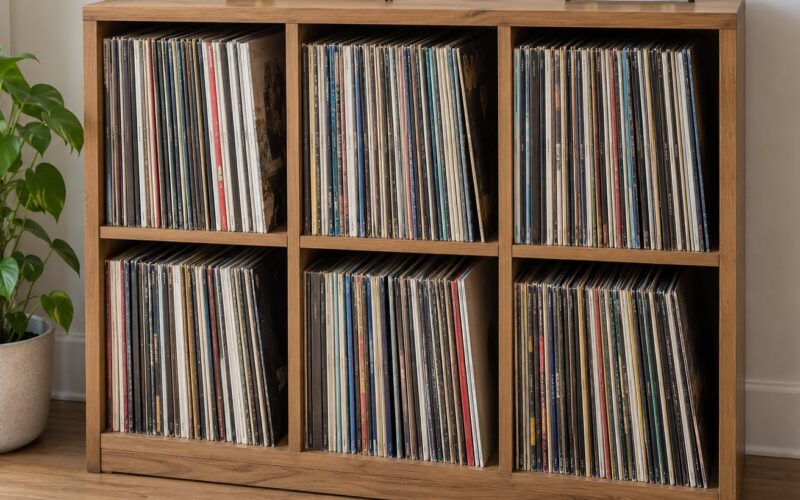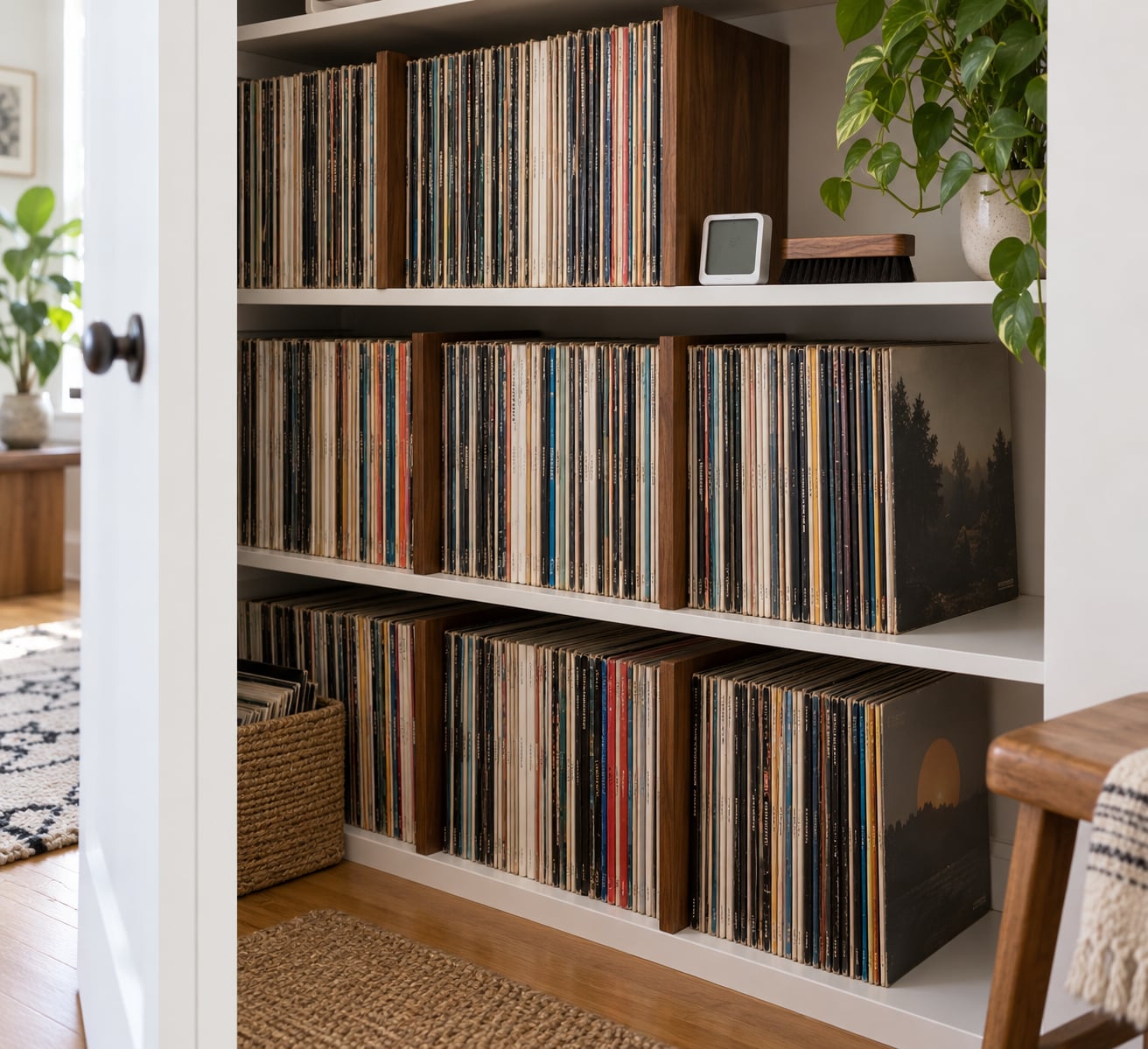
The best way to store records in a closet is upright and spine-out, on shelves that can actually carry the weight, in a room kept cool, dry and out of direct sun. Vinyl records need about 12.5 inches of shelf depth, 40-55% relative humidity and a steady temperature near 65-70F, and the part collectors miss most often is the shelf itself.
A typical closet shelf or hanging rod was never rated for a full load of LPs. A shelf holding 100 albums can weigh 40-45 lbs, so the setup below starts with reinforcement and ends with a maintenance routine. Give it an afternoon the first time and ten minutes a month after that.
Throughout this guide, records means vinyl: LPs, 45s and the occasional 7-inch single, not paperwork.
Table of Contents
- What You Need
- Step-by-Step: How to Store Records in a Closet
- 1. Inspect and Prepare the Closet
- 2. Clean the Records Before Storage
- 3. Choose Shelves That Support Vinyl Properly
- 4. Arrange Records in a Stable, Accessible Order
- 5. Control Temperature, Humidity, and Light
- 6. Maintain the Closet and Check Records Regularly
- Common Mistakes
- Frequently Asked Questions
- Can vinyl records be stored flat in a closet?
- Should records be kept in plastic sleeves?
- How dry does a closet need to be for vinyl?
- How much space should I leave between shelves?
- How do I organize a large record collection in a closet?
- Wrapping Up
What You Need
Gather this before the records come out of their current home, because you want the closet ready on the same day the shelves come down.
- Shelving rated for 40-70 lbs per shelf. A framed plywood shelf, a solid-wood commercial record shelf, or modular cube shelving with a published load rating. Avoid anything that wobbles when you lean on it.
- One sheet of 3/4 inch plywood and a few screws, if the closet shelf is particleboard or an unknown rating. A plywood deck laid over the old shelf and screwed through from below is the cheapest reinforcement there is.
- Shelf dividers or record dividers to break long rows into browseable sections and stop albums tipping into each other.
- Anti-static inner sleeves and outer poly sleeves. Inner sleeves cut static and scuffing on the disc. Outer sleeves protect the jacket corner from shelf wear.
- A soft record brush, a proper record cleaning fluid, and a clean microfiber cloth. Household glass cleaner and paper towels do more harm than good.
- A small thermometer and hygrometer so you are reading numbers instead of guessing from the feel of the air.
- Moving boxes or record crates for staging, which also serve later for a move or a renovation.
- An anti-slip shelf liner, a small level, and a stud finder with screws and washers for anchoring tall stacks to the wall.
Step-by-Step: How to Store Records in a Closet
1. Inspect and Prepare the Closet
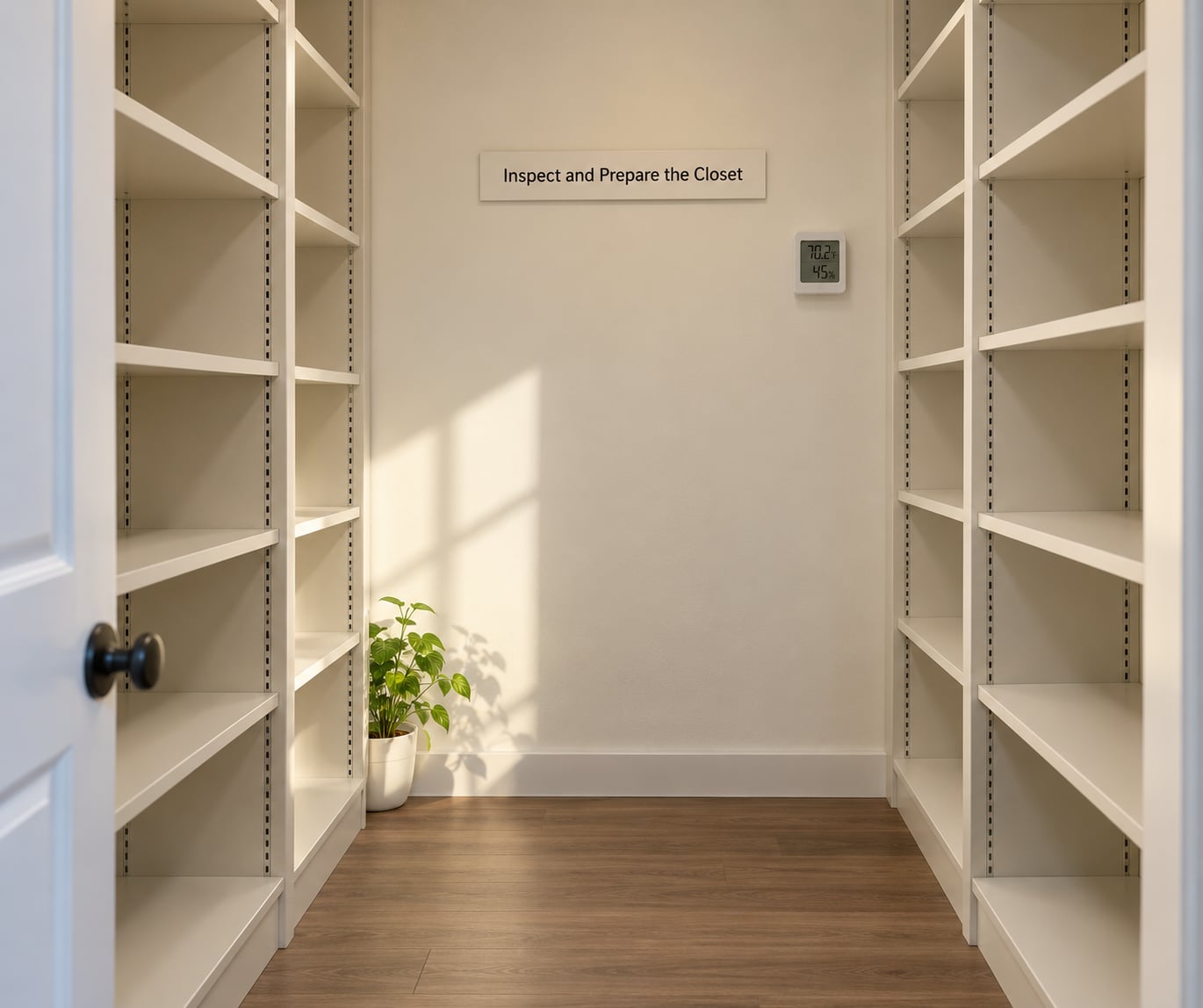
Start by checking the closet is fit for records at all, not just empty. Look for a leaking pipe, a roof stain, peeling paint or a musty smell, and deal with all of it before a single sleeve goes in.
Set the hygrometer inside and read it twice a day for two days. If it sits above 60% or drifts wildly between morning and night, that closet needs airflow or a different home for the collection. A closet on an exterior wall, next to a bathroom, under a water heater or in a garage is a poor candidate no matter how much room it has.
Then look at the light. Direct sun through a window will fade jackets and heat the shelf, so use a blind or a UV film. Dust on the floor and on the shelf surface goes now, not later. Check that the shelf is solidly attached to studs rather than to drywall anchors alone.
2. Clean the Records Before Storage
Dust and fingerprints on a record become permanent the moment it goes on a shelf. Brush each disc with a soft anti-static brush in the direction of the grooves, never across them, and follow up with a couple of drops of record cleaning fluid and a lint-free cloth held by the edge.
Skip aerosol dust remover and any household glass cleaner. The solvents in those products attack the plasticizers in vinyl and leave a film that traps more dust than you started with.
Jackets need a gentler hand. Wipe the cover with a cloth barely dampened with plain water, never a solvent, and never scrub a seam. Handle albums by the sides and the spine area rather than gripping the front edge, which is the first place ring wear and corner creases appear.
If a jacket is torn, run clear archival tape along the seam from the inside, keep damaged sleeves out of tight rows so the tape can stick to itself instead of a neighbouring album, and give anything water-damaged time to dry fully in open air before it goes back on a shelf.
3. Choose Shelves That Support Vinyl Properly
Depth is the number most people get wrong. An LP in its jacket is about 12.3 inches deep, so a 12 inch closet shelf will not hold one, and a 14 inch shelf leaves no room to grip the album. Plan on 13-14 inches of depth for a comfortable reach.
Next comes span. Particleboard sags in the middle, and a sagging shelf bows the discs resting on it. If the shelf is wider than about 30 inches and you cannot add a centre support or a plywood deck, buy a narrower shelving piece rather than pushing more albums onto it.
Popular modular cube shelving is rated per shelf, not per piece. IKEA Kallax shelves are commonly rated around 29 lbs, EKET around 33 lbs, and the EKET Mini around 15 lbs, so a cube loaded with records will reach its limit well before it looks full. One Audiogon collector describes 2,000 albums living happily in inexpensive white cube shelving, and the same thread is full of owners saying the cube needs reinforcing sooner or later.
Cube shelving has a second problem: the shelf is deeper than an album, so records slide to the back and lean. The fix is a divider or insert that brings the front row forward to the shelf edge, plus a shallow lip across the front.
On an existing closet, removing the hanging rod and building a deck across the closet opening gives you a full-depth shelf and more records per inch of wall than any single cabinet. Nail a front lip about half an inch tall along the edge so albums cannot slide forward, and anchor tall stacks to studs with a strap or L-bracket so a nudge cannot tip them.
4. Arrange Records in a Stable, Accessible Order
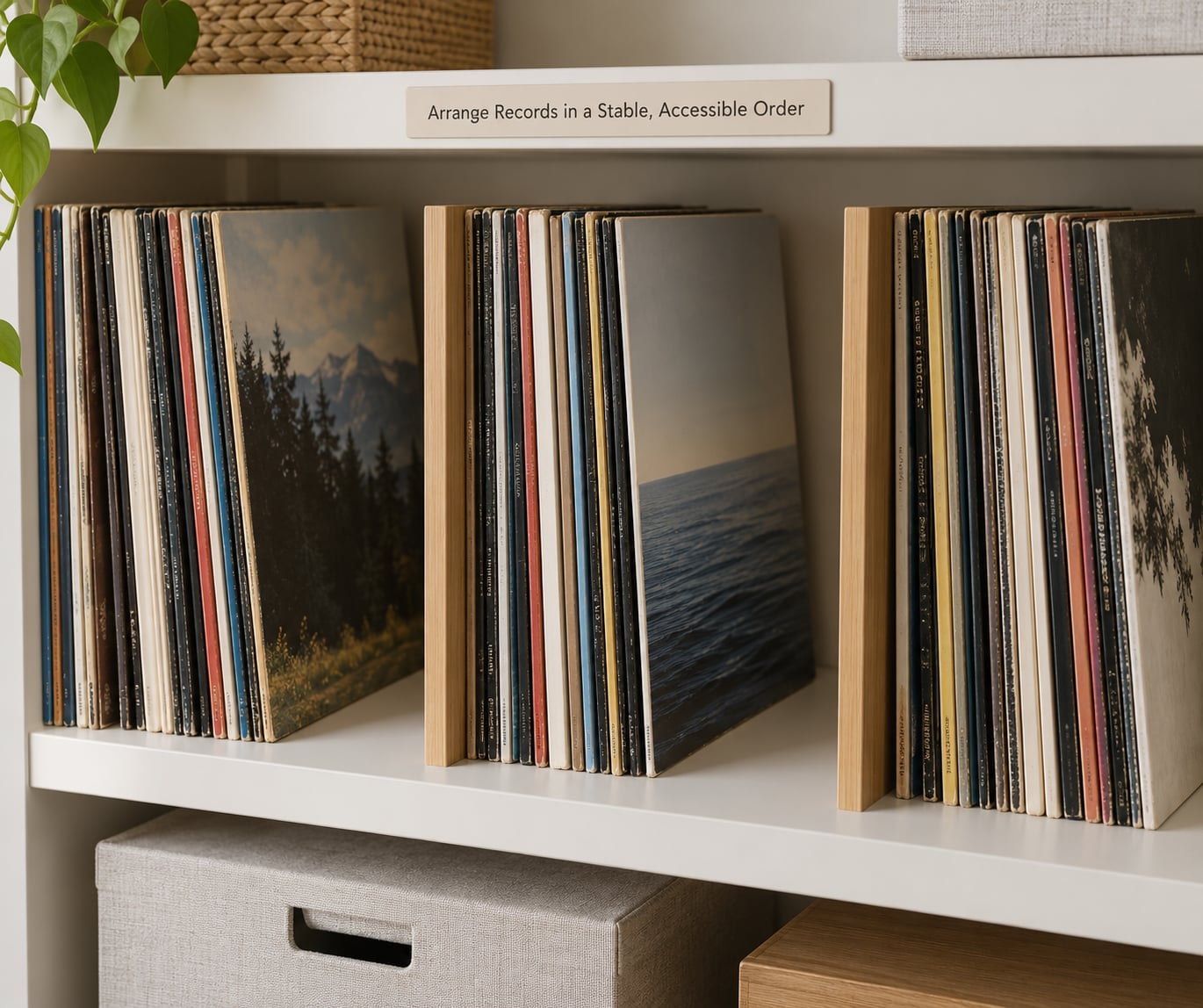
Sort alphabetically by artist for the bulk of the collection, because that is the system you will actually keep up. Label-based order suits people who follow a specific scene; genre order suits listening moods; newest-first on the top shelf keeps the recent buys visible.
Stand every record upright with a slight backward lean, which is what most collectors settle on. A perfect vertical row wants to fall forward, while a small lean lets gravity hold the stack against a shelf lip. One collector on the Audioholics forums stores records vertically in two stands that support them at both the front and the back, which is the tidiest version of this idea.
Space matters when you plan capacity. A sleeved LP takes about 0.2 inch along the shelf, so a 30 inch usable run fits roughly 150 albums once you subtract clearance at each end. Divide the usable shelf width by 0.2 for your own numbers, and keep about 60% of capacity as the safe working limit rather than packing to the last inch.
Flat storage has one honest use: short stacks of 45s and 7-inch singles. Keep those stacks under about ten inches tall, away from any shelf above that carries weight. LPs go upright.
Use dividers every 25-50 albums so a pull does not bring forty records with it. Put a spreadsheet or a Discogs collection list on your phone if the closet holds more than a few hundred records, because a packed closet you cannot search becomes a black box you never reorganize.
5. Control Temperature, Humidity, and Light
Target 40-55% relative humidity and a stable 65-70F. Vinyl is rigid PVC, and sustained heat softens it enough to warp, which is why collectors worry when a closet climbs past 80F and reports of closets hitting the high 80s and low 90s in midsummer are not unusual. Warping risk really starts somewhere above 80-100F sustained, not at the first warm day.
Humidity brings mould into jackets and card sleeves, and mould is not reversible. Keep airflow moving through the closet, prop the door open periodically, and keep records off the floor where damp collects. A small dehumidifier set to hold 50% is useful in a basement or ground-floor closet; in a dry climate, a humidifier in winter is the more common need.
Sunlight fades jacket art in a way that cannot be undone, so keep closet doors closed during the day if the closet catches direct light. An HVAC supply vent blowing onto the records is worth closing with a deflector.
If the closet stays above 60% RH, smells musty, or hits extreme summer temperatures no matter what you do, the honest answer is that this closet is the wrong room. Move the collection somewhere the building already keeps stable.
6. Maintain the Closet and Check Records Regularly
Put a monthly reminder in your calendar. Dust the top of each row with a dry microfiber cloth, check the front faces for leaning or forward-sliding rows, and glance at the few albums you pull most often.
Every few months, pick five records at random from the middle of a shelf and inspect them for mould, warping or sleeve stickiness. Smell the closet when you open it; a musty note means the humidity plan is failing.
Rotate the albums you actually play into a small shelf or crate near the door, and keep the closet itself as long-term housing. It keeps the browsing surface short, stops the same records from being dragged across the closet each time, and means a door that gets slammed lands on an empty shelf rather than a row of albums.
Common Mistakes
Leaning records permanently on their sides is the first one. The bottom albums in a long side stack carry everything above them, and jacket spines start to bow and crack within months. Long-term housing means upright.
Overpacking shelves past their rating causes sagging, and a sagging particleboard shelf bows the discs resting on it. Add a shelf before you add albums, not after.
Using plain cardboard record boxes in a closet with any damp history puts mould food in contact with jackets you care about. Use plastic crates or boxes, and line the closet floor with something washable.
Stacking LPs flat more than a few inches tall crushes the lower jackets and concentrates any heat in the middle of the pile. Short stacks are for 45s and singles only.
Leaving no front lip and no dividers on a deep shelf lets rows creep forward and slump. Half an inch of lip and a divider every 25-50 albums fixes almost every toppling complaint collectors post about.
Filling every cubic inch of the closet removes the airflow that keeps mould and heat in check. Leave the top of the closet and the gaps around the shelves clear.
And skipping the wall anchor on a tall stack is how a shelf full of records ends up on the floor. Tall shelving holds maybe 60 lbs, and that weight moves fast when it tips.
Frequently Asked Questions
Can vinyl records be stored flat in a closet?
Short stacks of albums can sit flat when the stack is stable and nothing heavy rests on it, which makes flat storage fine for 45s and 7-inch singles. For LPs, upright is safer long term because the bottom records in a flat stack carry the full weight above them, jacket spines bow under sustained load, and heat gets trapped in the middle of the pile.
Should records be kept in plastic sleeves?
Yes, with two different sleeves doing two different jobs. An anti-static inner sleeve protects the disc from static and scuffing, and an outer poly sleeve protects the jacket corner from shelf wear and handling marks. Keep records in their original inner sleeve unless it is damaged, and never seal a wet record into a sleeve, since trapped moisture invites mould.
How dry does a closet need to be for vinyl?
Aim for 40-55% relative humidity in a space that does not swing wildly. There should be no visible dampness, condensation on jackets, or musty smell when you open the door. Vinyl itself handles humidity better than cardboard does, but mould on jackets and sleeves is permanent, so airflow matters as much as the number on the hygrometer.
How much space should I leave between shelves?
Leave enough depth for the sleeves to stand upright without being crushed and enough clearance to pull an album out with two hands. An LP in its jacket is about 12.3 inches deep, so plan on at least 12.5 inches and ideally 13-14 inches of shelf depth. Adjustable shelves help here, and a front lip about half an inch tall stops records creeping forward.
How do I organize a large record collection in a closet?
Alphabetical by artist works for most collections and is the system you are most likely to keep up. Add a divider every 25-50 albums, label the shelf edge with a range of names, and keep a Discogs or spreadsheet list on your phone so you can find a title without pulling everything out. Keep daily players in a small crate outside the closet.
Wrapping Up
Do the load check first, because a shelf that collapses takes the whole collection with it. Put a hygrometer in the closet for two days, read the numbers, and if it sits above 60% or the room bakes in summer, find different space before you organize anything.
Then build the shelf properly: 13-14 inches deep, rated for 40-70 lbs, decked in plywood if it is particleboard, and fitted with a front lip and dividers. Load it upright, spine-out, with a slight lean, keep the room at 40-55% relative humidity and 65-70F, and check back every month. That is the whole method behind the best way to store records in a closet, and it holds up for decades.