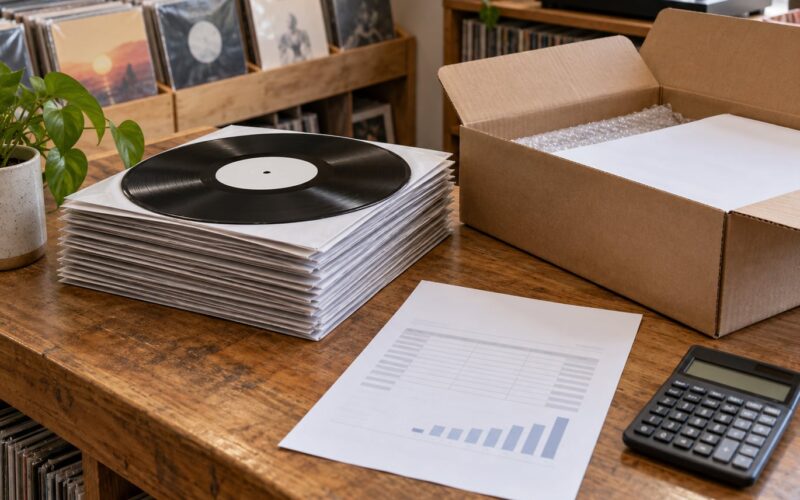
A repress is simply another pressing run of a record that has already been released. Same music, usually the same artwork, and most often the same catalog number, manufactured fresh once the first run sold through or the label decided to bring the title back. Fans want one because it puts an album they missed within reach and gives them a physical copy they can actually play.
The word confuses people because collectors use it loosely, and sellers use it for things that are not represses at all. On one marketplace listing it means a legitimate new pressing from the rights holder. On the next it means a bootleg with no licence and no matrix data. Both get called a repress, and the buyer is left to work out which one they are holding.
That ambiguity is worth clearing up, because a repress tells you what you are buying and what you are not getting. It is not a remaster. It is not necessarily a reissue with new packaging. And it is not the scarce original copy that collectors pay real money to track down. Getting those three things straight is the difference between a satisfying purchase and an expensive mistake.
This guide covers what a repress actually is, how to tell one apart from a reissue, a re-cut or an unlicensed pressing, what collectors look at before buying, and why the answer to “should I get the repress or keep hunting?” is not always the same for every record.
Table of Contents
- What Is a Repress and Why Fans Want One?
- What Is the Difference Between a Repress and a Reissue?
- What is an unofficial repress?
- How Collectors Tell Original Pressings and Represses Apart
- Catalog numbers tell you the edition, not the year
- Matrix numbers and the deadwax are the real fingerprint
- Stamper rings and plant codes tell you where it was pressed
- Country of manufacture and label design narrow it down
- Sleeves, inner sleeves and inserts reveal the recency
- Test pressings and promos sit outside all of this
- Why Do Fans Want a Repress Instead of an Original?
- How Record Mastering Changes the Listening Experience
- Where the audio actually comes from
- What half-speed and audiophile editions actually do
- The changes you will actually notice
- Which Repress Details Matter Most to Vinyl Collectors?
- How Much Should a Repress Cost?
- The case against buying every repress
- Frequently Asked Questions
- What does u0022repressu0022 mean in simple terms?
- What’s the difference between a repress and a reissue?
- Are repressed vinyls good?
- How do I know if my vinyl is a repress or an original?
- Does a repress use the original master tapes?
- What are vinyl test pressings?
- Start With the Edition Details
What Is a Repress and Why Fans Want One?

A repress is a second or later manufacturing run of a record that has already been released, using the same approved artwork and usually the same catalog number. The label orders a fresh batch from a pressing plant once the earlier run is used up, the rights come back into play, or demand for the album justifies putting it back in print.
So what a repress is not matters as much as what it is:
- Not a reissue. A reissue is a new edition, usually remastered and repackaged under a new catalog number. A repress is usually the same edition again.
- Not a remaster. Mastering is the transfer and cutting step. A title can be remastered and never repressed, or repressed from the identical lacquer.
- Not automatically a bootleg. The genuine article is authorised by whoever holds the licence. That authorisation is what you are checking for, and it is also what fake listings leave out.
Why bother wanting one? Mostly because the physical object matters to the people buying it. A reissue on vinyl is a real object with a sleeve, a runout and a place on a shelf, which a streaming file is not. Beyond that, fans tend to want a repress for a small set of concrete reasons, and those reasons are the subject of most of this guide.
The honest version of the collector’s position, from the long-running r/vinyl thread on the subject, is that represses can be good or they can be bad. They let people hear albums that would otherwise be expensive or hard to find, and they are never the reason a pressing plant exists. Both halves of that sentence are true at once.
What Is the Difference Between a Repress and a Reissue?
Reissue is the broad category; repress is one specific thing inside it. A reissue is any later official release of a title you already own, and it can carry new mastering, new packaging, bonus tracks and a new catalog number. A repress is narrower: another run of an edition that already exists, usually unchanged, often keeping the original catalog number.
The table below breaks the main families apart. The column that matters most when you are holding a record is the audio source, because that is where the difference in sound actually comes from.
| Type | What changed | Who authorised it | Audio source | New catalog number |
|---|---|---|---|---|
| Original pressing | Nothing, this is the first edition | Original label or rights holder | Original master tape or lacquer cut from it | No, this sets the number |
| Repress | Nothing or very little, a repeat run of the same edition | Rights holder or its licensed partner | Usually the same master, sometimes a fresh lacquer cut | Usually no, often still the original number |
| Reissue | Mastering, artwork, track list or format | Rights holder or its licensed partner | Remastered, sometimes from tape, sometimes from a digital source | Often yes, sometimes no |
| Re-cut or re-mastered edition | Mastering and packaging, sold as an upgrade | Rights holder or audiophile label | Original tape transferred by a named engineer | Yes, and the label name usually changes too |
| Bootleg or grey market | Usually the artwork, sometimes the audio | Nobody holding a licence | Whatever the producer could get, including CD rips | Copied, invented or omitted |
Two rows in that table are the source of most arguments. A repress that comes from the same tape as the original has no sonic advantage over the original, only a condition advantage. A reissue cut by a good engineer from the original tape can genuinely beat a played-to-death first pressing, which is the honest case for reissues existing at all.
What is an unofficial repress?
An unofficial repress is a pressing made without a licence from the rights holder, usually by a small operation that reproduces the artwork and sells on marketplaces. Sometimes the audio is fine, sometimes it was sourced from a CD or a lossy file. The giveaway is paperwork, not sound: no catalog number that traces back, a matrix area with nothing etched or stamped, or a label name that quietly differs by one letter from the real one.
The Discogs forum thread on the tag is blunt about this. The word gets attached to releases by whoever is selling them, so the label on the sleeve matters less than whether the matrix area says anything at all.
How Collectors Tell Original Pressings and Represses Apart
You tell them apart by reading the record and the sleeve, not by the seller’s description. Five pieces of information do most of the work: the catalog number, the matrix number in the runout, the plant identifier, the country of manufacture, and the insert situation. Check them in that order.
Catalog numbers tell you the edition, not the year
The catalog number printed on the label, the sleeve and often the obi strip identifies the edition. The same number appearing on a record bought in the 1970s and one bought this year is normal and is exactly what a repress looks like from the outside. What changes between runs is the matrix, not the catalog number.
Matrix numbers and the deadwax are the real fingerprint
The runout area between the last track and the label is the deadwax, and it usually carries a matrix or runout code. A first pressing often has letters and numbers hand-etched into the vinyl, sometimes with a mastering engineer’s initials or a stamper letter. A later press tends to have the same code stamped by machine, sometimes with an extra suffix letter for the pressing variant.
This is the check forum collectors repeat most often. If a listing claims a pressing and the deadwax has no information in it all, that is a problem worth walking away from, because it means nobody can verify what you have been sent.
Stamper rings and plant codes tell you where it was pressed
The ring around the label can carry a plant code, and the code tells you which pressing plant manufactured the run. The practical version of the rule is simple: matrix information, often hand-etched, is what separates a legitimate pressing from a copy with nothing to show. Every collector guide repeats the same instruction, which is to look in the runout groove before you pay.
Country of manufacture and label design narrow it down
Country codes on the label, sleeve and matrix, the language of the sleeve copy, the catalogue numbering conventions and the shape of the label logo all narrow a pressing to a window. A Japanese issue with an obi strip and a gatefold sleeve is not a later US pressing of the same record, whatever number is printed on it.
Sleeves, inner sleeves and inserts reveal the recency
Sticker, hype sticker, shrink wrap, poster, printed inner sleeve, booklet, bonus track. Modern pressings tend to arrive with a hype sticker even when the music is unchanged, because the sticker is the marketing. Older copies often came with an insert that has been separated from the record for decades, which is why finding the insert is part of the hunt.
Test pressings and promos sit outside all of this
A test pressing is a small sample run made to check a cut before or at the start of production, normally white label with hand-written details and a different matrix format. They are not for sale and they are collectable on their own terms. Promo copies are similar but were distributed to radio or reviewers, often marked with a stamp or an A-side designation.
Why Do Fans Want a Repress Instead of an Original?
The motivations are narrower than the word suggests, and they are mostly about access rather than status. Collectors on r/vinyl, DogsOnAcid and the Steve Hoffman forums describe the same handful of reasons, usually in this order:
- Filling a gap. The album was never in your collection and the original window closed before you started buying records. The repress puts the record on your shelf now instead of leaving a permanent hole.
- Getting an out-of-print title back. Labels routinely bring an album back because demand survived its disappearance. Fans who campaigned for particular records treat a returning pressing as an event rather than a routine release.
- Buying clean instead of worn. An original that has been played five thousand times carries surface noise. A fresh copy of the same edition does not, and for many listeners that matters more than provenance.
- Staying inside a budget. Original pressings of popular albums carry collector premiums that put them out of reach. The same edition later is the realistic version of the same record, and it usually costs a fraction of the first-run copy.
- Getting the format right. Some records came out in a format that no longer makes sense. An expanded double LP or a remastered reissue fixes an original packaging decision that aged badly.
- Hearing a better master. Modern reissues from labels like Analogue Productions, Music on Vinyl, Acoustic Sounds, Sundazed, Craft Recordings and Blue Note’s Tone Poet series are cut from tape by named engineers, and on a title where the original was noisy or compressed that upgrade is real.
- Completing a run of variants. Some collectors track every pressing variant of an album. A repress adds another verified entry to the list, and the Discogs statistics on a release page are how you confirm which one you just acquired.
- Fair access to something everyone wants. This is the Record Store Day argument: everybody gets a copy on the same morning, rather than a small group paying whatever the market asks for.
There is a ninth motivation that is not really about the record. Collectors describe buying a repress because they missed the original window and want to stop feeling left out. That is the honest emotional version of the same impulse, and it explains more purchases than sound quality arguments do.
How Record Mastering Changes the Listening Experience
Sound differences between two copies of the same album come from two places: the master the lacquer was cut from, and the pressing plant that moulded the disc. The first matters far more. Two records cut from the same master in different plants are close to identical; two records cut from different masters can sound like different albums.
Where the audio actually comes from
An original run is normally cut from lacquer that was itself cut from the master tape. A repress usually reuses that same lacquer or cuts a fresh one from the same tape, so the audio is broadly the same. The weak link is what happens when a label no longer has the tape and masters from a CD, a digital file or a lossy rip. Those transfers flatten dynamics, often raise surface noise relative to the signal, and strip the low end. It is the single most common complaint about represses in the forum threads, and it is a sourcing problem rather than a manufacturing one.
What half-speed and audiophile editions actually do
Half-speed mastering plays the tape at half speed during the transfer, which some engineers believe reduces high-frequency wear on the tape. Audiophile labels then press heavier vinyl and cut from tape with a named engineer, and Mobile Fidelity’s approach goes further by doing the transfer and the cut together under one roof. Whether you hear a difference is genuinely title-specific, and anyone who tells you it is universal is selling something.
The changes you will actually notice
- Loudness. Remasters are often louder than originals because loudness became a competitive habit. Turn it up and the difference shrinks.
- Dynamics. Heavily compressed masters leave less room between quiet and loud. A tape transfer from a good engineer usually breathes more.
- Bass and treble. Digital sources often lose the bottom end and roll off the very top. A tape transfer keeps more of both.
- Surface noise. This is pressing and condition, not mastering. A quiet original beats a loud repress when noise is the complaint.
The practical rule from collectors who have done the comparisons: the sonic gap between an original and a good reissue is often smaller than the price gap between them. Where the gap opens up is a bad source on one side, and that is a sourcing failure you can identify before you pay.
Which Repress Details Matter Most to Vinyl Collectors?
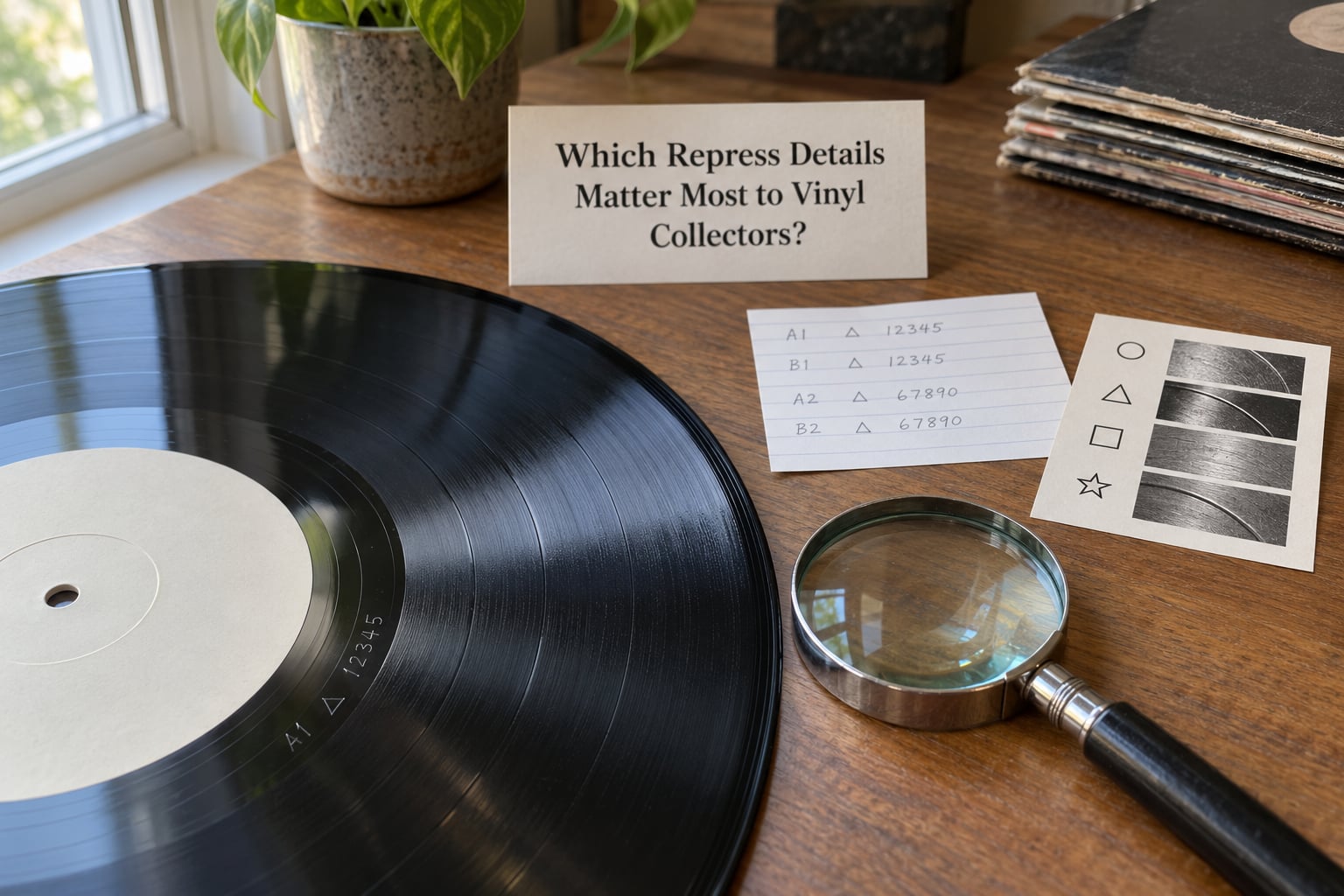
Collectors check a fixed set of details, and the order rarely changes because the failures always look the same. Work down this list and most bad listings fall away on the first or second item.
- Matrix and runout information. Does the deadwax say anything? Hand-etched marks suggest an older or higher-spec run, machine-stamped marks a later one, and a blank area is the warning sign.
- Mastering credit and source. A sleeve that names the mastering engineer, or a label known for tape transfers, tells you where the audio came from. Silence on the point is worth asking about.
- Pressing plant code. The ring around the label usually identifies the plant, and the code can tell you when the run was made.
- Catalog number continuity. The number on the record should match the sleeve, the inner sleeve and the obi strip. Mismatches are where fakes get caught.
- Country of manufacture. Printed on the label, the sleeve and often the matrix. It also tells you which market’s packaging you should be seeing.
- Vinyl colour and weight. Coloured, translucent or heavy 180-gram variants are marketing features as much as sonic ones, and they reset a pressing’s identity.
- Jacket and inner sleeve condition. Ring wear, seam splits and a missing insert are where most of the money is lost on an otherwise fine copy.
- Bonus material and limited status. Extra tracks, posters, numbered editions and hype stickers describe the edition rather than the music, but they do drive what collectors will pay.
- Test pressing or promo status, if claimed. These carry real value and real documentation requirements. Take the claim seriously or ignore it entirely.
Where a claim about a pressing cannot be verified, treat it as unverified rather than as false. That distinction matters, because sellers routinely describe a later pressing as a first pressing and correct themselves happily once asked for the matrix.
How Much Should a Repress Cost?
There is no fair price for a repress, because a repress is an edition rather than an object with a fixed worth. What sets the number is a short list of variables, and the same album can sit at two very different levels depending on which edition you are actually holding.
- Edition scarcity. How many copies of this edition exist, and how many are in playable condition.
- Condition. Record and sleeve separately graded, the way Goldmine does it. A clean repress usually outranks a damaged original for playability and often for price.
- Mastering quality. A named transfer from tape by a respected engineer supports a premium that a digital-sourced pressing does not.
- Label and country. Jazz on a well-known reissue label, Japanese pressings of Blue Note and OJC titles, and punk and hardcore records on their original independent labels each have their own market with its own expectations.
- Collector demand. Some titles are reissued every few years without losing value, because demand never really went away.
- Documentation. A copy you can identify from its matrix and plant code is easier to sell than one that is only described.
How you research the number matters more than the number. Completed sales on Discogs, filtered by the exact pressing you are buying, tell you what the edition has actually changed hands for. Asking prices tell you what somebody hopes. Popsike works the same way, with the same insistence on completed transactions. Check the Goldmine grade wording in the listing against the grade in the sale record, because a seller grading generously is the most common reason two pages disagree.
The case against buying every repress
Not everyone thinks represses are a good thing, and the objection deserves a straight hearing. Buyers on r/vinyl push back for reasons that have nothing to do with sound: an album that has been reissued four times with four different track lists feels like a product being relaunched rather than a record being preserved. Others point at the environmental cost of manufacturing the same album repeatedly, and at the way format changes reset the buying cycle every few years.
There is a fairness question buried in there too. A title that gets repressed annually gets more chances to sell than one that stays out of print forever, which is why some underground punk, hardcore and heavy scenes see repress culture as something that happened to other genres. The r/VaporVinyl thread on why some limited runs stay deliberately small is the other side of the same argument.
My own read, after a lot of browsing and not nearly enough buying: the frequency is the problem, not the repress. An album you want, in an edition you can verify, at a price that makes sense next to the completed sales, is a reasonable purchase. Buying every new edition of an album you already own twice is not collecting, it is inventory.
Frequently Asked Questions
What does u0022repressu0022 mean in simple terms?
A repress is another pressing run of a record that has already been released. The music, artwork and usually the catalog number stay the same, and the label simply orders a fresh batch from a plant once the earlier run has sold through or the title comes back into demand. Nothing about the edition has changed, which is why a repress often looks identical to a first pressing from the outside.
What’s the difference between a repress and a reissue?
A reissue is the broad term for any later official release of a title you already own, often remastered and repackaged, sometimes under a new catalog number. A repress is narrower: another run of an edition that already exists, usually unchanged and usually keeping the original catalog number. Same product again, as opposed to a new version of the product.
Are repressed vinyls good?
It depends entirely on the source. A repress cut from the original master tapes by a competent plant can match or beat a worn, noisy original pressing. One cut from a CD or a lossy digital file will sound thin and dull no matter how good the record is. Check whether the mastering engineer is named and whether the source tape is stated before you decide anything.
How do I know if my vinyl is a repress or an original?
Look at the deadwax. Matrix and runout information sits in the runout groove between the last track and the label, and older runs are often hand-etched while later runs are machine-stamped. Compare the catalog number on the record with the sleeve and the obi strip, read the stamper ring for the plant code, and check the country of manufacture. A blank matrix area means nobody can verify the pressing.
Does a repress use the original master tapes?
Usually, and that is worth confirming rather than assuming. A legitimate repress is generally cut from the same master tape as the original, sometimes with a fresh lacquer cut. When a label no longer holds the tape, the reissue may be mastered from a CD or a digital file instead, which is where the thin, compressed sound that collectors complain about comes from.
What are vinyl test pressings?
A test pressing is a small sample run made to check a cut before or at the start of production. They are usually white label with hand-written details and a matrix format that differs from the commercial run, and they are not sold to the public. Because they are scarce and clearly identifiable, they are collectable in their own right.
Start With the Edition Details
If you take one habit from all of this, make it the deadwax check before anything else. Look at the runout, read the matrix, match the catalog number to the sleeve, and note the plant code and country. Do that on every record you consider buying and the word repress stops being confusing, because you will know which side of the line you are on.
Then let the music decide, not the label copy. A repress of an album you have been after for years is a good buy at a sensible price, verified and clean. A well-documented copy you will actually play beats a nominally rarer pressing that nobody can identify. A repress is a normal feature of how records get made, and treating the edition details as ordinary information rather than a treasure hunt is what makes the whole thing easier.