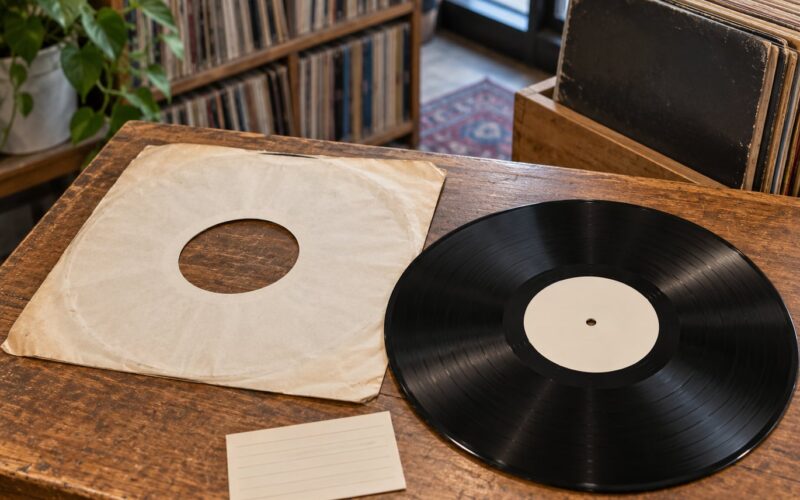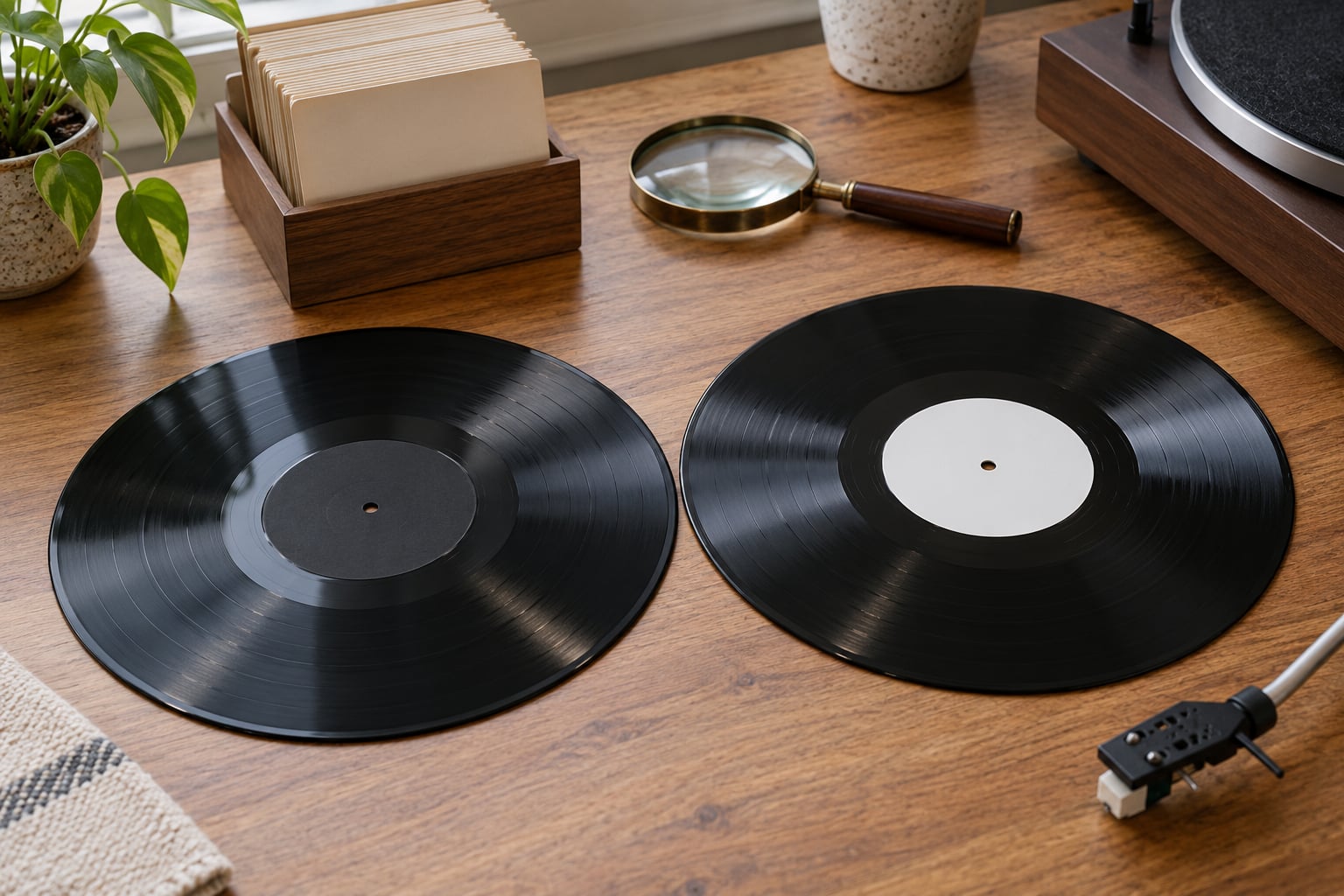
The difference between a bootleg and an unofficial release comes down to permission and paperwork. A bootleg is material recorded or released without the rights holder’s consent. An unofficial release is the wider bucket: any record pressed outside a label’s normal commercial system, which can include bootlegs but also licensed promos, club issues, and fan-made records.
That distinction sounds tidy on paper. In a record shop it gets messy fast, because sellers use both words loosely and one of them, counterfeiting, is a straight copy of an official record. Collectors who care about the difference between a bootleg and an unofficial release care mostly about one thing: knowing what they are actually putting on a shelf.
Table of Contents
- Difference Between a Bootleg and an Unofficial Release at a Glance
- Where the difference between a bootleg and an unofficial release actually sits
- What Is a Bootleg Release?
- What Is an Unofficial Release?
- How Do Authorization and Rights Differ?
- Why Do the Names and Labels Differ?
- Which One Has Better Sound Quality?
- Which One Is More Valuable to Collectors?
- How to Tell Them Apart Before Buying
- Which Should You Choose?
- Frequently Asked Questions
- Is every unofficial release a bootleg?
- Can an unofficial vinyl release be legal?
- Are bootlegs always better sounding than official albums?
- What does not for sale mean on a vinyl record?
- How can I tell whether a record is an original pressing?
- Are unofficial releases worth collecting?
- Conclusion: Check the Record, Not Just the Seller’s Label
Difference Between a Bootleg and an Unofficial Release at a Glance
| Criterion | Bootleg release | Unofficial release |
|---|---|---|
| Origin | Unauthorized recording of a performance, broadcast, rehearsal, or unreleased studio session | Any record issued outside a label’s normal commercial distribution |
| Authorization | None. Made without the artist’s or rights holder’s knowledge or permission | Sometimes. Can be licensed, artist-approved, promotional, or entirely unlicensed |
| Typical material | Audience tapes, soundboard feeds, FM broadcasts, demos, outtakes, alternate mixes | Club and radio sessions, promos, test pressings, regional issues, withdrawn albums, fan club records |
| Wording on the record | Trademark of Quality, unauthorized, not for sale, blank or invented label names | Promo, not for sale, white label, DJ copy, licensed wording, or no mention of any status |
| Sound quality | Ranges from excellent analog transfers to poor digital rip; no pattern | Ranges the same way, and official reissues often win on mastering |
| Packaging | Rubber-stamped covers, photocopied artwork, blank labels, generic sleeves | Ranges from rough photocopy to fully designed, numbered, and boxed |
| Legal status | Infringing in most jurisdictions to make, sell, or trade | Depends entirely on the specific release and its permission |
| Collector value | Usually modest; a handful of documented editions are genuinely sought after | Wide spread, from near-worthless to museum reference material |
| Best way to identify it | Matrix and runout etchings, known label catalog numbers, source and venue details | Catalog number, label design, pressing details, sleeve credits |
Where the difference between a bootleg and an unofficial release actually sits
Both terms describe a record’s relationship to the rights holder, not its musical quality or its rarity. A beautiful, well-mastered record can be a bootleg. A scruffy white label can be perfectly legal.
The practical test is simple. If nobody with the power to say yes said yes, it is a bootleg. If somebody said yes but it never entered ordinary retail distribution, it is an unofficial release.
What Is a Bootleg Release?
A bootleg is an unauthorized recording of a performance or unreleased material, released or sold without the rights holder’s permission. The word comes from the practice of stamping bootleg goods during Prohibition-era smuggling, and collectors have used it since the first rock records appeared.
Most bootlegs fall into three families.
Live bootlegs come from audience members recording with a cassette deck, from a mixing desk feed, or from a radio broadcast. The soundboard version is usually cleaner because it comes straight off the board. An audience tape carries the crowd, the hall, and the occasional dropped mic stand.
Studio bootlegs carry demos, rehearsals, outtakes, alternate mixes, and whole abandoned sessions. These are prized by fans because they show how a record was made, not just how it ended up.
Compilation bootlegs pull together rarities, regional tracks, or radio sessions that never appeared on a domestic release. They are the easiest type to date, because the track listing usually points straight at a specific year and market.
Collectors also use older shorthand. ROIR and ROIO mean records of indeterminate or unknown origin. VOIO is a joke acronym for very old indeterminate origin. Nobody prints them on a label; they are trading-room terms for when the paperwork has run out.
What Is an Unofficial Release?
An unofficial release is any record issued outside a label’s normal commercial system. It is a broader term that can include bootlegs, but does not require one. That is where most of the confusion in shops comes from.
Common unofficial categories include promotional white label pressings sent to radio or reviewers, test pressings made to check a master before production, and club or radio sessions broadcast live and cut to disc afterward. You also find regional issues withheld from certain countries, fan club pressings sold only to members, and records released with the artist’s blessing but outside the usual deal.
Several well-documented cases blur the line further. Some artists have licensed their back catalogue and let fans press officially sanctioned live albums. Some bootlegs eventually became legitimate, either because the rights holder licensed them or because a cleaned-up version was reissued properly. A record can start as a bootleg and finish as an official release.
Marketplaces use the word as a catch-all category, so an item tagged unofficial may be a genuine unauthorized recording or simply a promo that was never sold in shops.
How Do Authorization and Rights Differ?
Authorization is the whole difference. A bootleg infringes the copyright of the recording and, often, the underlying song. International treaties such as the Berne Convention mean most member countries protect those rights automatically without formal registration, so a bootleg is infringing almost everywhere the artist is protected.
In the United States, restored rules in the late 1990s strengthened enforcement against imported copies of unauthorized recordings, and current anti-counterfeiting rules target fakes of official product. Digital platforms add their own layer, with notice-and-takedown systems for infringing uploads.
The legal risk also differs by act. Buying a bootleg to listen at home is treated very differently from pressing it, advertising it for sale, or listing it on a marketplace. Collectors who pick up unofficial records at shows are usually exposed only as buyers, while sellers and pressers carry the real exposure.
Ethically the picture is messier than the legal one. Taping a show for personal use, trading a tape with a friend, and pressing 5,000 records for sale are three very different acts that often get flattened into one word.
Why Do the Names and Labels Differ?
Because these records were made outside any official system, the identifying information collectors rely on is often missing or invented. Catalog numbers, when present, follow the issuing operation’s own scheme rather than the label’s.
Look at the wording first. A record marked not for sale, promo, white label, or DJ copy is describing its distribution, not its legality. A record marked with a known bootleg operation’s name, or nothing at all, is telling you something different.
Then read the matrix and runout area. The etched code around the runout groove names the cutting and pressing facilities, and the pattern of codes is the single most trusted identifier collectors have. An official pressing’s codes should match what the label and pressing plant published for that edition. They will not match on anything pressed elsewhere.
Finally, look at how the label and sleeve were made. Rubber-stamped and photocopied artwork, blank labels, invented label names, and misspelled credits all point one way. A licensed unofficial release may carry perfectly professional printing with the rights holder’s own design and a catalog number that appears in their discography.
Which One Has Better Sound Quality?
Neither category wins automatically. A bootleg cut from a soundboard feed at 1972 fidelity can beat a modern reissue made from a worn digital master. A modern unofficial pressing sourced from a lossy file will lose to almost anything.
What decides quality is the chain behind the record.
- Source material. A soundboard feed beats an audience tape. A first-generation analog master beats a CD rip, which beats a streaming download.
- Transfers and mastering. Unofficial releases from the 1970s were often cut from clean tapes. Modern ones are frequently cut from files that were already compressed once.
- Pressing quality. A thin, light pressing from an unlicensed run carries more surface noise than a well-pressed copy. Weight is a clue, not a verdict.
- Surface noise. Crackle and hiss are normal on unofficial records. So is a dull, thin soundstage on digital-sourced pressings.
- Completeness. Tracks cut off, mislabelled running times, and missing sides are more common in unauthorized releases.
The useful rule: judge the audio when you can, and never judge it from the label color alone.
Which One Is More Valuable to Collectors?
Value follows documentation more than it follows music. The records collectors genuinely argue over are the ones with clear provenance, documented editions, and a known pressing history.
Rarity alone is not enough. Thousands of unlicensed records exist in near-identical runs, which makes them common rather than scarce. What raises interest is a specific known edition of a pressing run, a documented source or venue, a complete and correct insert set, and clean condition.
Condition matters more than usual. Unofficial records were often handled heavily, stored badly, and shipped without jackets, so a clean copy with a presentable sleeve stands out.
Authenticity is the final filter. A counterfeit wearing unofficial packaging can be sold as a rare item, and marketplace listings regularly mislabel fakes as original pressings. Checking a listing’s photographs against a verified official pressing catches more problems than any amount of listing description.
Collector consensus is fairly consistent here: buy unofficial records for the content and the history, not as an investment. Official reissues are usually the better listening buy.
How to Tell Them Apart Before Buying
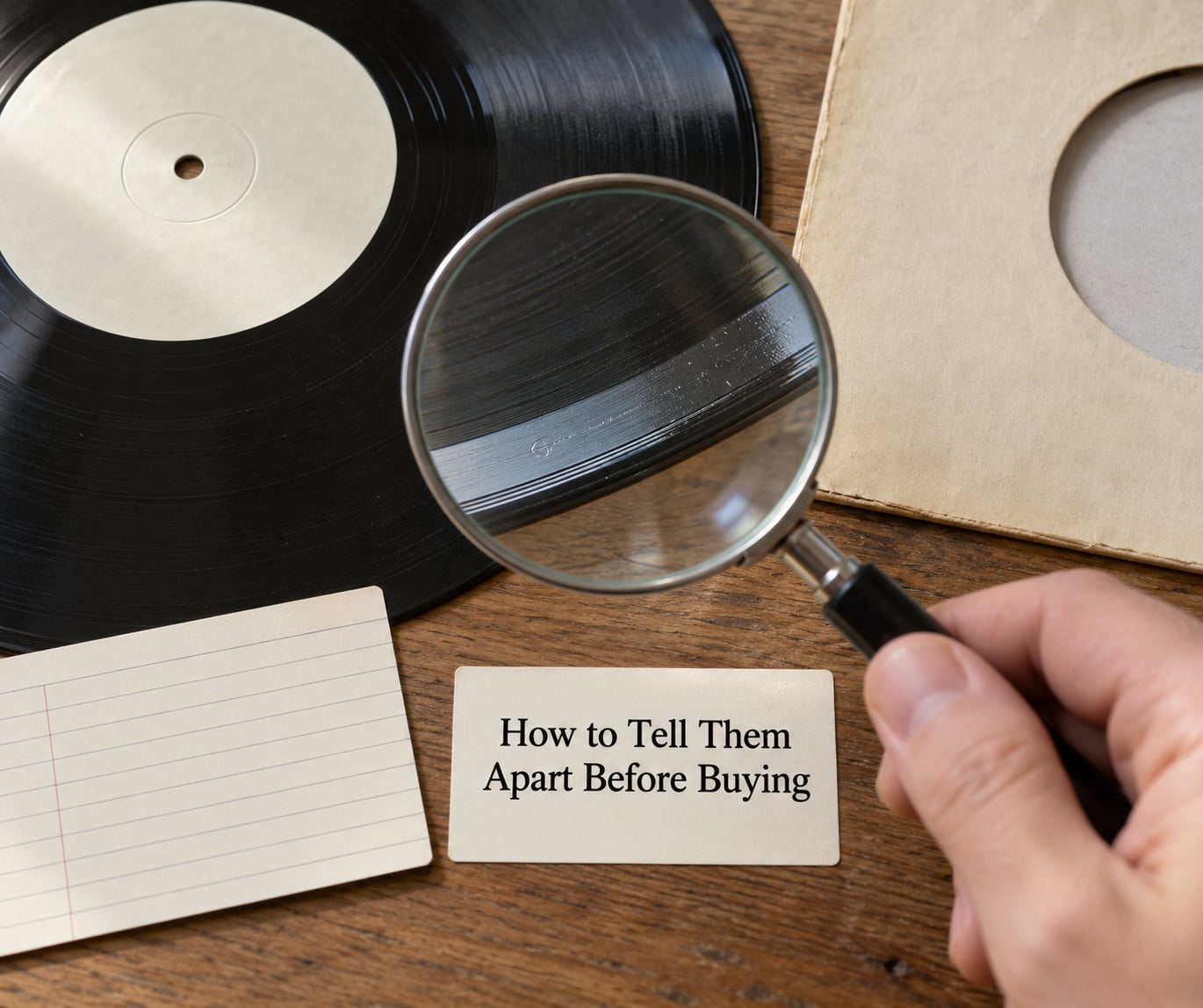
Run through this routine before you buy anything described as unofficial. It takes a few minutes and a phone flashlight.
- Read the label wording. Promo, not for sale, white label, DJ copy, and test pressing all describe distribution. An invented label name or no name at all points elsewhere.
- Check the catalog number. Look it up in the rights holder’s discography. If it is not there, the record is not an official edition of that title.
- Examine the runout and matrix etchings. Compare the codes with published pressing data for that edition. They will not match on anything pressed without authorization.
- Inspect the sleeve for printing method. Rubber stamps, photocopies, low-resolution scans, and misaligned type are hard to fake convincingly.
- Compare the track listing. Wrong running times, missing tracks, or tracks ordered differently from the official release are strong warning signs.
- Check the credits. Real sleeves credit engineers, producers, and designers. Blank or invented credits mean nobody stood behind the record.
- Ask about provenance. Where did this copy come from, and is the seller willing to photograph the runout and the full sleeve?
If a seller will not photograph the runout area, treat that as an answer.
Which Should You Choose?
Choose a documented unofficial release when you want a legitimate historical or artistic record: a licensed club session, an artist-approved live album, a radio broadcast performance, or a regional pressing that explains a gap in an official discography.
Choose a bootleg only when its provenance and significance are clear to you. That means a known edition with a traceable pressing history, and content you cannot get anywhere else, such as a specific performance or a set of studio sessions.
For plain listening, go official. A well-mastered reissue will beat most unauthorized pressings, and you will know exactly what you own.
And be careful with the word unique. Sellers reach for it constantly, and it usually signals a pressing variant rather than a one-off record.
Frequently Asked Questions
Is every unofficial release a bootleg?
No. Unofficial release is the wider category and covers anything pressed outside a label’s normal distribution, including promos, test pressings, club and radio sessions, regional issues, and licensed releases the artist approved. A bootleg sits inside that category as the subset with no permission at all. So an unofficial record can be perfectly legal while a bootleg is not.
Can an unofficial vinyl release be legal?
Yes, if somebody with the rights said yes. White label promos, test pressings, and club sessions are made by the label or with a licence. Artists have also authorised fan-pressed live albums. What makes a record unofficial is only that it stayed out of ordinary shops. Illegality comes from the absence of permission, not from the format or the distribution channel.
Are bootlegs always better sounding than official albums?
No. Quality depends on the source, not on the label. A 1970s soundboard bootleg cut from a clean tape can sound excellent. A modern unofficial pressing cut from a compressed file can sound worse than any reissue. Master tape quality, transfers, mastering, and pressing weight all matter more than whether the record was authorised. Judge the audio itself, not the packaging.
What does not for sale mean on a vinyl record?
It means the record was distributed for promotion, review, or radio rather than sold in ordinary shops. It describes distribution, not permission, and not legality. White label and promo pressings are usually official and fully licensed. Some bootlegs also carry the wording as cover. Check the label design, catalog number, and runout etchings before drawing any conclusion from the text alone.
How can I tell whether a record is an original pressing?
Start with the catalog number and matrix etchings. Compare the runout codes with published pressing data for that edition and country, and check the label design and sleeve printing against reference photographs. Matching codes, credits, and track order are a strong case. Unlisted codes, blank credits, or rubber-stamped artwork point to a pressing made outside the official supply chain.
Are unofficial releases worth collecting?
Some are, and most are not. The ones worth owning have clear provenance, a documented edition, complete inserts, and good condition, or they preserve a performance or session that no official release covers. Mass runs of unlicensed records are common rather than rare. Collect for content and history, and treat unofficial pressings as a listening and research interest rather than a financial one.
Conclusion: Check the Record, Not Just the Seller’s Label
A bootleg is unauthorized material released without permission. An unofficial release is any record pressed outside a label’s normal commercial system, which may or may not have permission behind it. One term describes a legal status, the other describes a distribution route.
Start with the runout etching and the catalog number, then confirm the sleeve printing and credits before you buy. Ask where the copy came from and get photographs of the whole thing. Provenance and condition will tell you more than any label on the jacket, and they are what separates a documented unofficial release from a modern cash grab.