Yes, a fitted outer sleeve is one of the cheapest real protections you can put around an album. It blocks dust, cuts, spills, ring wear and corner damage against the jacket, and a thicker non-PVC sleeve adds real stiffness. What it does not do is stop scratches on the vinyl itself, prevent warping, or make a bad sleeve safe. Think of the answer to “do outer sleeves actually protect records” as a qualified yes: strong on packaging, nil on the disc surface.
I have flipped a few hundred records in and out of outer sleeves over the years, and the honest summary is that the sleeve matters far less than most people fear and far more than most sellers claim. The record is a tough object. The cardboard jacket is not.
Table of Contents
- Do Outer Sleeves Actually Protect Records?
- What Does a Record Outer Sleeve Protect Against?
- Ring wear, the biggest one
- The damage a sleeve cannot undo
- How Do Outer Sleeves Differ from Inner Sleeves?
- Which Outer Sleeve Materials Offer the Best Protection?
- How to identify PVC in your own collection
- What PVC actually does
- Does Sleeve Thickness Matter for Vinyl Records?
- Should You Replace a Torn or Worn Album Jacket?
- How Do You Protect Records from Scratches and Seam Splits?
- Clean, dry hands every time
- Lift by the edges, always
- Use a soft cleaning brush
- Store upright, not stacked
- Keep temperature steady
- Do not overstuff the jackets
- Can a Damaged Outer Sleeve Be Repaired?
- Frequently Asked Questions
- Do vinyl record outer sleeves prevent scratches?
- Are thicker record outer sleeves always better?
- Should records be stored in both inner and outer sleeves?
- Does a poly outer sleeve protect the album artwork?
- Is it safe to put the record back in its jacket after playing it?
- What Should a Record Collector Do First?
Do Outer Sleeves Actually Protect Records?
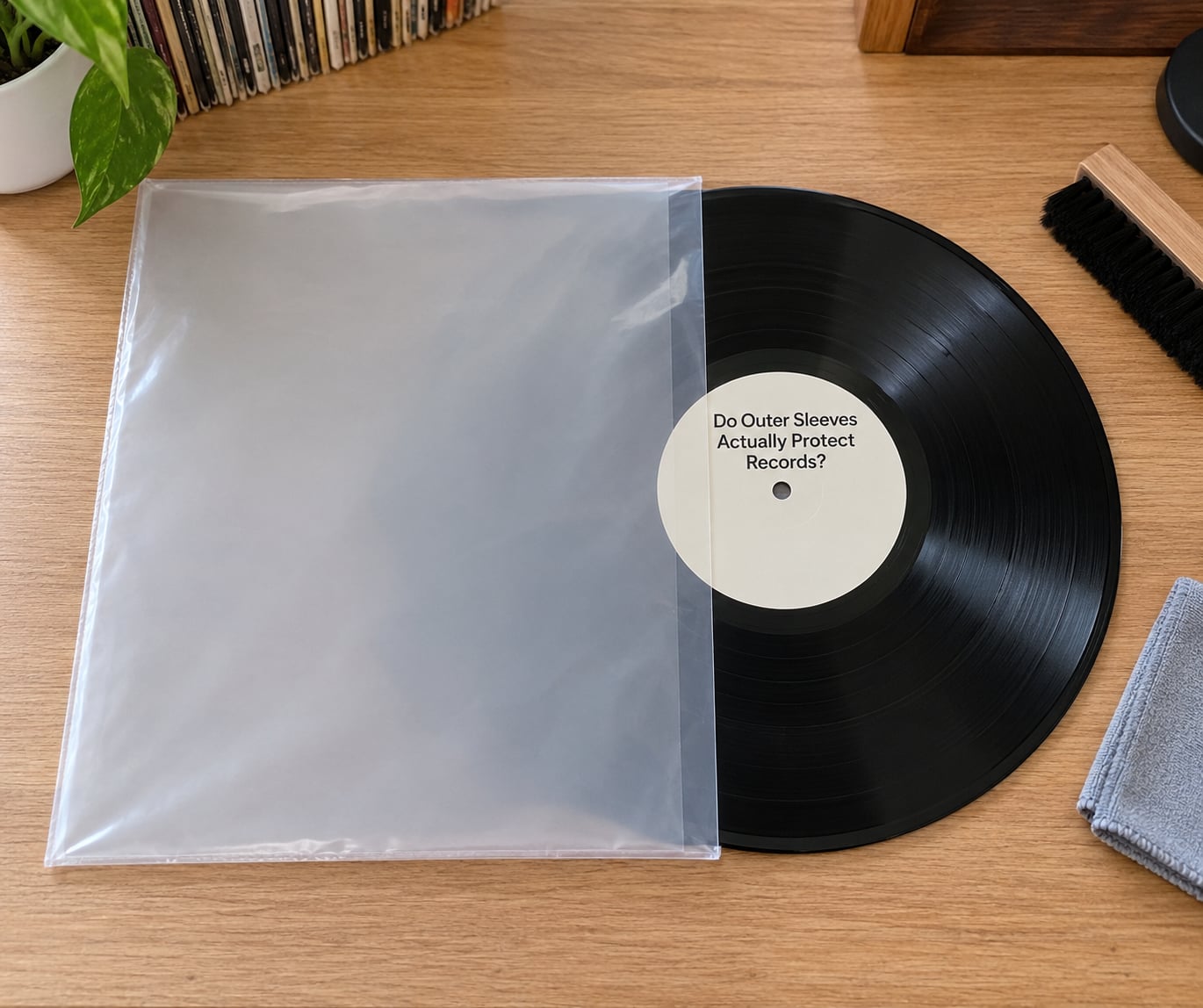
The verdict takes about fifteen seconds to check. Pull an album with an outer sleeve and one without out of the same shelf and compare the corners, the spine and the front edge. The sleeved copy will usually have a straighter spine and cleaner corners, and the bare copy will usually show ring wear across the front where the jacket rubbed the one in front of it.
Collectors often say “outer sleeves protect the record,” but that blurs three separate things. The disc, the inner sleeve and the album jacket each have their own enemy, and only one of them sits inside the outer sleeve.
| Layer | What it actually is | What it protects |
|---|---|---|
| Album jacket | The printed cardboard cover, usually 300-500 gsm | Nothing, by itself. It is the thing being protected. |
| Outer sleeve | A clear plastic or archival paper envelope that slips over the jacket | The jacket artwork, corners, spine and seams |
| Inner sleeve | A thin paper or plastic liner between jacket and disc | The playing surface, from abrasion and static |
So do outer sleeves actually protect records? They protect the record’s packaging, which is the part that degrades fastest and is hardest to replace. If a jacket splits along its seam, no amount of cleaning brings it back. Dust on artwork, ring wear across a printed face and a coffee ring are all permanent, and all of them happen faster on a bare jacket.
What Does a Record Outer Sleeve Protect Against?
Getting a straight answer here means separating the jobs. An outer sleeve is a barrier layer between your jacket and everything it would otherwise touch.
| Outer sleeves protect against | Outer sleeves do not protect against |
|---|---|
| Dust settling on artwork | Scratches caused by the stylus or a dirty needle |
| Ring wear from jacket-to-jacket friction on a shelf | Warping from heat, humidity or a leaning stack |
| Corner and edge wear from constant handling | Scratches on the disc from a worn inner sleeve |
| Spills, including a knocked drink | Sunlight fading through a window or glass shelf |
| Seam splits caused by jackets rubbing in a tight crate | Mould in a damp basement, no matter the sleeve |
| Shelf grime and sticky shelf surfaces | Damage from the wrong sleeve material itself |
Ring wear, the biggest one
Ring wear is the circular scuffing that appears when a jacket presses against the back of another jacket and rotates slightly in the shelf. It hits the printed artwork hardest, which is why pale and white sleeves show it worst. A tight outer sleeve holds the jacket flat and stops the flexing that starts the process.
The damage a sleeve cannot undo
Protection is one-directional. Dust you prevent never lands. A scratch already in the vinyl stays there, and a sleeve will not lift it. This is the part sellers gloss over: sleeves are cheap insurance against slow, cumulative damage, not a repair kit for a record that has already been mistreated.
A bent or badly stored record can still pick up deep scratches in a sleeve, because the sleeve does nothing about the warp itself. Clean hands and a good inner sleeve do more for the disc surface than any outer sleeve ever will.
How Do Outer Sleeves Differ from Inner Sleeves?
Confusing these two is the most common mistake in the whole debate, and it leads people to buy the wrong plastic. The inner sleeve sits between the disc and the jacket and touches the vinyl. The outer sleeve sits between the jacket and the shelf.
An outer sleeve protects the packaging. An inner sleeve protects the record surface from the roughness of the cardboard, from static and from grit that falls into the jacket while you are moving records around.
One collector thread on jazzcollector described buying used records with no outer sleeve at all and accepting the shelf wear, while another described an entire collection surviving a spilled beer because every album sat in a heavy-duty outer. Both experiences are true, and both come down to what you are protecting and how you handle it.
Some collectors keep the inner sleeve facing upward, outside the jacket. One commenter in that same thread reported no extra dust with that arrangement, because the inner sleeve opening partly seals the top of the jacket. It is a clever trick, though a plain outer sleeve does it more neatly.
Which Outer Sleeve Materials Offer the Best Protection?
Material matters more than brand. Four plastics cover almost everything you will see in a record shop, and one of them does real harm.
| Material | Scratch resistance | Clarity | Static | Longevity | Best for |
|---|---|---|---|---|---|
| Polyethylene (polythene) | Good, flexible, self-healing at small scuffs | Clear but slightly soft | Low | Excellent | Everyday protection, archival use |
| Polypropylene | Very good, stiffer and clearer | Excellent | Very low | Excellent | Display shelves, resale inventory |
| Mylar (polyester) | Very good | Waterproof, semi-rigid | Very low | Excellent | Moisture risk, gatefolds, heavy sets |
| PVC (vinyl) | Poor over time, becomes brittle | Cloudy, yellows | Builds static | Bad | Nothing. Avoid it. |
How to identify PVC in your own collection
PVC is easy to spot if you know what to look for. It is noticeably thicker and stiffer than polythene, and it feels like a soft plastic sheet rather than a crisp film. It tears like paper instead of stretching like polyethylene. Its edge seam is thick and visibly stitched rather than a thin welded seam. After a decade in a warm cupboard it turns cloudy, yellows, and develops a slightly gummy surface.
If a sleeve crinkles, bends without springing back, or leaves a plastic smell when you open it, treat it as PVC until proven otherwise.
What PVC actually does
Vinyl records and PVC share a chemical ingredient, and heat drives the reaction between them. Plasticizers migrate out of the sleeve and into the record and jacket, which shows up as hazing, a permanent milky matte fog on the playing surface, and mottling, an irregular blotching that often mirrors the wrinkles in the sleeve where the disc pressed against it.
The damage cannot be reversed. Cleaning products and isopropyl alcohol will not lift hazing. A collector reported a Sandy Denny single stored in PVC since the 1980s that now carries matte mist patches exactly where the paper sleeve wrinkled, and another described a Whitney Houston first pressing that became unplayable after a single year in a cheap plastic sleeve.
Picture discs shipped from the factory in PVC are the worst case, because the printed label sits right against the vinyl. If you own any, change the sleeve first thing.
One jazzcollector commenter described the long-term reality well: old PVC sleeves went brittle with sharp edges over ten to fifteen years, and that collector now restricts them to a small fraction of the collection. Another told of cutting skin on brittle edges, which is a good reason to swap them out even if nothing is visibly damaged yet.
Does Sleeve Thickness Matter for Vinyl Records?
Yes, and the reason is stiffness rather than toughness. A thicker sleeve resists abrasion, holds a jacket square and resists seam splits from jackets grinding together in a crate. The trade-off is shelf depth.
| Thickness | Feel | Protection | Watch out for |
|---|---|---|---|
| 2 mil | Paper-thin, floppy | Dust only, barely any stiffness | Wrinkles, tears, no gatefold support |
| 3 mil | Light but holds shape | Good everyday abrasion protection | Still tight for thick gatefold jackets |
| 4-5 mil | Rigid, semi-transparent | Best edge, corner and seam protection | Costs shelf depth and looks less clear |
One mil is one thousandth of an inch. Each extra mil adds roughly 0.025 mm per side, so a 5 mil sleeve takes noticeably more room than a 2 mil one on a shelf that is already tight. On a large collection that adds up to a cube that will not close.
For most people 3 mil polyethylene is the sweet spot. Go 4 or 5 mil for box sets, gatefolds, rare pressings and anything that travels. Stay at 2 mil only when shelf space is the binding constraint and the collection is clean, dry and handled gently.
Should You Replace a Torn or Worn Album Jacket?
Sometimes, and the decision is about which damage is easier to live with. Start by inspecting under decent light.
- Seam splits: a split along the spine or fold means the jacket will keep opening up. A sleeve slows it but cannot arrest it.
- Torn or soft corners: these catch on everything and get worse fast in a crate.
- Delamination: a laminated face that is lifting or peeling can never be flattened back down.
- Fading: sun-bleached or colour-shifted artwork stays faded.
- Loose gatefolds: a gatefold that no longer closes flat will crease itself permanently.
A replacement jacket gives a clean look and stops further loss, but you lose the original, and for many collectors original packaging carries real value on its own. My rule: if the jacket is structurally sound and the artwork is present, sleeve it and keep it. If it is falling apart or the art is gone, replacing it is not a loss, it is a repair.
One collector culled records and found them in mint condition from over-protection, then removed the sleeves purely for the pleasure of handling them. That is a legitimate position, not a mistake.
How Do You Protect Records from Scratches and Seam Splits?
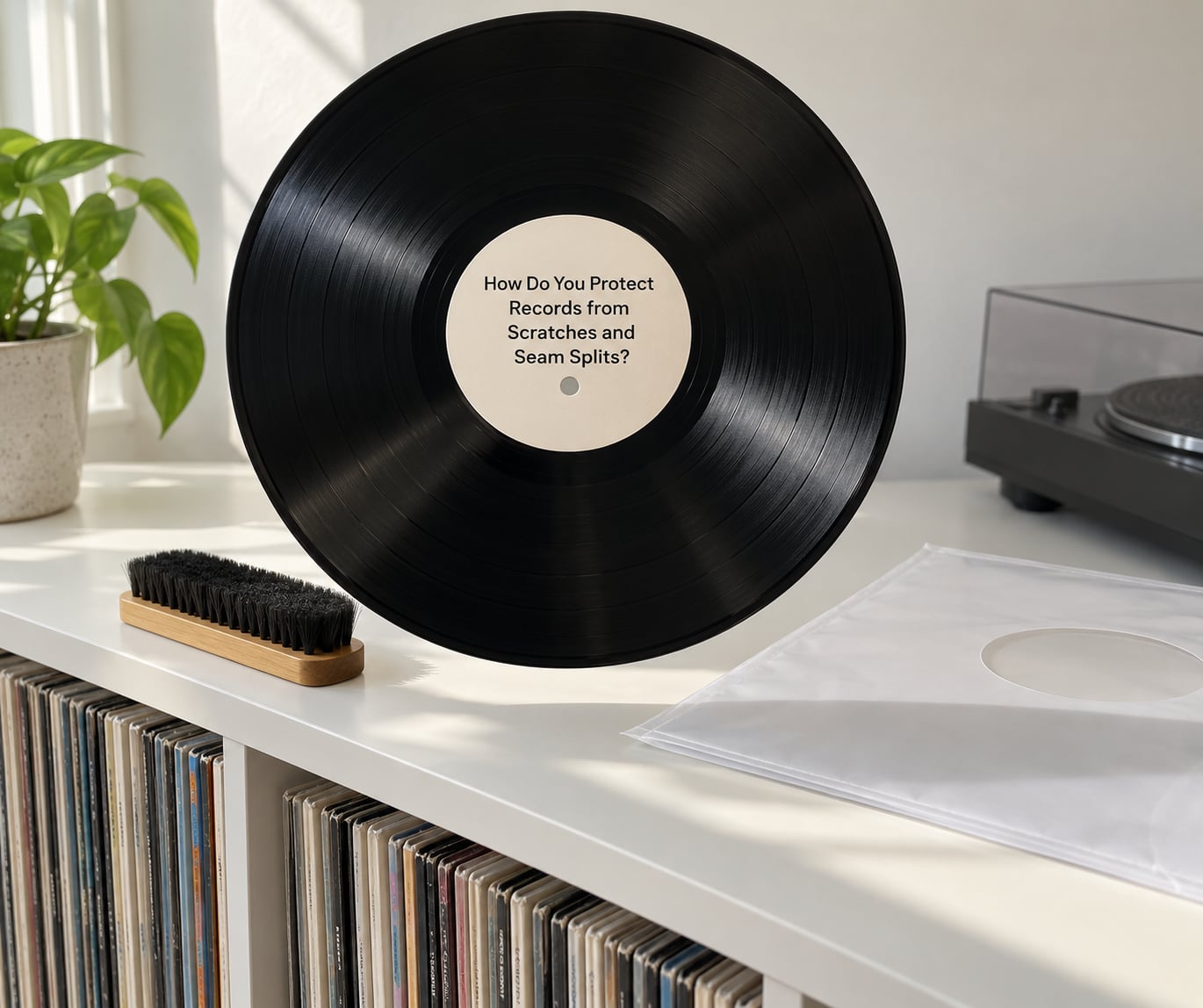
Sleeves matter, but handling decides most of the outcome. These are the habits that actually prevent scratches and seam splits.
Clean, dry hands every time
Skin oil transfers to the disc and attracts dust. Wash and dry before you touch a record, every time, even for a quick listen.
Lift by the edges, always
Hold the label edge and the opposite rim with two hands. Never grip the playing surface across the middle, and never slide a record across a shelf to pull it out.
Use a soft cleaning brush
A carbon fibre or velvet brush lifts dust before it settles into the grooves. A quick pass before each play keeps static and grit down.
Store upright, not stacked
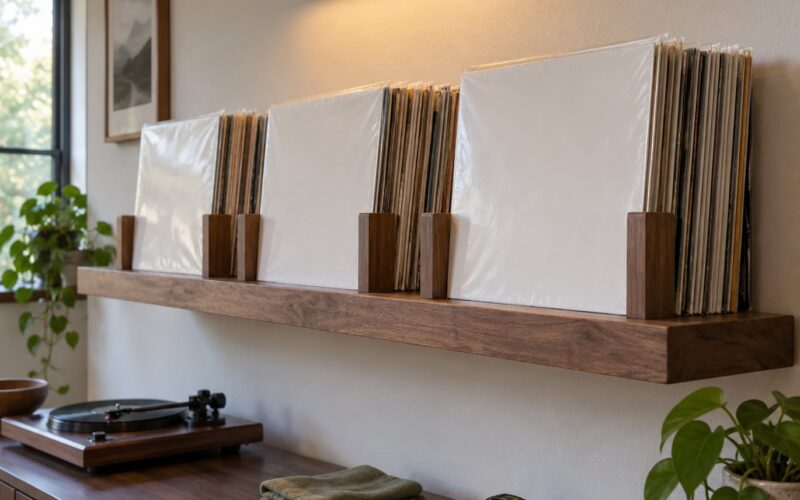
Upright storage on a shelf or in a crate reduces the pressure on jackets. Never lean a full stack of records against a wall for long periods.
Keep temperature steady
Warmth drives PVC off-gassing and encourages warp. A bedroom shelf is fine; a hot attic, a damp basement or a car boot is not.
Do not overstuff the jackets
Crams of records pushed tight together rub and split seams. Leave a little slack so each sleeve can sit straight.
Can a Damaged Outer Sleeve Be Repaired?
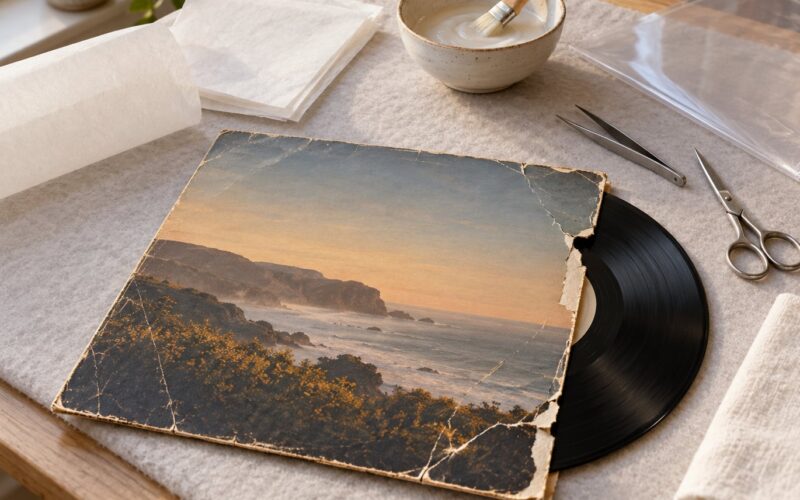
Sometimes yes, and it depends where the damage is. A small tear in a clear polythene sleeve can be patched from the inside with a piece of archival polyester tape placed over the crack, then trimmed flush. Archival tape on a seam works the same way and stops a split from running further.
Torn or creased artwork is a different story. Adhesive tape lifts ink and leaves residue that ages into the paper, and pressure-sensitive glue goes brittle and yellow with time. Never tape artwork itself.
For anything more than a small tear, replacing the outer sleeve is cheap and better. It is the one repair in vinyl care where the new part genuinely outperforms the old one.
Resealable sleeves with an adhesive strip are worth mentioning. They let you slide the record in and out without a second sleeve, which solves the storage-space complaint neatly, but the strip can tear artwork when peeled, and some fit tightly enough to be a problem on heavy pressings and double LPs. One collector on jazzcollector found Japanese resealable Mylar sleeves too tight for the heavy vinyl they buy.
Frequently Asked Questions
Do vinyl record outer sleeves prevent scratches?
Partly. An outer sleeve prevents scratches on the album jacket by keeping it from rubbing against other jackets and shelf surfaces. It does very little for the vinyl itself, because the disc never touches it. Scratches on the playing surface come from the needle, grit, a damaged inner sleeve or a warped record, so that protection comes from clean hands and a good inner sleeve instead.
Are thicker record outer sleeves always better?
No, because thickness adds shelf depth and cuts how many albums a cube will hold. A 3 mil polyethylene sleeve gives good everyday abrasion protection at almost no cost in space. Go to 4 or 5 mil for box sets, gatefolds, rare pressings and anything shipped or moved around, since those need the extra stiffness against corner wear and seam splits.
Should records be stored in both inner and outer sleeves?
Yes, they solve different problems and a full setup uses both. The inner sleeve protects the playing surface from the cardboard jacket, from static and from grit. The outer sleeve protects the jacket artwork from dust, ring wear, spills and handling. Storing records bare, in an inner sleeve only, leaves the artwork exposed to everything the shelf throws at it.
Does a poly outer sleeve protect the album artwork?
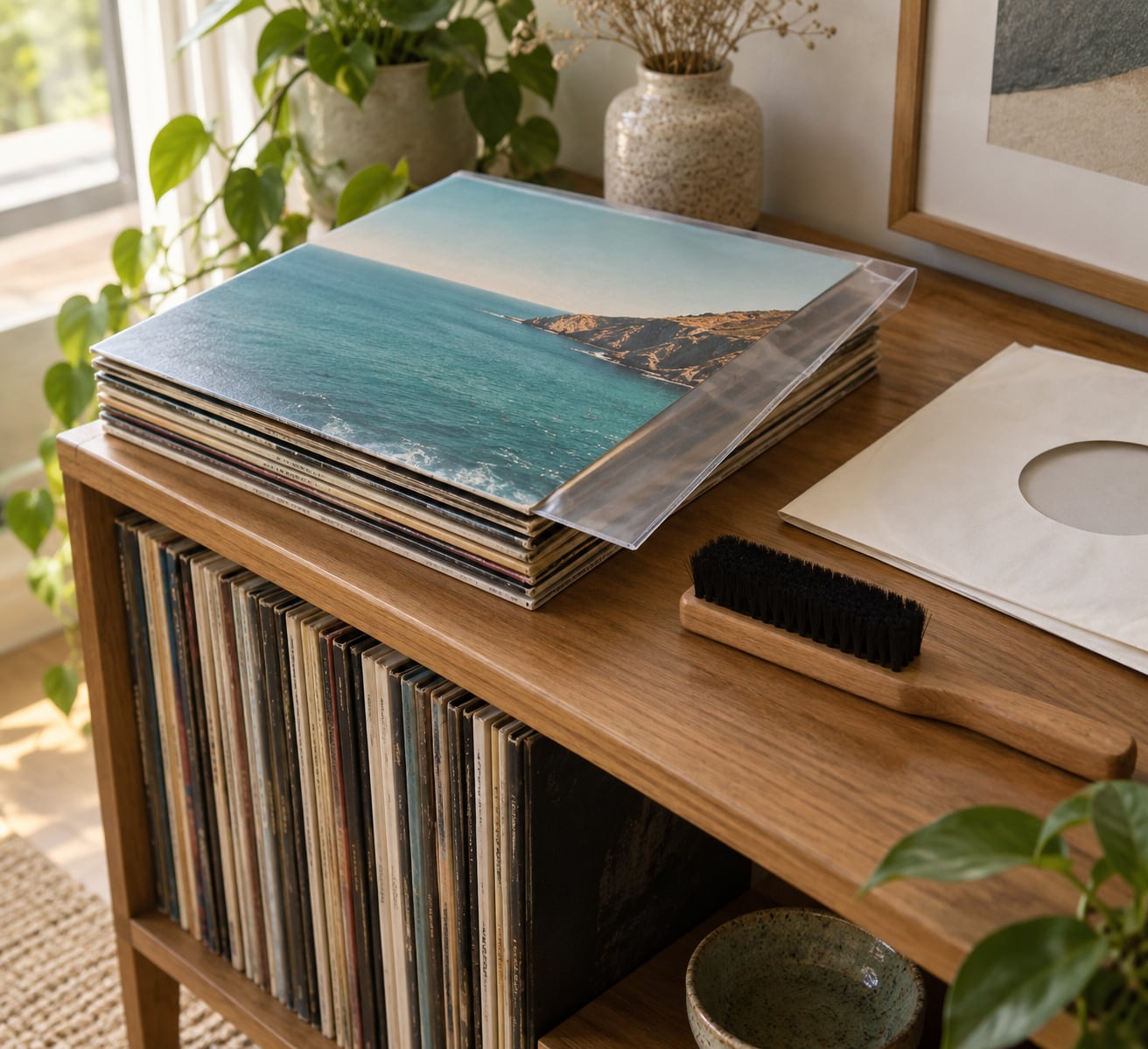
Yes, and it is the single best return on a small outlay in vinyl care. A clear polyethylene or polypropylene sleeve blocks dust, stops jackets grinding together to create ring wear, adds rigidity that resists corner and edge damage and buys real time if a drink goes over. Choose an archival, PVC-free poly sleeve in a thickness that fits your shelf depth.
Is it safe to put the record back in its jacket after playing it?
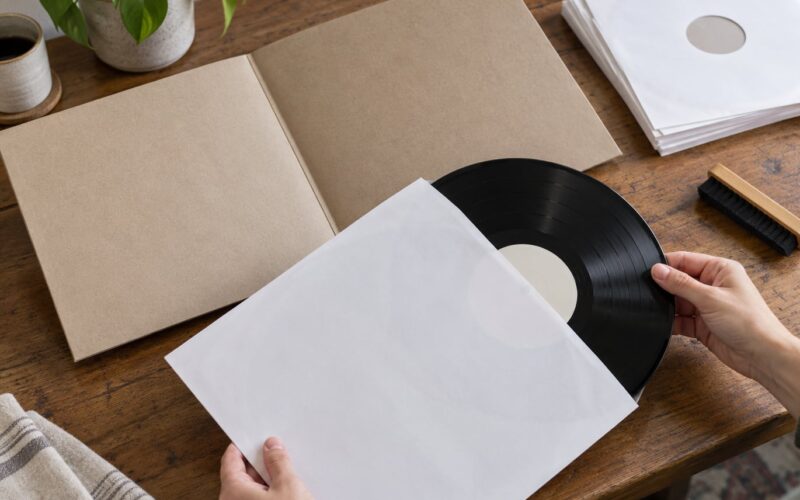
Put it back, every time. Leaving records out on a table exposes them to dust, sunlight, spills and stack pressure for no benefit. Slide the disc back into its inner sleeve first, then into the jacket, then into the outer sleeve. That order keeps the playing surface away from the cardboard and keeps the artwork covered whenever the shelf is open.
What Should a Record Collector Do First?
Do four things this weekend, in order. Check any cloudy or brittle sleeves and replace every PVC one you find, starting with picture discs and anything stored somewhere warm. Fit a soft anti-static inner sleeve to any record that has been sitting against bare cardboard. Add a correctly sized 3 mil polyethylene outer sleeve where ring wear and dust are a problem, moving to 4 or 5 mil for gatefolds and box sets.
Then store the album upright with the disc behind the jacket, hands clean, temperature steady. That is the whole argument. Outer sleeves earn their keep on the packaging, not on the vinyl, and no sleeve at all can substitute for careful handling.