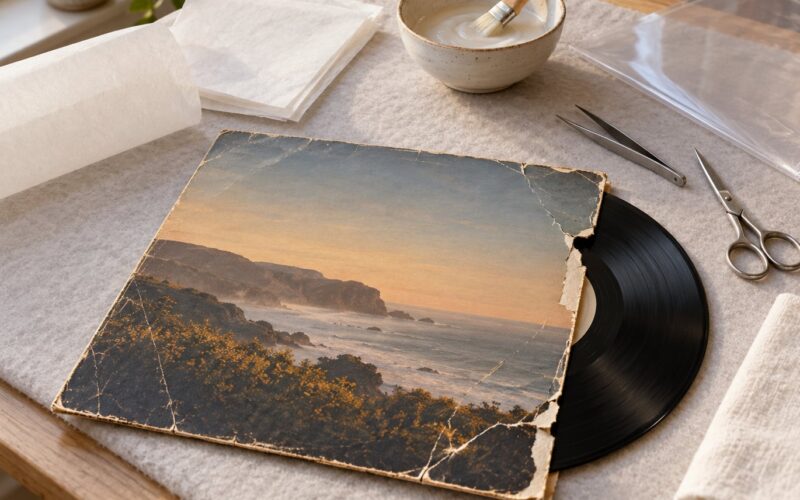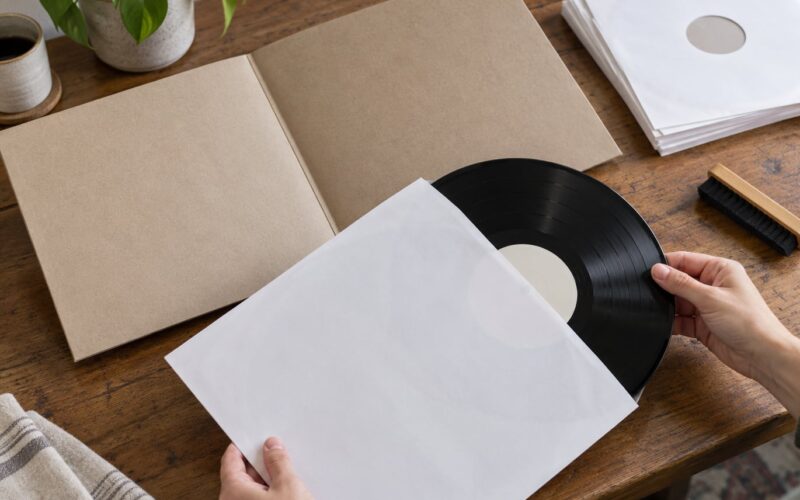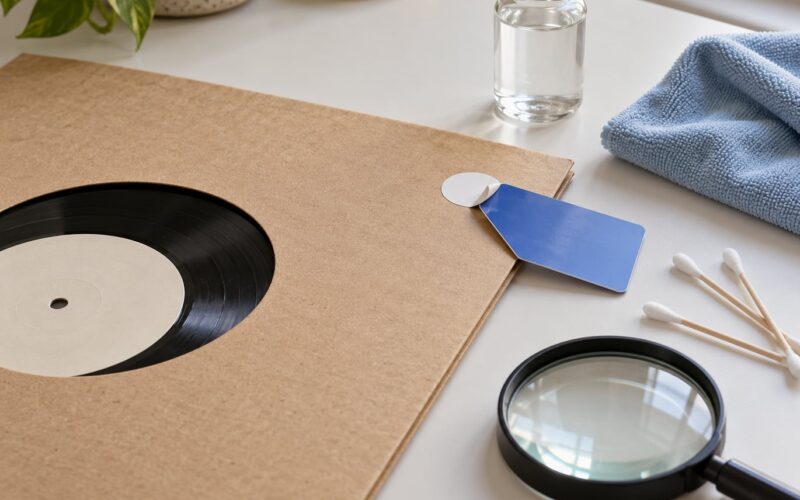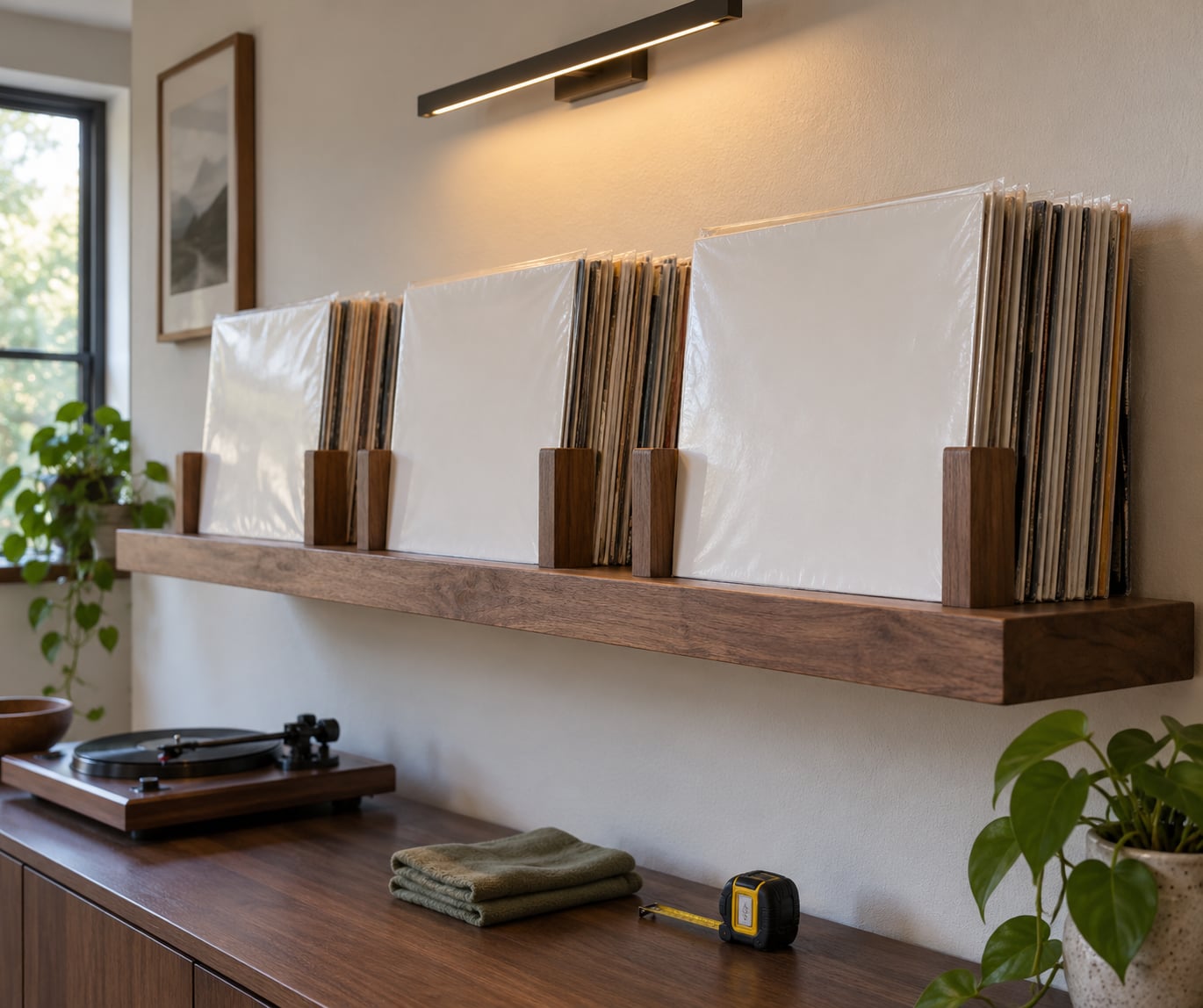
Knowing how to display records without damaging them comes down to three things: keep them out of sunlight and heat, hold the weight with shelving that was built for it, and add a sleeve between the jacket and whatever is touching it. Get those right and a wall of vinyl stays playable, flat and colourful for years.
Most damage I see comes from a display that looked fine on day one. A shelf a little too shallow, a window a little too close, a strip of adhesive that was never rated for the weight. None of it announces itself until the cover bows or a record flat-tens on the turntable.
This guide walks through seven fixes, starting with where the wall goes and ending with a maintenance routine. It takes maybe an afternoon to set up properly, and the whole thing costs less than replacing one warped pressing.
Table of Contents
- What You Need to Display Records Without Damaging Them
- Step-by-Step: Seven Ways to Display Records Without Damaging Them
- 1. Choose a cool, dry location away from sunlight and heat
- 2. Decide whether to display jackets, bare vinyl, or framed art
- 3. Use shelving and racks that carry the full album weight
- 4. Protect sleeves and jackets with an outer layer
- 5. Avoid leaning records at unsafe angles
- 6. Add lighting without exposing albums to heat
- 7. Maintain and rotate the display
- Common Mistakes That Damage Displayed Vinyl
- Frequently Asked Questions
- Is it safe to display vinyl records on the wall?
- Do Command strips damage vinyl records?
- How do I hang records on a wall without nails?
- Can you play vinyl records that are displayed?
- How do I stop album covers from bowing on a shelf?
- What is the safest way to handle a valuable record?
- What to Do First
What You Need to Display Records Without Damaging Them
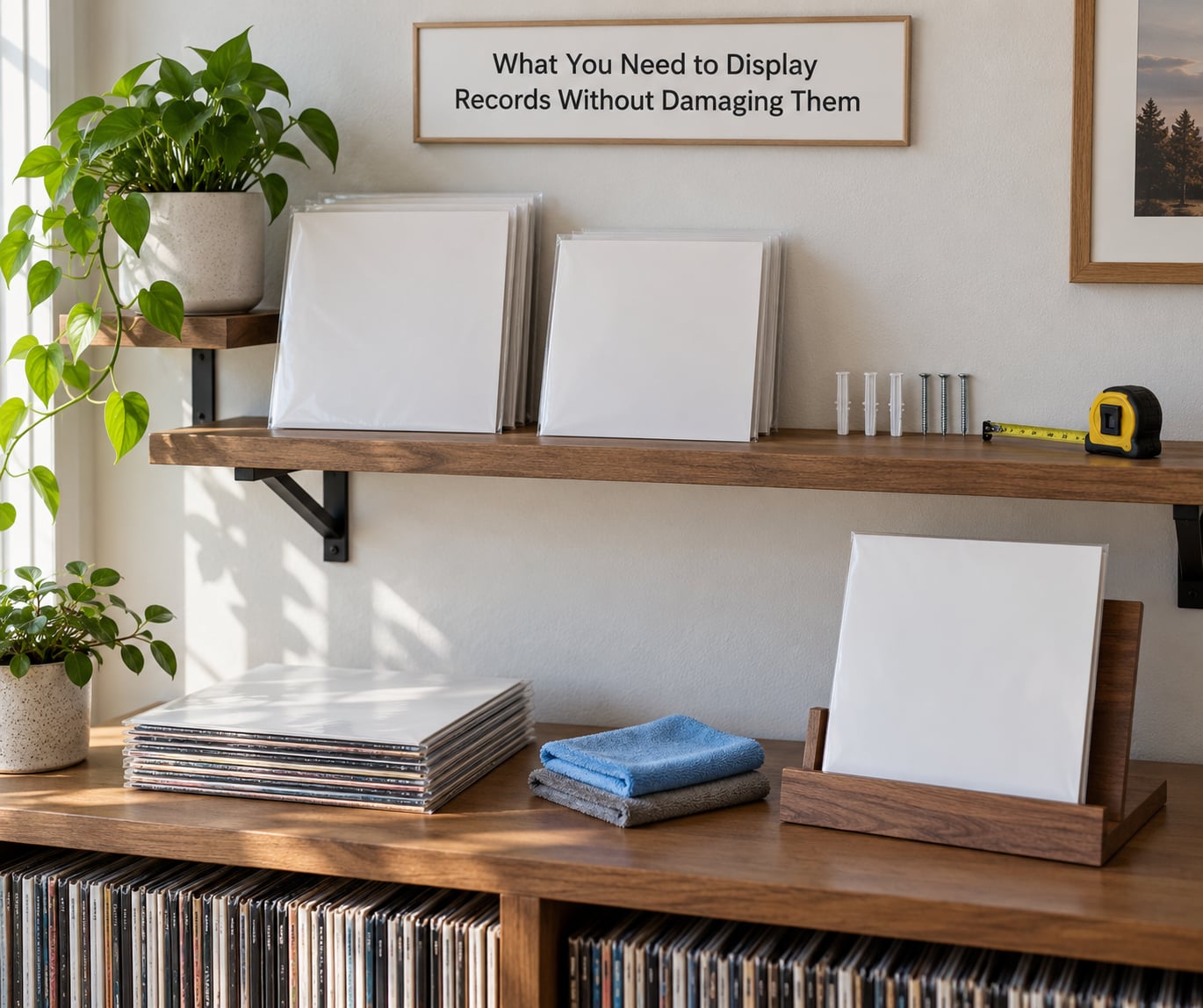
The list is short, and you probably own half of it already.
- A shelf rated for the weight. A standard 12-inch LP weighs roughly 180 to 200 grams, and a dozen of them puts close to half a kilo on one stretch of board. Solid timber, plywood or a purpose-built record crate beats a cheap MDF shelf every time.
- Dividers or bookends sized to the albums. Too loose and the row slumps into a lean, too tight and spines crack over time.
- Wall anchors that match the wall. Plasterboard needs hollow-wall anchors, masonry needs masonry screws, and anything in a rental is better served by removable adhesive or a freestanding unit.
- Outer sleeves. A thicker polythene outer sleeve is the cheapest protection upgrade in the whole hobby.
- Nitrile gloves or clean, dry hands. For anything valuable or recently handled.
- A soft cloth or a dry record brush for dusting covers without dragging grit into a seam.
Step-by-Step: Seven Ways to Display Records Without Damaging Them
1. Choose a cool, dry location away from sunlight and heat
Pick a wall that never sees direct sun, and keep it away from radiators, heating vents, fireplaces and exterior walls. Vinyl is PVC, and PVC is sensitive to heat, so a display above a radiator can bow a record in a matter of weeks.
Humidity is the quieter problem. Aim for somewhere around 45 to 50 percent relative humidity, and avoid damp basements, lofts and uninsulated external walls where condensation forms. Temperature swings matter more than a single hot day, because a cover that expands and contracts repeatedly will start to bow at the spine.
If a window is the only wall you have, a roller blind kept down during the brightest hours buys you a lot of time. Forum collectors report visible fading on sunlit covers within three to six months, which matches what I have seen on south-facing displays.
2. Decide whether to display jackets, bare vinyl, or framed art
Jackets are the safest option because the record itself never leaves its sleeve. The vinyl stays protected, the cover is what people actually look at, and the whole album can come down and be played in seconds.
Partially exposing the disc looks sharp and lets you show off a label or a coloured pressing, but only do it on a mount that supports the centre spindle. A record hanging from its outer edge by two strips is the fastest way to get a warped disc.
Framing the album art suits high-value or sun-exposed walls, because glazing blocks UV and takes the hits that would otherwise land on the cover. Downside is weight and the fact that a framed album is no longer convenient to play. If the record gets played often, display the jacket on a shelf and keep a spare copy of the art for framing.
3. Use shelving and racks that carry the full album weight
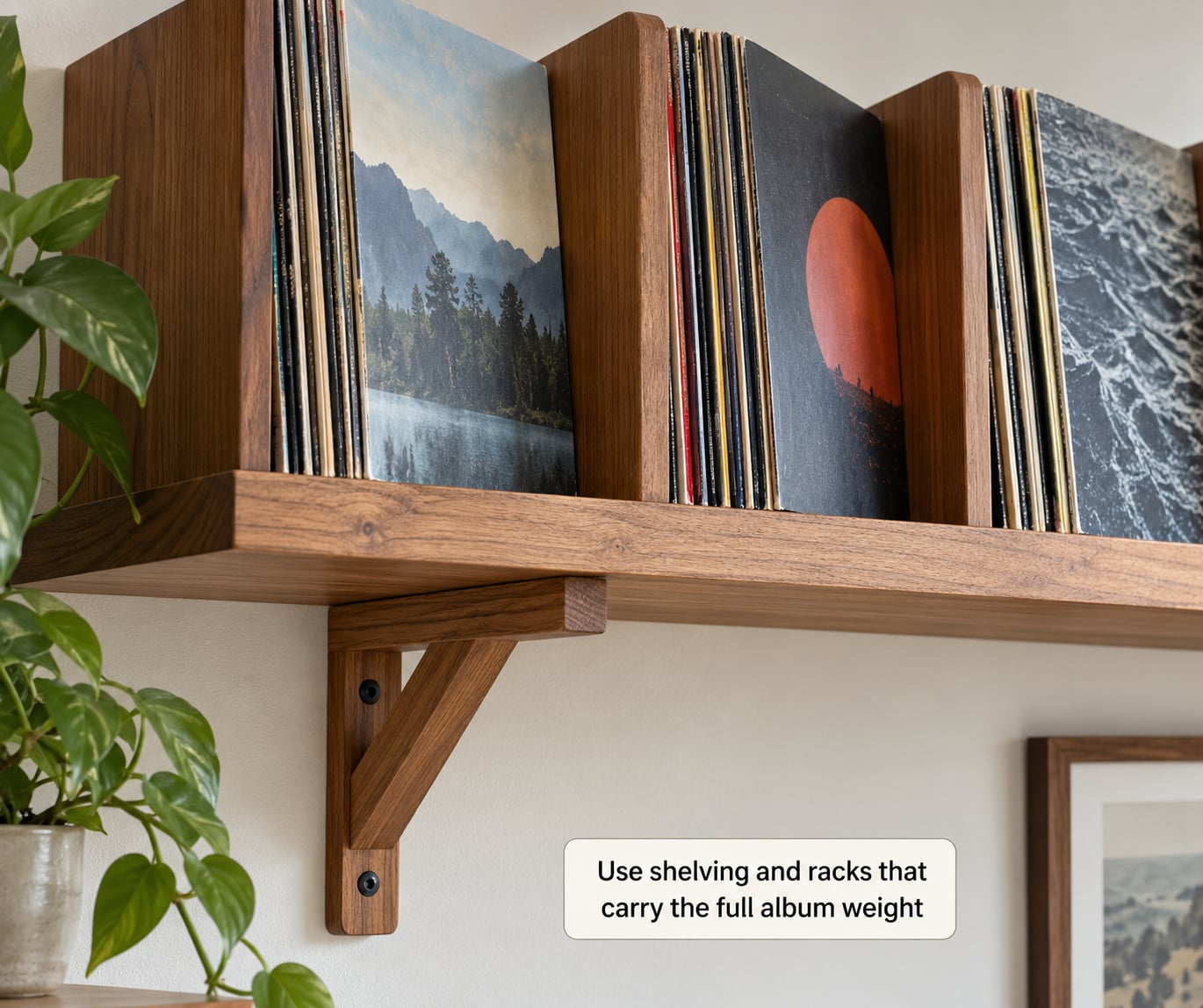
This is where most displays fail. A floating shelf that is beautiful with three picture frames will sag or drop six albums if the fixing was done into plasterboard with a small screw.
Look for a shelf with a lip at the front, a back rail, or brackets underneath, and check the stated load limit before you buy rather than after. Depth matters more than most people expect: a shelf under about 12.5 inches lets a 12-inch record overhang far enough to tip forward onto its neighbour.
Wall-mounted record crates and cabinets give you the same upright support with a back panel that stops the row leaning. Freestanding units avoid wall fixing altogether, which makes them the sensible pick for a rental. Whichever route you take, fix into a stud or use anchors rated above the loaded weight of the shelf, and check the level before you load it.
4. Protect sleeves and jackets with an outer layer
This is the single easiest part of learning how to display records without damaging them, and most people skip it. Every displayed record needs a thicker outer sleeve, and it needs one that fits the jacket without forcing it.
Polyethylene and polythene outer sleeves are the standard choice. Polypropylene is stiffer and clearer, which looks better on a wall but can crease corners on a soft jacket over time. Collectors on the r/vinyl wiki repeatedly name the Diskeeper Ultimate Outer as a benchmark for fit and thickness, and the Spincare Density polythene sleeves are the other name that comes up constantly in DIY wall-mount threads.
Fit matters. An oversized sleeve lets the jacket slide around, which is what causes bowing. A sleeve that is a few millimetres too small puts pressure on the spine and eventually splits the seam. Squeeze gently along the edges of the sealed sleeve, and if it needs real force, it is not the right one.
Wear nitrile gloves for valuable sleeves. Skin oils are the fastest route to ring wear, and once a thumbprint lands on a gloss or gatefold finish it stays there.
5. Avoid leaning records at unsafe angles
An LP is designed to sit vertical in a crate with support along its whole height. Hang it by the top two corners, rest it on a shallow ledge, or lean it at more than about 10 degrees without support, and the weight of the vinyl inside pulls on the jacket seam until the cover curves.
Keep records upright rather than fanned out, space them so each one has a full contact edge, and use dividers or bookends matched to the album depth. Floppy bookends are the usual culprit: a record only needs to lean a few degrees and start leaning faster, because gravity compounds what it starts.
One technique worth knowing: overlapping albums slightly, each one resting partly on the one below, keeps covers flatter than a gap-and-divider row. A rubber-coated paper clip is the low-tech single-album version of the same idea. Both are common answers in r/vinyl display threads.
6. Add lighting without exposing albums to heat
LED is the only lighting type I would put near a record display. It runs cool, it draws very little power over long hours, and it emits no meaningful infrared. Halogen and warm incandescent picture lights are the ones to avoid, because they throw heat at exactly the angle the albums are facing.
Position fixtures so the beam washes the wall rather than landing on a cover, and keep any housing at least a few inches clear of the vinyl. If you want the effect of a spot on a specific album, use a cool-running LED puck and check the housing spec for a maximum wattage. LED does not emit UV in any meaningful amount, so it removes the fading problem that a window creates.
Do not run a strip light inside a closed cabinet without thinking about airflow. Trapped heat inside a glass display case is a common cause of warped records in cabinets that are otherwise well built.
7. Maintain and rotate the display
A display needs a routine, otherwise small problems accumulate. Every month or two, dust the covers with a dry soft cloth, working top to bottom so grit does not fall onto albums below. Vacuum the shelf with a brush attachment held below the records, not above them.
Check dividers and brackets while you are there, and look at the spines for the beginnings of a seam split. Anything that has started to lean gets reshelved flat, and anything with a bowed cover goes back into the archive until the rest of the row is re-spaced around it.
Rotate the featured albums rather than keeping one wall frozen in 2026. A shelf of records you never move will slowly settle into whatever problem exists; a shelf you re-space every few months gets corrected before the damage sets. Keep the rarely displayed records in archival outer sleeves in a crate, and bring them out when you want to look at them.
Common Mistakes That Damage Displayed Vinyl
Hanging albums in direct sunlight. Cover art fades fastest on the reds and blues, and the fade is permanent. Fix: a roller blind, UV-filtering glazing, or moving the display to a wall with no sun path.
Trusting adhesive strips with heavy or double LPs. Strip ratings assume a clean, smooth, painted surface at room temperature. Humidity, textured plaster and dust kill adhesion long before the packaging predicts. Fix: use one strip pair per record rather than sharing, keep the load within the published rating with a margin, and never hang a 180g or 200g pressing on strips alone.
Leaning on shallow shelves. Records overhang and tip forward, which dents corners and puts pressure on the sleeve. Fix: at least 12.5 inches of depth, plus a lip or back rail.
Handling discs bare-handed, then sleeving them. Fingerprints on a gloss surface are the classic defect you notice on the turntable. Fix: clean dry hands or nitrile gloves, and handle the record by the edges and the label.
Packing a shelf tight and never returning to it. A compressed row develops seam splits and the spines get ring wear from the album next door. Fix: leave a fingertip of space and divide the shelf into sections.
Wiping covers with a damp cloth. Moisture gets into a seam and into any paper or card stock in the package. Fix: dry cloth only, and for dirty jackets a soft brush rather than a wet wipe.
Skipping outer sleeves because the jacket is new. New jackets scuff and bow fastest because nobody has protected them yet. Fix: sleeve everything on display, every time.
Forgetting the return trip. A record taken out to play and left in a stack or a crate under load will pick up a ring mark or a bow. Fix: same outer sleeve, same slot, same orientation it came from.
Frequently Asked Questions
Is it safe to display vinyl records on the wall?
Yes, as long as the wall avoids direct sun, heat and humidity, and the shelving carries the weight. Most wall displays are safe. Problems come from records hung at an angle with no centre support, shallow shelves, and displays near radiators or windows. Keep albums vertical, add an outer sleeve to every one, and check the shelf load rating before loading it.
Do Command strips damage vinyl records?
Not the records themselves, but they fail in ways that matter. The adhesive gives up on textured walls, dusty paint or humid rooms, and a record that drops takes the sleeve and the corner with it. Users report strips holding for six to twelve months before letting go, less in humid conditions. Use one pair per record, keep well under the rating, and never use them on a double LP.
How do I hang records on a wall without nails?
Two methods work well. The first is a thicker polythene outer sleeve with removable photo mounting strips on the back, which handles one standard album at a time. The second is a mount with a centre spindle, so the record is held in the middle rather than by its edge and the weight never pulls on the jacket. Test any adhesive on a hidden corner of the wall first.
Can you play vinyl records that are displayed?
If they are on a shelf or in a cabinet, yes, and that is the best argument for shelves over adhesive. Jacket displays let you pull the record, play it and return it to the same slot in seconds. Bare-disc displays need a spindle mount and a little more care, because the exposed disc picks up dust and fingerprints. Framed art is for show, not for playback.
How do I stop album covers from bowing on a shelf?
Bowing comes from weight hanging on the jacket, so the fix is support and spacing. Divider rows with a fingertip of space, or slightly overlapping albums where each rests on the next, keep covers flat. A shelf lip or back rail stops the row tipping forward. Anything already curved usually relaxes in a day or two once it is supported on both sides and left somewhere temperate.
What is the safest way to handle a valuable record?
Wash and dry your hands, or wear nitrile gloves, and work on a clean surface away from food and daylight. Lift the album by the edges with both hands, never by the spine, and pull the record halfway out before you take hold of it rather than reaching into a tight sleeve. Always return it to the same orientation it came from, with an outer sleeve in place.
What to Do First
Start with the wall, not the hardware. If you move the display away from the window and the heating vent, you have already removed the two causes that cannot be repaired later.
Then buy a shelf with real depth and a stated weight limit, fit dividers that match your albums, and sleeve everything on display. That covers most of how to display records without damaging them for a few pounds and an afternoon.
The rest is habit: gloves for the valuable stuff, a dry cloth every couple of months, and a rotation that means nothing sits untouched for years. Collectors on r/vinyl mostly describe the same result, whether they hang albums, shelve them or frame them. Where the records sit matters far less than whether anybody thought about weight, light and sleeves.