What to check before buying a used turntable comes down to four things: the physical chassis, the motor and platter, the tonearm and cartridge assembly, and the sound coming out of the outputs. Most faults on an older deck are cheap and fixable, a small number are structural and uneconomical, and the difference is usually obvious within fifteen minutes if you know where to look.
A beginner assembling a budget vinyl setup and a collector hunting a specific model are really testing the same things. The plan below takes about twenty minutes with the deck in front of you and it is worth every one of them.
Terms used throughout: the platter is the spinning surface the record sits on, and on most decks it is driven by a belt drive, an idler wheel or a direct drive motor. The tonearm carries the cartridge, which holds the stylus that reads the groove. Turntables output a tiny signal that needs a phono preamp (or phono stage) applying RIAA equalisation before it reaches an amplifier and speakers.
Table of Contents
- What You Need
- Step-by-Step
- 1. Confirm the Model and Ask for Proof of Operation
- 2. Inspect the Platter, Controls, and Connections
- 3. Examine the Tonearm, Cartridge, and Stylus
- 4. Test Speed and Wow and Flutter
- 5. Listen for Groove Noise, Skipping, and Speed Drift
- 6. Check Safety Before Plugging It In
- 7. Estimate Service and Replacement Costs
- 8. Confirm the Return and Payment Terms
- Brands That Hold Value, and Ones to Walk Away From
- Common Mistakes
- Frequently Asked Questions
- What do I need to know before buying a turntable?
- How do you inspect a used turntable?
- How do I know if a record player is good quality?
- What record players should I avoid?
- Does a used turntable need a new belt?
- Can I use a turntable without a phono preamp?
- Conclusion
What You Need
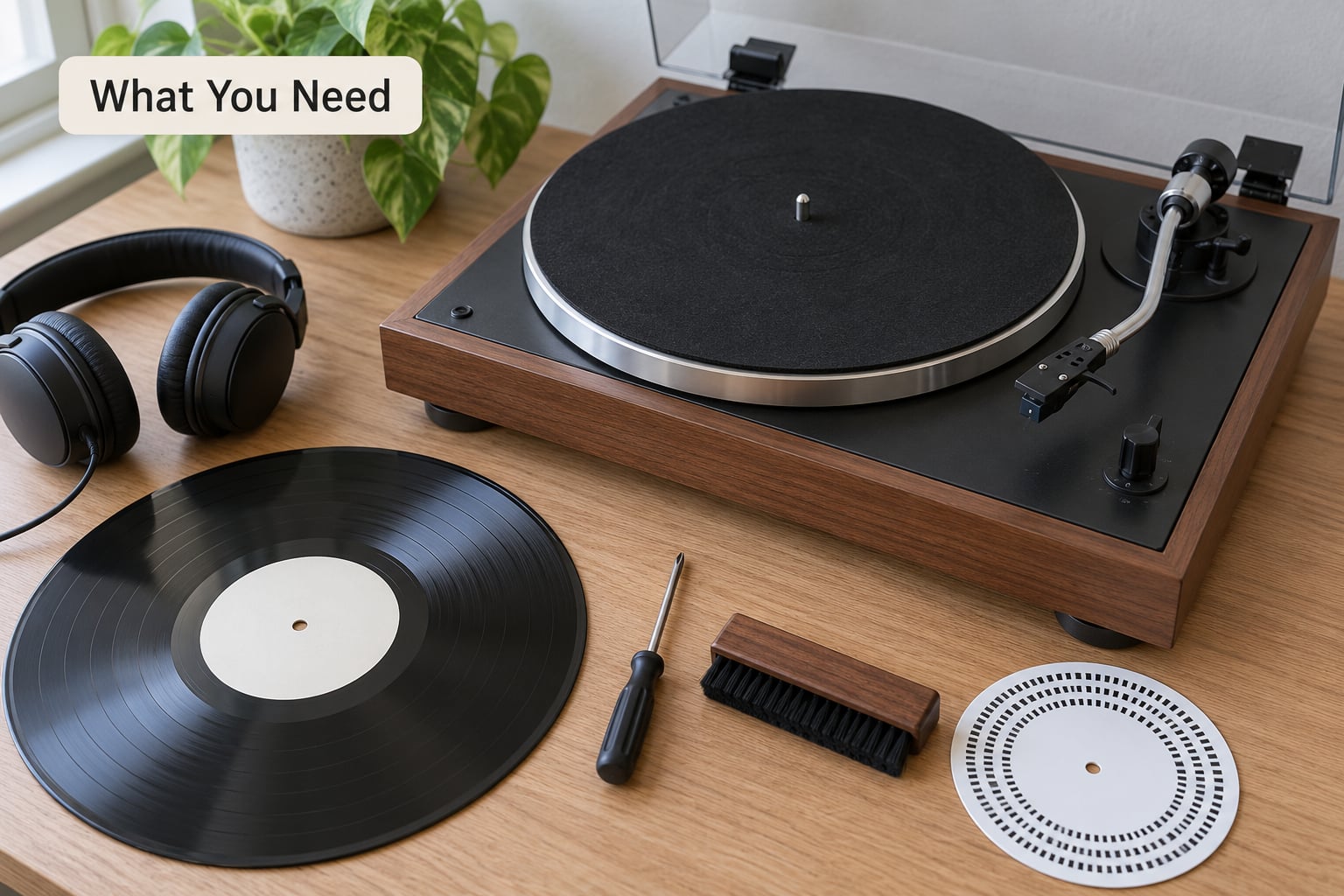
Gather these before the seller hands you the deck. Turning up unprepared is how people end up agreeing to a bad price.
- A record you know well, ideally one with quiet passages and a track you can sing along to
- A soft cleaning brush and a dry cloth for the stylus area
- A flashlight for looking into the plinth and behind the connectors
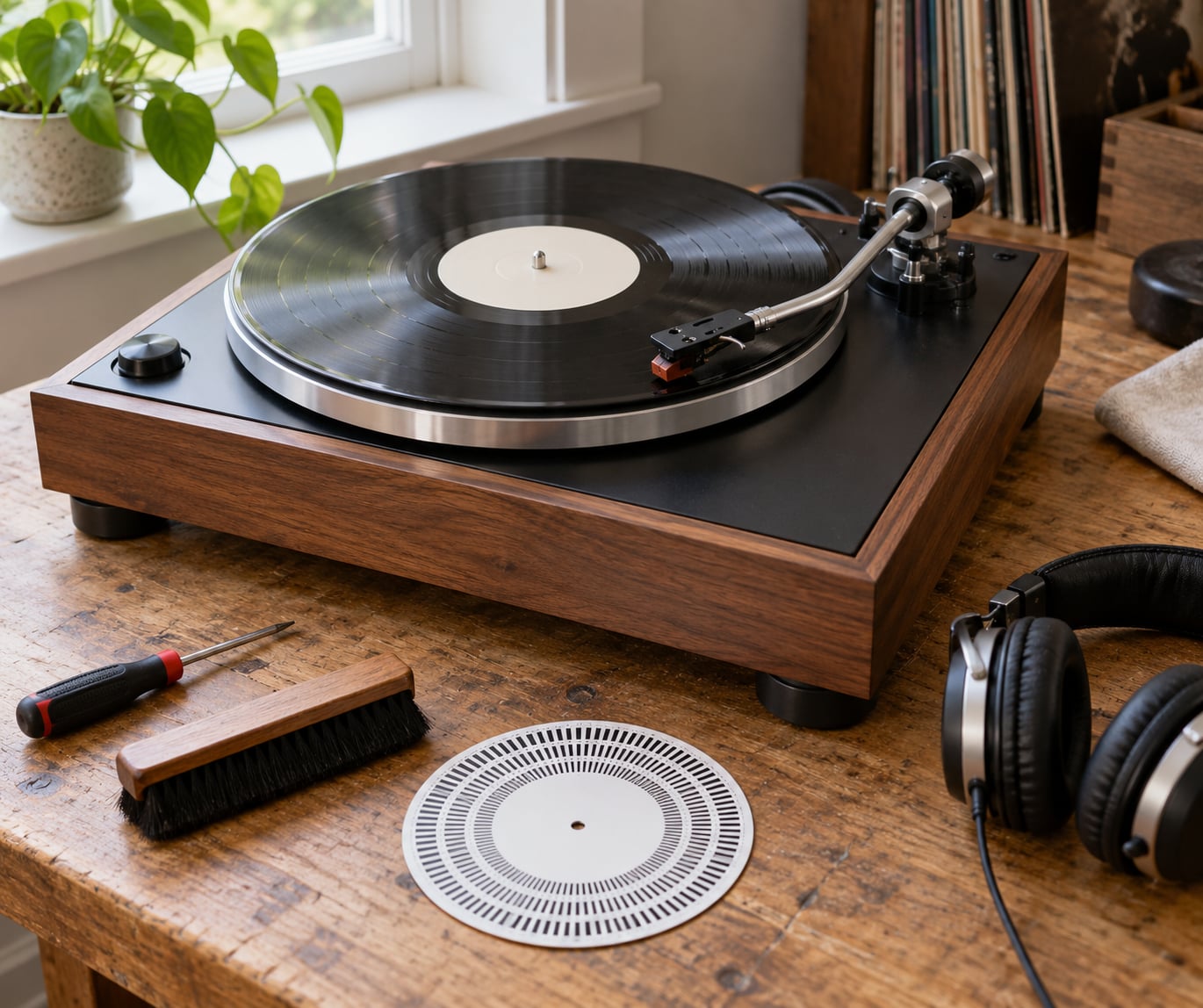
- A speed-check app on your phone, or a strobe disc if you have one
- A small flat-head screwdriver for opening the dust cover clips and checking for missing screws
- Headphones, or a system already set up nearby so you can hear the deck playing
- The listing text, the model number and the seller’s return and payment terms, on your phone
Step-by-Step
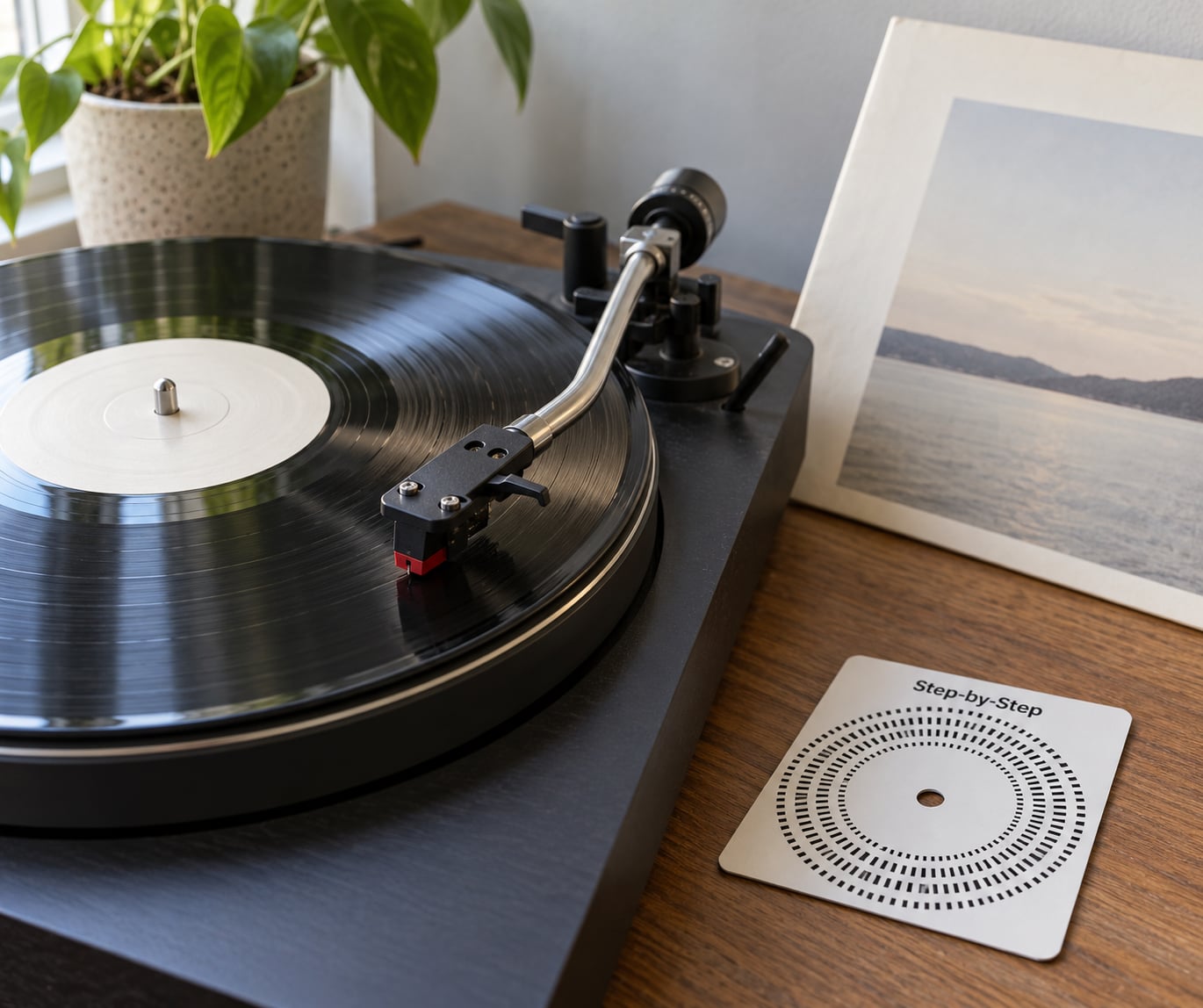
1. Confirm the Model and Ask for Proof of Operation
Start with the model number on the underside of the plinth. Without it you cannot check parts availability, and an unidentifiable deck is a walk-away no matter how cheap the asking price looks.
Ask the seller how long they owned it, how often it was used, whether it has been serviced, and whether it has been stored or left running. Buyers on Reddit’s r/vinyl and r/vintageaudio threads repeat the same advice: have the deck played a few records in front of you before any money changes hands. If you are buying without a demo, ask for an unedited video of the platter spinning with a record on it and the tonearm tracking across the whole side.
Confirm what is included. A missing dust cover, headshell, RCA cables or feet quietly lowers the value, and forum buyers treat an original cartridge that still works as worth real money.
2. Inspect the Platter, Controls, and Connections
Spin the platter by hand before switching anything on. It should coast smoothly and evenly for several seconds. A heavy grinding feeling means a dry bearing or a seized motor bearing, which is a shop job rather than a weekend job.
Look for wobble with a finger on the rim, dents or deep scratches on the platter surface, and hardened or perished rubber on the isolation feet and the mat. Press the start and stop buttons and work every switch and slider; a control that does nothing, or a start button that has to be held down, is a wiring fault. Check the tonearm rest for bent metal and the cueing lever for smooth action.
At the back, look for a loose or missing RCA jack, a frayed cable, and any sign that the deck has been opened. A screw hole with rust around it and no screw in it usually means someone had it open and did not put it back together properly.
3. Examine the Tonearm, Cartridge, and Stylus
Cue the arm slowly from rest to record and back without a record on the platter. The arm should glide rather than drop, and the gimbal bearing should hold any position you leave it in. If the arm swings wildly or slams down, the damping or the counterweight end is bent or seized.
Confirm the counterweight turns and that anti-skate is adjustable. Glide the arm across its full range and watch for the wires in the headshell catching, which means the headshell is not seated correctly or the wires are routed badly.
Check the cartridge itself. It should be firmly seated in the headshell with the mounting screws present and tight, and the pins on the back should line up with the colour markers. Look at the stylus under a flashlight with magnification if you have it: a healthy tip is a clean, symmetrical point. Jagged, flattened or visibly lopsided tips mean a replacement. Without a microscope, use your ears instead: bright treble that sizzles, a dull channel compared with the other, or skipping at a normal tracking weight all point to a worn stylus.
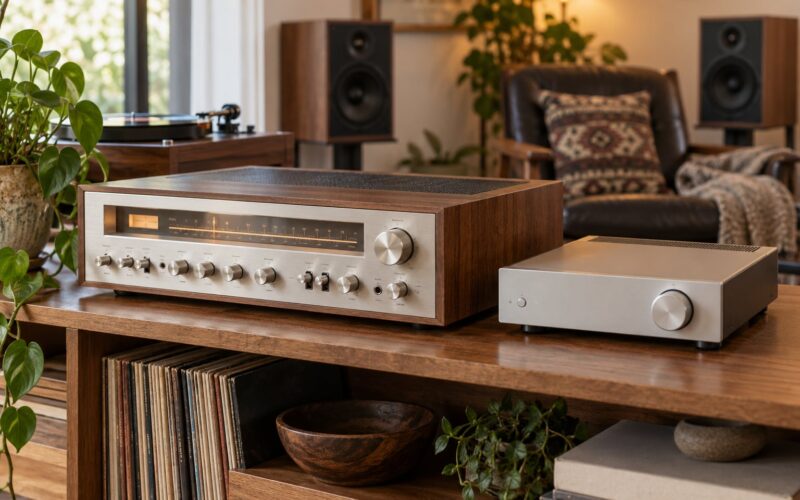
Note the cartridge type. A moving magnet cartridge works with almost any phono stage; a moving coil cartridge needs one with the matching gain and loading, and several old receivers cannot supply it.
4. Test Speed and Wow and Flutter
Put your speed-check app on the floor, away from the deck so the vibration of the platter cannot fool it, and measure the speed at 33 1/3 RPM and 45 RPM. Healthy decks sit within roughly half a percent. That is wow and flutter, the small variation in platter speed you can also hear as a warble on long held piano notes.
A consistent reading slightly fast on both speeds points to a stretched belt, which is a cheap fix. A reading that wanders up and down, or a pitch that rises over the first two minutes of a side, points to a hardening platter mat, a dried-out bearing or a motor that is on its way out.
Idler-drive decks deserve a closer look at the idler wheel, since hardened rubber there causes exactly that drifting speed. Check whether the pitch fader or strobe window has a working adjustment to trim speed back to correct.
5. Listen for Groove Noise, Skipping, and Speed Drift
Play at least two records, and play one you own. Something you know well exposes problems that a shop test disc hides.
Listen for repeated clicks in the same place on every track, scraping or grinding at the outer edge, and skips that happen on a record you have played hundreds of times. Wiggle the RCA plugs slightly while it plays. If the crackle changes or a channel drops out when you move the cable, you have found an intermittent fault, and that is a walk-away item no matter how good the deck looks.
Pay attention to the balance between channels and to any pop or thump when the arm lifts or lands. Then listen for speed drift by playing a long track and comparing the last thirty seconds with how it started. If the pitch falls as the record plays and recovers when you lift the arm, the motor or the belt is the problem. If the pitch is steady but the sound is dull and lifeless, suspect the cartridge or a missing phono stage rather than the motor.
6. Check Safety Before Plugging It In
Do this before the power goes on, not after. Look at the mains cord for cracks, exposed conductors or a missing pin, and check the power adapter for any original brick that came with the deck. Vintage electronics are frequently modified with non-original parts, and a replacement adapter for an unknown model is cheap insurance.
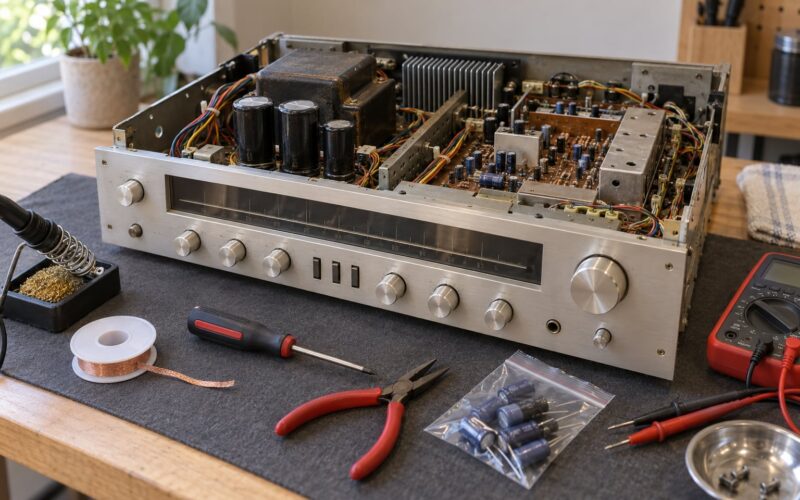
Never plug in a deck that smells of burning, has been stored in a damp garage or basement, or has water marks around the power section. If the platter stalls, the speed control sparks, or the deck smells hot during the test, switch it off at the wall and stop. A pop and thump when you energise it can mean a capacitor that has dried out, which is a repair, not a return.
This matters more than most sellers admit. Decades-old power supplies fail in ways that are unremarkable at the socket and serious behind the panel. If anything about the electrical behaviour feels wrong, unplug it and walk away.
7. Estimate Service and Replacement Costs
Do the arithmetic before you fall in love with the deck. Add up what it will need and compare that to the asking price, not to the original retail price.
- A belt and a mat are parts-level costs and a simple job on almost any belt-drive deck
- A stylus is a modest part cost on a common cartridge, but moving coil and specialist needles cost far more
- A cartridge runs from cheap to more than the deck is worth, depending on the system you pair it with
- A full service from a reputable shop is a real bill, and a recognised turnmaker will quote before starting
- RCA cables, feet, the dust cover and a headshell are trivial parts that people routinely forget to price in
Readers on theaudiophileman.com made exactly this calculation when pricing a used deck, and the thread advice was to get it serviced by a known specialist such as Michell or Salisbury HiFi and treat that as part of the deal rather than a future surprise. Some shops will quote a condition report before you commit, which is worth asking for.
If the asking price plus a realistic service is more than a comparable serviced model would cost, you are buying problems rather than a turntable.
8. Confirm the Return and Payment Terms
Before you pay, photograph everything: the serial plate, the tonearm, the cartridge, the outputs and any blemish you noticed. If the listing description says fully working and one channel is dead, you want those photographs.
Ask for a return window in writing, and check that it is long enough to cover a full listening test on a few records. Pay through a protected channel that covers goods and services rather than a transfer that cannot be reversed, and never let a seller rush you into an irreversible payment for an untested deck.
When you buy sight unseen, ask specifically what to check before buying a used turntable in return: a full-speed video, a video of both channels playing separately, a photo of the stylus under a flashlight, and the exact model number. Sellers who refuse any of those are telling you something useful.
Brands That Hold Value, and Ones to Walk Away From
Model reputation narrows the search fast. Technics decks including the SL-1200, SL-1210 and SL-D3, Rega Planar models, Michell units, Thorens and quality Garrard, Dual and Pioneer belt-drive turntables have strong parts support and enthusiast followings, which is exactly what a used buyer needs.
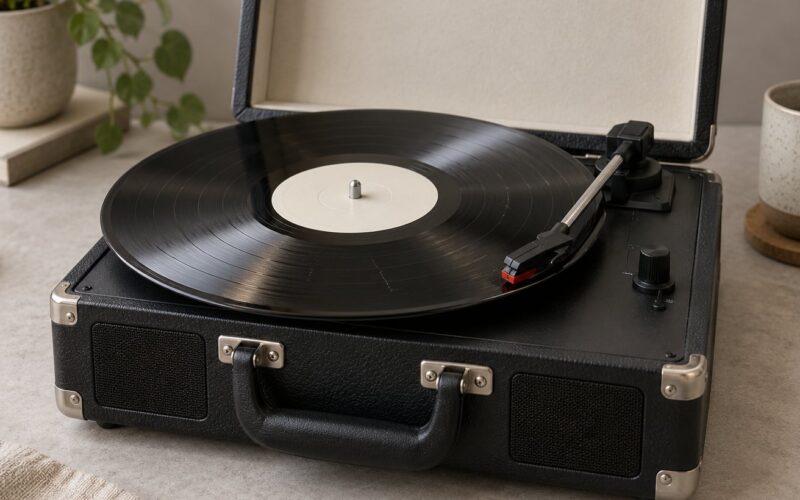
Generic 1980s Japanese decks with no badge and no documentation are the risky group, because nothing about them can be looked up later. Party players and record-player-and-speaker all-in-one units are a different category entirely, with no separate phono stage and no upgrade path. On r/vintageaudio the repeated warning is simple: judge the fit and finish and the materials, because a deck that feels rattly in your hands is usually a cheap one.
Another community heuristic worth using: pick the deck up. What HiFi forum buyers talk about weighing a deck in the hand, since a heavy plinth and a real motor usually mean decent internals, and a light one usually does not.
Common Mistakes
The most common errors fall into two groups: treating cheap normal wear as a dealbreaker, and treating cosmetic charm as proof of a working machine.
Judging by appearance alone. A clean plinth and a tidy dust cover say nothing about the motor. Sound it under load with a record you know.
Assuming the stylus is new. Many decades-old decks shipped with a diamond that lasted a few hundred hours. Treat any unknown stylus as spent until it proves otherwise.
Ignoring electrical safety. Adapters, cords and unknown internal modifications deserve the same attention as the tonearm, and a smell of hot plastic ends the inspection immediately.
Skipping the speed test. Pitch drift is invisible on a record you do not know well and obvious the moment you hear something familiar.
Forgetting the service in the price. A cheap deck that needs a full service is not cheaper than a dearer one that has just had one.
Treating age as the fault. Age alone is not a problem. Twenty years in a dry cabinet with regular use is usually better than two years in a damp attic, which is what rust on the pivot screws and hardened feet will tell you.
Not testing the connection. Intermittent faults show up only when you move the plug. Wiggle everything while the record plays.
Two habits pay off immediately. Play the record at the tracking weight the cartridge is rated for rather than cranking the counterweight up to force a worn stylus through a groove, and set the deck on a solid surface with good isolation. AudioKarma regulars report that sorbothane feet and a stable cabinet make a noticeable difference to a mediocre deck, which is a cheap improvement you can make after purchase.
Frequently Asked Questions
What do I need to know before buying a turntable?
Know the exact model number, whether it has a built-in phono preamp or needs an external one, what is included such as the cartridge, headshell and cables, and whether the parts and service for that model still exist. On a used deck also check the motor, belt or idler, tonearm and stylus condition before you agree on a price. Confirm the drive type, whether belt, idler or direct, because it tells you what wears out first.
How do you inspect a used turntable?
Work from the outside in. Check the chassis, feet and dust cover, spin the platter by hand for smooth coasting, look at the RCA jacks and cables, glide the tonearm through its full range, examine the stylus under magnification or by listening for distortion, then measure speed with a strobe or phone app. Finish by playing two records you know well and wiggling every connection while the music runs.
How do I know if a record player is good quality?
Pick it up. A deck with a heavy plinth, a solid tonearm and a metal or well-moulded chassis usually reflects a real motor and better internals than a light plastic unit. Then confirm behaviour rather than feel: smooth platter coasting, an arm that glides without dropping, speed within roughly half a percent, and clean sound with no crackle, hum or imbalance when you move the cables.
What record players should I avoid?
Walk away from unidentifiable brands with no model number, no documentation and no way to order parts. Be careful with party players and all-in-one record player and speaker units, which usually have no phono stage and no upgrade path. Avoid any deck with a bent tonearm, a grinding platter bearing, an intermittent dead channel, or a seller who refuses to test it or confirms the model.
Does a used turntable need a new belt?
Probably, and it is not a dealbreaker. Belts perish with age and stretch with use, and a stretched belt shows up as a speed reading slightly fast on every setting. On a belt-drive deck replacing it is a parts-level cost and usually a straightforward job. If the speed reads correctly and the pitch holds steady, a new belt can wait until you have taken it apart anyway.
Can I use a turntable without a phono preamp?
Not usefully. A turntable outputs a signal small enough that it needs RIAA equalisation before an amplifier can drive speakers, so you need either a deck with a built-in phono stage, a receiver or amplifier with a phono input, or a small external preamp. Plenty of vintage amplifiers lack a phono input, so check yours before buying, especially with a moving coil cartridge, which needs a stage with matching gain.
Conclusion
Start by confirming the model and asking the seller for proof that it plays. Then check the safety of the cord and adapter before you power it up, test speed accuracy with a phone app, and listen to a record you know for crackle, imbalance and drift.
If the sound is good, the arm glides and the stylus looks healthy, price in the belt, mat and any service the deck genuinely needs. That last step is what separates a sensible second-hand purchase from an expensive hobby.
Last checked for 2026. Prices and service rates move, so treat any figures you find as a starting point and get a written quote.