Why the fifties rock and roll sound disappeared is not a single story about a plane crash. It is six stories running at once: a 1959 crash that removed key architects, a payola crackdown that broke the pay-for-play system, a format change to LPs, amplifier and tape technology that made the clean thin sound obsolete, a crossover pipeline that closed, and a British Invasion that simply took the charts. The sound was transformed, not erased.
The usual answer, borrowed from a Don McLean lyric in “American Pie”, is that rock and roll died the day Buddy Holly’s plane went down. It reads well and it is mostly wrong. What died in 1959 was a business arrangement. The music itself kept going, moved to new cities, and came back stronger in versions that sounded nothing like the originals.
So let’s be precise. This is what the sound actually was, what happened to it, and what replaced it.
Table of Contents
- What Do We Mean by the Fifties Rock and Roll Sound?
- Why the Fifties Rock and Roll Sound Disappeared
- How the Record Business Changed the Music
- The jukebox single economy
- Payola and the end of the pay-for-play system
- The LP and the end of the single as the unit of value
- How Television and New Technology Reshaped the Sound
- Why the Fifties Rock and Roll Sound Disappeared: Myth or Reality?
- How Younger Musicians Expanded the Sound
- Did the 1950s Sound Survive After 1960?
- Why Do 1950s Rock and Roll Records Sound Different?
- What Should Collectors Listen To First?
- Frequently Asked Questions
- Did rock and roll die when the 1950s ended?
- Did Elvis Presley cause the fifties rock and roll sound to change?
- Why does early rock and roll music sound so raw compared with 1960s rock?
- Which genres kept the original 1950s rock and roll sound alive?
- Should rock and roll collectors start with 1950s albums or singles?
- Conclusion: Start With the Change, Not the Myth
What Do We Mean by the Fifties Rock and Roll Sound?
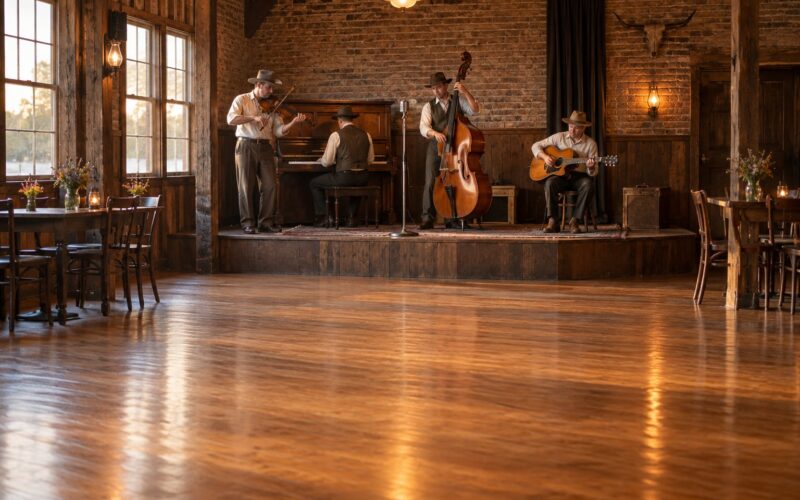
The sound people mean is narrow and specific. Think 12-bar blues structures, songs that run under three minutes, a heavy backbeat, one or two guitars, a stand-up bass, drums, and a piano or Hammond organ if there was room. Everything sits close to the microphone and nothing floats to the sides.
Vocals stayed in a comfortable range rather than reaching for notes. Guitar tone was clean and percussive rather than sustained. The whole record was mixed in mono, which forced every instrument into a single shared space. That is not a stylistic choice so much as a limit of what the recording chain could do in 1956.
It also was not the only music of the decade. Country, gospel, blues, swing, jazz, folk, doo-wop, girl-group pop and R&B all ran alongside it, and the rock and roll records everyone remembers were built almost entirely out of Black R&B, gospel and country. Sam Phillips at Sun Records in Memphis, Berry Gordy at Motown in Detroit, the Brill Building songwriters in New York and Specialty Records in Los Angeles were all part of the same production ecosystem.
Audiences on demderby.com tend to hear those regional scenes as the real article rather than the national chart, and they are not wrong to.
Why the Fifties Rock and Roll Sound Disappeared
Chart economics changed first. A 45 rpm single was a jukebox item. Labels made their money on fast turnover, so they chased songs that teenagers would buy impulsively and play twice before getting bored. That favours a two-and-a-half-minute hook and discourages anything that needs four minutes to develop.
Television then changed what a performance looked like. Camera operators got better and started following the singer instead of shooting a wide shot of five men and an amp stack. Facial expression, stage movement and a short, repeatable visual hook started to matter as much as the arrangement.
Touring economics followed the money. Once a record was established, the star went out on a bus with a small band and played two shows a night to a hall full of teenagers. There was almost no time or budget for the kind of technically demanding stage show that came later.
Generational change did the rest. The teenagers who bought the first wave of records grew up, had money of their own, and wanted music that sounded like adults behaving badly rather than like rebellion against parents.
Studio technology then made the older sound look primitive. Multi-track tape meant a band could record instruments one at a time and build a record nobody could have played live at the time. Louder amplifiers turned clean electric guitar into a choice rather than the only option available.
Songwriting shifted too. The 1950s sound relied heavily on professional songwriters writing for singers. By the mid-1960s the most interesting records came from bands writing their own material, which is a very different creative model.
None of this happened on a schedule. It is a decade-long drift, and the reason why the fifties rock and roll sound disappeared has no clean answer is that no single event did it.
How the Record Business Changed the Music
The jukebox single economy
For most of the 1950s, the format was the single and the destination was a jukebox. Labels counted on teenagers spending loose change on a song they had already heard on the radio, which meant a strong, repeatable chorus and no long instrumental passages. Songwriting and production were both aimed at that purchase.
The result was a strange period in which songwriters were often more important than performers. A record could be a hit because of a chorus, a groove, or a singer’s delivery, regardless of who wrote it.
Payola and the end of the pay-for-play system
Rhythm and blues records had been pushed onto radio by independent distributors paying stations to spin them, and by the late 1950s labels had adopted the practice at scale. When a Senate committee investigated starting in 1959, the hearings exposed the arrangement publicly, and several figures including Alan Freed faced prosecution.
The consequences went beyond individual convictions. Labels that had relied on purchased airtime found themselves on the defensive about their promotion practices, and radio stations reworked their policies. What had been an automated path for a record to reach teenagers got slower and more expensive, which pushed money toward acts with existing national audiences instead of unknown newcomers.
This is the cause most often skipped in “what killed 1950s rock and roll” accounts, and it is structural rather than romantic. It changed what a label was willing to gamble on.
The LP and the end of the single as the unit of value
The LP existed before the singles era ended, but its importance came later, when it started to matter commercially. Once an album was the thing that made money, the economics inverted. A hit single became a way to advertise a record rather than the record itself.
That rewards longer tracks, more ambitious arrangements and producer-led construction. Phil Spector’s Wall of Sound is the clearest example, layering so much onto one vocal that the song becomes a production event rather than a performance. Alan Freed’s format was never going to survive inside that business model.
How Television and New Technology Reshaped the Sound
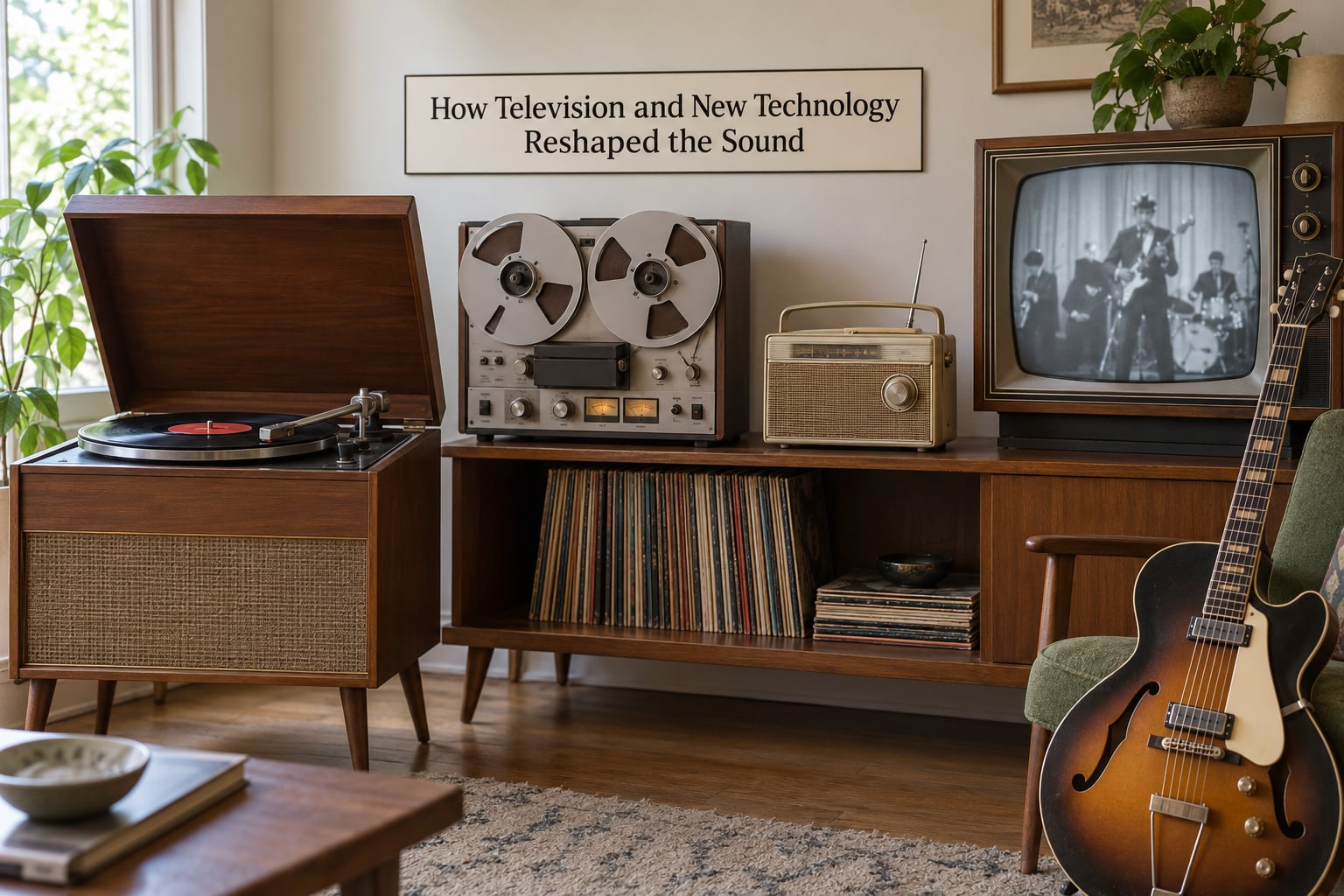
American Bandstand gave national exposure to whoever stood in the right spot, and its rhythm of live performances pushed acts toward fast, repeatable songs that could be played once and understood. Two decades later, three appearances by the Beatles on the Ed Sullivan Show produced an audience figure so large it is still the standard the show is measured against.
Consumer technology pushed the other direction. Transistor radios put music into cars and bedrooms rather than living rooms. Home hi-fi equipment made listeners care about tone and stereo separation. And the recording chain itself changed from mono to stereo to multi-track.
That last one is the quiet killer. A three-track session let a band record basic rhythm, then overdub a second vocal or a lead guitar part separately. A sixteen-track session let each instrument have its own channel. Once a record could be assembled rather than performed, the constraint that produced the 1950s sound, everything has to happen at once, simply stopped applying.
For collectors, this is the point where jukebox survival copies start to matter. A matrix run by a jukebox company plays hard on a relatively soft disc, and the wear pattern many of those copies carry is playback damage, not how the record was mastered.
Why the Fifties Rock and Roll Sound Disappeared: Myth or Reality?
Reality, with one clarification. The sound did not vanish; it lost the centre of pop and moved to the edges.
Rockabilly kept running through the 1960s in Europe and the American West Coast. Doo-wop and girl-group pop carried the close-harmony vocal approach into 1962 and beyond. Surf and hot rod records on Del-Fi and Liberty used the same instrumental vocabulary. Garage rock took the fuzz and the two-guitar lineup and pushed both further. Country, gospel and R&B never stopped, and R&B in particular kept developing on its own terms.
That is the honest version. The early sound stopped being what most teenagers bought, not what musicians were making.
How Younger Musicians Expanded the Sound
Through the 1950s the biggest records were usually made by a single singer working from material written for him. By the mid-1960s that reversed, and the reversal is the single clearest structural change in the period.
The Beatles covered Chuck Berry, Carl Perkins and Little Richard in their early years before writing their own songs, which tells you exactly how they heard their inheritance. Once they started writing, they arrived with longer structures, deliberate dynamic changes and an instrumental identity built around songwriting rather than a groove.
Bob Dylan moved a different piece of the puzzle, putting poetry and protest into popular song and opening a lane for folk rock and singer-songwriters. The Byrds put twelve-string guitar and jangling rhythm into that space. The Who and the Kinks took the volume up and made the guitar solo an event instead of a filler.
None of these groups set out to end anything. They simply had more to say than three minutes allowed, and the format got out of their way.
Did the 1950s Sound Survive After 1960?
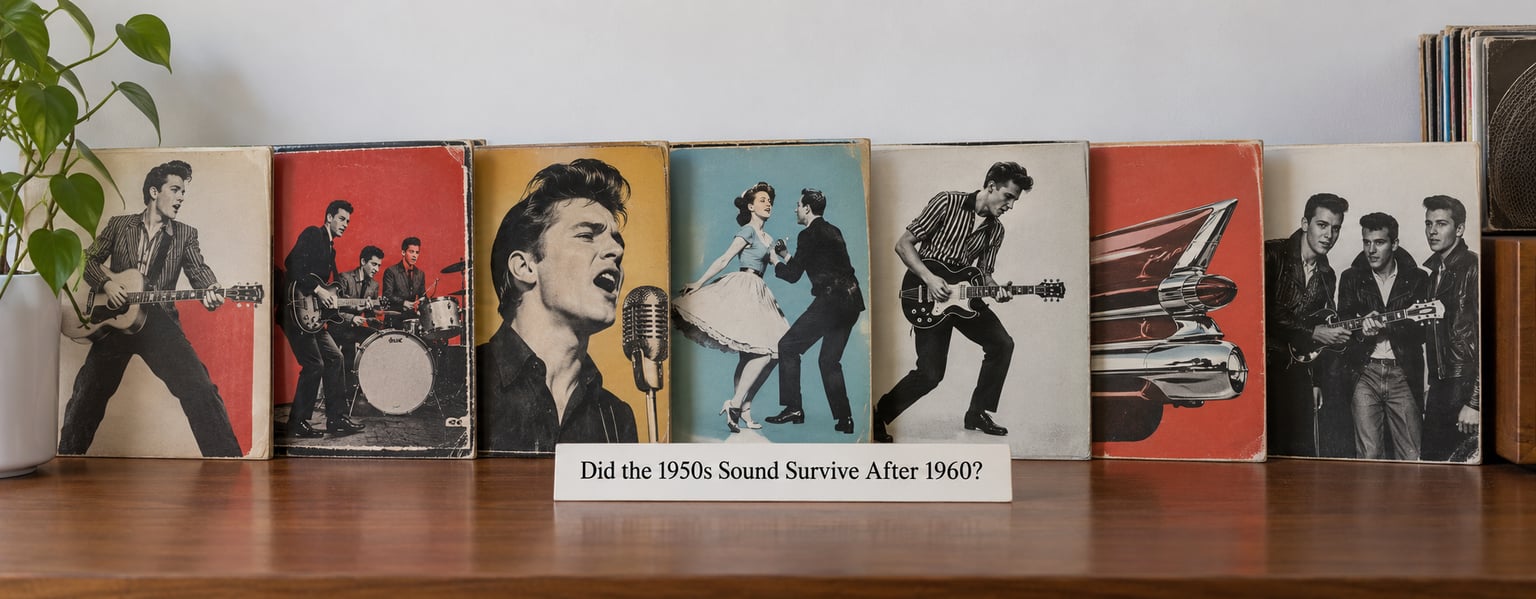
Yes, and on purpose in several cases. When people ask why the fifties rock and roll sound disappeared, they are usually asking when it stopped being mainstream. It stopped being mainstream in the early 1960s and came back as a revival in the 1970s, when rockabilly shows and neo-rockabilly bands started treating 1955 recordings as a repertoire rather than a nostalgia.
What endured was specific. The slapback vocal on the front of the record, the upright bass, the shuffle feel, the 12-bar closer, the short runtime. Guitarists kept going back to those records for phrasing and dynamics long after the distortion era arrived.
Punk and post-punk borrowed the rawness and the short songs rather than the sound itself. The roots revival of the late 1960s and 1970s went further back, into country and blues material from the 1930s and 1940s.
Psychobilly and the greaser scene later fused 1950s rockabilly with punk energy, and rockabilly festivals turned that into a live circuit with its own audience. Why the fifties rock and roll sound disappeared is therefore a slightly misleading question, because the sound currently keeps being performed and re-recorded.
Why Do 1950s Rock and Roll Records Sound Different?
Almost all of it comes down to the recording chain rather than talent or taste.
Limited instrumentation was partly budget and partly format. There was no reason to add a fifth instrument to a record that was going to be cut onto a small disc and played in a jukebox for two minutes.
Slapback echo was the standard vocal trick, created by running a second vocal back through the echo unit from a distance of a few feet. Double-tracking put the same singer on two channels at once. Both techniques were cheap ways to make a record sound bigger than it was.
Close vocal microphones are the biggest reason 1950s records feel intimate. Several instruments sat in the same mono space, which is why the mix lacks the separation that later records have.
Short runtimes meant no long instrumental passages, no suites and no extended solos.
High R&B influence shows up in the backbeat and the shuffle rather than in the chord vocabulary. These were mostly Black American musical forms that white performers were often credited with inventing, and the industry cashed in on that ambiguity for years.
| Element | 1950s | Early 1960s | Mid-1960s |
|---|---|---|---|
| Format | 45 rpm single, mono | Single plus LP, stereo emerging | LP as primary product |
| Instrumentation | One or two guitars, bass, drums, maybe keys | Full rhythm section plus lead | Layered overdubs, sometimes many |
| Song length | Under three minutes | Three to four minutes | Five minutes and longer, side two experimentation |
| Guitar tone | Clean, percussive | Clean, occasionally overdriven | Fuzz, sustained leads, deliberate distortion |
| Vocal approach | Close mic, slapback, narrow range | Double-tracked, closer to stereo centre | Multi-layered harmonies and band backing |
| Who controls it | Label, songwriter, producer | Producers gain influence | Artist or band, sometimes self-produced |
| Radio path | Pay-for-play often, jukebox exposure | Payola crackdown, playlists | Format radio, narrower slots |
One more thing worth separating: how the record was mastered versus how your copy survived. A clean original 45 does not sound thin. A copy that spent twenty years in a jukebox does, and that is damage, not period character.
What Should Collectors Listen To First?
A compact path, grouped by what you actually want to hear rather than by chart position. No single list covers the decade or its regional scenes, so treat this as a starting set.
Early rockabilly and blues-based rock and roll: Sam Phillips sessions at Sun, Carl Perkins, Johnny Cash’s Sun sides, and the Chess records by Chuck Berry and Muddy Waters.
Doo-wop and close-harmony vocal groups: The Clovers, The Drifters, The Penguins, and the Brill Building material in general.
Girl-group pop: the Brill Building productions, with the Shirelles as the obvious place to start.
Later side of the decade, where the sound starts to widen: Jerry Lee Lewis, Eddie Cochran, Gene Vincent, and Little Richard’s Specialty recordings.
Proto-rock and the roots underneath: Howlin’ Wolf, Bo Diddley and Ray Charles, because you cannot hear what happened in the 1960s without hearing where it came from.
If your interest is the sound rather than the rarities, start with mono pressings and clean copies, and be skeptical of any 1950s record that sounds genuinely damaged without a story to explain it.
Frequently Asked Questions
Did rock and roll die when the 1950s ended?
No. The early sound stopped being what teenagers bought most often, but the music never stopped being made. Rockabilly, doo-wop, girl-group pop, surf and garage rock all kept using the same structures, instrumentation and vocal approach into the 1960s and beyond. What ended in the 1950s was a business model, not a style.
Did Elvis Presley cause the fifties rock and roll sound to change?
No single artist did that. Presley’s early Sun records defined the sound and his military service in 1958 to 1960 removed him from the market at a critical moment, but the same period also produced Little Richard, Jerry Lee Lewis and the first Sun and Chess releases. The change came from industry economics and technology rather than one career.
Why does early rock and roll music sound so raw compared with 1960s rock?
Mono recording, limited instrumentation and close microphones account for most of it. Everything had to share one space, songs ran under three minutes, and slapback echo was the standard way to make a vocal sound larger. Once multi-track recording arrived, producers had room to separate instruments, extend songs and push volume, and the older approach started to sound limited.
Which genres kept the original 1950s rock and roll sound alive?
Rockabilly kept running in Europe and on the American West Coast, and it powered the neo-rockabilly revival of the 1970s. Doo-wop and girl-group pop carried the close-harmony vocal style forward, surf and hot rod records kept the instrumental palette, and garage rock pushed the same two-guitar lineup with heavier fuzz. Psychobilly later fused rockabilly with punk.
Should rock and roll collectors start with 1950s albums or singles?
Start with singles. Most of what people mean by the fifties sound was designed for the 45 rpm format and the two-and-a-half-minute single, so that is where the style is most concentrated. Move to LPs once you want to hear how the sound was already widening, and prioritise clean mono pressings over jukebox copies, whose wear can make a record sound thinner than it was.
Conclusion: Start With the Change, Not the Myth
The fifties sound was rebuilt rather than erased. Single-driven economics gave way to album economics, pay-for-play radio gave way to a crackdown, mono three-track sessions gave way to multi-track stereo, and songs written for singers gave way to songs written by bands.
One concrete place to start: put an original clean mono 45 of a 1957 Sun or Chess record on one side and a 1966 British Invasion record or a rockabilly revival single on the other. The gap you hear is not nostalgia. It is money, technology and politics, and once you can name those three, the myth stops making sense.