Learning how to collect music memorabilia comes down to four habits: choose a narrow focus, learn what genuine items from that niche look like, buy slowly, and write down everything. Music memorabilia is any physical object tied to a recorded or performed music event that you keep for its connection to the artist — concert tickets and stubs, tour programmes, handbills, posters, autographs, record awards, stage clothing, instruments, setlists. You can start a collection this weekend, but building one that holds up takes years of study. The rest of this guide is the process, in order.
The niche is crowded with reprints, paid-signature autographs and certificates of authenticity printed by the people selling the item. That is why most beginner guides skip the boring middle of collecting and jump to valuation. What actually protects your money is knowing what an item is, where it came from and what condition it was in on the day you got it.
Table of Contents
- What You Need
- How to Collect Music Memorabilia Step by Step
- 1. Choose a Collecting Focus
- 2. Set a Budget and Buying Rules
- 3. Find Music Memorabilia
- 3b. Getting Autographs at Live Shows
- 4. Check Authenticity
- 5. Inspect Condition Before Buying
- 6. Document and Store Each Piece
- 7. Display Without Damaging the Collection
- Common Mistakes
- Frequently Asked Questions
- What is the best way to start collecting music memorabilia?
- How can I tell whether a concert poster or album cover is authentic?
- How should I store vintage posters, tickets, and other paper memorabilia?
- Is an autograph worth buying without a certificate of authenticity?
- How do I safely display vinyl records and concert posters?
- What should I record about a music memorabilia purchase?
- Conclusion
What You Need
You can start with almost nothing, but a short list of inexpensive tools makes every later decision easier.
- Reference material. A discography or tour chronology for your chosen artist, plus two or three known auction archives where sold examples and their descriptions are visible.
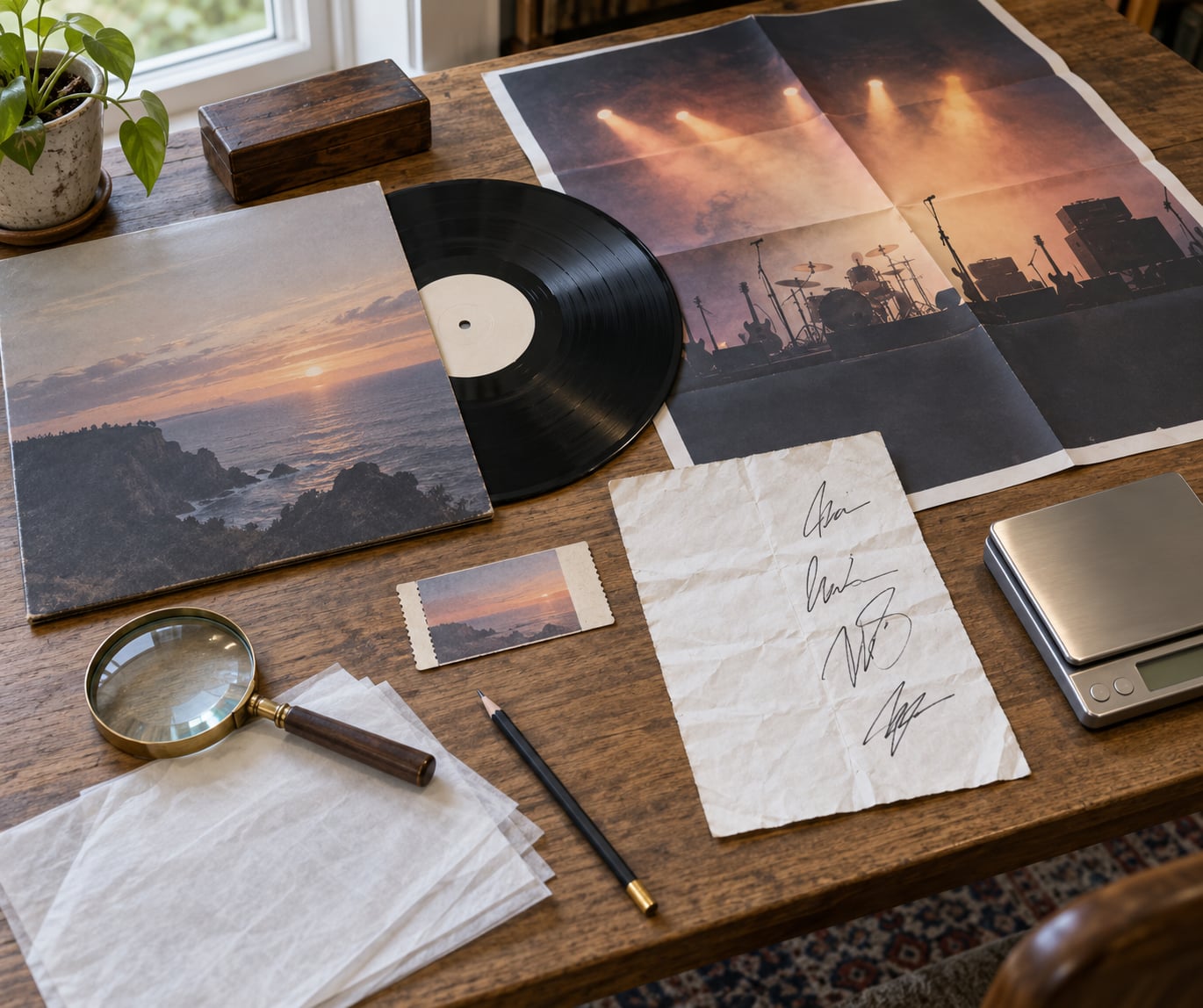
- A loupe or magnifying glass with 5x to 10x. A cheap one is fine. It is the fastest way to spot modern ink sitting on top of older paper.
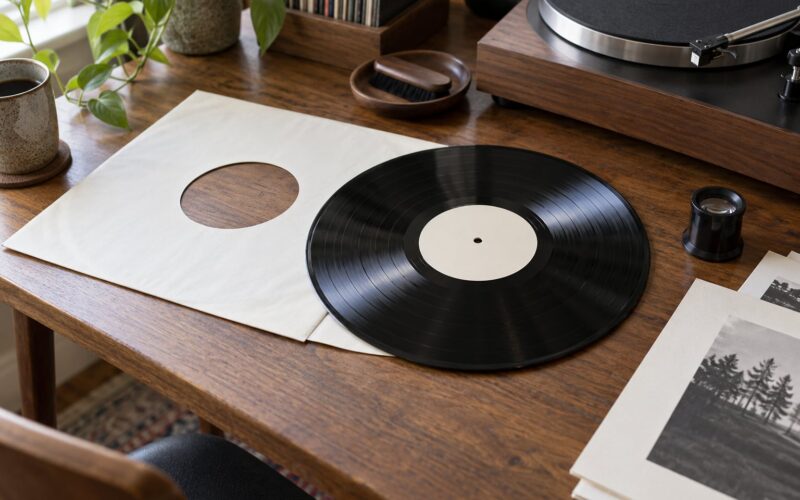
- Acid-free tissue, buffered board and clear polypropylene sleeves. Tissue for wrapping, board for backing, sleeves for tickets and programmes. Never use anything you would use to store a bank statement.
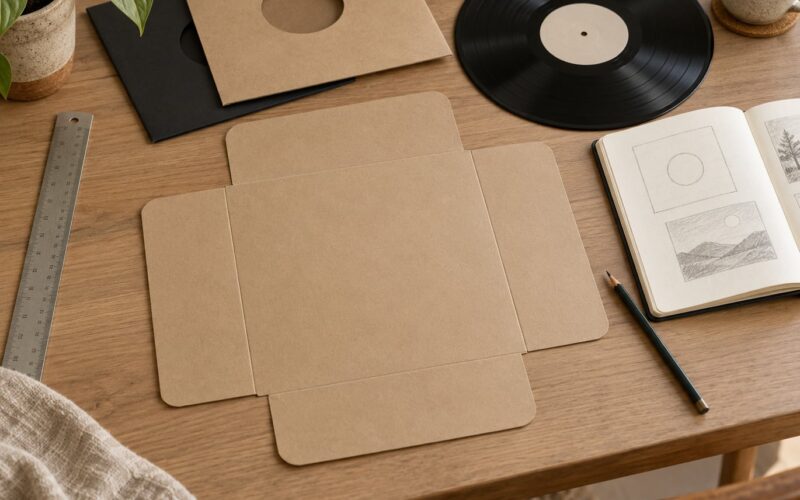
- A soft pencil, a ruler and a small weighing scale. Dimensions and weight are evidence. A poster at the wrong size is the single most common giveaway.
- Nitrile gloves. Only for handling anything signed, inky or fragile. For ordinary tickets, clean dry hands are kinder to the paper.
- A spreadsheet and a camera. One row per item: artist, tour, date, venue, source, cost, condition, evidence. One photo set per purchase, taken the day you buy.
- A UV-filtering frame for anything you intend to hang rather than file.
How to Collect Music Memorabilia Step by Step
The following seven steps are the whole process. Most collectors who rush are skipping step four.
1. Choose a Collecting Focus
Decide what the collection is about before you spend anything. Narrow focus makes everything afterwards easier: learning faster, buying cheaper because you know the market, and storing sensibly because the volume stays low. Good entry points are a single artist, a genre and era such as 1976-era UK punk 7-inches, a tour, a venue, or one object type such as tour handbills.
My rule is that a collection should be describable in one sentence. “Beatles mono stereos from 1966” passes. “Music stuff” does not. If you cannot write the sentence, keep narrowing.
2. Set a Budget and Buying Rules
Write down a monthly ceiling and stick to it. Collecting memorabilia has one great feature: the things you want most are usually the things you cannot verify, and the verifiable ones are cheap. Set three buying rules before you look at anything — for example, no item without a stated event date, no autograph without evidence of how it was signed, and nothing damaged in a way you cannot live with.
Separate must-haves from opportunistic buys. A must-have is on your written list already. An opportunistic buy is anything at a sensible level that shows up while you are looking for something else. Collectors who blow their ceiling usually did it on opportunistic buys, not on the plan.
3. Find Music Memorabilia
Sources rank very differently in practice, and the best value sits in the least glamorous places.
- Record stores and specialist dealers. Dealers who trade in ephemera usually know exactly what is in the boxes behind the counter, and they will hold an item for you. Ask what they have had recently that they could not sell.
- Estate sales and house clearances. Forum collectors consistently report their best finds here rather than from dealers. Go early, go with a small budget, and know that album-cover board can be worth more than a poster.
- Flea markets and record fairs. Cheap paper ephemera — handbills, ticket stubs, fan club inserts — turns up constantly here.
- Online marketplaces. Huge choice, zero guarantee. Assume every listing is unverified until you have checked it yourself.
- Auction houses. The only route to documented, catalogued examples, with descriptions and condition reports you can read before bidding.
- Shows and venues. Bands often sell or hand out their own posters, programmes and setlists. Ask the merch table whether they keep the leftovers.
- Collector communities. Forums and trading groups are where trades and local advice happen. Search for your artist plus memorabilia rather than a generic group.
Before you buy, collect evidence: clear photos of both sides, the seller’s own description of condition, any paperwork, and the event date. If the seller cannot name the date, venue and city, that is not a small gap. It is the item’s entire story.
3b. Getting Autographs at Live Shows
Buying signed items is one route; getting them is cheaper and better, but it has etiquette. Bring a good item to sign — a sleeve, a programme, a setlist — never a cheap single. Ask rather than shove, and accept a no without comment; artists have a hard day and a queue of people behind you. Some acts sign everything, some sign nothing, and some do paid signings where every item is pre-produced, which is why paid signings are treated with suspicion in collector circles.
Take a photo of the signing itself, and include the date. That photo is worth more to a future buyer than any certificate the seller could print, and it is the cheapest provenance evidence available to anyone.
4. Check Authenticity
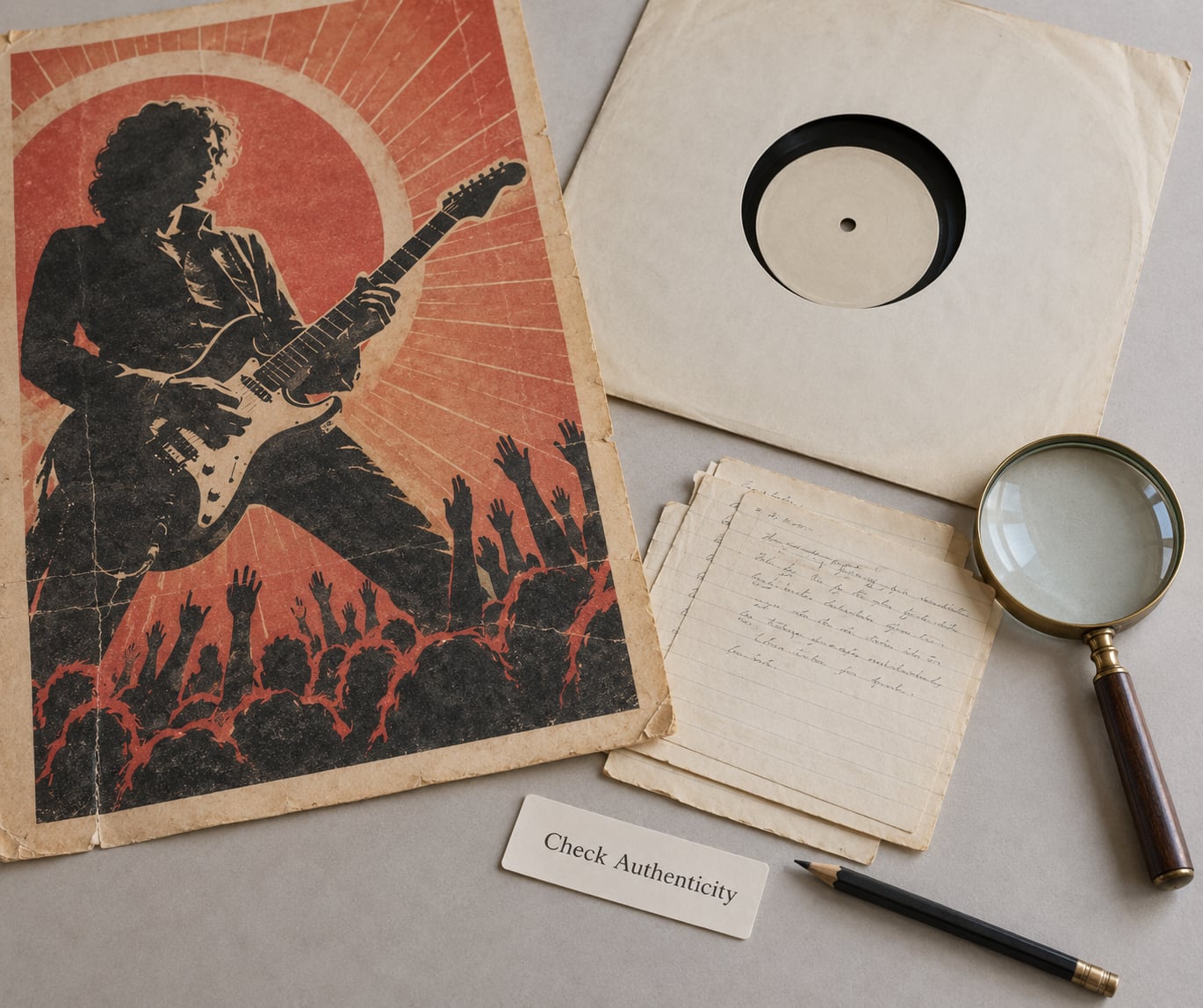
Authenticity is a checklist, not a feeling. Work through printing, paper, dimensions, dates and provenance, and stop at the first thing you cannot explain.
- Printing. Original offset, litho and screen-printed posters have ink that sits into the paper, with slight bite at the edge of solid areas. Modern digital copies look flat and identical everywhere, and often show banding in skies and gradients.
- Paper. Feel it under the loupe. Fibre, texture and age-toning should be consistent across the whole sheet. A poster printed on modern bright-white stock with old-style ink is a reprint.
- Dimensions. Compare against the original format for the era and market. A famous poster sold in the wrong size is the most commonly faked item in this niche.
- Dates and details. Venue, city, bill, tour leg, printer’s name and catalogue number must all agree with each other and with the tour chronology. A well-known band playing a venue that did not exist yet is a bad sign.
- Tickets. Check perforation style, stub separation, paper and numbering pattern against other known examples from the same promoter. Modern reprints use laser perforation that looks completely different from the torn or machine-cut edges of the period.
- Album copies. Match the sleeve to the record. Labels, matrix or runout etching, inner sleeve and booklet should all agree, and a sleeve from a later pressing sold as a first pressing is an easy and common swap.
- Autographs. Compare the signature shape, ink colour and placement against a reference of known-good examples from the same period. Treat anything signed in a suspiciously consistent ink across many items as a mass-production signing.
On certificates of authenticity: a seller-issued COA proves that a seller printed a piece of paper. Collectors on forums are blunt about this. Evidence weight runs roughly photo proof of the signing, then a witness you can contact, then a third-party authentication, then a seller-issued certificate.
5. Inspect Condition Before Buying
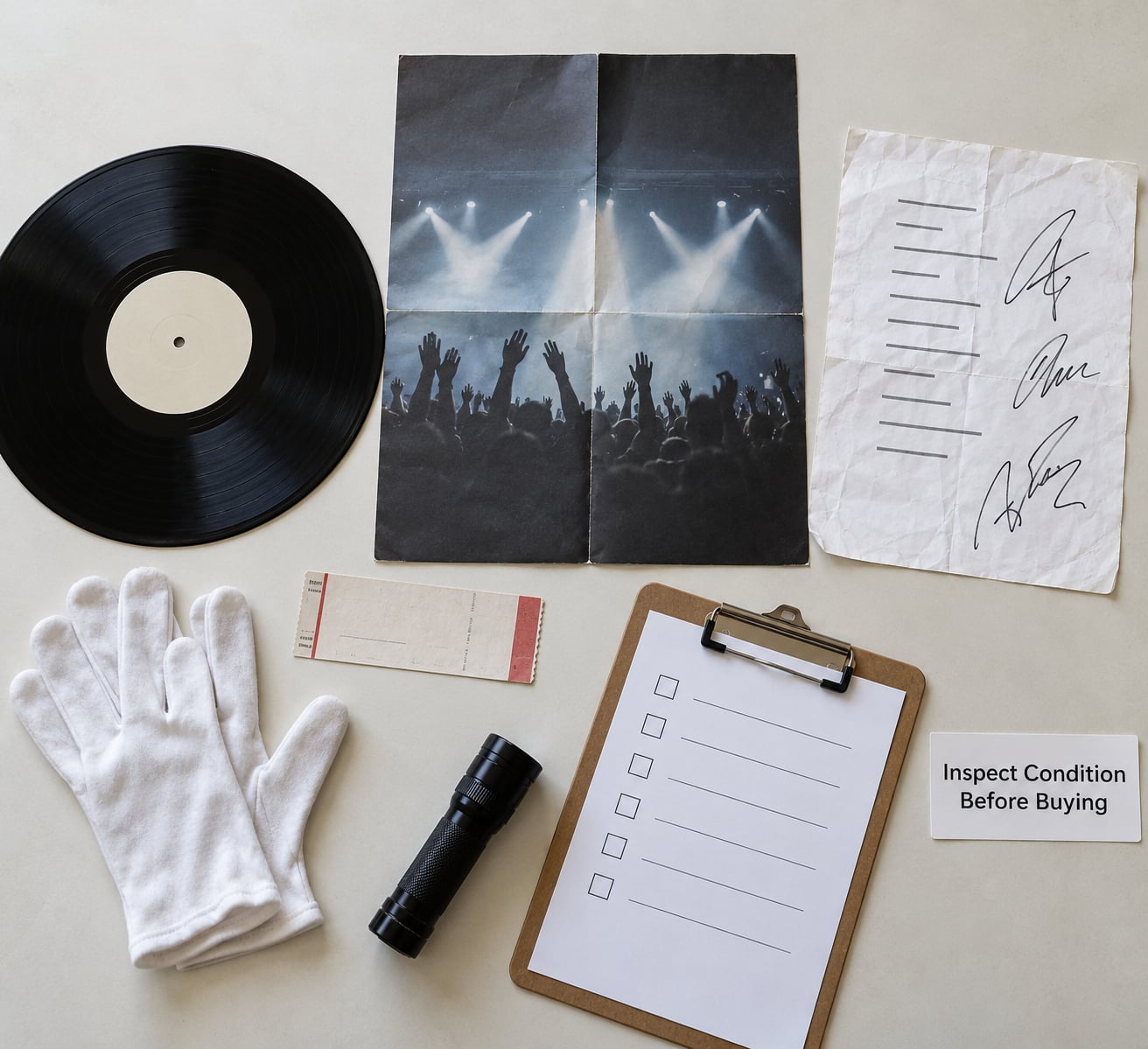
Condition drives price more than almost anything else in ephemera, and it is graded loosely. Here is a workable rubric; note that the same grade means something different for a ticket than for a poster.
| Grade | Tickets and programmes | Posters and handbills | Vinyl |
|---|---|---|---|
| Mint | Perfect, uncreased, bright ink | Unfolded, no fading or trimming | Unplayed, heavy gloss |
| Near mint | One tiny crease or nick | Light handling creases at edges | Opened, played once or twice |
| Excellent | Creased, colour still strong | Folds, some edge wear, no loss | Light surface marks, plays well |
| Good | Faded, brittle, edges soft | Trimmed edges, small tears, fading | Visible marks, some crackle |
| Fair and poor | Falling apart, illegible | Pieces, heavy damage, restoration | Warped, scratched, play faults |
Look for specific things: spine splits on programmes, fading of ink on anything signed, adhesive staining or residue where something was once taped, trimming along poster edges, retouched tears, and any sign of bleaching. A repaired poster sold as original is a common and expensive error.
Two more checks that cost nothing. Does the item smell of damp or mustiness? And has the seller fixed a flaw with tape, glue or a lacquer that makes the surface shine? Restoration is not automatically disqualifying, but undisclosed restoration is.
6. Document and Store Each Piece
Write the record on the day of purchase, while details are still fresh. Artist, tour, event date, venue, city, item type, size, source, what you paid, condition in your own words, and every piece of evidence that came with it: certificates, witness details, photos. Photograph front and back, plus any signature close up, and save those images somewhere you will not reorganise out of existence.
Store by size and handling risk. Large flat items go flat in acid-free tissue, between buffered board, in a box that will not shed acid. Small tickets and programmes go in polypropylene sleeves, upright in a shoebox or in files. Records stand upright in a snug shelf so the jackets do not take the weight of everything above them. Keep the room stable around 30-50% relative humidity and away from radiators, exterior walls and exterior light.
Anything signed should be kept away from acrylic, tape and unknown pens, and never laminated. Lamination looks tidy and permanently traps whatever acidity is in the paper.
7. Display Without Damaging the Collection
Display is where a good collection is quietly ruined, because most damage is slow and invisible until it is finished.
For posters, use archival matting with hinged corners rather than tape, UV-filtering glazing, and no direct sun on the wall. For records, show the sleeve on the wall and keep the disc in a proper outer sleeve inside the shelf, rather than framing a disc in glass where it will sit at a tilt. For tickets, programmes and small signed items, a shallow shadow-box frame with a mat opening slightly larger than the item keeps dust off and stops the item touching the glazing.
Watch the weight on any framed piece, keep framed items off external walls, and rotate what hangs in daylight. If you travel with a piece, carry it flat in a rigid document case inside a larger box so nothing bends.
Common Mistakes
These are the errors I see repeatedly, each with the fix that stops it.
- Buying a reproduction as an original. Check paper, printing, dimensions and ink under magnification before you pay. If the seller cannot state the date, venue and city, walk away.
- Ignoring condition. Grade it yourself against the rubric above, write the grade in your record, and accept that a damaged item needs to be priced as damaged.
- Paying a scarcity premium with no evidence. Rarity you cannot prove is an assumption, not a fact. Provenance beats scarcity every time.
- Trusting a seller-issued certificate. Treat it as decoration. Look for photo proof of signing, a contactable witness, or third-party authentication.
- Stacking records flat. Storage pressure warps discs and permanently creases sleeves. Store upright, snug, and never piled with anything heavy on top.
- Hanging posters in direct sunlight. Fading is cumulative and irreversible. Use UV-filtering glazing, keep pieces off sunlit walls, and rotate them.
- Failing to document provenance. A collection with no spreadsheet becomes unmanageable around the fiftieth piece and unsellable at any point after that. Record it on the day you buy, not later.
- Laminating paper ephemera. It removes value, traps acidity and cannot be undone. Use sleeves and acid-free tissue instead.
Frequently Asked Questions
What is the best way to start collecting music memorabilia?
Start with what you already love rather than what looks like an investment. Pick one artist, one era or one object type, learn the going rate for common items, and set a firm monthly ceiling before the first purchase. Most collections that hold up over time were built from things the collector already attended or already owned.
How can I tell whether a concert poster or album cover is authentic?
Check the paper and the printing first. Original offset, litho and screen-printed work shows ink bite at the edges of solid areas and a texture that feels inconsistent across the sheet, while modern copies print flat. Compare dimensions against the original format, and cross-check the event details against the tour chronology. For album copies, make sure sleeve, labels and runout etching all match.
How should I store vintage posters, tickets, and other paper memorabilia?
Keep anything larger than a sleeve flat, wrapped in acid-free tissue and backed with buffered board inside a non-acidic box. Small tickets and programmes go in clear polypropylene sleeves and should never be laminated. Aim for a stable room around 30-50% relative humidity, away from radiators and exterior walls, and out of direct sunlight.
Is an autograph worth buying without a certificate of authenticity?
Often yes, provided the evidence behind it is stronger than the certificate would have been. A seller-issued COA can be printed in minutes and proves nothing on its own. Photo proof of the signing, ideally timestamped, or a witness whose name you can contact carries far more weight. If the seller cannot name the exact date, venue and city, treat the signature as unattributed.
How do I safely display vinyl records and concert posters?
Records want vertical storage in a snug shelf so nothing rests on the bottom sleeves, and a framed sleeve is safer than a framed disc. Posters want UV-filtering glazing, an archival mat hinged at the corners rather than taped, and a wall out of direct sun. Small tickets and programmes sit best in a shallow case with a mat opening slightly larger than the item.
What should I record about a music memorabilia purchase?
At minimum: the item, artist and tour, event date, venue, source, what you paid, the condition you noted at the time, and any provenance or signing evidence that came with it. Photograph both sides the day you buy. That spreadsheet is the only thing that keeps a collection manageable once it passes fifty pieces, and it is what a future buyer will ask for first.
Conclusion
Start smaller than feels comfortable. Pick one artist or one object type, write your buying rules, and buy your first three items only from a source you can physically look at. Photograph and log each purchase on the day it happens, then learn one thing about grading or printing before your next shopping trip.
How to collect music memorabilia well is less about hunting rare pieces than about not wasting money on unverifiable ones. A focused, documented, condition-conscious collection of modest pieces beats an ambitious one built on certificates you cannot trust.