Punk show etiquette for newcomers comes down to one idea: nobody hands you a rulebook, and the crowd itself keeps things safe. If you get shoved, help the person who fell. If someone is grabbing people or starting fights, tell a staff member instead of handling it yourself. Show up curious, stay out of other people’s space, and support the band. That is genuinely the whole list.
I have been going to punk and hardcore shows for long enough that I stopped counting, and I still see someone new walk in looking like they owe the room money. That is the part I want to fix here. Nobody at a punk show is going to tell you that you are too old, too new, or too normal-looking. The person who looks most nervous is usually the one the room is warmest to.
What follows is the walkthrough I give friends before their first night: what to sort out beforehand, what to bring, how to handle the pit, and how to leave without being a jerk about it. If you only remember five things, they are at the end of this guide.
Table of Contents
- What You Need
- Step-by-Step: Punk Show Etiquette for Newcomers
- 1. Research the Venue and the Bill
- 2. Buy the Right Ticket and Plan Your Arrival
- 3. Bring Only What You Need
- 4. Enter the Room and Find a Comfortable Spot
- 5. Understand the Stage, Pit, and Reserved Boundaries
- 6. Watch, Film, and Participate Responsibly
- 7. Support the Artists Without Crossing the Line
- 8. Leave and End the Night Well
- Common Mistakes
- Frequently Asked Questions
- Do I have to mosh at a punk show?
- What does “doors at 7″ mean at a punk show?
- What should I wear to a punk show?
- What is the number one rule in a mosh pit?
- Is it weird to go alone, or to be older than the crowd?
- What do I do if someone harasses or gropes me at a show?
What You Need
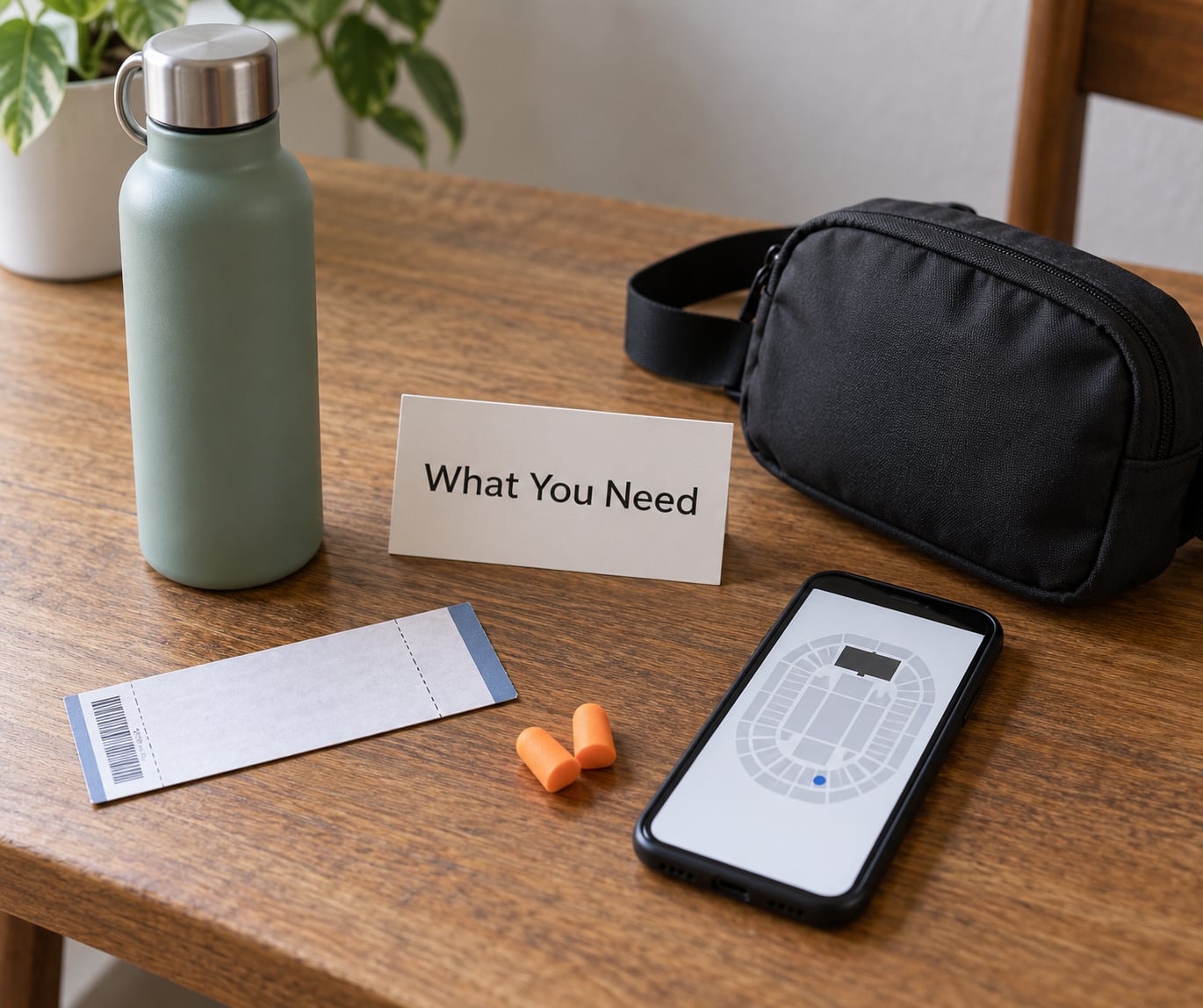
You need very little, which is one of the nicer surprises. Punk venues are usually small rooms with a bar, a sound system and a toilet, not arenas with a premium tier. The list below is what actually matters before you walk out the door.
Know the bill. Find out who is opening, when each band plays, and when the headliner goes on. A three-band local bill might start at 8pm and finish before 11pm, which is a very different evening from a touring show where a support act plays an hour after doors.
Have the right ticket. Most punk shows are general admission, meaning first come, first positioned. Some sell assigned or reserved seats, some sell a limited number of advance tickets at the door price. Buy from the venue or the band’s own channels rather than a resale site if you can.
Check the entry rules. Age limits vary more than people expect. Some rooms are strictly 21-plus, some all-ages with a parent or guardian after a certain hour. Photo ID at the door is normal, so bring it.
Pick your footwear carefully. Broken-in boots or sturdy sneakers with real ankle support. Whatever you wear, you may be standing on other people’s feet for two hours, and a pit does not care about laces.
Bring earplugs. This is the item experienced attendees mention most often and the one most newcomers skip. A small room with a loud band will leave you ringing afterward, and repeated exposure adds up. Foam plugs cost almost nothing and you will be glad to have them by the third show.
Leave the rest at home. No big bag, no glass, no loose jewelry that can catch. Check the venue’s bag policy and payment method before you go, since many small rooms are card-only at the bar and a few still do not accept cards at all.
If you have mobility needs, ask the venue in advance about accessible entry, a raised viewing platform, or a spot near a door. Every club has a side of the room that works better for standing, sitting, or getting out quickly, and staff will tell you which one if you just ask.
Step-by-Step: Punk Show Etiquette for Newcomers
1. Research the Venue and the Bill
Most small clubs post a listing somewhere online with the address, the door time, the ticket link and the age rule. Read it properly, because the door time is the single most confusing number for a newcomer.
Doors at 7 means the room opens at 7 and the first act usually plays somewhere between 7:30 and 8. It does not mean you are late at 7:30. Turning up forty-five minutes after doors gives you a decent spot and you still catch the opening act. Turning up when the headliner starts means you watch one song in the middle of a dense crowd.
While you are on that page, look for anything about bags, photography, re-entry, outside food or drinks, and what the sound curfew is in that neighborhood. Small rooms in residential neighborhoods often have to shut the amplifier off by a fixed hour, so check the running order and plan to be gone by then rather than surprised.
You will also see whether the venue runs a code of conduct or a safer-space policy. Plenty of punk rooms now do, which surprises people who assume those ideas come from somewhere else. It costs you nothing to read the policy on the way in, and it tells you exactly who the staff are and how to reach them.
2. Buy the Right Ticket and Plan Your Arrival
Buy early. Small-room punk shows sell out more often than people expect, and a sold-out room is a worse first show than a quiet one. If the advance sale is gone, check whether the band lists an official second-show date rather than hunting for resale listings.
Plan the trip like any other outing. If you are taking a train or a bus, check the last one back and add a buffer, because bands run over and nobody apologizes. If you are driving, decide where you are parking before you are in a queue you cannot leave.
Aim to arrive around doors. You get time to find the room, locate a toilet, get a drink, and settle in without shoving anyone. Arriving early is not gatekeeping, it is just arriving.
3. Bring Only What You Need
ID, a payment method, earplugs, and maybe a small zip bag for your phone and keys so everything stays together if someone bumps you. That is the load.
Keep an eye on the venue’s prohibited list. No glass almost everywhere, and often no outside drinks at all, which means the bar is your only option indoors unless the venue says otherwise. If you want to eat before the show, do it outside the building, because you generally cannot bring food into the room.
If you wear glasses, expect that they are the first casualty of a crowded night, so bring a hard case if you have one. If you are short, do not plan on being able to hold your ground in a pit. Take the edge, enjoy the view from outside, and skip the part where you get lifted off the ground.
4. Enter the Room and Find a Comfortable Spot
This is where most people’s first-show nerves come from, and most of that is imagination. In a typical room there are three zones and you can stand in any of them.
The front is loud, tight and physical, and it fills early. The middle gives you a decent view and lets you step back if you want. The rear and the sides are genuinely fine, and standing against a wall or next to a seated area is not rude, it is just a preference. You can move all night if the first spot does not work.
Whatever you pick, do not block a door or a corridor. People need to get in and out all evening, and a person standing in the flow is the fastest way to get an unwanted shoulder in their back. This is the same rule as standing aside on a busy pavement, and it works exactly the same way.
Do not push to the front. People arrive at the barrier continuously, and shoving forward is how someone gets elbowed in the face by accident. Walk along the edge of the crowd and fill in when a gap opens.
5. Understand the Stage, Pit, and Reserved Boundaries
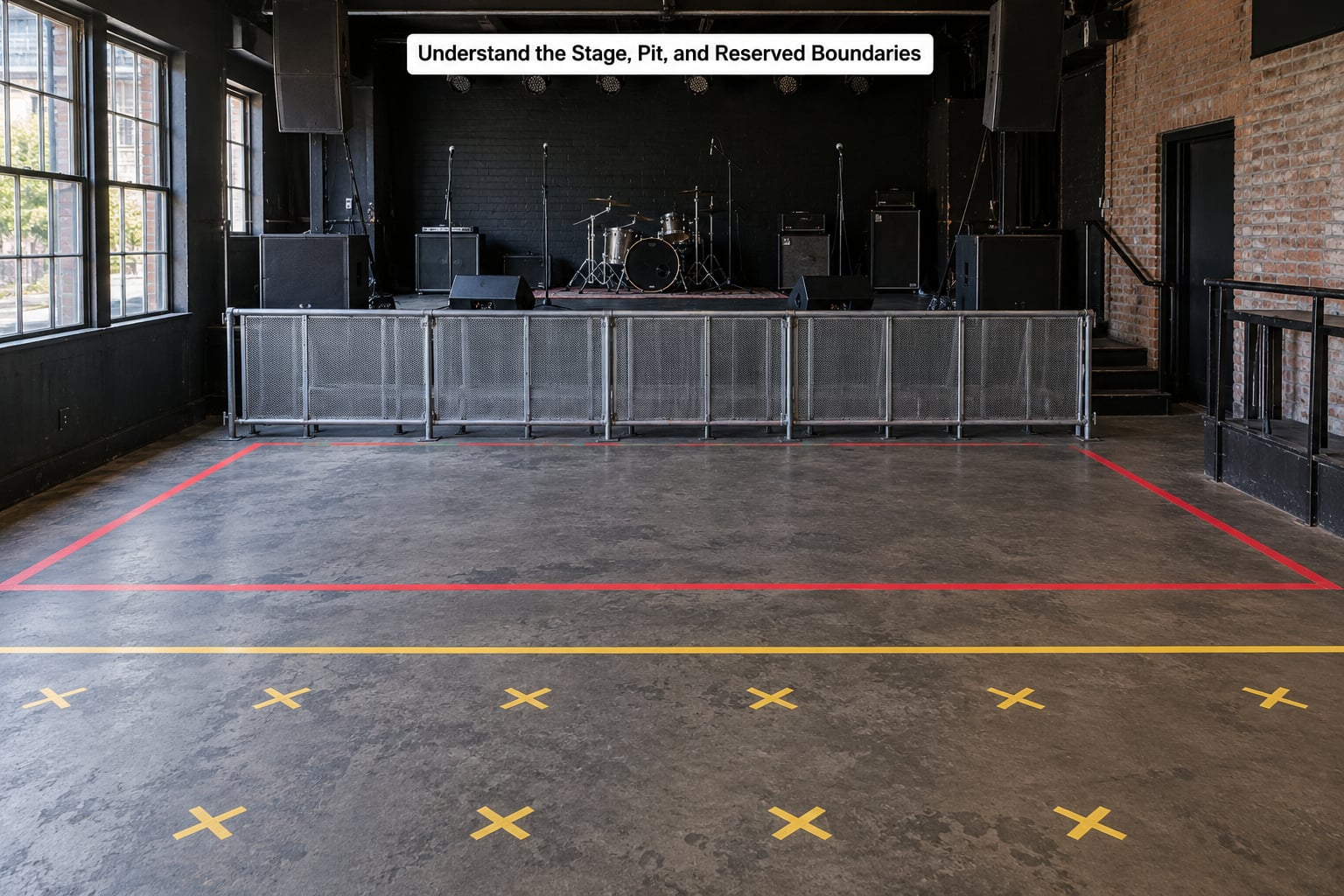
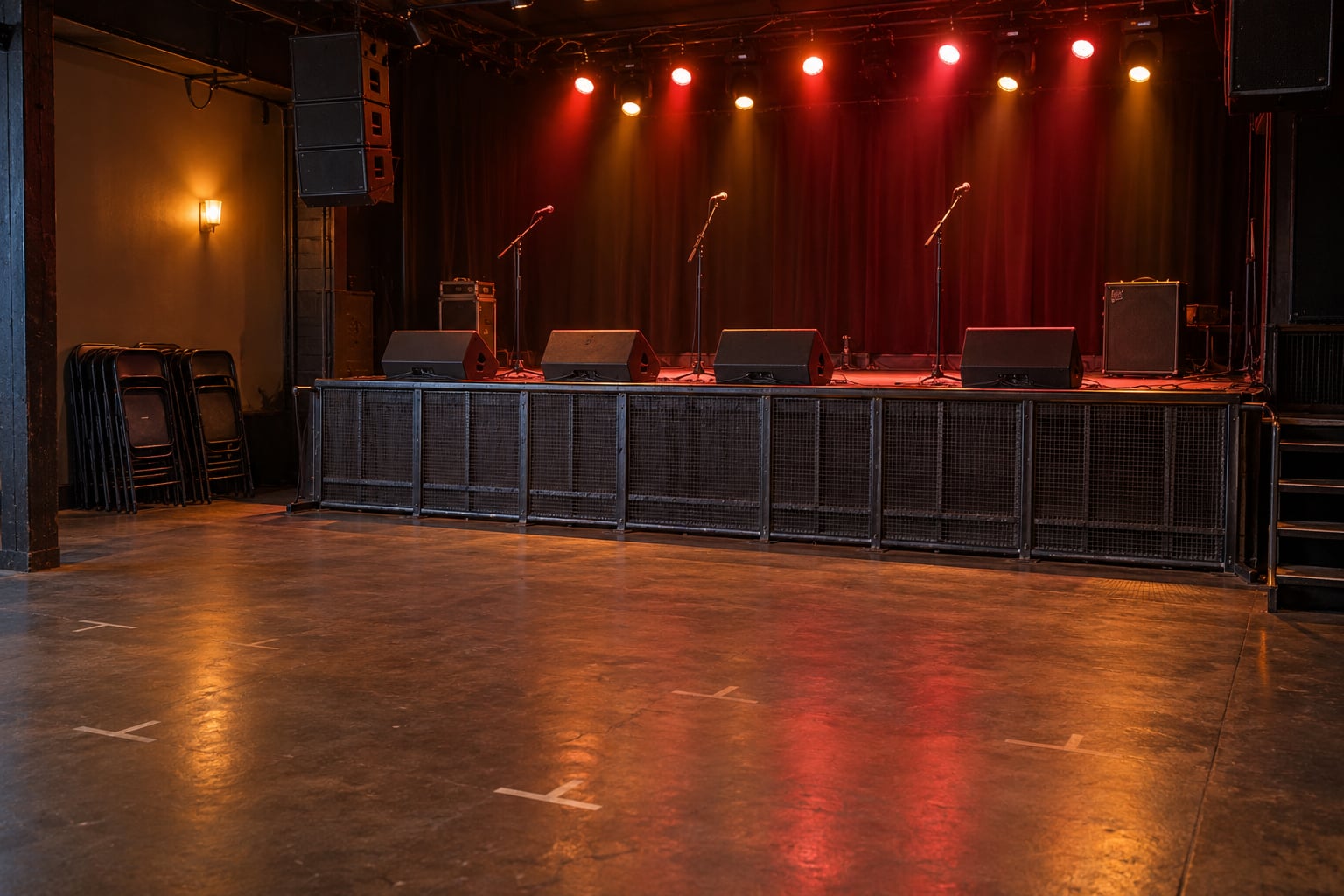
The stage is the raised area at the front and it is not a spectator zone. Nobody walks onto a stage during a set unless they are performing, and if a singer invites someone up, that is not an open invitation to the floor.
The pit is the moving circle of people in front of the stage. A traditional pit is people running into each other and clapping hands on shoulders, and it is genuinely fun. A circle pit is the same motion in an actual ring, one with a clear edge. A hardcore pit is rougher, with more shoulder checks and kicks. Power violence shows are rougher again, and if a band’s reputation is violence, watch from outside.
There may also be a barrier or a short riser at the front for safety reasons. Ask a staff member before you step past any rope, barricade or marked line. Nobody will mind the question, and it is the single fastest way to avoid the one thing that actually gets a newcomer removed from a room.
You are allowed to skip all of it. Not mashing on your first show is the standard advice from people who have done it a thousand times, and starting at the side costs you nothing.
6. Watch, Film, and Participate Responsibly
Watching is the baseline. Turn up, give the band your attention, and put the phone away unless the room has explicitly asked people to film. A small room with twelve people filming is a small room where twelve people watch a screen instead of a band.
If you do film, hold the phone low or at your side, never above your head, and never in front of someone who is trying to see. A stage selfie blocks three people and helps nobody.
If you join in, join in on your own terms and within your own body’s limits. Keep your hands open, follow your rhythm rather than someone else’s, and never grab, pull, grab at someone’s shirt, or pull them backwards into the pit. If you fall, protect your head and let people help you up. The old rule applies: you help me up, I help you up, and nobody outranks anyone else in there.
One thing worth naming because veterans get tired of it: the urge to police the entire pit on someone’s behalf. If a friend of yours is struggling, stand near them. If someone is genuinely hurting people or groping, that is a job for venue staff, not a fistfight in the crowd.
7. Support the Artists Without Crossing the Line
The support act is doing the hardest job on the bill. They are playing to a room that is still filling up and waiting for someone else, for no more money than the headliner gets. Stay for them. Talk over them at your own cost.
Merch tables usually sit by the door or the merch stall, and they open before the show and stay out after. Buying a shirt or a record is how most bands cover the cost of a tour, so it matters more here than at a show with a corporate promoter. Nobody will judge you either way. If money is tight, showing up and staying is support enough.
What crosses the line is demanding access. Asking a band to play a song they have retired, shoving a stage, begging a photo in the middle of a set, or following someone around after the show is not enthusiasm, it is an imposition, and the room will notice.
8. Leave and End the Night Well
Stay for the whole bill if you can, and leave at the end of a song or a set rather than mid-song. Slipping out during a number is the one exit everybody can see.
Read the venue’s re-entry rule before the night starts, because many small rooms stamp your wrist and let you leave and come back once, and others do not let anyone back in at all. Know which one you are at before you need it.
Check your pockets and your bag twice before you walk out. Lost keys, phones and glasses turn up on the next show’s table more often than anyone would like to admit.
Leave the neighborhood the way you found it. Say goodnight to the people you talked to, take your trash with you, and if you are drinking, take the long way home. That last one keeps you and everyone else out of a police report instead of a supportive thread.
Common Mistakes
Almost every first-show story that goes badly involves one of the same seven things. Fix these and you are ahead of most people in the room.
- Pushing to the front. Walk along the edge and fill gaps instead of forcing your way in from behind. Someone’s elbow lands where you cannot see it.
- Filming when nobody asked you to. Put the phone away or hold it low. Small rooms usually ban or discourage filming, and enforcement means someone getting asked to leave.
- Arriving after doors. You miss the support act and you get shoved into an already-formed crowd. Doors means doors.
- Ignoring the venue’s posted rules. Age limits, bag checks, sound curfew, re-entry. They are posted for a reason and staff will not explain them twice.
- Stepping past a barrier. Ask a staff member first, every time, even if the person in front of you walked straight through.
- Writing off the opening band. Half the room is still talking during the first act. Be the person who pays attention; it costs nothing.
- Taking space that belongs to someone else. Doors, aisles, the view corridor along the barrier, the seat somebody is actively sitting in.
Two more worth adding. Do not treat age as a barrier, because nobody in that room is checking your birth year, and do not treat not mashing as a failure, because a good chunk of regulars stand at the side every single night.
Frequently Asked Questions
Do I have to mosh at a punk show?
No. Mashing is optional at every show and nobody will track whether you did it. Plenty of regulars stand at the side, at the back, or near the bar for the whole night and nobody gives them a hard time. Experienced attendees usually tell newcomers to skip the pit on the first show and work up to it, because you cannot tell how rough a particular band’s pit will be until it opens.
What does “doors at 7″ mean at a punk show?
It means the room opens at 7pm and the first act usually goes on between 7:30 and 8. Arriving at doors gives you time to find the room, get a drink, and settle in without pushing anyone. Arriving forty-five minutes late means you walk into a formed crowd and miss most of the opening band, which is the part most newcomers end up wishing they had seen.
What should I wear to a punk show?
Whatever you are comfortable in. Sneakers or boots with ankle support if you expect to be near the front, and closed-toed shoes you do not mind getting stepped on. No outfit will get you turned away, commented on, or singled out, including whatever you normally wear. If you are new and unsure, plain clothes are the lowest-effort option and nobody in the room is keeping score.
What is the number one rule in a mosh pit?
Help people up. If someone falls, the people around them pick them up without being asked, and that person does the same for someone else later. It is an unwritten contract that runs both ways. The other half of the rule is that you never grab, pull someone backwards, or use a person who is down as a step. Everything else is detail.
Is it weird to go alone, or to be older than the crowd?
Neither one. Going alone is common and plenty of people do their first show solo, so it will not mark you out. Age is a non-issue too. Rooms are mixed, and people going to shows in their thirties and forties are a normal sight in most scenes. The recurring advice from people who have been going for decades is simply that nobody is going to tell a curious newcomer they should not be there.
What do I do if someone harasses or gropes me at a show?
Tell staff. Bar staff, the door person, or anyone wearing a venue badge can act on it and remove someone, which you cannot do safely or effectively yourself. Say it plainly and specifically so they know who you mean, and stay near them while it gets handled. If it is serious, venue staff can also help you get to safe transport or contact police, and you do not have to leave on your own.
If you only take one thing from this, arrive at doors, bring earplugs, and stand wherever you are comfortable watching the opening band. The rest of the night sorts itself out, and the room will look after you faster than you expect. Updated for 2026.