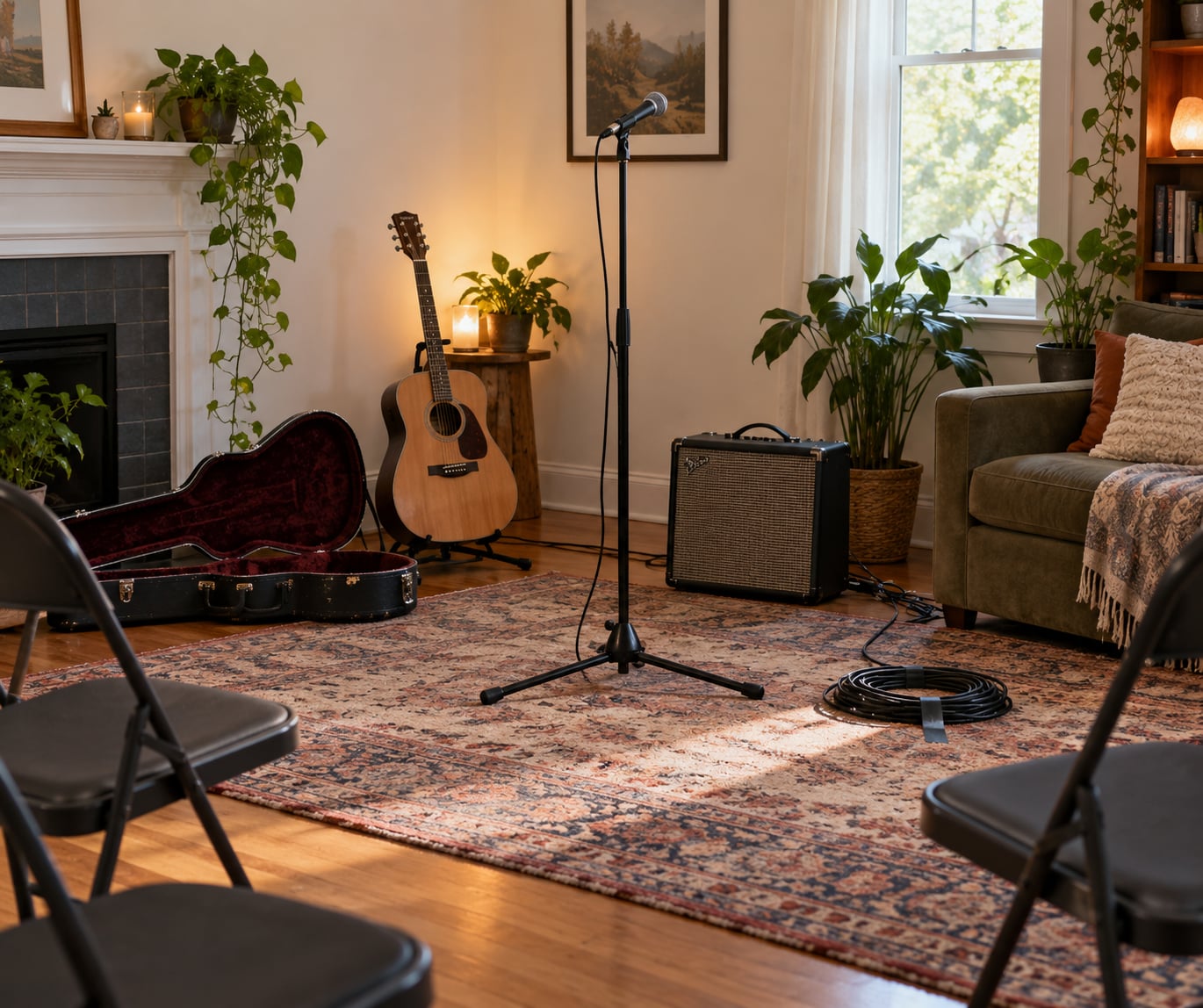
A house show is a concert played in someone’s home, garage, basement or yard instead of a rented venue, usually arranged directly between the band and a fan willing to host. It is small, informal and often all-ages, and it is the cheapest realistic way for a new band to play in front of people.
Learning how to play a house show is mostly about preparation rather than music. You pick the right host, agree on who is coming and what the rules are, bring the minimum gear that fits the room, and leave the place better than you found it. Get those four things right and your first one will probably go fine.
This guide is for solo artists and small bands who cannot fill a venue yet, plus anyone thinking about hosting one and wondering what hosting actually involves. Updated for October 2026.
Table of Contents
- What You Need
- Step-by-Step: How to Play a House Show
- 1. Choose the Right Host and Space
- 2. Set the Format, Capacity and Expectations
- 3. Build a Setlist and Rehearse the Setup
- 4. Assemble the Minimum Gear
- 5. Confirm the Show and Create a Promotion Plan
- 6. Set Up Early and Soundcheck
- 7. Perform and Run the Night Like a Professional
- 8. Close, Pay Attention and Reset the Space
- Common Mistakes
- Turning the volume up past what the building allows
- Inviting more people than the room holds
- Not being specific with the host
- Picking a room with bad acoustics
- Playing a full concert-length set
- Promoting with no call to action
- Leaving without a cleanup plan
- Ignoring the money question
- Frequently Asked Questions
- How loud can a house show be before neighbors complain?
- How much money do you make from a house show?
- Should house shows be all-ages, and what does that require?
- What gear do you need to play a house show?
- What is proper house show etiquette for the audience?
- What do you do if almost nobody shows up?
- Conclusion
What You Need
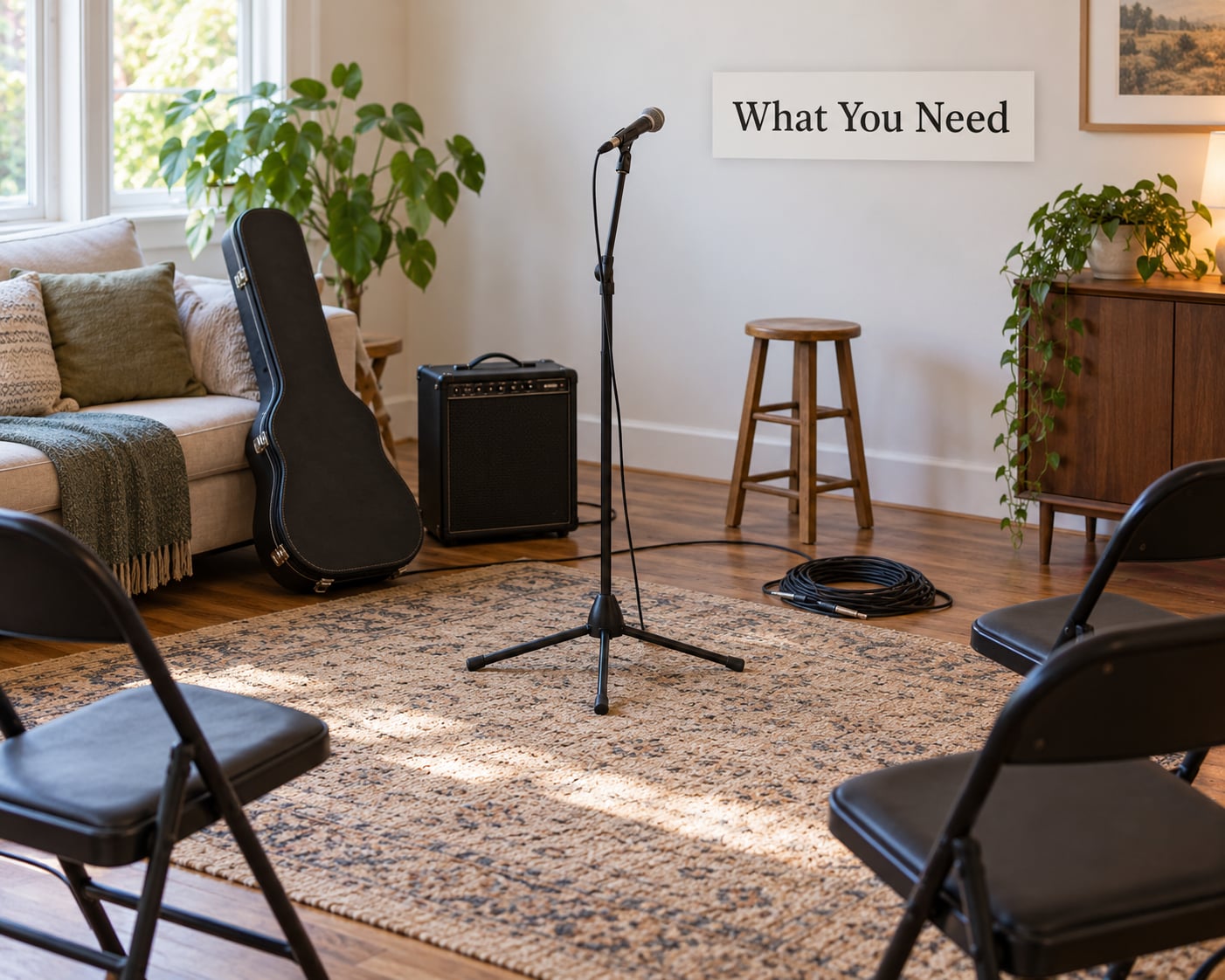
Here is the short list. Most bands that skip something on this list end up paying for it in a bad night.
- A willing host. Someone whose home you are using, who agrees to the date and can actually invite people.
- A suitable room. Enough floor space for the band plus a standing crowd, no more than one room deep.
- A realistic audience. Twenty to thirty people is a full living room. Plan for a show you can perform well in front of twelve.
- A short setlist. Thirty to forty minutes of material you have played live before, not a festival of songs you have never run through.
- Reliable amplification. Sometimes that is one vocal mic and a small speaker. Sometimes it is nothing at all if you play acoustic.
- Basic stage gear. Instrument stands, picks, spare strings, batteries, a tuner, a few cables, a power strip, gaffer tape or duct tape.
- Promotion material. One poster or social post with the date, address, time, whether it is all-ages, and a way for people to say they are coming.
- A safety and cleanup plan. A clear exit path, a guest limit you will enforce, and someone responsible for trash.
Step-by-Step: How to Play a House Show
1. Choose the Right Host and Space
Hosts come from your existing audience first. Someone who came to see you play, or streams you monthly, already likes you and already has a room. Musicians in communities like r/DIYmusic and r/DIY_Booking describe exactly this: a small streaming audience, sometimes only a few dozen monthly listeners, is a usable host list because the platform shows you where those listeners live.
Ask in a way that gives them an easy no. Mention who you are, roughly how many people you expect, that you need about three hours for soundcheck and the set, and that you will leave the room clean. If the answer is hesitant, move on.
Then check the room. You want flat floor space, a low ceiling is better than a high one, and soft furnishings help more than expensive gear. Confirm capacity out loud, and ask about neighbours, smoking, alcohol and whether anyone in the house is asleep or working early. Those five questions prevent most mid-show shutdowns.
2. Set the Format, Capacity and Expectations
Decide what the night actually is before you announce anything. A private hangout for fans and friends is the easiest to run and the hardest to promote. A small ticketed show pays for gear and gas but adds payment, age and insurance questions. A showcase for labels, press or a booker needs a clean guest list. Pick one and say so plainly.
Put the details in writing so nobody misremembers later: start and end times, your playing length, a hard guest limit, whether it is all-ages, what happens with money, and whether smoking or drinking is allowed. Bands who skip this part tend to remember it at 1am with sixty people in a small room.
3. Build a Setlist and Rehearse the Setup
Short sets work better in homes than people expect. Thirty to forty minutes of songs lands well and keeps the host happy. If you want a longer night, add a support act rather than stretching your own set.
Choose songs you know cold. Nobody wants the one you always nail at rehearsal to fall apart because the mic is close and the room is dead. Put the two or three biggest songs early, not at the end, because attention drops fast in a warm room.
Then rehearse the changeover. Practice one song stopping and starting. Decide who tunes, who talks, and how long the gap between songs should be. In a living room those transitions are what people actually notice.
4. Assemble the Minimum Gear
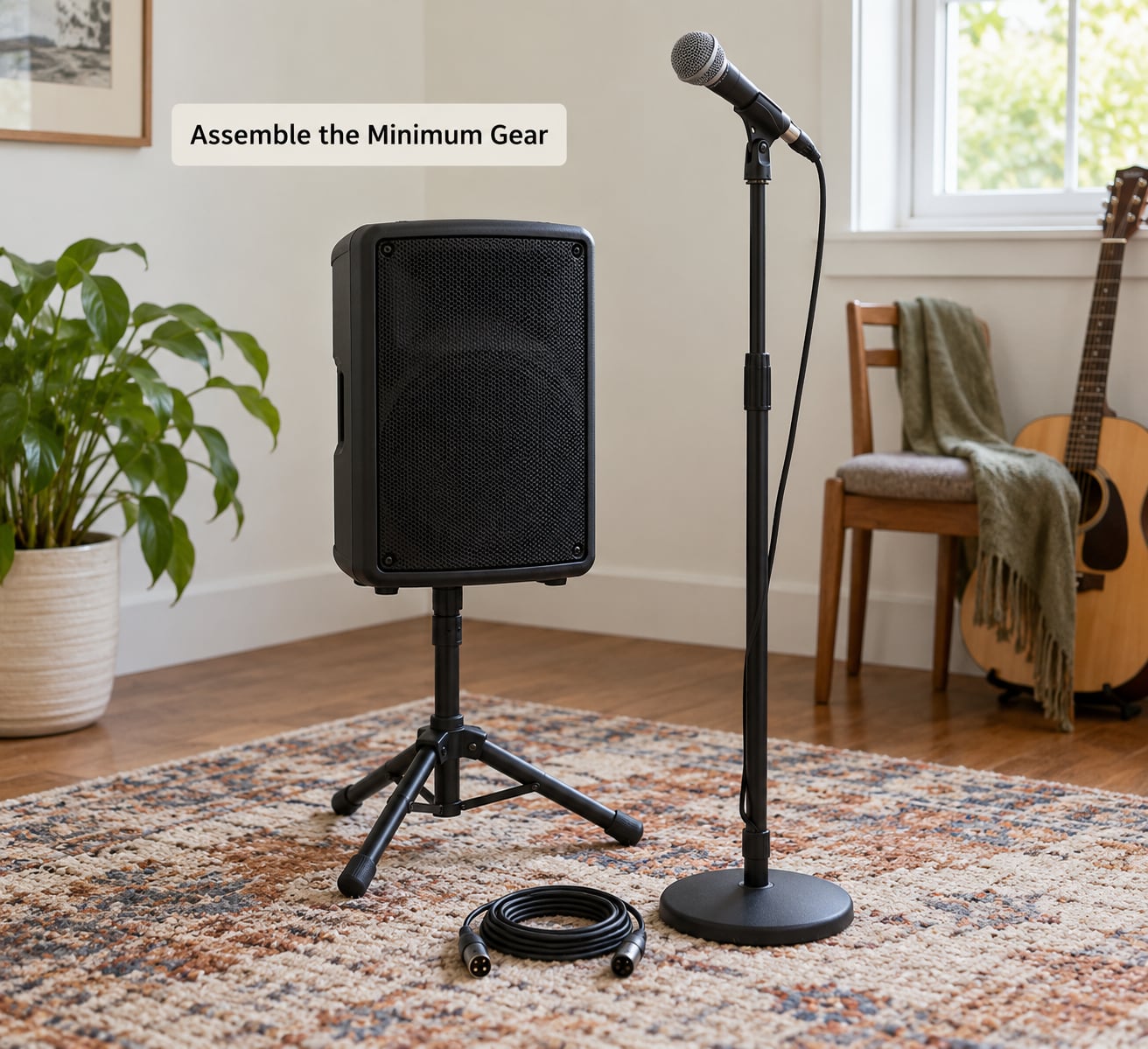
Do not drag a full rig into a 12 by 14 foot room. Sound engineers on r/livesound generally advise letting guitarists and bassists play through their own amps at small shows instead of miking or DI-ing them, which cuts channel count and load-in time dramatically. One vocal mic, one small speaker or powered speaker, and your instruments is a complete show.
Things people forget until they need them at 9pm: spare strings, a spare set of drumsticks or guitar picks, batteries for the tuner, a two-out extension cord, a multi-out power strip, gaffer tape for cables, and a cash float for the door or tip jar. A cardboard box makes a fine riser for a monitor. Water in a closed container is better than an open cup next to an amp.
5. Confirm the Show and Create a Promotion Plan
Send the final details to the host and to your guests separately. The host gets the address, arrival time and count. Guests get date, time, address, whether it is all-ages, whether there is a door charge, and what to bring. Never put a residential address in a public post; share it with people who say they are coming, in a message, the day before.
One poster or post is enough. Put a QR code on it linking to a sign-up form or a playlist so you can collect an email list from people who came. Then post it three times in the week before, on different platforms, and post again on the day itself.
A short message that works, aimed at a host rather than a promoter:
Hey, we played at the show in (town) last month and I’m putting together a short run of house shows. Would you be up for hosting in (month)? We’d need about three hours, expect somewhere around 20 to 30 people, and we’d handle gear, sound and cleanup. No cover and no door unless you want one. Can we talk details?
Ask people to confirm, not just to promise. An RSVP lets you cut the guest list the day before, which is the difference between a packed-but-safe room and a packed-and-dangerous one.
6. Set Up Early and Soundcheck
Arrive 45 to 60 minutes early. Park, unload, and get the room set before anyone else arrives, because you will not be able to move furniture with a room full of people.
Tape down every cable run. This is the single highest-return five minutes of the night. Look at the room from the audience’s spot and check for anything they could trip over, then keep that path clear all evening.
Soundcheck with the room as it will actually be, not how it will be once people fill it. A room with twelve people in it absorbs sound differently than an empty one, so set conservative levels and leave headroom. Keep the vocal mic slightly behind the speaker line, point it at the back of the room rather than the ceiling, and walk to the back before you start. If you get feedback at the first note, the fix is mic position and volume, not blaming the speakers.
7. Perform and Run the Night Like a Professional
Start on time. People who arrive late miss songs, and a set that begins twenty minutes late feels amateur to everyone except the band.
Set up a simple run of show: load-in, soundcheck, doors, support act, headline set, announcements, breakdown. Assign one person, not the whole band, to be in charge of timing, announcements and keeping an eye on capacity.
Watch the room. Keep exits clear, stop serving alcohol to anyone who is unsteady or aggressive, and if you are hosting minors make sure one sober adult is visibly in charge of them. Announce the address of the bathroom, where the first-aid kit is, and that nobody needs to drink to have a good time.
Invite people to pay attention but not to film. A band that asks for a phone-free set usually gets a better one.
8. Close, Pay Attention and Reset the Space
Plan the wrap before you go. Budget twenty minutes to breakdown and twenty for trash, and have one person own each. Bring your own bags; a host should not wake up to your show’s leftovers in their kitchen.
Check for damage before you leave and photograph the room. If something broke, say so now and offer to fix it. Fixing a scuffed table the next day buys you a dozen future shows.
Settle the money the same night, in front of everyone. If the door was a per-head charge, count it with the host and the other acts there. Agree on the split out loud before the show, so nobody is doing math at 1am in a stranger’s hallway.
Then follow up within a week: thank the host in person, send photos to everyone who came, post one good clip, and message your list about the next date. Bands that document the night get more shows than bands that just played it.
Common Mistakes
Turning the volume up past what the building allows
The fix is to plan the neighbours before you plan the set. Tell the host to warn anyone nearby, keep the bass amp off the wall shared with the next unit, and be willing to stop early. Neighbour complaints end more house shows than anything else, and the host pays for that relationship long after you leave town.
Inviting more people than the room holds
A 12 by 14 foot room holds about twenty people safely, not forty. Set the limit, ask for RSVPs, and cut the list the day before. If you expect a bigger crowd, pick a basement, garage or community room instead of a living room full of furniture.
Not being specific with the host
Every unclear detail becomes a problem at 10pm. Confirm the date, arrival time, guest count, age policy, money arrangement and cleanup expectations before anyone promotes the show.
Picking a room with bad acoustics
Low ceilings and soft furniture help. Bare hardwood, a vaulted living room and thin walls do not. Play the room empty first; if it sounds harsh, use less gain, fewer mics and a lower volume rather than more equipment.
Playing a full concert-length set
Forty minutes in a home feels long, and it is. Short sets get asked back more often, and the host still gets to enjoy their evening instead of waiting for the load-out.
Promoting with no call to action
A post that says only “we’re playing Friday” asks nothing of anyone. Ask people to confirm, and give them one specific reason to come.
Leaving without a cleanup plan
Arrive with bags and a plan. Trash, cables, breakables and the bathroom are all your responsibility, and the host will remember who cleaned up and who did not.
Ignoring the money question
Decide before the show whether there is a door, a tip jar, or nothing, and who gets it. Nothing damages a scene faster than unclear splits afterward. If you take less to keep a show happening, say that openly and people respect it.
Frequently Asked Questions
How loud can a house show be before neighbors complain?
There is no safe number, only a conversation. Tell the host to speak to anyone in adjoining units a few days ahead, keep the drums and bass off shared walls, aim sound toward the room rather than the windows, and plan to finish when neighbors are likely to be asleep. If a complaint comes in, stop immediately and shorten the night. Music at conversation volume, with one short loud moment, is far safer than a full set at stage volume.
How much money do you make from a house show?
Less than most bands expect, and that is fine. At a house show the money is usually a small per-head door charge or a tip jar, split between the acts, minus the host providing food, space and usually a spare room. A four-band bill on a small door can leave each act with less than a night of gas money. Treat the show as paying for gear and building fans, and treat merch as the real upside.
Should house shows be all-ages, and what does that require?
All-ages is the most common format because the host’s living room is a private residence, not a licensed venue. It does mean someone sober stays sober and stays responsible for the whole night, that minors have a visible adult looking out for them, and that no one is buying or serving alcohol. If there is any drinking at all, the safer choice is an adults-only night and a sober host who is not drinking either.
What gear do you need to play a house show?
Less than you think. A vocal microphone, a small powered speaker or compact PA, your instruments, a few cables, a power strip, a tuner and gaffer tape will cover most rooms. Let guitar and bass play through their own amps instead of miking them, which cuts feedback and speeds setup. Add spare strings, picks, batteries and a cardboard box for a monitor riser, and you have covered almost everything.
What is proper house show etiquette for the audience?
Arrive before the set starts, keep phones away during songs unless the band says otherwise, and stay out of the performer’s sightline. Bring something to sit on if the room has no chairs. Stay sober enough to look after yourself and anyone younger, do not block the exit, and do not touch instruments or amps without asking. Most of all, talk to the person next to you between songs rather than during them.
What do you do if almost nobody shows up?
Play the set anyway, at full volume, like the room is full. People who arrive late see a confident act mid-song rather than four people packing up. Afterwards, message everyone who said they would come and let them know what a good time it was, so the next show starts with more trust. A thin first show is normal; the second and third are where a host list grows.
Conclusion
Five things to do first, in order. Find a host from your existing listeners and ask honestly whether their room works. Agree in writing on the date, guest limit, age policy and money. Build a set of thirty to forty minutes you know cold. Pack the minimum rig that fits the room, plus spares and tape. Then confirm the details with everyone and warn the neighbours before the day arrives.
That is genuinely the whole job. The bands that keep getting asked back are not the ones with the biggest rigs; they are the ones the host never had to chase for anything. Updated for October 2026.