A small first run of 100 pressed records in the US typically lands somewhere between $1,000 and $3,000 all in. Push the order to 500 copies and you are usually looking at $2,000 to $4,500, and by 1,000 copies a straightforward black-vinyl LP with a printed jacket often comes in under $5 per copy before packaging. Here is how those numbers are built.
One warning before the numbers: what a plant advertises as a per-record rate is almost never the whole bill. It is the pressing line only. Setup, plating, test pressings, packaging, freight and tax sit on top of it, and the gap between the headline rate and your invoice is where most first-time buyers get caught out. So if you are asking how much does it cost to press vinyl records, budget for the whole invoice rather than the advertised per-copy figure. Every price below is a typical US range for 2026, and prices vary by region, plant and order size.
Table of Contents
- How Much Does It Cost to Press Vinyl Records?
- Typical US Vinyl Pressing Costs by Run Size
- What Is Included in a Vinyl Pressing Quote?
- 7-Inch, 10-Inch, and 12-Inch Pressing Costs
- Colored, Specialty, and Limited-Edition Pressings
- What Affects the Price
- Ways to Save
- Frequently Asked Questions
- What is the minimum number of vinyl records a plant will press?
- Can I buy vinyl records directly from a pressing plant?
- Why are test pressings separate from the final production run?
- Are labels, jackets, and inner sleeves included in a pressing quote?
- How much more does colored vinyl usually cost?
- What costs are missing from a cheap vinyl pressing quote?
- Bottom Line
How Much Does It Cost to Press Vinyl Records?
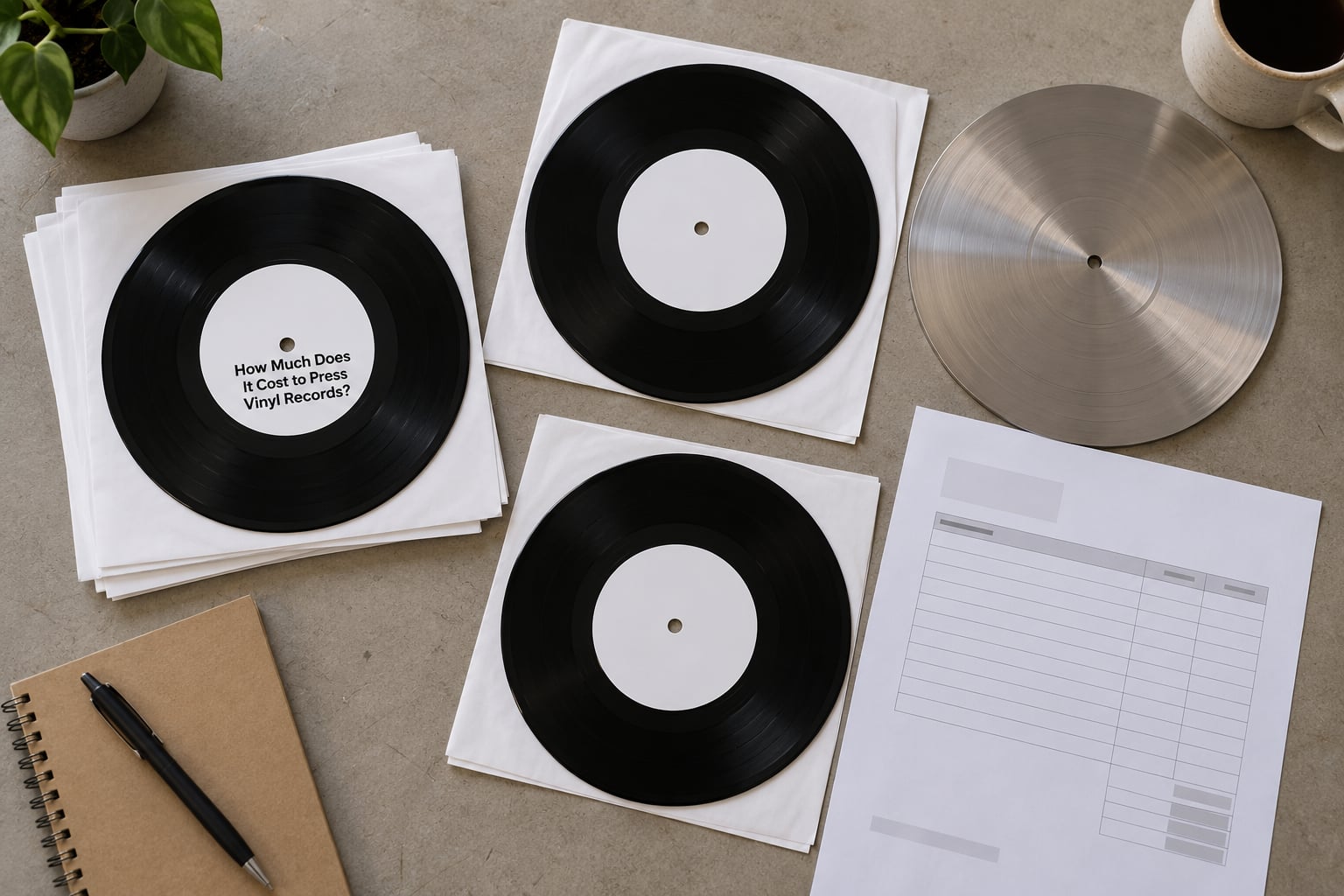
The table below is the honest version: total order cost, not the advertised per-copy rate.
| Run size | Format | Typical total | Cost per finished copy |
|---|---|---|---|
| 100 copies | 7-inch single, black vinyl, plain sleeve | $1,000 to $2,000 | $10 to $20 |
| 250 copies | 12-inch LP, black vinyl, printed jacket | $3,000 to $5,000 | $12 to $20 |
| 500 copies | 12-inch LP, black vinyl, printed jacket | $4,000 to $7,000 | $8 to $14 |
| 1,000 copies | 12-inch LP, black vinyl, printed jacket | $6,000 to $11,000 | $6 to $11 |
| 5,000 copies | 12-inch LP, black vinyl, printed jacket | $18,000 to $40,000 | $4 to $8 |
| 1 to 50 copies | Lathe-cut or one-off pressing | $250 to $900 per record | $250 and up |
Typical US Vinyl Pressing Costs by Run Size
A high per-copy number does not always mean a high invoice. A 100-copy run can look brutal at $18 a record and still total less than a 1,000-copy run that prices at $6 a record but carries a much larger setup bill and heavier freight.
Here is how the two halves of the cost separate, because this is the single most useful thing to understand before requesting quotes.
| Cost type | What it covers | Scales with quantity? |
|---|---|---|
| One-time setup | Mastering for vinyl, lacquer cutting, metal plating, stamper set, test pressings, artwork setup | No |
| Per-unit manufacturing | The records themselves, labels, sleeves, jackets, inserts, assembly | Yes |
| Per-unit finishing | Shrink wrapping, boxing, quality control | Yes |
| Freight and tax | Delivery to your door, sales tax or VAT | Partly |
Run the split on a 500-copy 12-inch LP. Setup might be $1,500 of the bill, while manufacturing runs $2.50 to $4 a copy. On a 1,000-copy order the same setup gets spread over twice as many units, which is why the per-copy figure drops so sharply as you scale.
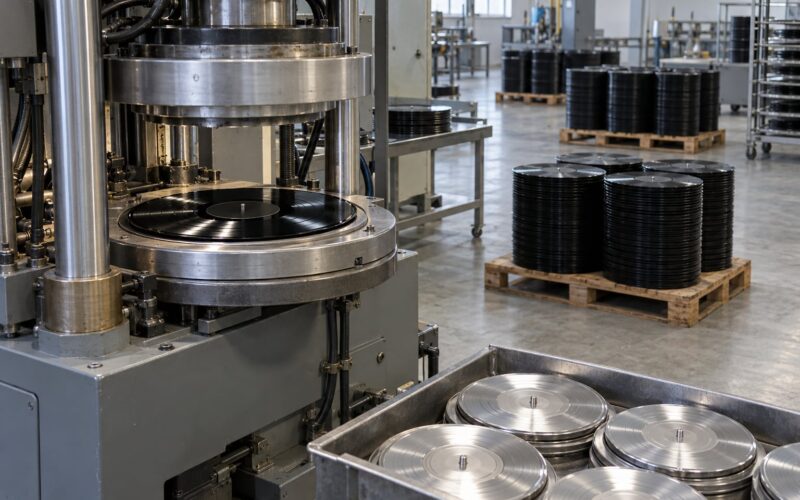
Factory-production pricing on a large order works the same way, just further out. A 5,000-copy run amortises setup down to almost nothing per disc, so the per-copy figure sits close to raw material plus press time. That is also why plants are reluctant to take small jobs at large-run rates. They cannot make the economics work.
What Is Included in a Vinyl Pressing Quote?
Line items differ between plants, but any real quote will cover some version of the following. Ask which of these are bundled into the advertised rate and which are billed on top.
- Audio master — a finished 24-bit file or high-resolution PCM supplied by you, prepared for vinyl rather than for streaming.
- Mastering for vinyl — the engineer-level pass that adjusts levels and bandwidth for a groove. Usually $200 to $500 when you bring a properly prepared master, more when the plant does the work from your mix.
- Lacquer cutting — a reference disc cut by a cutting engineer. Traditionally charged per side, which is why a two-sided record costs more than a single-sided one.
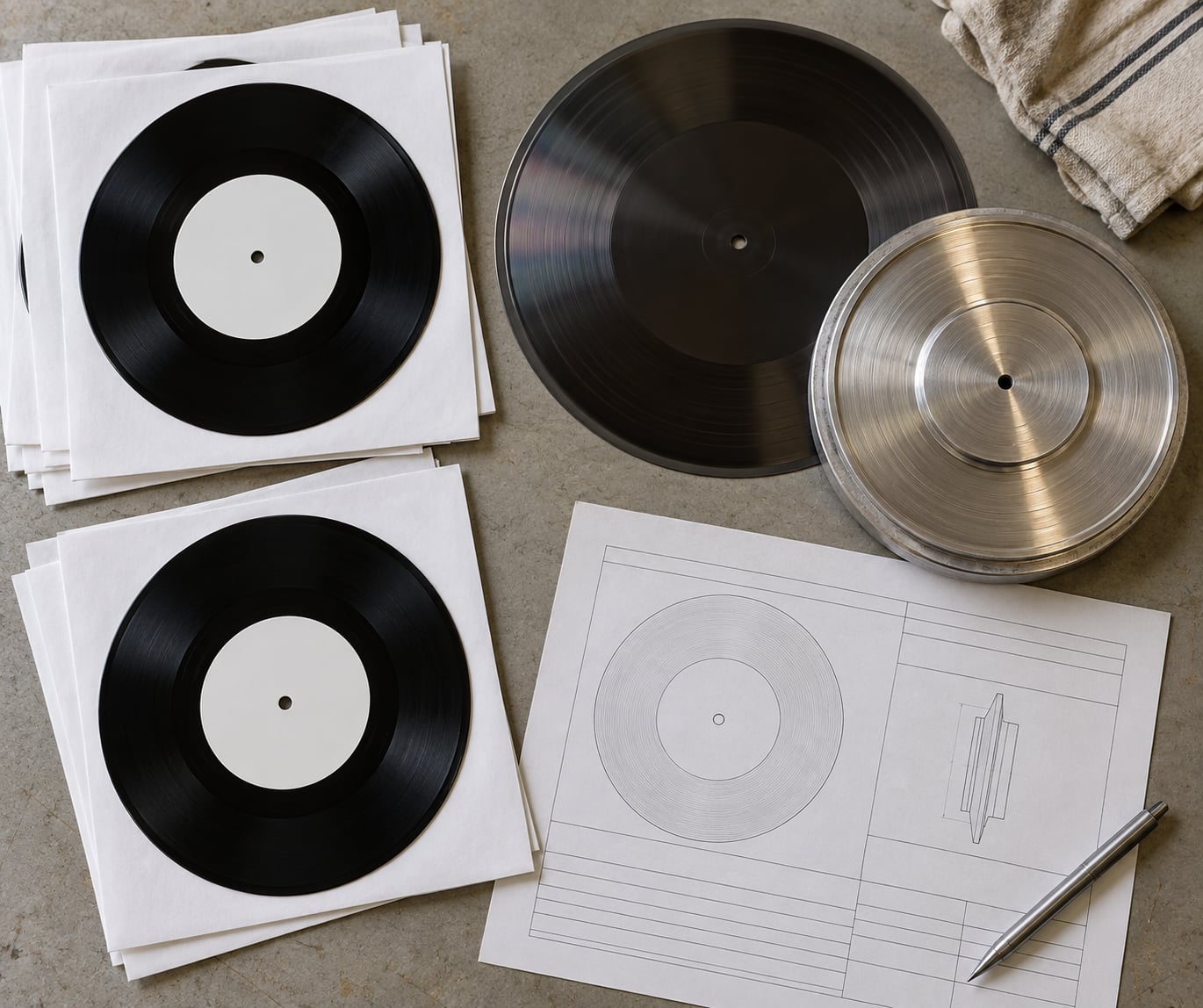
- Test pressings — a small approved run you listen to before production starts.
- Plating and stamper set — the lacquer is galvanically plated into metal stampers. One-step plating puts the lacquer directly into the stamper; two-step plates a negative and positive master, which sounds cleaner but costs more.
- Production quantity — the records, plain white label by default.
- Packaging — jacket or sleeve, printed labels, inner sleeve, inserts, gatefold or tip-on jacket.
- Assembly — putting the record in the sleeve, inserting the OBI card, shrink wrapping and boxing.
- Delivery — freight from the plant to your address or distributor.
That last line is the one people forget. A pallet of boxed records is heavy, and freight is quoted separately on most quotes rather than folded into the per-copy rate.
7-Inch, 10-Inch, and 12-Inch Pressing Costs
Format changes the price, but quantity and who supplies the master matter far more than the diameter itself.
A 7-inch single is the cheapest entry point. 45 RPM discs hold less audio per side, so a lacquer cut covers two or three songs rather than a full album, and the setup comes in lower. Many plants quote bundled packages for 7-inch runs starting around $1,000 for 100 units.
10-inch records sit in between. They are a middle format that some plants handle as a special order rather than a standard catalogue item, so you may pay a premium or a minimum order set for a format that is not core to the plant’s press line.
A 12-inch LP or EP carries the widest range, from budget white-label runs to full-color gatefold editions. Side count is not the deciding factor, though people assume it is. A one-sided 12-inch with a picture disc on the reverse still costs roughly what a plain two-sided LP costs to press, because the press time and setup dominate.
Colored, Specialty, and Limited-Edition Pressings
Finishes and packaging add cost in predictable ways, and not every option is available at every plant. Treat these as premiums on a base run, not as separate services.
- Colored vinyl — a base color such as red or translucent white usually runs a modest premium per copy. Multi-color marbled and splatter mixes cost more because the compounding is done by hand and wastes more material.
- Colored labels — printed instead of plain white, charged per label rather than per record, so it scales with the run.
- Gatefold or deluxe jacket — heavier board, more folds, extra printing, and often a separate printed insert. On a 500-copy run this can add more than the pressing itself.
- Numbered editions — hand-numbered in the run rather than machine-numbered, which pushes the plant toward a smaller quantity.
- Picture discs — a printed surface on one side. Cheaper to produce and generally lower fidelity than a standard black disc, so consider them a photo product.
What Affects the Price
Most of what moves the number is structural and unavoidable. The rest is choice, and choice is where you have leverage.
Order quantity. This is the dominant variable by a wide margin. Per-copy cost falls as the run grows because fixed setup gets spread thinner. Moving from 500 to 1,000 copies is the single biggest saving available.
Record size and speed. Larger formats need more material and longer press cycles. 33 RPM LPs take longer on the press than 45 RPM singles for the same unit count.
Audio preparation. Supplying a properly prepared master saves money. Sending a rough mix and paying for mastering, cutting and rework adds hundreds and sometimes weeks.
One-step or two-step plating. Two-step produces a lower noise floor with less hiss and more extended highs. One-step is cheaper and fine for a first run. Artists who have heard both usually say the difference is real but subtle, and some listeners never notice.
Color count and packaging complexity. Every extra component and every extra print process is another line item.
What the plant sources. If the plant buys your jacket board, prints your labels and buys your sleeves, it is doing more for you than one that presses records only. The price reflects it.
Minimum quantity. Many plants set a floor of 300 or 500 copies, which pushes small artists toward alternatives rather than a small order.
Plant location and freight. Domestic plants usually quote lower than overseas ones. Overseas pressing can be cheaper per copy, but add freight, customs, import duty and a longer lead time before comparing the two honestly.
Rush work and proofing. Rush fees can add a meaningful percentage. Repeated proofing cycles and artwork revisions get billed too, and plants often charge a setup fee per artwork round.
Two costs sit outside the quote entirely and catch people out. Sales tax or VAT applies on delivery in many jurisdictions. And final delivered quantities commonly run up to 10 percent over the order, with the extras billed to you — a real problem when you under-ordered and have no spares left.
Ways to Save
None of these touch master quality. Cutting corners on the audio is how a run ends up sounding bad and selling badly, which costs far more than the setup fee you tried to avoid.
Get three current quotes using the same specification. Write the format, quantity, weight, color, packaging and delivery date into one document and send it to every plant. Quotes are not comparable until the spec matches.
Order the quantity you will actually sell. The break-even maths is simple: divide the total cost by the copies, then divide that by the price you expect to charge. Artists on forums regularly report that under-ordering a 400-copy run and wishing they had pressed 1,000 is the most common regret in the whole process.
Start with black vinyl and a plain sleeve. You can always press a colored follow-up run later. It is far harder to reprint a run that already sold out in white label.
Skip optional upgrades that buyers rarely notice. Colored labels, shrink wrap and heavyweight board are the ones most likely to be invisible at resale.
Bundle a single run across several releases. Plants often price repeat customers better, and a second run of the same format reuses setup work already done.
Fund the order rather than absorbing it. Pre-orders, crowdfunding and direct-to-fan bundles convert a $6,000 outlay into a few hundred pre-sold copies at full price.
For runs under 100 copies, skip pressing entirely. A lathe-cut record made individually costs far more per copy but requires no run, no minimum and no setup. It is a completely different product, and it is the honest answer for a 20-copy project.
Combine mastering and cutting where the package allows. Some plants bundle the audio preparation into the run price instead of charging it separately.
Use the plant’s artwork template. Templates differ between plants, and reformatting artwork costs a setup round and delays the run.
Frequently Asked Questions
What is the minimum number of vinyl records a plant will press?
Most plants set a minimum of 300 to 500 copies for a full production run, and several enforce 1,000 for cheaper per-copy rates. Boutique and artist-friendly plants accept shorter runs at a higher cost per copy. Below 100 copies, pressing is usually the wrong tool entirely and a lathe-cut or one-off approach fits the project better.
Can I buy vinyl records directly from a pressing plant?
No. Pressing plants manufacture for labels, artists and distributors, and their minimum quantities exist because the economics of a press run only work at volume. If you want a single custom copy, look for a lathe-cut service or a one-off pressing option rather than a plant, which will not sell you one record from a production run.
Why are test pressings separate from the final production run?
Test pressings exist so you can approve the cut before the plant runs the full order. The cut engineer sends a lacquer, it gets plated, and a handful of records are pressed and shipped to you for listening. Once approved, the same stampers produce the full run. Because they are physically separate, they are quoted and billed separately, and they add one to two weeks to the schedule.
Are labels, jackets, and inner sleeves included in a pressing quote?
It depends entirely on the package. A bare quote usually means plain white labels and a printed outer sleeve, nothing more. Inner sleeves, printed labels, gatefolds, tip-on jackets, inserts and OBI cards are typically optional extras quoted per unit. Always ask for an itemised quote listing every component, because a headline per-record rate usually covers the disc and a basic sleeve only.
How much more does colored vinyl usually cost?
A single base color such as red, blue or translucent white usually adds a modest premium per copy on top of the standard black rate. Multi-color marble and hand-poured splatter cost considerably more because compounding is manual and material waste runs high. The exact premium depends on quantity, so ask each plant for the colored figure rather than assuming a percentage.
What costs are missing from a cheap vinyl pressing quote?
The most commonly omitted items are mastering for vinyl, lacquer cutting, test pressings, inner sleeves and inserts, shrink wrapping, rush fees, freight and import duty, sales tax or VAT, and charges for artwork revisions. Final quantities also commonly run up to 10 percent over the order, with the extras billed. Ask for a written all-in total so nothing appears as a surprise on the final invoice.
Bottom Line
Write the specification down before you talk to anyone: format, whether your sound master is finished and approved, minimum quantity, vinyl weight and color, sleeve type, every printed component, and the delivery date you need.
Then send that same document to at least three plants and ask each one for an itemised quote with an all-in total. Comparing identical specifications is the only way to know whether a lower headline rate is actually a lower bill, and it is the fastest answer to how much does it cost to press vinyl records for your release specifically.