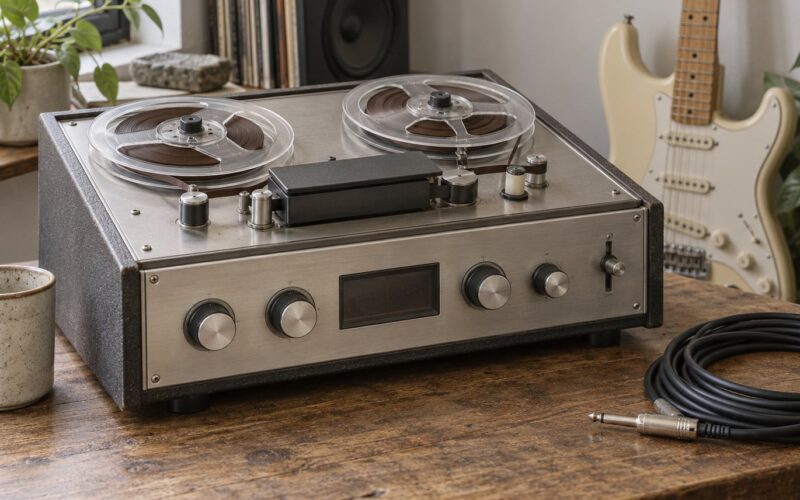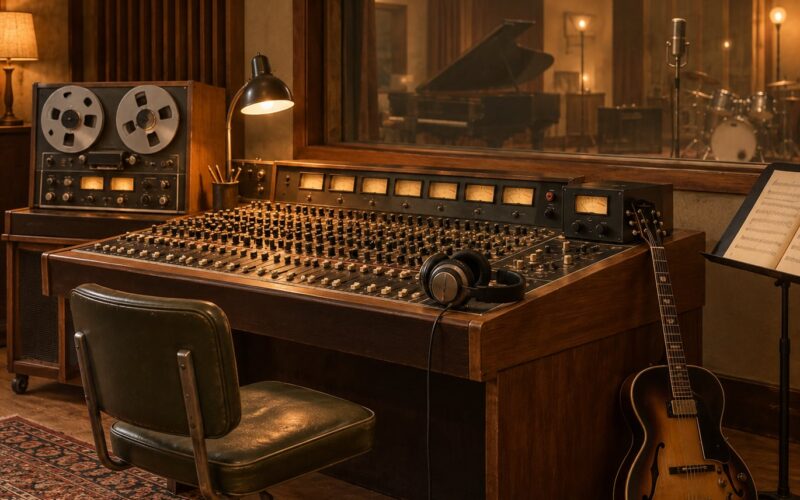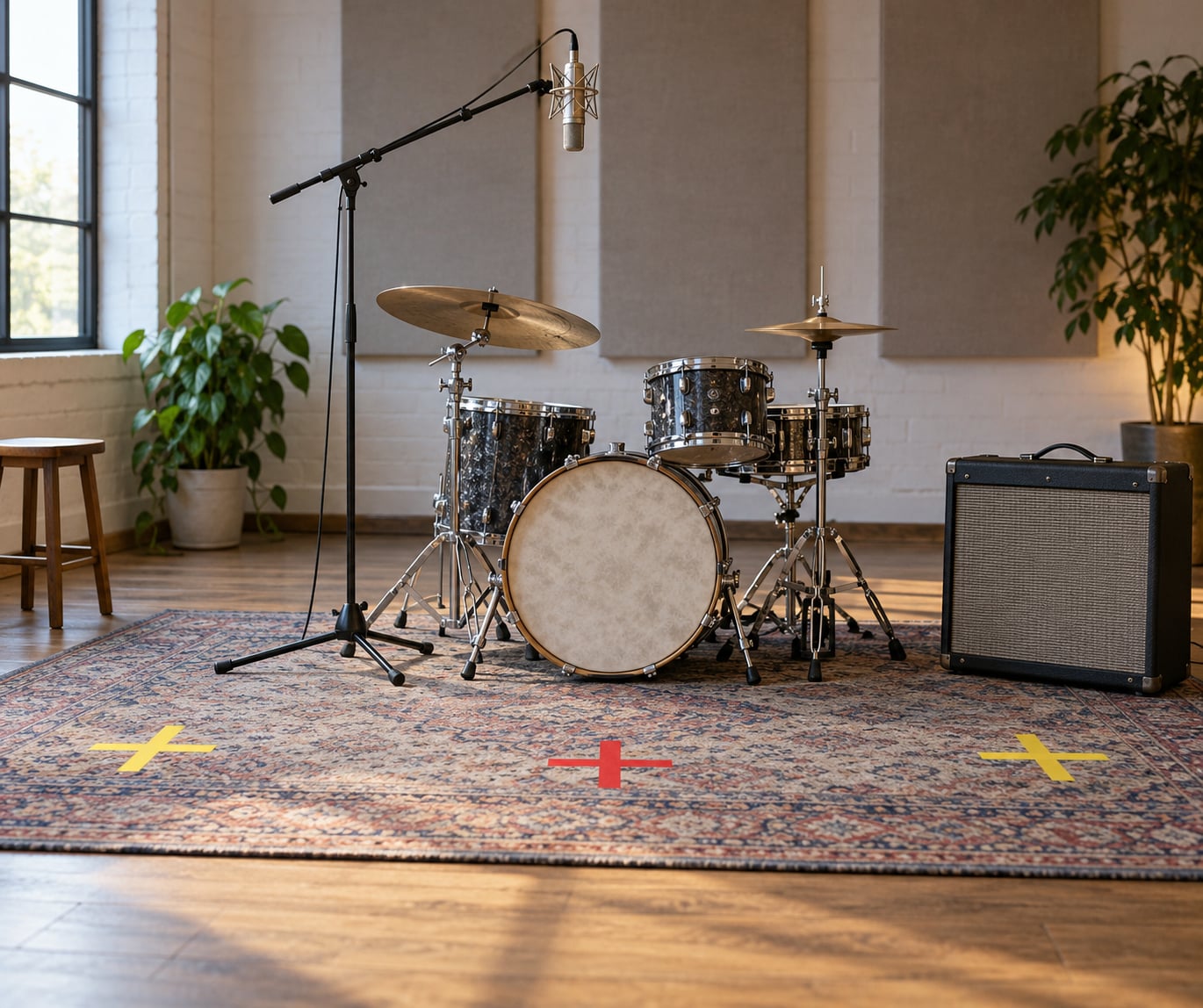
A one mic recording is a performance captured with a single microphone, so the balance you hear comes from where each player stands rather than from faders, tracks or mixing decisions made later. One microphone, one take, and whatever the room adds to it.
That is the whole idea, and it is older than most people assume. The phrase also shows up as minimal microphoning or one-point recording, and the technique sits behind a good share of the orchestral and jazz records in heavy rotation on vinyl today. In 2026 it is also one of the easiest ways for a home musician to make something that sounds finished rather than demo-ish, provided the room is decent and you accept what happens.
Table of Contents
- What Is a One Mic Recording?
- How Does a One Mic Recording Work?
- What Makes a One Mic Recording Sound Raw?
- Why Do Artists Record with Only One Microphone?
- Where Should You Place the One Microphone?
- What Microphone Works Best for a One Mic Recording?
- How Do You Record a Band with One Microphone?
- Can a One Mic Recording Be Edited or Cleaned Up?
- How Can You Tell If a One Mic Recording Sounds Good?
- Frequently Asked Questions
- Is a one mic recording always raw and unedited?
- Can you replace instruments in a one mic recording?
- Is one microphone enough to record a full band?
- What is the best microphone position for a band?
- How is a one mic recording different from a live album?
- Where to Start with a One Mic Recording
What Is a One Mic Recording?
A one mic recording captures an entire performance with one microphone, so every instrument shares a single signal and the mix balance is set by performer position instead of mixing decisions. Nothing is isolated, nothing is rebalanced afterward, and the room becomes part of the instrument.
It is worth separating that from two things people often lump together with it. Multitrack studio production gives each player their own input and recordable track, then builds the balance in the session. A session that runs through a mixing desk to a live two-track is a different animal again: many microphones may have been used, but the result is also a fixed, unchangeable capture. One mic recording is the more extreme of the two, because there is only ever one point in the room listening.
Some people also use the phrase loosely for a stereo pair, which is two microphones in one mount. That is not a one mic recording, though plenty of tape operators in the 1950s and 60s made gorgeous records that way. If someone tells you they use a Decca tree or a Blumlein pair, they are describing a pair, not a single point.
How Does a One Mic Recording Work?
Sound travels from every player to one capsule, through a cable to a preamplifier or interface, into the recording device, then through whatever editing and mastering you decide to do. The microphones never get to change levels independently. Everything that follows is repair work, not capture work.
The mechanical heart of the technique is distance. Sound level falls off sharply as you move away from the source, so a snare a metre from the mic sits far louder in the file than a trumpet two metres back. Balance is set by geometry, not by a fader. Move the drummer closer and the band gets quieter in the mix; move the drummer back and the guitars need to walk toward the mic instead. Engineers describe this using the inverse-square law, and it is the one idea a beginner needs to understand before anything else.
There is a practical consequence. Because a mistake in level is baked in, performers often choose songs they can play start to finish without a restart, rather than the ambitious arrangement they would normally track in pieces. A four-minute song recorded cleanly in one pass beats a nine-minute arrangement with three collapsed takes.
What Makes a One Mic Recording Sound Raw?
Raw here means unseparated. Every instrument sits in the same acoustic space, so each one hears and partly captures the others. A guitar mic placed a metre from a snare picks up the snare, and there is no way to remove it afterwards without damaging the guitar too.
Two more things come with the territory. Room noise that would sit far below a close mic on a single instrument becomes plainly audible, and reflections arrive at the capsule from every wall. Those reflections can reinforce or cancel a direct sound depending on timing, which is the source of the comb filtering people complain about. Limited isolation means a squeaky pedal or a barking dog is captured with the same permanence as the performance.
None of that is a defect. It is the sound of one honest take in a real room, and plenty of listeners find it more involving than a sterile close-miked studio record.
Why Do Artists Record with Only One Microphone?
- Speed of setup. One stand, one cable, one channel. A trio can be capturing in minutes rather than spending an afternoon on mic placement.
- An integrated sound. Instruments arrive already balanced to each other, so the recording sounds like a performance instead of an assembled collage.
- One coherent acoustic image. With a single point of capture, there is no duplication of the same source across several microphones, which is the usual cause of phase trouble and smeared stereo images.
- Visual performance. Records made this way are often made in front of an audience, in a church, a hall or a club, which is often the whole point.
- No retakes to hide behind. Players commit, and commitment tends to produce sharper performances.
The trade is straightforward. There is no second pass for a fluffed entrance, no safety net for an unbalanced arrangement, and a bad room cannot be EQ’d out of a single-channel capture. On r/audioengineering, one engineer describing a punk band setup put it plainly: a mic above the kick aimed at the snare works fine for that genre if you accept a lo-fi drum sound. That is the deal in a sentence.
Where Should You Place the One Microphone?
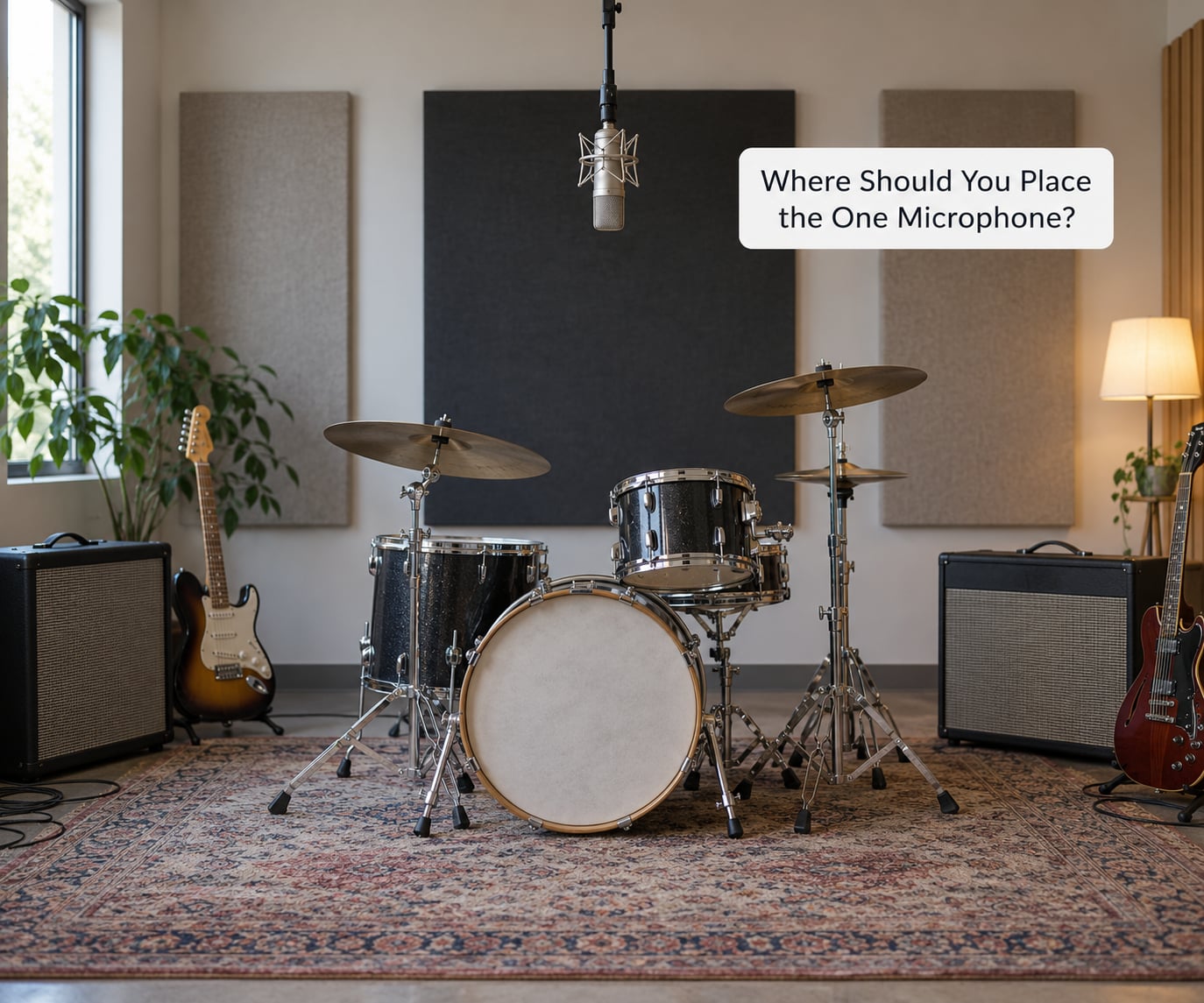
Position is the entire decision. There is no default, only trade-offs, and the honest truth is that most of the useful positions sit somewhere between the loudest instrument and the middle of the group.
| Position | Tone | Balance | Feedback risk | Room response |
|---|---|---|---|---|
| Over the drummer, angled toward the snare | Punchy, close, drums forward | Guitar and keys sit back, so keep them playing hard | Low | Heavy, live |
| In front of the band, facing the singer | Vocal forward, warm and direct | Reasonable if everyone is in a shallow arc | Medium, especially with open-back cabinets | Moderate |
| Above the whole group, pointing down | Slightly flat, distance colour | Even, because distance to each player is similar | Very low | Room dominant |
| At the position of a listener in the best seat | The most natural, least flattering | The most honest, and sometimes the most uneven | Low to medium | Maximum, and intentional |
Height matters as much as distance. Dropping the mic to chest height over a seated acoustic player gets you a warm, close sound with plenty of body. Raising it above head height thins things out and pulls in more of the room, which suits a string quartet and flatters a mediocre room far less than people expect.
Distance sets how much of the room you capture. Close is intimate and exposed; far is spacious and forgiving of bad playing but quickly turns into a recording of the room rather than the band.
What Microphone Works Best for a One Mic Recording?
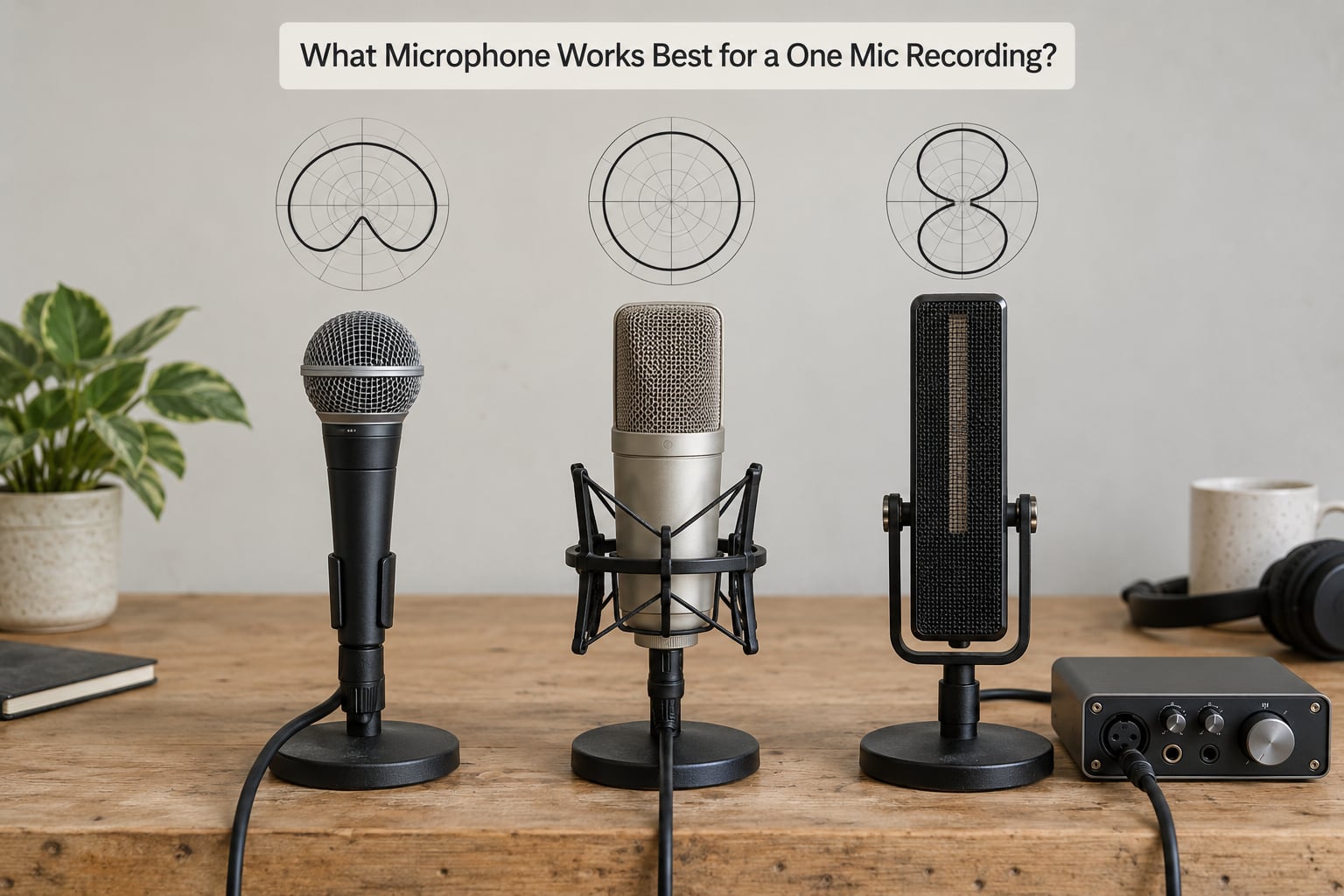
There is no holy grail model here. A room-acoustics decision narrows the field more than any microphone shortlist does, and the same mic that sounds generous in a treated studio can sound thin and exposed in a bedroom.
Dynamic microphones are the forgiving option. They handle loud sources, tolerate feedback, and their off-axis rejection helps when players are spread across a room. They will not capture the airy top end or the quiet decay that makes an ensemble sound wide open.
Condenser microphones catch transients and detail, and their low self-noise suits quiet acoustic instruments and strings. They are more sensitive to room noise, to handling, and to sibilance when a singer is close. A small-diaphragm condenser is a common first choice for one-mic acoustic work.
Ribbon microphones are gentle on loud sources and often smooth, but they are delicate, need a clean preamp, and their figure-8 pattern means they hear what is behind them as well as in front. That can be a problem in a small room with a wall right behind the group.
Polar pattern decides how much of the room comes along. An omnidirectional mic picks up equally in every direction, which is why podcasters settle on it for two speakers and why it suits a one mic recording of a group playing quietly in a good room. A cardioid rejects the rear, which helps with feedback and with noise behind the group. Expect less low end from a cardioid at the same position, because it is no longer hearing the front-to-back wave the same way.
The room decides the rest. A large, live hall asks for a directional pattern and a lot of distance. A small, damp room punishes any microphone for reflections you cannot remove.
How Do You Record a Band with One Microphone?
- Choose the room first. Walk into it, clap once, and listen to how long it rings. A soft furnished room is better than a bright empty one, whatever the address costs.
- Place the performers. Put the loudest source furthest away and the one you most want to feature closest. Have everyone stand in a loose arc facing the mic rather than a straight line across it.
- Set gain and leave headroom. Get the loudest expected moment to land several dB below clipping, then stop touching it.
- Record a reference pass. Play the whole song once without recording it as your gauge. Listen back in headphones and note what sits where.
- Reposition and repeat. Adjust player positions, not volumes, and run the reference again. This is the step beginners skip, and it is where balance actually gets decided.
- Monitor while recording. Watch the input meter rather than the output, and keep an eye on feedback during louder passages.
- Record complete takes. No drop-ins, no patching. One performance of a chosen song length beats four attempts at something ambitious.
- Back up before you edit. Copy the raw file to a second drive the moment you stop.
Two beginner checks carry most of the value. Play the file back and ask whether you can follow the lyric at a low volume, which tests clarity. Then check the low end for boominess, which usually means the mic is too close to a reflective floor or a kick drum is too near it.
Can a One Mic Recording Be Edited or Cleaned Up?
Editing and mixing are two different things here. Editing is fine. Cutting a dead section, tightening a pause, aligning takes and setting levels are all ordinary work, and mastering on top of that is normal.
What you cannot do is the multitrack job. You cannot pull the bass up and the guitar down, because both are inside one signal. You cannot replace a fluffed verse, because there is only one performance of it. You can reduce steady noise, apply compression to even out levels, and shape tone with EQ, but those are gentle corrections rather than rearrangements.
Even noise reduction has a limit here. Because every instrument shares one channel, aggressive filtering takes the edges off the instruments along with the hiss. Mild, tasteful work is the realistic target.
How Can You Tell If a One Mic Recording Sounds Good?
Judge it on seven things, in roughly this order. Balance: can you hear every instrument at a comfortable level without hunting for one? Clarity: does the lyric survive at low volume? Dynamics: does the performance move, or is everything pinned at the same level? Frequency balance: is it dull, harsh, or boomy, and is that the room’s fault? Ambience: is the space around the music pleasant or distracting? Noise: is there anything you notice on the second listen, or only the first?
The last one is emotional. A well-made one mic recording usually feels like you were standing in the room, and that feeling counts for more than a technical checklist.
One warning: a lo-fi, distant or slightly blurred drum sound is frequently the intended result, not a fault. If the recording is a punk set captured live, the drums sounding far away is the record. Decide whether the texture serves the song before deciding it is broken.
Frequently Asked Questions
Is a one mic recording always raw and unedited?
No. The capture is single-take and single-channel, but you can still cut dead sections, align takes, set levels, apply gentle EQ and compression, reduce steady noise and master the result. What you cannot do is treat it like a multitrack session: instruments cannot be raised, lowered or replaced individually, because they all live inside the same signal.
Can you replace instruments in a one mic recording?
Not from the same take. There is no isolated track for the guitar, so dropping it out also removes the bleed of everything else that was captured with it. Your options are re-recording the song with the offending instrument quieter or further from the mic, or accepting it. Some engineers run a second pass with one added source, but then it is no longer a one mic recording.
Is one microphone enough to record a full band?
For acoustic and classical ensembles, jazz, folk, string quartets and singer-songwriters, one microphone is genuinely enough, and many classic records were made that way. For dense modern rock or metal, where every instrument needs its own level and processing, one mic is a poor fit and you will spend the whole mix wishing you had tracked separately. Loud, heavily amplified bands also risk feedback and long decay problems.
What is the best microphone position for a band?
There is no single best spot, only trade-offs. Above the drummer favours the kit and pushes everything back. In front of the band facing the singer puts the voice forward. Above the whole group pointing down gives the most even balance. At a listener’s seat you capture the most natural result and the least flattering one. Start a couple of feet above head height and move it based on what you hear.
How is a one mic recording different from a live album?
A live album describes the setting, not the microphone count. A band playing live to an audience can be recorded with twenty microphones and still sound open and cohesive, or with one mic in a bad room and sound muddy. One mic recording is about the capture method and its consequences: one point of listening, balance fixed by position, and no fix-it-in-the-mix.
Where to Start with a One Mic Recording
Start in the quietest, most forgiving room you have access to, pick a song you can play cleanly from top to bottom, and hang the mic at one chosen spot for the whole group rather than planning to fix balance later. Do a reference listen, move people a step or two, and record one take you like. Once you have one good one mic recording, the next step is simply a better room and a second take, not more microphones.