Slapback echo is a single short repeat of a sound, usually a voice or an electric guitar, arriving a fraction of a second after the original and dying away immediately. One echo, no trail, no wash. That is the whole trick, and it is why the effect still sits at the centre of rockabilly, garage and country records more than seventy years after it was built into tape machines.
The direct answer: what is slapback echo? It is a delay effect set short, usually between 50 and 200 milliseconds, with the repeat level pulled well under the dry signal and the feedback turned down to nothing. You hear one distinct echo instead of a long decaying sequence of them.
I have spent a lot of time with tape echo units and pedals that pretend to be them, and the thing that trips people up is not the delay time. It is the feedback. Leave a repeat control up at two o’clock and you get six echoes, which is a delay. Turn it to zero and the same pedal becomes a slapback. One control, two completely different effects.
Table of Contents
- What Is Slapback Echo?
- How long is a slap back delay?
- How Does Slapback Echo Work?
- What Makes Slapback Echo Sound Different?
- Why Is Slapback Echo Important in Rockabilly and Vintage Rock?
- What Is the Difference Between Slapback Echo, Delay, and Reverb?
- What Are the Best Slapback Echo Settings?
- How Do You Use Slapback Echo Without Overdoing It?
- What Equipment Can Create Slapback Echo?
- Can Slapback Echo Be Recorded Live or From a Record?
- Frequently Asked Questions
- Is slapback echo the same thing as delay?
- What delay time should I use for slapback echo?
- Can I use slapback echo on guitars and drums?
- Should the echo repeat the vocal or the whole mix?
- What is the difference between slapback echo and reverb?
- Conclusion: Start With One Short Repeat
What Is Slapback Echo?
Slapback echo is an original sound followed by one or a very few brief repetitions, usually locked to the tempo of the track so the repeat lands between two beats and fills the gap. The short gap, the controlled repeat level and the absence of feedback are what make it feel intimate and rhythmic rather than spacious and ghostly.
How long is a slap back delay?
- Vocals: roughly 40 to 110 milliseconds, kept quiet enough that the words stay clear.
- Snare or full kit: around 80 to 150 milliseconds, mostly to give the backbeat a shove.
- Electric guitar: roughly 100 to 180 milliseconds, with the repeat sitting well under the picking.
- Historic Sun Records sound: analyses of those early Memphis tapes put the repeat at about 134 to 137 milliseconds.
Any delay longer than roughly 250 milliseconds stops reading as a slapback and starts reading as an echo you are conscious of. That is not a hard wall, but it is where the character changes.
How Does Slapback Echo Work?
The signal path is short enough to describe in one line. A voice or guitar goes into a delay unit, the unit holds that signal for a set number of milliseconds, plays it back once at a lower level, and the wet signal is added back into the mix with the dry one.
Four controls decide what you hear.
Delay time sets the gap before the repeat arrives. This is the control that matters most, because the ear is extremely sensitive to how long a gap is relative to the beat. A repeat that lands a sixteenth note late sounds like a mistake; one that lands exactly on the subdivision sounds like the band played it twice.
Repeat level sets how loud the echo is compared with the original. Classic slapback sits far below the dry signal, often quiet enough that you notice it more as width than as an echo.
Feedback routes the wet signal back into the input, creating more repeats. At zero you have a single repeat. Turn it up and you get a decaying sequence, which is exactly what the effect is not supposed to be.
Wet and dry balance decides how much of the delayed signal returns to your ears or to the recording. Pedals often have a blend knob; plugins usually have a mix control. Keeping the dry signal loud enough to dominate is the difference between a thickening effect and a mess.
What Makes Slapback Echo Sound Different?
Short, discrete repeats. The repeat is separated from the original by a musically useful gap and from itself by silence. On a vocal at 70 milliseconds you hear the word arrive, then a softer copy a fraction later, and that copy is gone. Nothing accumulates.
Controlled decay. There is no decay to speak of, which is the point. Long echoes fade gradually and draw attention to themselves. A slapback stops dead, so the ear treats it as part of the performance rather than as an effect lying on top.
Rhythmic placement. Set the delay to a musical subdivision and the repeat becomes part of the groove. On a snare it fills the space after the backbeat; on a guitar it answers the chord. Musicians playing with a slapback often start moving in the gaps, because the repeat occupies them.
Quiet repeat level. A slapback is meant to sit under the dry signal. Push it forward and it turns into a feature. Push it louder still and the low end doubles in the wrong places, which is where mud comes from.
A repeatable timbre without doubling confusion. Because the gap is long enough to avoid the pitch and phase problems that hit very short delays, the repeat sounds like the same instrument, slightly behind. Too short, and instead you get the hollow, flanged tone that short-delay settings are famous for.
Why Is Slapback Echo Important in Rockabilly and Vintage Rock?
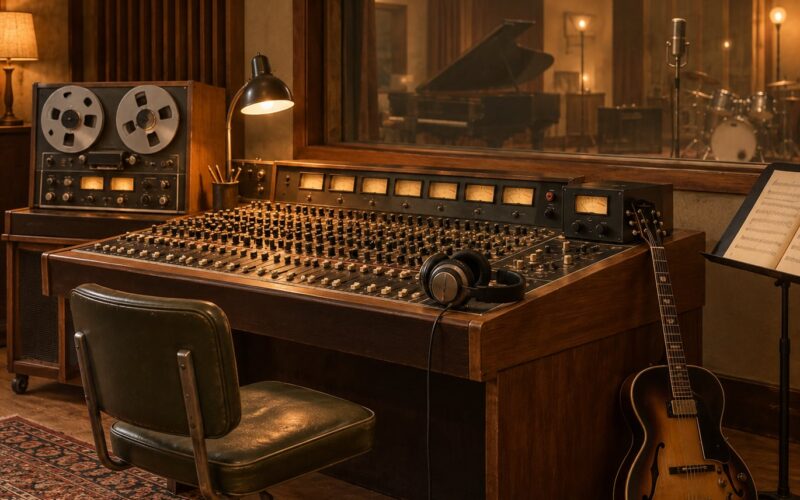
Sam Phillips built the sound at Sun Studios in Memphis. Rather than print a vocal dry, he ran it through tape and back into the room so the recording picked up the room as well. A second tape machine gave him one clean repeat, and the repeats on those mid-1950s records land at around 134 to 137 milliseconds. Analysis of Sun sessions has put some RCA Nashville setups at roughly 114 and 82 milliseconds, so the same idea arrived in Nashville with slightly different spacing.
Listen to Scotty Moore’s guitar on the early Presley sides and you can hear the effect doing two jobs at once. It gives the notes a shadow, and it makes a single guitar sound like a small group without anyone actually doubling the part.
Eddie Cochran, Carl Perkins and later Brian Setzer all worked in the same room, so the echo sits under the same kind of twangy guitar. Country chicken pickin, surf guitar and spaghetti western scores all borrowed the trick, and surf players in particular took it further with fast repeating patterns that turn a held note into a gallop.
The reason it matters is practical, not just nostalgic. A mono vocal with one short repeat reads as bigger and closer than the same vocal recorded clean, which was a genuine advantage before stereo became normal.
What Is the Difference Between Slapback Echo, Delay, and Reverb?
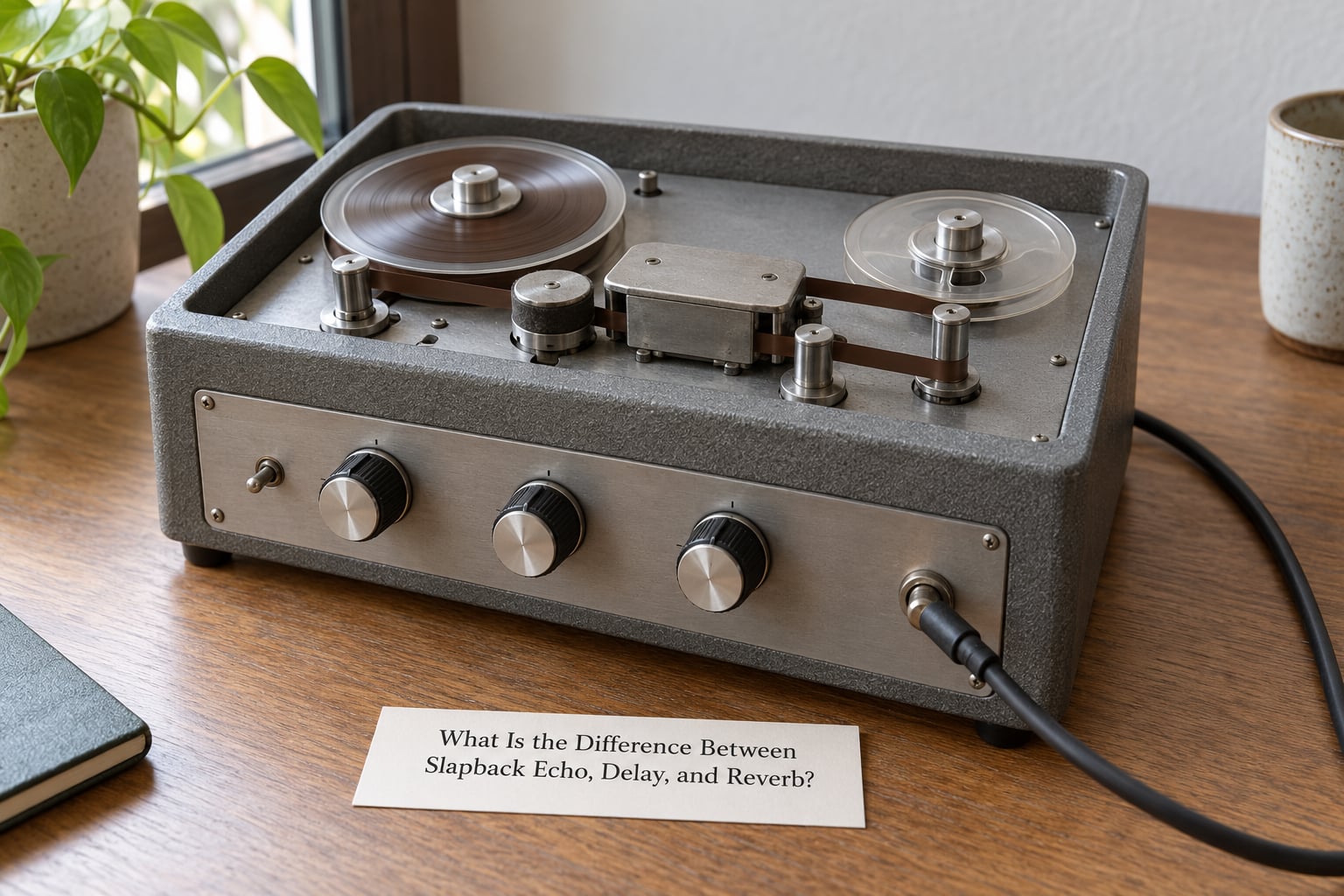
Slapback is a type of delay. Reverb is something else entirely, and confusing the two is the most common misunderstanding in this whole area.
| Effect | What repeats | Typical length | What it does to space | Best used on |
|---|---|---|---|---|
| Slapback echo | One distinct echo, then silence | 40 to 200 ms | Adds a rhythmic shadow, no real sense of room | Rockabilly vocals, twangy guitar, snare backbeat |
| Delay | A repeating sequence, often long | 200 ms to several seconds | Adds movement and space that keeps going | Ambient parts, lead guitar, dub, worship |
| Reverb | Many overlapping reflections blended together | Half a second to many seconds | Creates the sense of a room or hall | Drums, vocals in a finished mix, ambience |
Two other effects get mixed up with slapback constantly. Artificial double tracking is a very short delay of only a few milliseconds, which thickens a vocal by thickening its body instead of echoing it. Pre-delay is a short gap before a reverb or plate begins, used to keep clarity, and it is not a repeat of the sound at all.
What Are the Best Slapback Echo Settings?
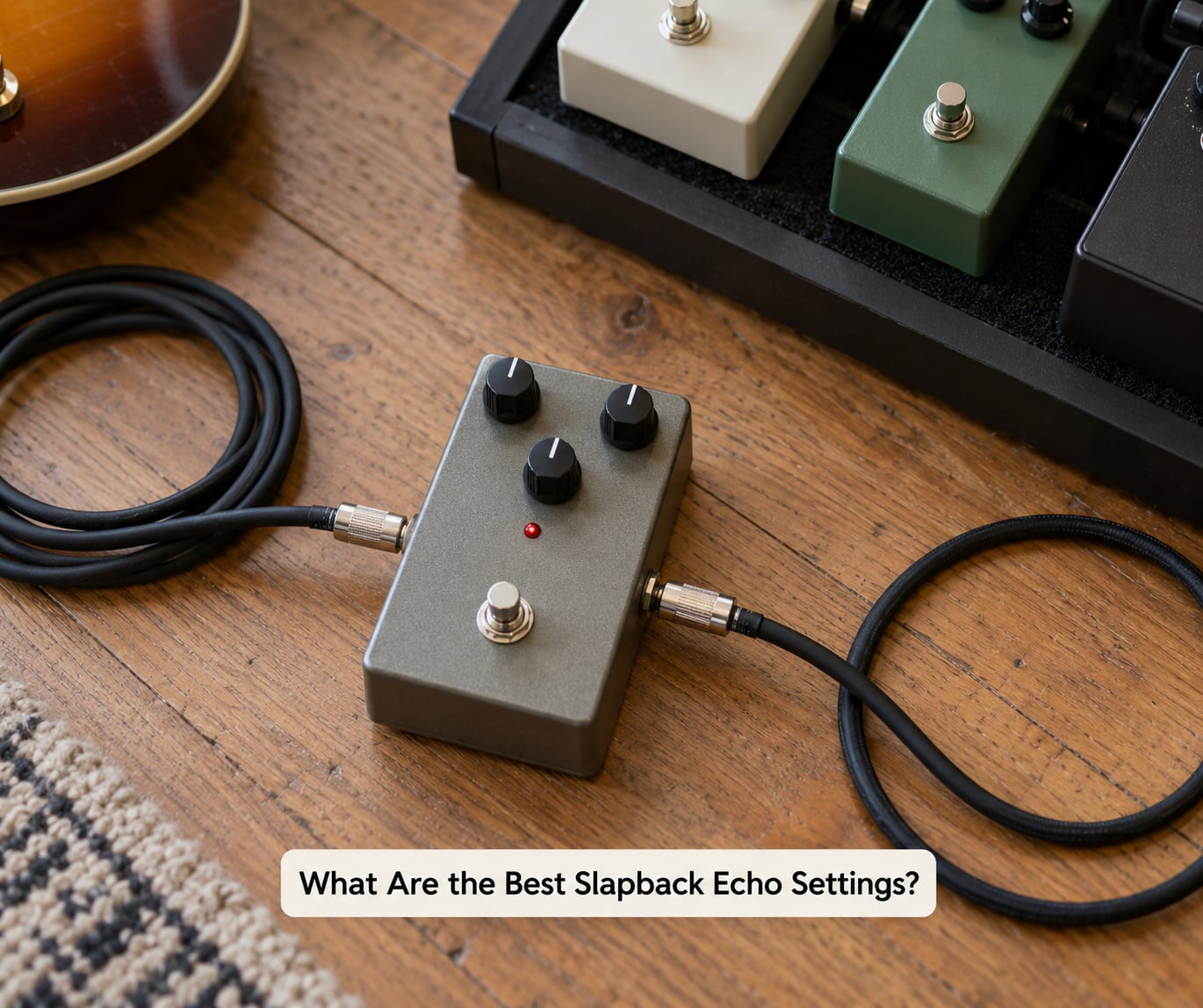
Treat these as starting points rather than rules. Tempo, source material and taste all move the answer around.
- Vocal slapback: 40 to 110 milliseconds, feedback at zero, repeat level low enough that you can still read every word at normal volume.
- Snare or full kit: 80 to 150 milliseconds, quieter still, and keep the hi-hat out of it or the mix gets busy fast.
- Clean electric guitar: 100 to 180 milliseconds, low repeat, tone rolled back slightly so the copy sounds darker than the original, like a tape repeat.
- Subtle rockabilly mix: one repeat, no feedback, repeat level sitting a few decibels under the dry, and delay time nudged until the echo lands just ahead of the next strum rather than exactly on it.
That last trick is the one I use most. A repeat landing exactly with the next note sounds tidy. A repeat landing just slightly before it sounds like a second guitarist who is trying hard.
How Do You Use Slapback Echo Without Overdoing It?
Start with one repeat and build from there. Most over-egged mixes are a single repeat turned up far enough to become three, which is why the feedback control is where people should actually spend their time.
Automate the wet level rather than the dry. A vocal that needs clarity in the verse and thickness in the last chorus can ride the effect without anyone touching a fader.
Leave room for the dry signal. If the effect is at the same level as the voice, the listener has to work. Most engineers I know put the dry about 6 to 10 dB above the wet and let the repeat do its quiet work.
If repeats sound too loud, pull the wet down before you touch anything else. If they sound too short and watery, that is a comb filtering problem rather than a level problem, so lengthen the delay instead. If they sound too long and dreamy, you have probably left some feedback in.
One more thing worth knowing, because it confuses people regularly: sometimes you do not have an echo at all. Monitoring latency in a digital audio workstation can print a duplicate of a vocal a few milliseconds behind it, which sounds exactly like a tiny slapback in the finished track. Check your buffer size and direct monitoring setting before you start blaming the room.
What Equipment Can Create Slapback Echo?
The effect is old enough that every category of delay gear can do it, and what matters is the controls rather than the badge on the front.
Analog delay pedals. Bucket-brigade circuits warm up and get slightly unstable in a way that suits this effect, and most have a repeat control that can reach true zero.
Digital delay units and multi-effects. Cleaner and more precise, with tap tempo and subdivision, which is genuinely useful for locking a repeat to a track. Their repeats can sound too bright, so pull the tone down.
Delay pedals with a dedicated slapback mode. Several stompboxes ship with a single-repeat setting already dialled, which saves a lot of fiddling.
Amps with echo built in. The classic mid-century combo echo in a guitar amp does exactly this and needs nothing else in the chain.
DAW delay plugins. The best option for precise work, since you can set the time, mute the effect between phrases, and print the wet signal into the mix like any other track.
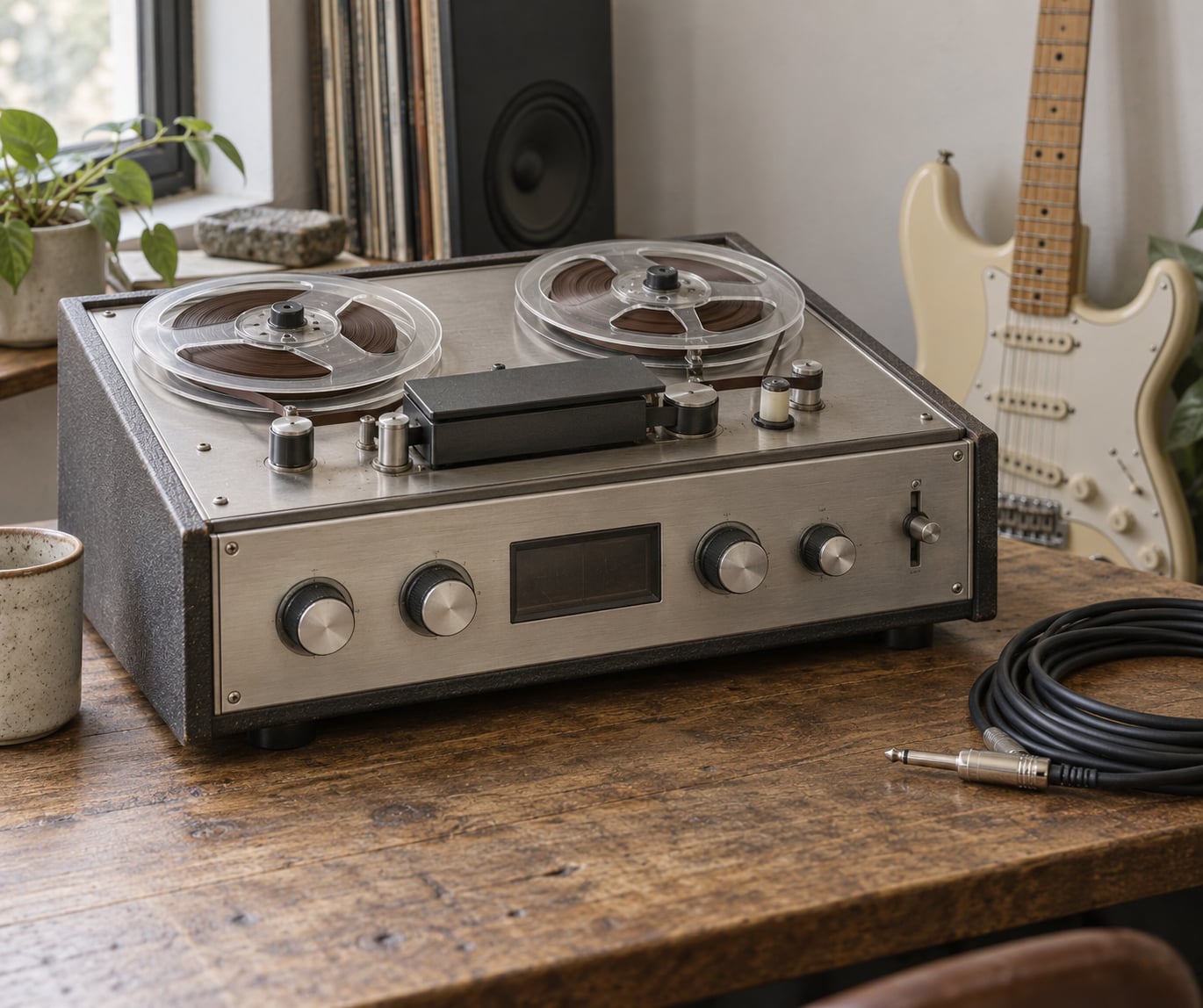
Tape and tape emulation. A real tape machine routed back into itself is the original version, and emulation plugins get you close without the maintenance.
Can Slapback Echo Be Recorded Live or From a Record?
A guitarist can do it with a pedal between the guitar and the amp, which is how it worked for most players who had one. Set the delay short, set the repeat low, and let it sit under the sound the way it does on the records.
A singer in a rehearsal room can get the same thing from a delay processor or a keyboard with effects on it, running into the PA rather than the monitors. Send a little to the floor wedges so the effect is heard but not pushed forward at the singer.
A producer working from a home studio adds it in the DAW on a separate track, prints it, and mutes it wherever it fights the lead. The advantage over a pedal is that you can draw the wet level by hand across a phrase, which no pedal gives you.
To get closer to a historic mono recording, route the dry vocal to one track, send a copy to a second track, delay that copy by around 130 milliseconds, lower it, and nudge it left while the dry stays centred. Play it back in mono and you get very close to the Sun sound, including the phase interaction you cannot hear in stereo but can feel.
Frequently Asked Questions
Is slapback echo the same thing as delay?
It is a type of delay, but a specific one. A slapback is a very short delay with a single repeat and the feedback turned to zero, usually between 40 and 200 milliseconds. Most delays are longer and repeat several times. Same machine, different settings, and the difference is obvious the moment you hear both.
What delay time should I use for slapback echo?
Roughly 40 to 110 milliseconds for vocals, 80 to 150 milliseconds for a snare, and 100 to 180 milliseconds for electric guitar. Early Sun Records sessions measure around 134 to 137 milliseconds. Set the time to a rhythmic subdivision of your tempo so the repeat lands between the beats.
Can I use slapback echo on guitars and drums?
Yes, and it was mostly a guitar effect originally. On guitar it adds a shadow to twangy chords and fills the gap between strums. On snare it gives the backbeat more weight, though you should keep it out of the hi-hat. It also suits upright bass and simple piano parts.
Should the echo repeat the vocal or the whole mix?
Repeat the vocal on its own, almost always. Sending the whole mix through a slapback muddies the low end and makes the rhythm section harder to hear. If you want a vintage room feel on the band as well, use reverb for that and keep the single repeat for the lead voice or guitar.
What is the difference between slapback echo and reverb?
A slapback is one discrete repeat a fraction of a second after the original sound, with no tail and no sense of a room. Reverb blends many reflections into a diffuse wash that suggests a hall or a chamber. They solve different problems, and many classic rockabilly mixes use both at once.
Conclusion: Start With One Short Repeat
So, what is slapback echo in one line? One short repeat, timed to the music, quiet enough to sit under the original, with the feedback at zero. Everything else people associate with echo, the long trailing repeats and the wash, is a different effect that happens to share a name.
Here is what to do first. Pick a tempo, set the delay somewhere between 100 and 150 milliseconds for a guitar or 60 to 90 for a voice, pull the repeat level down until you can barely notice it, and leave the feedback alone. Then raise the wet level slowly until the sound starts to feel wider, and stop just before it starts to feel like an effect. That is the whole process, and once you have heard it sit correctly you will recognise the same space on every classic record that used it.