A mail order distro is a small independent operation that buys records, zines and band merch in bulk from DIY labels, then resells them by post at a modest markup over wholesale. It is how fans get hold of obscure pressings when they live nowhere near a scene, and it is how small labels reach listeners beyond their own gigs.
Updated October 2026. If you have seen the word distro thrown around on forum threads and record shop windows without anyone explaining it, this is the plain-English version.
Table of Contents
- What Is a Mail Order Distro?
- A mail order distro is not a distributor
- How Does a Mail Order Distro Work?
- What Is the Difference Between a Distro and a Record Store?
- Why Do Collectors Use Mail Order Distros?
- How to Tell Whether a Mail Order Distro Is Reputable
- How Do Shipping, Payment, and Backorders Work?
- Frequently Asked Questions
- What does distro mean in music?
- Are mail order distros cheaper than record shops?
- How long does a mail order distro take to ship an order?
- What is sale or return distribution?
- What are punk zines and are they legal?
- Do record distros ship overseas?
What Is a Mail Order Distro?
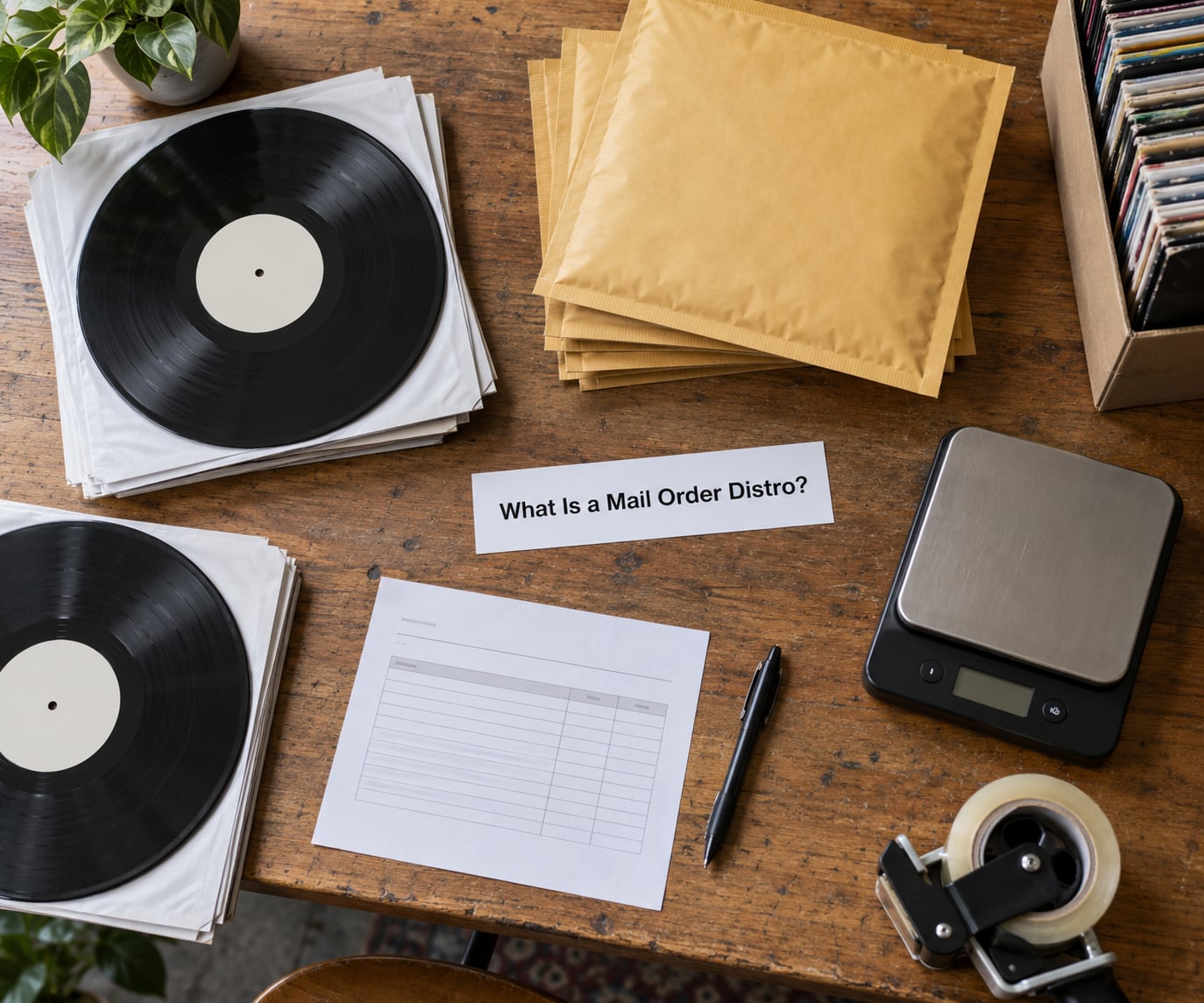
The short answer: a mail order distro sits between the people who make records and the people who want to buy them. It buys inventory in bulk at a wholesale price, lists it on a webstore or a Bandcamp page, takes payment, packs the parcel and posts it out. Whatever sits between the wholesale price and the retail price is the business.
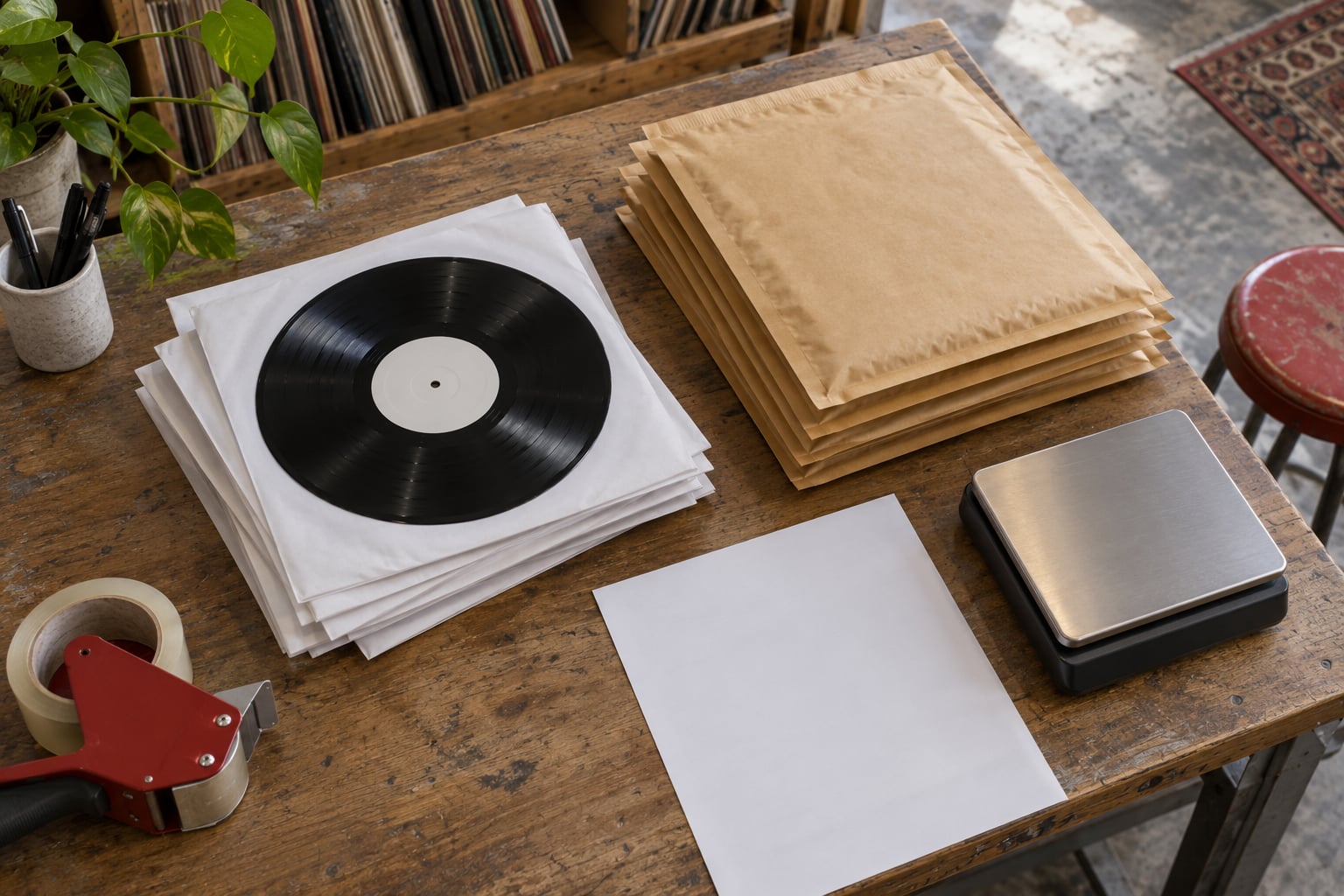
Most of these operations are tiny. One or two people, a spare room, a printer and a stack of padded mailers. Some run their own label and press records as well. Some run a record shop as well. Plenty do neither and just move other people’s product.
The vocabulary confuses people, so here is the short glossary:
- Distro – short for distributor, but in music it almost always means a small independent mail-order operation rather than a formal distribution company.
- Label – the entity that owns the master recording and pays for the pressing.
- Trade copies – wholesale inventory a label sells to shops and distros, usually at a discount and often on sale-or-return terms.
- Sale or return – the label or band hands over copies and gets the money (or the unsold copies) back if they do not move.
- Mailorder – how most distros write it on their own site. Same thing.
A mail order distro is not a distributor
Big distributors move records for major labels into chain stores and account for millions of units a year. Nobody involved in punk, hardcore or crust calls that a distro. When a record shop owner says their supplier is a distributor, they usually mean their email contact who sends a monthly spreadsheet of new arrivals.
The distinction matters when you read a listing. A record sold by a distro has often passed through one or two small operations before reaching your door, which is part of why independent pressings stay affordable.
How Does a Mail Order Distro Work?
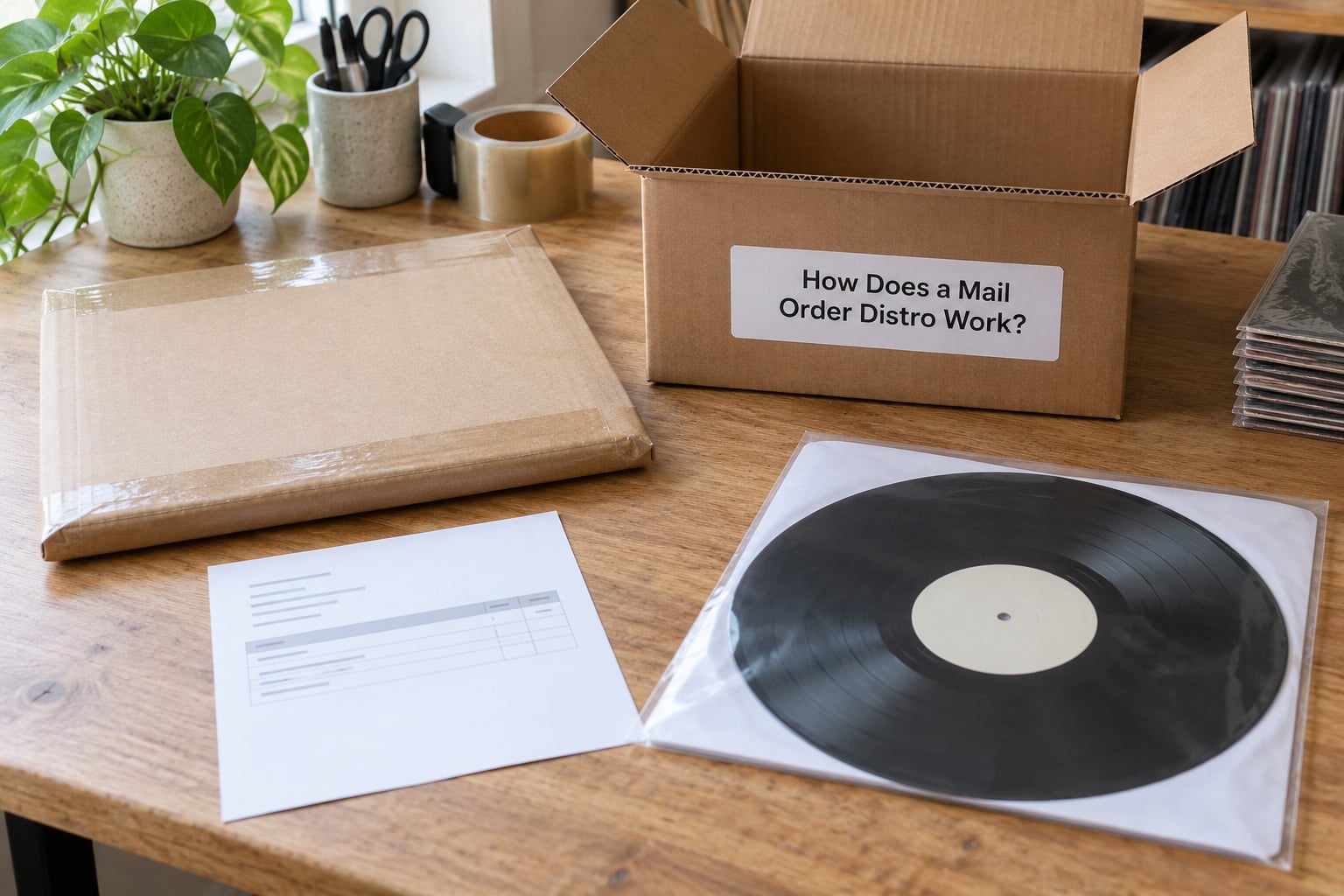
Five steps, start to finish, and none of them complicated:
- The label or band sells wholesale inventory. Copies go to the distro at a discount, either bought outright or handed over on sale-or-return.
- The distro lists it online. New arrivals land on a webstore or a Bandcamp page, usually with genre, format, pressing details and a note if the edition is limited.
- Fans order and pay. Card payment through the site is standard. Some operations still take bank transfer for larger orders.
- The parcel goes out. Good operations dispatch within a day or two and say so on the site, because that promise is what people judge them on.
- The distro keeps the margin. The difference between what it paid and what it charged is the income that keeps the operation running.
Many also sell at shows, festivals or record fairs, where there is no postage cost at all. Those days are often the best ones for an operator, though the shopfront sales rarely cover rent on their own.
What Is the Difference Between a Distro and a Record Store?
This is the question people arrive with most often, because nobody ever puts the three side by side. They overlap constantly, so the honest answer is that most mail order operations are hybrids.
| Criterion | Mail order distro | Record label | Record shop |
|---|---|---|---|
| Where the music comes from | Other labels, plus their own releases if hybrid | Its own recordings, pressed at a plant | Licensed trade copies from many labels |
| Has a shopfront | Usually not | Usually not | Yes, that is the whole point |
| Typical range | Narrow and scene-specific, often hundreds of titles | Its own catalogue only | Broad, mainstream and catalog titles included |
| How it earns | Margin between wholesale and retail | Margin on pressings, plus merch | Retail margin, plus in-store events |
| Grabs a record same day | No | No | Yes |
| Best for | Hard-to-find DIY releases nobody nearby sells | Following one artist or scene closely | Browsing, instant gratification, used bins |
A hybrid blurs all of this. Sorry State in the UK runs a shop, a label and a mail order operation. Land of Treason and Devil Dog sit closer to pure mail order, with a webstore front and a tightly defined genre focus. Larger outfits like Midheaven span downloads, CDs, LPs, books and cassettes for buyers who want one account instead of forty.
Why Do Collectors Use Mail Order Distros?
Catalogue depth. A good scene distro carries several hundred titles and a record shop carries a few hundred new ones at a time. When you are after a specific DIY label, the distro is often the only source that has it at all.
Genre focus. A shop stocks what sells locally. A distro stocks what the scene actually produces, which is how crust, anarcho punk, D-beat and emo records get to people living in places with no venue and no label.
Rare and older pressings. Discontinued runs, represses, coloured vinyl and label swaps turn up here when the pressing plant is done. Land of Treason, for example, carries punk books and archival material alongside new records.
Zines and printed matter. The word zine comes from fanzine, a fan-published magazine. Bands and labels photocopied them, stapled them and mailed them to other fans before there was anywhere online to post them. Most small distros still stock them, and many are not sold anywhere else.
Ordering without a scene. Collectors in towns with no punk venue used to have no route to these records. The webstore ended that. It is the single biggest reason the model survived.
How to Tell Whether a Mail Order Distro Is Reputable
Most of these operations are one person working from home, so the usual signals are small ones. What matters is consistency, not branding.
- Dispatch times are stated openly. Sites promising orders go out within a day or two are telling you something they can be held to.
- Postage is explained before checkout. Discovering the real cost at the payment screen is the complaint collectors raise most often.
- Descriptions include the details collectors ask about. Format, pressing, edition size, label and whether it is a repress.
- Limited items say how limited they are. If the run is not stated, ask before you buy.
- Email gets answered. A one-person operation replying within a couple of days is doing fine.
- The catalogue is maintained. Pages that still show sold-out pressings as available for months are a warning sign.
Useful insider detail: ask your local record shop for the empty boxes distros use to mail LPs. Those plain double-wall boxes with the die-cut corners are the giveaway, and shops usually have a pile by the door.
How Do Shipping, Payment, and Backorders Work?
Postage is the real price driver, not the record itself. A single record shipped on its own can cost more to send than the record costs to buy, which is why nearly every distro has a minimum order or a flat rate above a certain spend. Combining two orders into one shipment is the single easiest saving, and it is standard practice.
Media rates and discounted parcel services handle most domestic sending. International orders are where things get awkward: customs charges, a longer wait and paperwork the operator has not asked for. Some distros publish a no-questions-asked policy for overseas buyers, others cap the number of foreign orders they take per week. Check the policy before you fill a basket.
Preorders behave differently. A label needs a minimum number of orders before committing a pressing, so a preorder page can sit open for months with no fixed ship date. Three to six months is common for limited runs, and a pressing can be cancelled entirely if the threshold is not met. Paying part up front is normal in that situation, as is waiting without a firm date.
Split shipments happen when part of an order is ready and part is not. Orders containing preorders are the usual reason, though some operations hold everything until it is ready rather than paying postage twice.
Frequently Asked Questions
What does distro mean in music?
A distro is a small independent operation that buys records and merch in bulk from independent labels and resells them, most often by post. It is short for distributor, but in music it refers to scene-level businesses run by one or two people, not the formal distribution companies that supply chain stores. Distros often release records as well, which makes them label and shop at once.
Are mail order distros cheaper than record shops?
Usually on the record itself, because a distro buys trade copies at a wholesale discount and skips the shop rent. The saving shrinks fast once postage is added, which is why most operations publish a flat rate or a minimum order. Combine two orders into one parcel and the difference mostly disappears. Collectors often use both: the shop for browsing and in-stock titles, the distro for the release nothing local carries.
How long does a mail order distro take to ship an order?
Good operations dispatch within one or two working days and say so on their site, which is why that promise shows up in their marketing. Preorders are the exception: those can sit open for three to six months with no firm ship date while the label gauges whether the pressing will happen at all. Anything taking longer than a few days outside a preorder is worth an email before you chase it.
What is sale or return distribution?
It is a stocking arrangement where copies are handed to the distro without payment up front. If they sell, the label gets paid. If they do not, unsold copies go back. It lets tiny labels release without risking money on an unknown seller, and it lets a distro hold a wide catalogue without tying up cash. Consignment means much the same thing, though the legal detail differs slightly by country.
What are punk zines and are they legal?
A zine is a small self-published magazine, and a punk zine is one made by fans or bands outside the commercial system. The word comes from fanzine, a fan magazine, and the form grew out of photocopied and stapled booklets traded at shows and mailed to other fans. They are entirely legal to make and sell. Copyright still applies in the usual way, but printing your own words or photographing a band at a gig is not infringement.
Do record distros ship overseas?
Most of them do, at least to countries with a postal service, and several publish a policy stating they will not ask buyers to pay import duty. Expect a longer wait and possible customs charges, plus a higher rate on the heavier parcels that records make. A few operations limit how many international orders they take in a week because the paperwork gets heavy. Read the shipping page before you fill a basket from another country.
So: a mail order distro is a small independent reseller that buys from DIY labels in bulk and posts orders out, keeping the gap between the two prices. If you collect punk, hardcore, crust or anything adjacent, it is usually the only route to releases your local shop has never heard of, and the fact that it still works at all is down to people treating a parcel of records as worth sending.