A nuggets compilation is a various-artists record that gathers short, cheap, half-forgotten singles from small independent labels rather than building a coherent set of new material. The phrase almost always points at one record first: Nuggets: Original Artyfacts from the First Psychedelic Era, 1965-1968, compiled by Lenny Kaye and released by Elektra Records in 1972.
Below is the plain version, for anyone who keeps hearing the word dropped by musicians and record-store staff without knowing what it means. No insider vocabulary required.
| Full title | Nuggets: Original Artyfacts from the First Psychedelic Era, 1965-1968 |
|---|---|
| Released | 1972 |
| Compiled by | Lenny Kaye |
| Label | Elektra Records (first issue), Sire Records (mid-1970s reissue) |
| Tracks | 27, all different artists |
| Format | Double LP |
| Era covered | American singles from 1965-1968, with a few strays from just before and after |
| Sound | Garage rock, freakbeat, folk rock, psychedelia, early punk and proto-punk |
Table of Contents
- What Is a Nuggets Compilation?
- Why Is It Called a Nuggets Compilation?
- Is a Nuggets Compilation an Album?
- Who Created the Original Nuggets?
- What Kind of Music Did the First Nuggets Collection Feature?
- How Were the Tracks Selected?
- Why Did Nuggets Matter for Punk and Garage Rock?
- How Does the First Nuggets Relate to the Later Volumes?
- What Should Collectors Look For in a First-Volume Copy?
- Frequently Asked Questions
- What is a Nuggets compilation?
- Is Nuggets a punk compilation?
- How many Nuggets compilation volumes are there?
- Who compiled the original Nuggets: Original Artyfacts?
- What is the rarest song on the first Nuggets album?
- Is the first Nuggets album worth collecting?
- Conclusion
What Is a Nuggets Compilation?
A nuggets compilation is a collection of tracks assembled from other people’s records, usually 45 rpm singles, issued by labels too small to press an album. You buy the compilation to hear twenty-seven bands in one sitting, and you are trusting somebody else’s ear rather than a band’s own choice of material.
When people say Nuggets with a capital N, they mean that 1972 Elektra double album specifically. Lowercase or generic “nuggets,” and you might instead be looking at one of dozens of licensed bargain-bin sets of lost sixties and seventies rock, in psych, bubblegum, soul or glam flavours. Different records, same idea: small treasure, low cost.
The 1972 set is the one people mean when they write the name out in full, because it is the volume that turned that idea into a genre-defining document. The later Rhino Handmade volumes, the Nuggets II and Children of Nuggets releases, and various regional sets borrowing the name all descend from it rather than share a shelf with it.
Why Is It Called a Nuggets Compilation?
The nuggets are the records themselves: cheap, dented, overlooked 45s that record stores had shoved into cutout bins. The subtitle, “Original Artyfacts,” makes the same joke with more affection, filing those pressed singles as museum pieces of a finished era. Kaye was not digging for masterpieces. He was keeping evidence before the labels and the masters themselves disappeared.
Is a Nuggets Compilation an Album?
It is called a compilation album because “compilation” is the technical word, but nothing else about it behaves like a studio album. This is the distinction that trips up newcomers, so here it is flat:
| Studio album | Nuggets (1972) | A Nuggets Volume 2 | |
|---|---|---|---|
| Who picks the songs | The band, often with a producer | One outsider with an opinion, Lenny Kaye | A label or archivist working from an archive |
| Who the artists are | One group | 27 different groups | Many groups, mostly unheard on the first volume |
| Length and shape | One body of work with running order | 27 short songs, cut for length not argument | Same format, different era of digging |
| What it is for | Listening as a band | Learning what a scattered scene sounded like | Going deeper into a scene already sampled |
Also worth saying out loud, because forum threads repeat it forever: a track being on Nuggets did not make it obscure. Several of those 27 songs were on the American charts. And “Louie Louie,” one of the most-requested cuts, predates the stated 1965-1968 window entirely. A compilation put together from other people’s singles rarely respects its own date range.
Who Created the Original Nuggets?
Lenny Kaye put it together. He was a writer and music-history obsessive who also worked at Village Oldies, the Greenwich Village record shop where he spent his shifts hearing other customers argue about records and quietly cataloguing the ones nobody wanted.
The commission came from Jac Holzman, who founded Elektra and had moved the label toward a broader, less academic image of what rock could be. Kaye’s route in reportedly ran through an Esquire piece in which he was named as a token rock critic, and Holzman offered him the chance to make something for the label.
The original plan was much bigger. A run of regional sets, each covering a city or scene, was planned under a working title that the label changed. Clearing licences for dozens of tiny regional tracks turned out to be slow, expensive work, and the series collapsed into one double album instead.
That licensing slog is the unglamorous reason the record looks the way it does. It is not a survey of everything Kaye loved. It is what survived the paperwork, which is why it leans on national and semi-national labels rather than purely local scenes.
What Kind of Music Did the First Nuggets Collection Feature?
Short, loud, homemade and fast. Most of the 27 tracks run somewhere around a minute and a half to two and a half minutes, because that is how long a single was. The production is thin: one microphone, a rehearsal room, a fuzz pedal, and whatever the drummer had that afternoon.
Within that, several distinct things sit side by side. Garage rock from regional scenes with names like the LSE and the Count Five, whose fuzz guitar and hand-lettered sleeves announce their home town. Freakbeat and folk rock with a harder edge. Full psychedelic rock from 1967 and 1968. And a handful of records so short, so dry and so aggressive that later listeners read them as punk arriving early.
That genre spread is deliberate rather than sloppy. Kaye’s argument was that all of it came from the same DIY habit: a person who wanted to make records, needed money for an amplifier, and pressed a single rather than wait for a career. One label owner called Nuggets a grab bag of lost rock tracks, and the complaint is fair, but the connections are real.
How Were the Tracks Selected?
Rarity, character, historical value and findability. Whether a song had been a hit barely registered. Kaye’s own account is that he picked the tracks he loved and would still play, which is why several cuts are one-hit bands with no second single, and why others are deep B-sides that only a collector would have wanted.
That method also explains the gaps in the tracklist. Kaye has explained at length why “Gloria,” which a lot of listeners assumed belonged on Nuggets, never made the tracklist at all. Assumptions about what a famous album should contain turned out to be wrong often enough to be worth talking about.
The practical filter was harder than taste: Kaye had to be able to find the master, and Elektra’s lawyers had to be able to find and clear the band. A song could be perfect and still fail on paperwork.
Why Did Nuggets Matter for Punk and Garage Rock?
It arrived while punk was still an insult rather than a genre, and then the timing sharpened. When Sire reissued the album in the mid-1970s, at the moment bands were giving themselves punk names and shortening their songs, a two-LP set of short, cheap, furious American records suddenly read as a blueprint rather than an oddity.
For the Ramones and the crowd around the CBGB scene, Nuggets functioned as a source book. The template it offered was specific: simple chord changes, fast tempos, deadpan or shouted delivery, no polish. You could hear what to aim for and what to leave out.
It also created a market for the same kind of digging elsewhere. Cheap bootleg series, licensed or not, began resurfacing regional sixties rock: Pebbles, Rubble, Boulders, and the long Back From The Grave line. Nuggets did not invent the archivist’s compilation, but it gave the format a prestige and an audience.
Half a century on the effect is still visible. The garage revival bands of the 2000s, including groups that reached the mainstream, grew up with reissue programmes and cheap compilations built on Kaye’s original premise, and critics regularly reach for the Nuggets comparison.
Worth keeping the scale honest: no single record caused punk, and plenty of bands arrived at that sound without buying a copy. What Nuggets did was make a route through the past visible and name it, which is a different kind of influence and arguably the more durable one.
How Does the First Nuggets Relate to the Later Volumes?
First, a clarification that regularly gets missed. The planned Nuggets volume 2 was never released in the sixties style anyone expected, but its material did eventually surface: a 2023 fiftieth-anniversary box set for Record Store Day carried Nuggets, Volume 2 alongside a companion volume of Kaye’s rarest deep sides. Collectors who had assumed that material was lost forever found it had simply been waiting.
Rhino’s Handmade series then turned Nuggets into a numbered run covering further eras and further down the label pecking order, which is where most casual fans meet the name after the original.
| Release | What it is |
|---|---|
| Nuggets (1972) | The original Elektra double album, 27 tracks, 1965-1968 |
| Sire reissue, mid-1970s | The edition that landed alongside punk’s coinage |
| Rhino volumes, 1980s onward | Numbered expansions covering later eras and rarer sources |
| 1998 four-CD box | The first volume expanded and reassembled as a set |
| 2012 remaster | Archival reissue cut from original tapes |
| 2023 box | Fiftieth-anniversary edition including the formerly unreleased Volume 2 |
| Nuggets II, Children of Nuggets, Los Angeles Nuggets, San Francisco Nuggets, Come to the Sunshine, Hallucinations | Other labels using the same name for their own regional or thematic sets |
None of those are interchangeable with the 1972 album, even when the tracks overlap. Rhino’s compilation work was assembled by a label’s archivists from tapes and masters; Kaye’s was one person’s memory of records he had loved in a shop. Knowing which one you are holding explains most of the tracklist confusion new collectors hit.
What Should Collectors Look For in a First-Volume Copy?
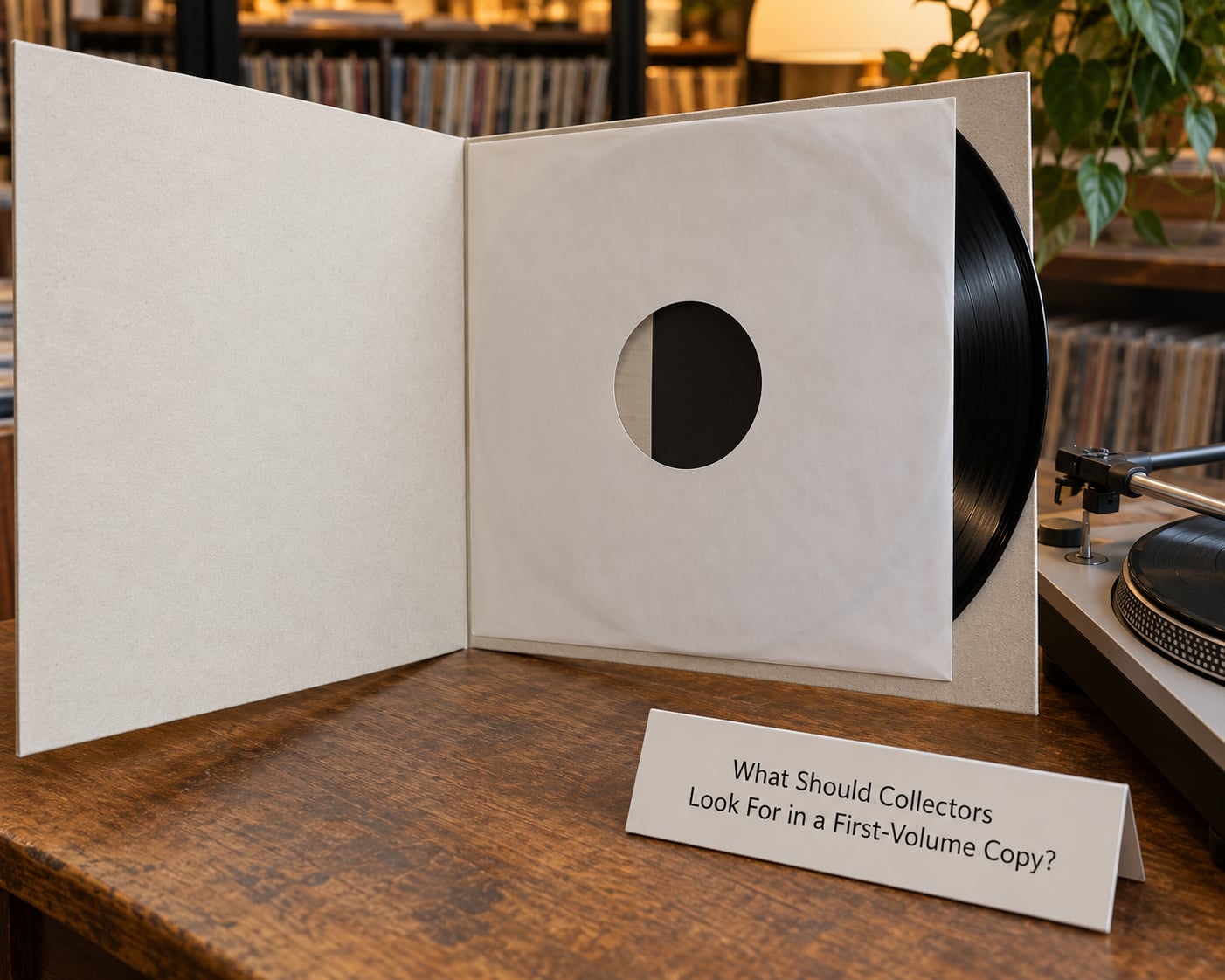
Start with mono or stereo. The first issue circulated in both, and the two sound different enough that collectors argue about them, so decide which one you are actually shopping for before you start reading runout etchings at a shop counter.
Then check the catalog number on the jacket and the labels against the label’s own discography, and compare what you see with what the seller is claiming. Runout etchings, matrix numbers and the Elektra label stamp are the reliable tells, and only the record in front of you settles them. Seller photographs and listing descriptions are where pressing errors come from, so verify rather than assume.
Condition matters more here than on an average reissue. The sleeves from 1972 are flimsy gatefolds with printed card stock, and a copy that has been in a cutout bin will show it in the seams. Vinyl that has lived in a garage will have a groove wear you cannot fix, so play-test before you commit.
On where the copies come from: the record cycles. It was ordinary stock for years, then it disappeared, then it turned up again at prices that shock people who remember the cheap version. That swing is exactly why the pressing details need checking from the copy, not from a remembered asking price.
Frequently Asked Questions
What is a Nuggets compilation?
A nuggets compilation collects short, cheap singles from small independent labels onto one various-artists record, usually so listeners can hear many bands at once. The phrase most often means Nuggets: Original Artyfacts from the First Psychedelic Era, 1965-1968, the 1972 Elektra double album compiled by Lenny Kaye from 27 American garage, psychedelic and proto-punk singles.
Is Nuggets a punk compilation?
Not at the time it was made. In 1972 punk was still an insult and the word punk rock had barely entered use, so the tracks were filed as garage, freakbeat and psychedelia. The punk reading arrived when Sire reissued the album in the mid-1970s, and punk bands then treated it as a blueprint for short, fast and deliberately unpolished rock.
How many Nuggets compilation volumes are there?
There is no single tidy answer, because different labels used the name independently. Rhino’s Handmade series turned it into a numbered run covering further eras, and titles such as Nuggets II, Children of Nuggets and regional Nuggets sets came from other labels. The long-rumoured unreleased Volume 2 eventually appeared on the 2023 fiftieth-anniversary box set.
Who compiled the original Nuggets: Original Artyfacts?
Lenny Kaye compiled and wrote the liner notes. He was a writer and record-shop clerk at Village Oldies in Greenwich Village, known for memorizing the stock and sharing it with anyone who asked. Elektra founder Jac Holzman commissioned the project, originally planned as a series of regional sets, and label lawyers cleared the licences down to one double album.
What is the rarest song on the first Nuggets album?
Collectors rarely agree on a single answer, because rarity depends on whether you mean the cheapest original single, the hardest to find record for sale today, or the track with the lowest original pressing count. What is not in doubt is that several bands on Nuggets pressed only one single, so their side is genuinely thin. Original singles and reissue track listings are the place to compare candidates.
Is the first Nuggets album worth collecting?
Most owners treat it as a foundation piece rather than a trophy, and that is the sensible approach. Play value and liner notes matter more than a mono original for nearly everyone, and a mid-2010s remaster or a later box set gives you the same 27 tracks in better condition. Original 1972 pressings in clean mono are genuinely scarce, so check catalog numbers and etchings against the copy in your hands.
Conclusion
Nuggets is an archive with a point of view: 27 short American singles from 1965-1968, rescued from cutout bins by one record-shop clerk who knew what was about to vanish. It sits at the front of the garage rock lineage, the punk blueprint and the bootleg reissue culture that followed it.
Start with the rarest early sides and the thinnest original pressings, and give the liner notes a proper read, because that essay is the reason the record is talked about half a century on. Then check catalog numbers and etchings against the actual copy before you buy, since the pressing details do more to decide a copy’s character than anything the listing promises.