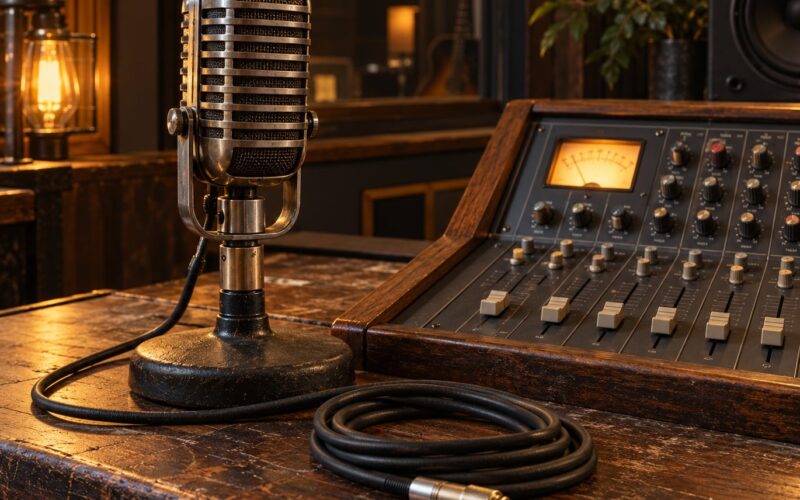
Studios recorded live to tape by capturing the whole band playing together in a single pass onto one multitrack machine, rather than tracking each instrument separately. Microphones fed a mixing console, the console outputs fed the tape machine, and every performance landed on its own track at the same moment. That constraint shaped the drum sounds, room sound, and editing you can hear on classic records.
Put another way, if a band recorded live to tape, the drummer, bassist, guitarist and singer all played at once and the machine caught all of them together. Nothing was assembled later from separate passes, apart from guide tracks and safety recordings.
This matters for anyone with a record shelf full of classic rock, punk, garage and rockabilly. Those records were made under hard limits: expensive tape, a fixed number of tracks, and no undo. The engineer got one pass, the band had to be tight, and whatever chemistry happened is what you hear decades later.
Table of Contents
- What Does Recording Live to Tape Mean?
- What got captured in a single pass
- How it differs from modern digital recording
- Why Did Studios Record to Tape?
- Five reasons that pushed bands into the room together
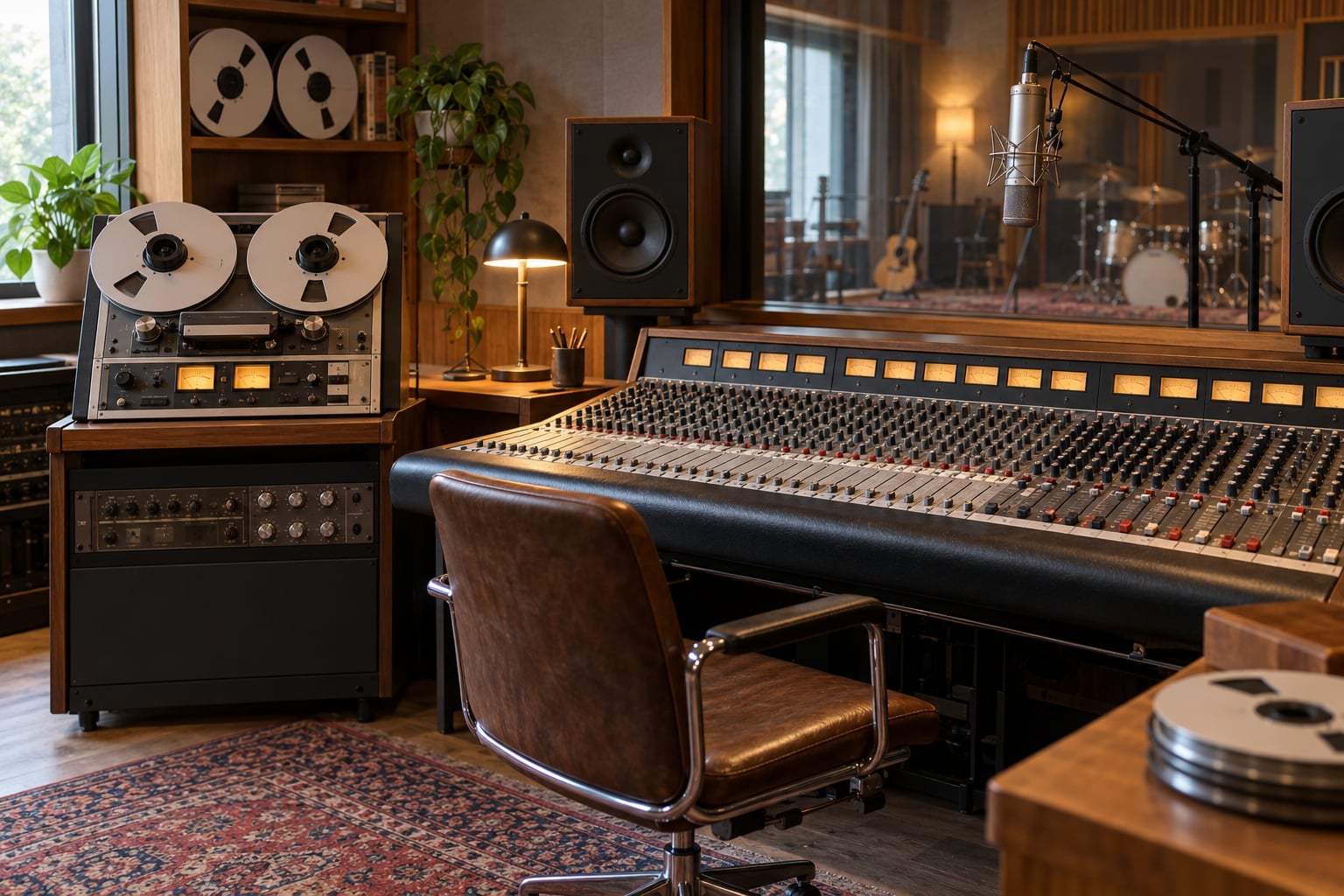
- How Studios Recorded Live to Tape: The Recording Chain
- 1. Instruments and microphones
- 2. The mixing console
- 3. The tape machine
- 4. Monitoring
- 5. Mastering and transfer
- How the Band, Engineers, and Producer Worked Together
- The sync decision
- What a session day actually looked like
- How Microphone Placement Shaped the Sound
- How Tape Speeds and Formats Affected the Recording
- How Studios Edited and Mixed Live Recordings
- How You Can Hear Live-to-Tape Recording on Vinyl
- Live to Tape vs. Overdubbing: What Changed the Result?
- Frequently Asked Questions
- What does live to tape mean?
- How is audio recorded to tape?
- Why do studios record the band live instead of tracking each instrument?
- How many tracks can you record on 2 inch tape?
- Do studios still record to tape?
- What famous songs were recorded live in one pass?
- Conclusion: Start by Listening for the Performance
What Does Recording Live to Tape Mean?
Live to tape is a recording method, not a genre. The band plays together in one room, in one pass, and the full performance is captured simultaneously on a multitrack tape machine. Each source still gets its own track, but every track contains not only the instrument it was meant to capture but the rest of the band leaking into it.
That leak, usually called bleed or spill, is what separates live tracking from overdubbing. In an overdub session the singer can be alone in the booth with headphones on, so their track is clean and isolated. In a live tracking session every mic hears the room, and the engineer has to make the spill work rather than remove it.
Nothing about the process is inherently nostalgic. Bands still track live to tape today, and plenty of engineers prefer it because editing is not the point. The performance is the point.
What got captured in a single pass
In the classic workflow, the rhythm section was tracked live first: drums, bass and rhythm guitars in the same room at the same time. Lead vocals were usually done afterward as overdubs, because a singer’s tone varies too much to risk on a one-take pass. So the phrase live to tape often describes the backbone of a record, not every note on it.
How it differs from modern digital recording
Modern digital sessions can behave the same way. The real differences are practical: unlimited takes, unlimited tracks, non-destructive editing, and the ability to fix timing and pitch afterwards. None of those existed on tape. A blown take stayed blown.
Why Did Studios Record to Tape?
The short answer is economics. Tape was expensive and track counts were small, so capturing a whole band at once was often the only way to finish a record in a reasonable number of days. The musical reasons came later, or in parallel.
Five reasons that pushed bands into the room together
Track limits. A 16-track machine could hold a drum track, a bass track and a few guitars, but nowhere near a full arrangement. Recording the rhythm section in one pass solved the arithmetic.
Time pressure. Albums had deadlines and studio time was booked by the day. Every overdub is another pass, another playback, another setup. A live tracking session captures five sources for the price of one pass.
Saturation. Driving tape into saturation compresses peaks and adds harmonic content. On loud rock sources that glue is exactly what the records wanted, and it happened whether or not anyone was chasing it.
Tightness. Overdubs drift. Record a drummer alone for an hour and the feel shifts; record the band together and the pocket is fixed by the time the tape passes the head.
Simplicity of sync. A single pass needs no click alignment against a previous take. Everything lands at the same instant because everything happened at the same instant.
Punk, garage and rockabilly producers leaned into the speed of it. If the band can play the song and the room works, you get a take. Style and constraint pointed the same direction, which is why those genres sound the way they do.
How Studios Recorded Live to Tape: The Recording Chain
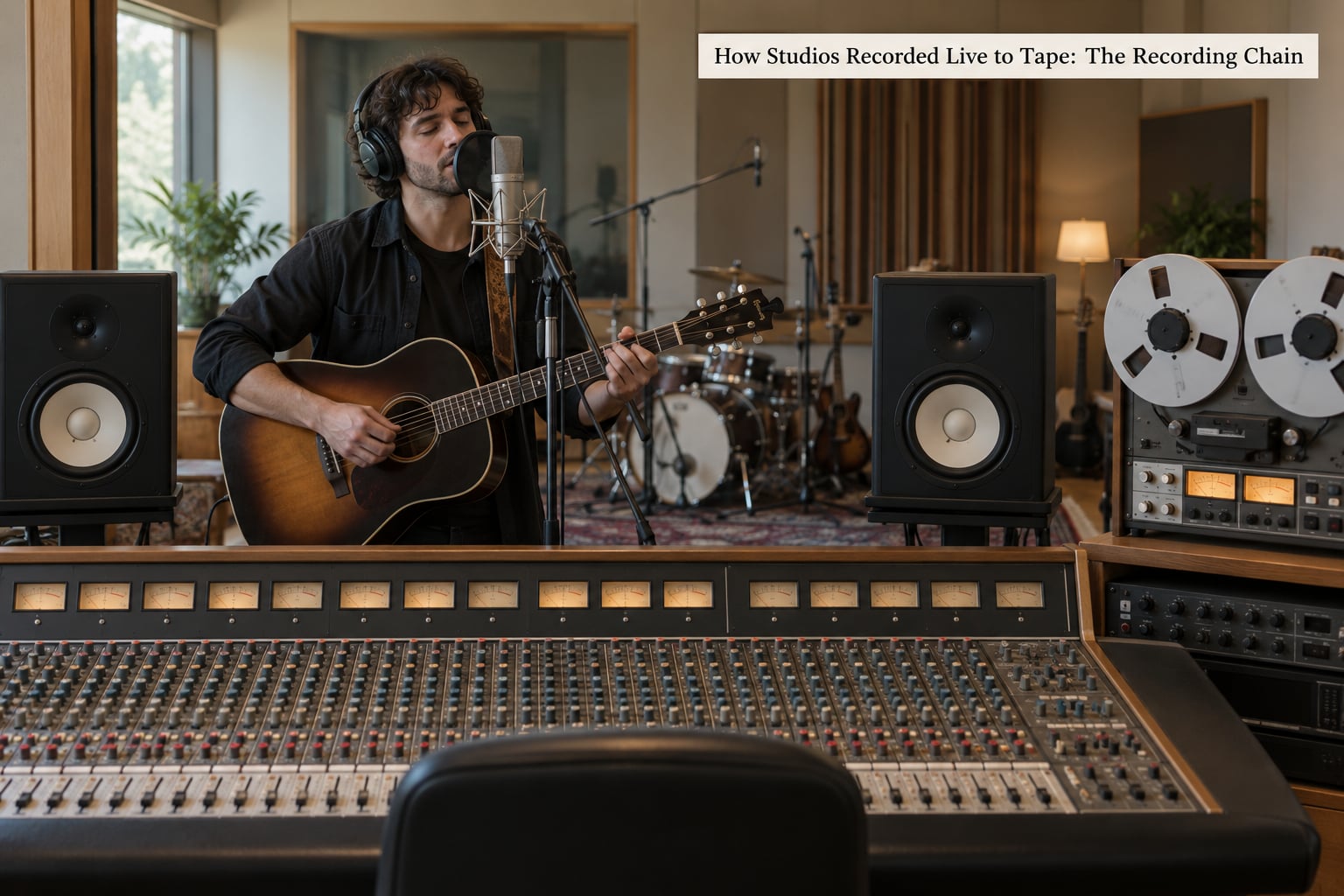
The signal path in a tape room ran from the floor to the console, and every stage shaped the record. Understanding the chain is the fastest way to hear old records differently.
1. Instruments and microphones
Each source had at least one microphone, often two or three. Drums got overheads plus close mics, guitars got a mic on the cabinet, bass was often split between a mic and a DI, and vocals got a large diaphragm condenser in whatever corner of the room had the fewest reflections. Multiple microphones on one source were summed by the console, which is where the width of a drum kit comes from.
2. The mixing console
Big consoles from MCI, Neve, API and Trident acted as the control centre. Every mic landed on a fader with its own EQ, dynamics and routing. On a live tracking pass, the console was not just a mixer but a decision engine: which spill was acceptable, which room mic added what, which source got level cut after three minutes of loud drums.
3. The tape machine
Machines from Studer, Ampex and MCI ran tape past a record head array. Two-inch tape at 15 inches per second carried up to 24 tracks in the classic era, and the machine recorded all of them at once. The heads were fixed; the mic positions and faders determined what landed on each track. Print, or bouncing, was how a mix moved from machine to machine.
4. Monitoring
Control room monitors let the band and engineer hear what was actually going to tape, spill included. That honesty was useful and brutal: a player hearing a vocal buried under spill could not be told to fix it later, because later there was no clean version.
5. Mastering and transfer
Once the mix was printed, it went to a mastering engineer who cut the lacquer, or later to a transfer chain that moved the audio into the digital domain. Vinyl’s own bandwidth limits lived downstream of everything above, but the live tracking decision was already baked in.
How the Band, Engineers, and Producer Worked Together
A tape day had an order, and the order was not arbitrary. Engineers described on gearspace and thegearpage.net track drums, bass and rhythm guitars first on a 24-track 2-inch machine, then add vocals, keys and everything else afterward, sometimes by dumping the analog tracks into a DAW at 88.2k and finishing digitally.
The logic is straightforward. Drums set the tempo and the loudest source, so once they are captured the rest of the band can play along with them. Bass and rhythm guitars lock to the drums. Vocals, being the most variable and the most exposed to spill, are saved for last when there are free tracks and a settled arrangement.
The sync decision
Sync, half-sync and bouncing describe three different solutions to the same problem, and collectors hear the difference even when they cannot name it.
| Approach | What happens live | What gets replaced | You hear |
|---|---|---|---|
| Full sync | Whole band tracked together, guide vocal possible | Vocal overdub, sometimes lead parts | Tight, unified, some spill |
| Half-sync | Drums tracked alone and bounced down | Everything except drums | Perfectly locked kit, drier band |
| Full live | Everything in one pass | Nothing, possibly a safety take | Loose, energetic, real spill |
Half-sync was the pragmatic middle ground and it shaped a lot of classic rock. You get a drum sound with no other instruments bleeding into it, because the kit was recorded in an empty room. It also removes the interaction that made live tracking worth doing, which is a trade producers made deliberately.
What a session day actually looked like
Load-in, line check, level setting, then takes. A working engineer described handling a live band as a 5 to 8 hour block with musicians in the main room on four separate headphone mixes. Rehearsal first, balance second, record third. Between takes the engineer decided whether the problem was the performance or the level, and once tape rolled there was no taking a take back.
How Microphone Placement Shaped the Sound
Placement decided more of the record than the microphone model did. With a live tracking pass, every move changed what bled onto every other track.
Close-miking a snare drum puts the mic inches from the head. You get attack, stick noise and a small amount of spill from the rest of the kit. Moving overheads higher widens the picture and picks up more cymbals and room. Two to four feet of distance is a common starting point, then you listen and adjust.
Overhead mic pairs became standard on rock records partly because stereo overheads made a mono tape track feel wide on the turntable. Room mics, often ribbon, added a layer of blended sound on top and are one reason live tracking can sound so full. Isolation booths and power soakers existed to fight spill: putting a room in the guitar amp lowered the level without touching tone much.
The spacing rule engineers quote is roughly five to one, the distance between two mics relative to the distance from the source to the nearest mic. Break it and the two signals partially cancel, which is the phase problem listeners often mistake for a bad record.
Vocals recorded last got a treated corner, a pop filter and a quiet room, which is a large part of why vocal overdubbing became standard. Bass guitar usually ran through a DI box for a clean signal with the amp mic blended underneath, or the low end was cut out of the mic and restored from the DI at mix time to control leakage.
How Tape Speeds and Formats Affected the Recording
Tape speed is the speed of the tape past the head, measured in inches per second. The faster the tape, the more magnetic particles pass a given area, which means better high frequency response, lower noise and more headroom before saturation.
15 ips was the standard studio speed on two-inch tape, and it is the reason those records have open, clear top end. 7.5 ips was the economical choice, trading away sparkle for half the tape consumption. 3.75 ips showed up on portable and home machines, including cassette machines, where the noise floor and high frequency loss are audible.
Slow tape also means wow and flutter, the small pitch variations caused by the transport not holding perfectly constant speed. On a slow machine playing a slow part, it becomes audible as pitch wobble. On a well-maintained machine at 15 ips it mostly disappears.
Format mattered as much as speed, because format determined how many things could be recorded at once.
| Format | Max tracks | Typical speed | Era | Character and use |
|---|---|---|---|---|
| Quarter-inch mono | 1 | 7.5 or 15 ips | 1950s onward | Single, limited bandwidth, early pop and spoken work |
| Quarter-inch 4-track | 4 | 7.5 ips | 1960s | Home and project studio demos, thin but usable |
| Quarter-inch multi-track | 8 to 16 | 7.5 ips | 1970s | Demos and smaller productions, audible noise and hiss |
| Two-inch 16-track | 16 | 15 ips | 1960s to 1970s | Standard rock session format, clean and open |
| Two-inch 24-track | 24 | 15 ips | 1970s to 1980s | The classic rock album format, room for a live pass plus overdubs |
| Two-inch high track | Up to 48 | 15 ips | 1980s | Later big records, less room for the live-tracking approach |
Two-inch 24-track is the format most people mean when they say studios recorded live to tape. It held the whole rhythm section in one pass and still had tracks left for the overdubs that followed, which is exactly why the method worked at album scale.
How Studios Edited and Mixed Live Recordings
Editing tape was physical. An engineer marked a cut point with grease pencil or edit flags, laid a blade on the tape at an angle, and made one clean pass with a razor. Rotate the reel back and do it again. There was no undo, and a bad cut wasted the segment behind it.
On a live tracking session, edits were limited by what was actually on the tape. If a guitar spilled into the vocal track across the whole song, you could not lift the guitar. What engineers did instead was assemble the best take, print it back to other tracks, and use that new track as a guide for overdubs.
Mixing then happened on the console in real time, with the mix printed to a separate machine or two. Bouncing degraded the signal a little each pass, so engineers limited how many times they printed. Effects came from outboard gear rather than plugins, and adding reverb meant printing the affected part back again.
Once the mix was settled, it went to mastering for lacquer cutting. The mastering engineer worked on the cut itself as much as the audio, since a record could be equalised to fit the format rather than the other way around.
How You Can Hear Live-to-Tape Recording on Vinyl
Here is the part that pays off for a collector. Put on a record you suspect was tracked live and listen for these specific things.
Consistent feel across the take. A live tracking pass cannot drift, because the whole band is locked together by the same performance. A solo overdub from an hour later often can.
Spill. Listen at the quiet moment before a snare hit and see if the vocal mic picked up the room. On a genuinely live pass, the guitar is faintly present in the vocal, and the vocal is faintly present in the guitar.
Room sound. A record with a lot of room has a blended character where sources seem to share space. That is the room being captured along with the band, not a flaw.
Edit marks. A splice or a small click between sections can mean the band was assembled from more than one take. On a raw live tracking record there may be none at all, because the whole song happened once.
Narrow stereo. A mono source fed to both stereo channels produces a wide but empty centre. Blown-up mono on a live pass sounds different from a genuine stereo image, and that narrowness is often a sign of the era.
Compression and saturation. When levels are high on tape, peaks get compressed and harmonics build up. It shows up as a dense, glued loudness that is hard to fake, and a lot of garage and punk records have it simply because the engineer ran the levels up.
Live to Tape vs. Overdubbing: What Changed the Result?
Recording the band together and building a song one layer at a time produce genuinely different records, and the difference is audible rather than philosophical.
| Factor | Live to tape | Overdub |
|---|---|---|
| Setup time | One pass per song | Many passes, many headphone mixes |
| Fixing a mistake | Retake the whole performance | Redo one part |
| Timing and tuning | Untouchable afterwards | Editable after the fact |
| Spill | Everywhere, and part of the sound | Minimal, each source isolated |
| Energy | Raw, sometimes chaotic | Controlled, sometimes stiff |
| Risk per take | High, all or nothing | Low, layer by layer |
The honest drawback of live tracking is that editing cannot rescue it. One producer’s argument, often repeated, is that pitch correction cannot fix a live recording because the bleed means there is no clean isolated source to correct. The same person records with less distortion in the room than they use on stage, and keeps a straight DI as insurance.
Plenty of records used both approaches, which is why the label is a description rather than a category. A rhythm section tracked live with a vocal overdub is both a live record and a heavily produced one. Collectors who assume the two are opposites miss that middle ground, and it covers more classic albums than either camp would like to admit.
Frequently Asked Questions
What does live to tape mean?
Live to tape means the band played together in a single pass and the whole performance was recorded at once onto a multitrack tape machine, instead of each instrument being tracked separately and assembled later. Each source still had its own track, but every track also contained the rest of the band bleeding into it, which is why editing and tuning fixes were rarely possible afterwards.
How is audio recorded to tape?
Microphones carry each sound into a mixing console, where faders, EQ and routing shape every source. The console outputs feed a multitrack tape machine, which pulls magnetic tape past a fixed array of record heads and lays all tracks down simultaneously. The finished mix is printed back to tape, then cut to lacquer by a mastering engineer or transferred into a digital system for release.
Why do studios record the band live instead of tracking each instrument?
Tape was expensive and track counts were low, so recording a whole band at once was often faster and cheaper than dozens of overdub passes. Musically, a single pass locks the feel together and captures the interaction between players. The trade-off is that spill contaminates every track, and you cannot isolate or replace a single instrument once the take is printed.
How many tracks can you record on 2 inch tape?
Two-inch tape at 15 inches per second supported 16 tracks in the 1960s and 70s, then 24 tracks through the classic rock era, with later machines reaching up to 48 tracks. Twenty-four tracks was the standard format for rock albums because it held the whole rhythm section from a live pass and still left tracks free for the vocal and lead overdubs that followed.
Do studios still record to tape?
Yes, though the modern session is usually a hybrid. A common workflow described on gearspace is to track drums, bass and guitars to a two-inch 24-track machine, then dump those analog tracks into a DAW at 88.2k and add vocals, keys and edits digitally. One practical friction point: studios own the machine but usually do not supply blank tape, so the reel has to be sourced separately.
What famous songs were recorded live in one pass?
Two-inch 24-track at 15 ips was the format behind most classic rock, punk and garage albums of the 1970s, so entire records in those genres were built on live tracking. Tell-tale signs are locked timing that does not drift, spill audible on quiet passages, and a blended room sound. The clearest example of a genuinely complete single-pass record is difficult to point to, because most hits used a live rhythm section with overdubbed vocals on top.
Conclusion: Start by Listening for the Performance
If you want to understand how studios recorded live to tape, put on a record you think was tracked live and listen for the performance first, not the tone. Does the timing hold steady from the first bar to the last? Can you hear one instrument faintly inside another on the quiet passages? Is there a click or a splice where a take changes?
Those clues tell you more than the equipment list ever did. The reason live tracking mattered was never the tape itself, it was that a band playing together in one pass produced a take that could not be improved on later, because there was no later.