Surf rock is guitar-driven rock and roll born in Southern California in the late 1950s, built on a wet, echoing electric guitar, fast drum beats and short riffs built to be nodded along to. It has two main forms: the twangy instrumental sound Dick Dale built in Hermosa Beach, and the harmony-heavy vocal pop the Beach Boys turned into hits. So what is surf rock music in plain terms? Rock and roll written for people who treated the beach as a front porch.
Table of Contents
- What Is Surf Rock Music?
- The two forms, in one line each
- What Makes Surf Rock Sound Distinctive?
- The guitar tone is the whole argument
- The rhythm section does more than keep time
- How Is Surf Rock Music Different from Rockabilly and Garage Rock?
- Where Did Surf Rock Come From?
- Who Are the Most Important Surf Rock Artists?
- Why Dick Dale Is the King of Surf Rock Music
- What Are the Best Surf Rock Records for Beginners?
- Start with one compilation
- Then take two classic records
- Then chase the four singles that matter
- How Does Surf Rock Relate to Punk and Independent Music?
- How Can You Start Listening to Surf Rock?
- Frequently Asked Questions
- Does surf rock always have vocals?
- What bands are considered surf rock?
- Who is the king of surf rock?
- What is the most popular surf rock song?
- Is surf punk the same thing as surf rock?
- Why is surf rock so closely associated with California?
- The Short Version
What Is Surf Rock Music?
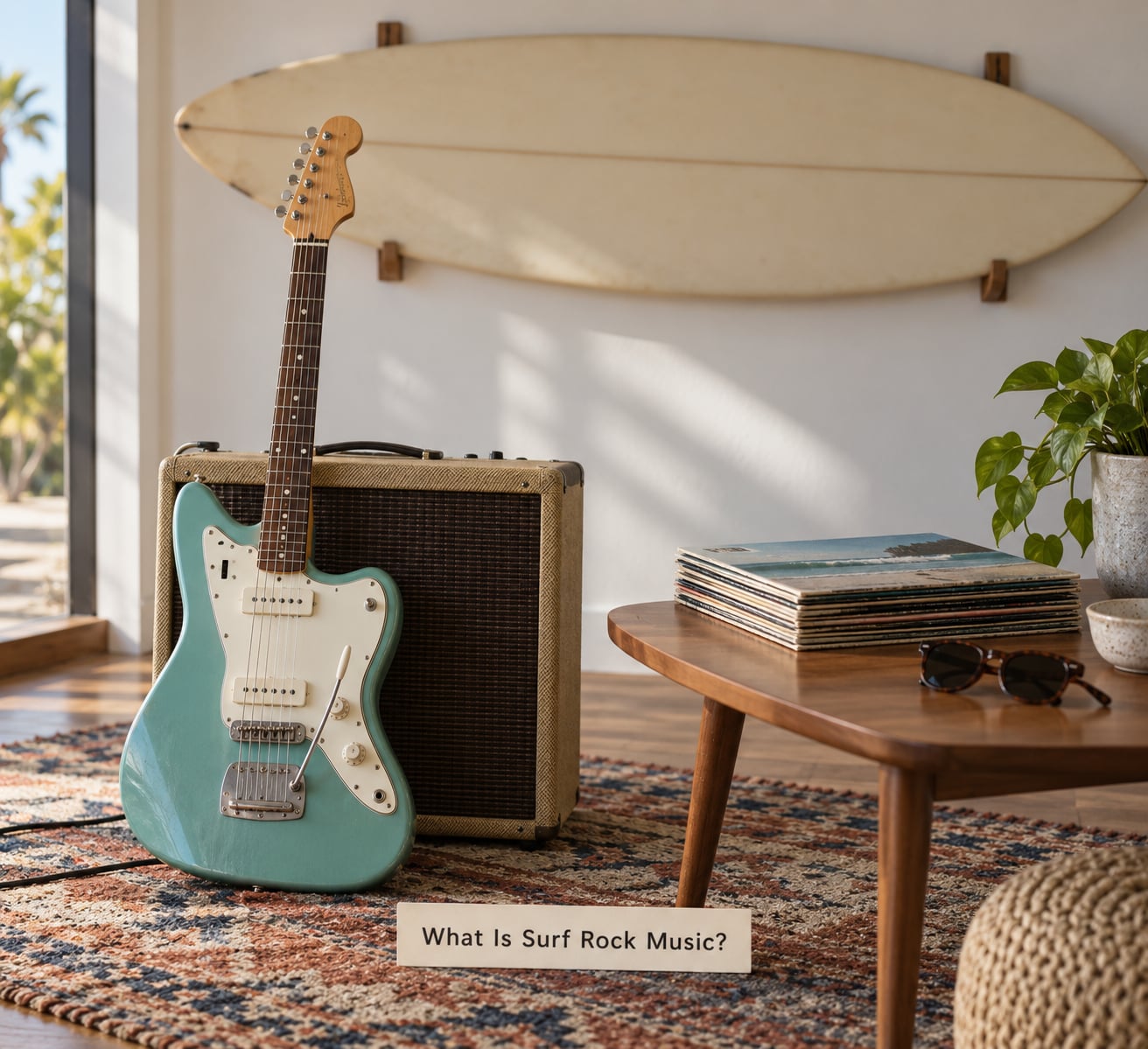
Surf rock is a genre of rock and roll tied to surf culture in Southern California, especially popular between 1958 and 1964, and it exists in two major forms. Instrumental surf rock leans on reverb-drenched lead guitar, staccato chords and drum patterns built to sound like waves breaking. Vocal surf rock puts the same guitars behind sung songs about cars, boards and endless summer, and it usually gets filed under surf pop instead.
That second half catches people out. Plenty of listeners meet the Beach Boys first and assume the whole genre is sunny vocal pop, when the instrumental half is closer to the real centre of the style. Forum regulars on surf music boards are blunt about it: the twangy stuff is the tradition, the vocal stuff is the branch that sold more records.
The two forms, in one line each
Instrumental surf: short pieces built around a single guitar riff, a driving backbeat and no words at all. Dick Dale, the Chantays, the Surfaris and the Lively Ones worked in this lane.
Vocal surf: the same rhythm section and reverbed guitar underneath layered vocal harmonies and lyrics about the beach. The Beach Boys, Jan and Dean and the Rip Chords belong here.
Hot rod rock is a branch of the vocal form. Around 1962 and 1963 the lyrics slid away from waves and toward drag strips and chrome, which is why Jan and Dean’s car records and bands like the Rip Chords turn up in surf histories too.
What Makes Surf Rock Sound Distinctive?
Six things do most of the work. Learn to hear them and you can pick surf rock out of any playlist within a few seconds.
- A wet, dripping guitar. Lead lines run through a big spring reverb tank so every note smears into the next one.
- Rapid picking. Alternate picking, tremolo strumming and hard staccato chord stabs instead of long sustained bends.
- A rolling, surf-like drum beat. Fast eighth-note patterns and shuffle figures that never settle into a plain backbeat.
- One riff, repeated. Songs are often two to three minutes long and revolve around a single melodic idea.
- Bright major melodies. Cheerful and major-key, sometimes over a minor or twelve-bar blues structure underneath.
- Relentless energy. Even the slower tracks are recorded like the fun never stops, which fits the image and the era.
The guitar tone is the whole argument
Ask anyone who plays this style what defines it and they talk about the sound before the songs. Guitarists on gear forums describe the ideal rig as a single-coil offset or a Strat run into a valve amp, with a spring tank sitting in the room on a high proportion of wet signal. Digital reverb is not the same animal; it has no drip and no swell.
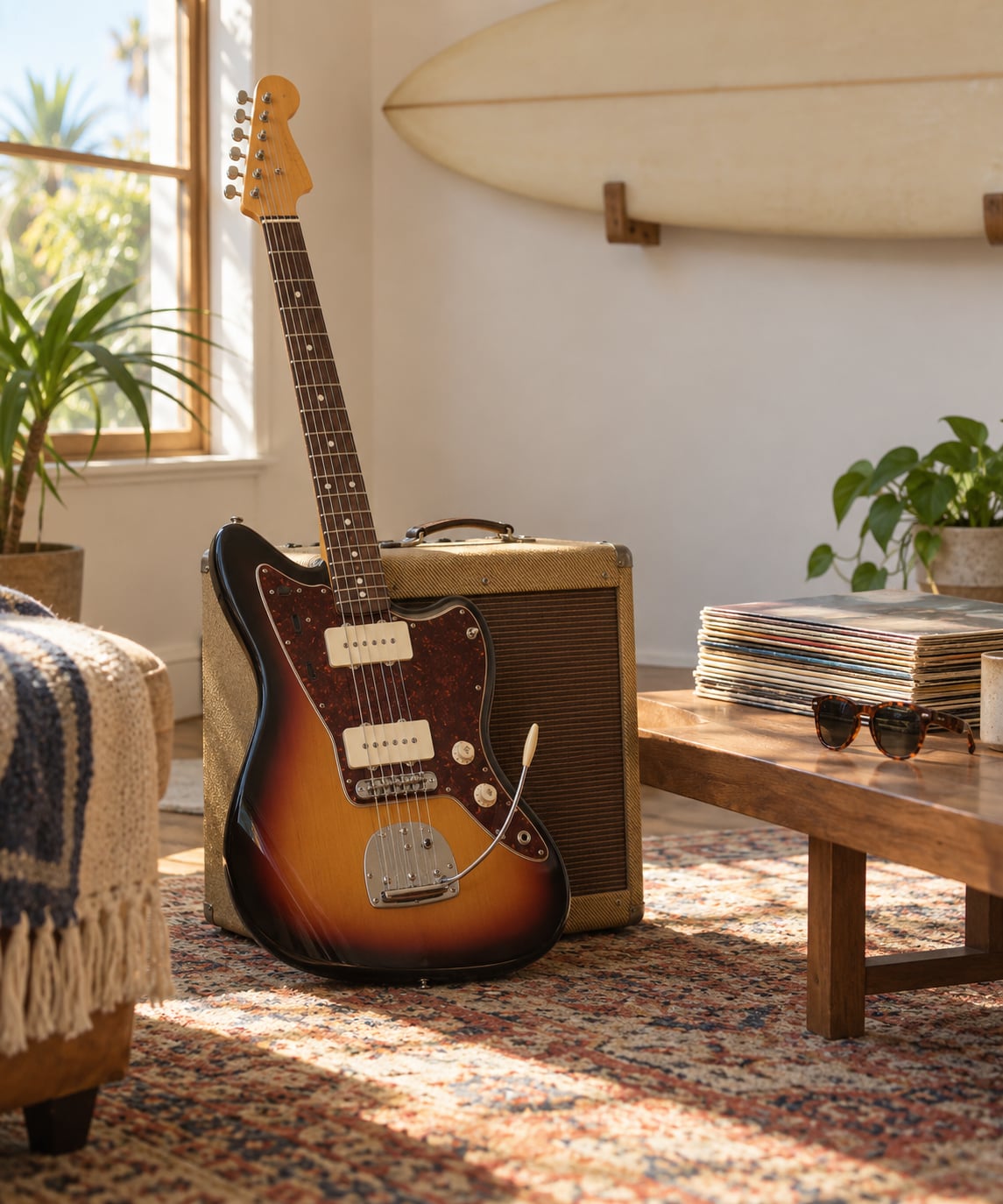
Leo Fender’s offset shapes, including the Jazzmaster and Jaguar, became the genre’s default instruments, with the Stratocaster and the Precision bass in the pockets around them. The wet, spring reverb sound still pulls in listeners who could not care less about the beach.
The rhythm section does more than keep time
A surf rhythm section plays around the riff rather than under it. Drummers lean on shuffle patterns and fills that roll forward, and the bass often locks to the snare instead of a typical four-to-the-floor root line. Combined with guitars that barely breathe, it creates the sense of constant motion that listeners describe as waves.
That said, plenty of it is deliberately simple. The surf era was made for two-minute jukebox singles, so the songs stay short, repeatable and built so a live band can play them without a chart in front of it.
How Is Surf Rock Music Different from Rockabilly and Garage Rock?
All three come from the same late-1950s engine and get mixed up constantly, so here is the short version side by side.
| Element | Surf rock | Rockabilly | Garage rock |
|---|---|---|---|
| Typical tempo | Fast and rolling | Mid to fast, with a lazy bounce | Fast and scrappy |
| Vocals | Either none or tight harmonies | Lead vocal front and centre | Shouted, raw, often with handclaps |
| Guitar focus | The lead line and the reverb | Choppy rhythm guitar plus a slap or twang lead | Fuzz, feedback, distortion |
| Defining effect | Spring reverb, tremolo picking | Slapback echo, hollow-body tone | Fuzz pedal and spring reverb too |
| Main imagery | Waves, boards, hot rods | 1950s youth, rebellion, cars | Teen boredom and lo-fi rebellion |
| Peak years | 1958 to 1964 | Mid 1950s onward | Mid 1960s |
| Song length | Under three minutes | Two to three minutes | One to three minutes |
Rockabilly is built around a singer and a rhythm guitar, surf rock around a lead guitar, and garage rock around noise. That is the whole difference in one line, though the three overlapped constantly in the early sixties.
Where Did Surf Rock Come From?
Surf rock did not appear fully formed. It grew out of instrumental rock and rockabilly, took a shape in a handful of California towns, and then faded almost as fast as it arrived.
- 1958-1959: the guitar takes over. Link Wray’s rumbling “Rumble” and Duane Eddy’s “Rebel Rouser” put the electric lead guitar in front for the first time. Rock and roll vocals slide aside, and the guitar starts doing the talking.
- 1960: the gear catches up. Big reverb tanks become affordable, Fender builds the offsets, and bands like the Bel-Airs start experimenting with the wet sound out of Los Angeles.
- 1961: the first wave of hits. The Ventures put “Walk Don’t Run” into millions of homes, Sandy Nelson’s “Teen Beat” gives instrumental rock a beat of its own, and a Californian sound stops being a local curiosity.
- 1962: the peak year. Dick Dale releases the two sides of “Misirlou”, the Chantays record “Pipeline”, the Atlantics record “Bombora”, and the Surfaris take “Wipe Out” to number two.
- 1963: surf becomes pop. Jan and Dean’s “Surf City” is the first number one single by a vocal group, and the Beach Boys put surf imagery in front of a much wider audience.
- 1964: the wave breaks. The British Invasion moves the charts faster than most surf bands can follow, and the era’s acts start chasing a heavier, more commercial sound.
The decline was not really a failure of quality. It was a change in what teenagers were listening to, and it happened the way a lot of short-lived scenes end: the original scene moved on, and the records stopped selling before they stopped being good.
Then the genre came back in pieces. A surf-punk wave in the late seventies and early eighties stitched surf instrumentals to punk energy, the 1994 film Pulp Fiction put a package of surf classics into a generation that had never heard them, and from the 2000s on a steady run of bands in Los Angeles, San Francisco and points overseas kept the format alive. Modern surf rock is not revival as nostalgia; it is a working scene with new records.
Who Are the Most Important Surf Rock Artists?
If you only put six names on a list, make it these. Each one adds something the others do not.
- Dick Dale and the Del-Tones. The pioneer who pushed the guitar harder than anyone else and made the wet, loud sound the template for everything after him.
- The Ventures. The most recorded instrumental group of the era, and the reason surf guitar reached people who never set foot in California.
- The Surfaris. California group whose “Wipe Out” is one of the defining surf instrumentals, with a full band sound and a surf-culture name that fit perfectly.
- The Chantays. A small Los Angeles band with one of the most recognisable riffs ever recorded in “Pipeline”.
- The Lively Ones. Delivered “Surf Rider”, the record surf guitar players still chase decades later and the one many listeners meet through film.
- The Trashmen. Minneapolis band that took the sound in a stranger direction, most famously with “Surfin’ Bird”.
- The Atlantics. Australian group whose “Bombora” took surf music out of California and gave it an international hit.
- The Honeys. One of the few all-female surf groups of the period, fronted by Marilyn Rovell, and a reminder that the scene was not only a boys club.
- The Beach Boys. Brian Wilson’s harmony-driven vocal surf, which pulled the genre toward pop and produced some of the finest records of the era.
- Jan and Dean. Vocal surf at its commercial peak, and later the bridge into hot rod rock and death-defying car imagery.
Why Dick Dale Is the King of Surf Rock Music
Most people asked who rules this genre answer Dick Dale, and it is not close. He was the loudest, the earliest and the most influential player of the wet sound, and his two-sided debut single “Misirlou” set the template that bands copied for the next decade. Every instrumental surf record since has his fingerprints on the guitar tone.
What Are the Best Surf Rock Records for Beginners?
The catalogue is deep and the reissue rabbit hole is real, so start small. Three records in order will teach you more than twenty in random order.
Start with one compilation
Pick a broad surf compilation that covers the whole era rather than one band’s anthology. You get Dick Dale, the Chantays, the Surfaris and the Ventures side by side in about an hour, which is exactly how the music felt to a teenager in 1963.
Then take two classic records
Dick Dale’s first full-length with the Del-Tones is the loudest and most influential entry point. The Chantays and the Surfaris records are tighter and more conventional, and they are the best way to hear what most bands actually sounded like rather than what the loudest band sounded like.
Then chase the four singles that matter
- Misirlou by Dick Dale, the signature riff and the song surf rock is identified with.
- Pipeline by the Chantays, the most immediately recognisable surf melody ever cut.
- Wipe Out by the Surfaris, the full-band record and a genuine chart hit.
- Surf Rider by the Lively Ones, the one most people first hear in a film rather than on a playlist.
Add the Beach Boys only after the instrumental side makes sense to you. Without that order, their records just sound like nice pop, and you lose the reason they made the guitar sound like that in the first place.
How Does Surf Rock Relate to Punk and Independent Music?
Surf rock is one of the few genres punk took something structural from. The link runs through garage rock, which shared the same low-fi recording style and the same spring reverb, and then through the late seventies bands that combined surf riffs with punk attitude.
Agent Orange spliced surf guitar lines into hardcore energy and made the fusion a scene of its own. Man or Astro-man? took the instrumental template and added science-fiction drama and tempo. The Bambi Molesters, the Mermen and the Sheiks of Surfgrass kept the surf side of it loud and clean. Los Straitjackets did something different again, wrapping instrumental surf around horn arrangements.
Further out, bands like the Wavves and Beachwood Sparks borrow the vocal side, adding power pop and indie melody to the surf lyric and the surf chord. That usually gets filed as surf pop or indie surf rather than surf rock, and the label argument is genuinely never settled.
One warning for new listeners: not every fast, loud guitar record with reverb is surf rock. The useful test is whether a single riff is the song, whether the guitars are doing the singing, and whether the band sounds like it is having a good time. Punk records with fuzz and no riff, and indie records with surf imagery but slow arrangements, both fail that test.
How Can You Start Listening to Surf Rock?
A four-step path gets you from curious to obsessed without a year of research.
- Play one compilation in full. Not shuffled, not a playlist of favourites. Linear, like someone made the running order for you.
- Pick three artists and stay there. Dick Dale for the sound, the Chantays or Surfaris for the songs, the Ventures for the scale of the whole thing.
- Compare studio and live. A live surf record changes the way you hear the studio one, mostly because the drums stop pretending to be polite.
- Then branch out. Modern surf rock first, since it is easier to find than 1962 B-sides, then the reissue rabbit hole when you want the raw sound.
On the gear side, if you play, the shortest path to the tone is a single-coil guitar into a valve amp with a spring tank on a high wet mix. Start with the tank before you spend on the guitar, because that is where the sound lives.
Where is the genre now? Strongly in Los Angeles, San Francisco, Australia, Japan and parts of Europe, with a new instrumental record every month and a festival circuit that fills rooms. Guitar forums still argue about which vintage instrument sounds most authentic, and collectors still trade original pressings of the same small run. It is not a museum genre, and that is the most useful thing to know about it.
Frequently Asked Questions
Does surf rock always have vocals?
No. Most of the foundational surf rock records are instrumental, including Misirlou by Dick Dale, Pipeline by the Chantays and Wipe Out by the Surfaris. The style also has a vocal branch built around layered harmonies, which is where the Beach Boys and Jan and Dean sit. Both branches share the same reverb guitar, rhythm section and tempo, so they belong to the same scene even though they sound very different.
What bands are considered surf rock?
The core names are Dick Dale and the Del-Tones, the Ventures, the Surfaris, the Chantays, the Lively Ones, the Trashmen and the Atlantics. Jan and Dean and the Beach Boys count as the vocal side, often called surf pop. More recent acts in the same tradition include Los Straitjackets, the Bambi Molesters, Man or Astroman? and the Mermen.
Who is the king of surf rock?
Dick Dale is the answer most listeners give. His two-sided debut single Misirlou set the template for the wet, loud guitar sound, and his band pushed the instrument harder than anyone at the time. The Chantays and the Surfaris had the bigger pop hits, but Dale defined what the genre was supposed to sound like.
What is the most popular surf rock song?
Misirlou by Dick Dale is usually the answer, thanks largely to its use in Pulp Fiction and decades of film and television placement. If you mean the biggest chart success rather than the most recognised riff, the Surfaris’ Wipe Out and Jan and Dean’s Surf City both went further commercially. For a first-time listener, Misirlou is still the one to start on.
Is surf punk the same thing as surf rock?
No, though the two share instruments and a tempo. Surf rock refers to the guitar-driven California music of the late 1950s and early 1960s. Surf punk, which arrived decades later, mixes that riff-based guitar style with the speed, volume and attitude of punk. Agent Orange is the band most often credited with starting it.
Why is surf rock so closely associated with California?
The music grew out of specific local conditions: a new and fast-growing surf culture, hot rod racing, a local scene of guitarists unhappy with vocal pop, and the right recording equipment becoming available at the same time. Bands like Dick Dale’s came out of Hermosa Beach and other south bay towns, and the imagery came straight from the beaches those players actually visited.
The Short Version
Play one broad surf compilation in order, then go straight to Misirlou, Pipeline and Wipe Out. That is roughly what a California teenager heard in 1962, and it is the fastest way to understand why surf rock still matters to guitar players.